Indian Meal Planner & Nutrition Checker
Discover what people actually eat in different parts of India and verify if your typical daily intake meets the "complete meal" criteria (Staple + Protein + Vegetable).
1. Select Your Region
2. Check Your Plate
Check the components present in your average daily main meal:
🌾 Regional Food Profile
Select a region and click "Analyze My Diet" to see results.
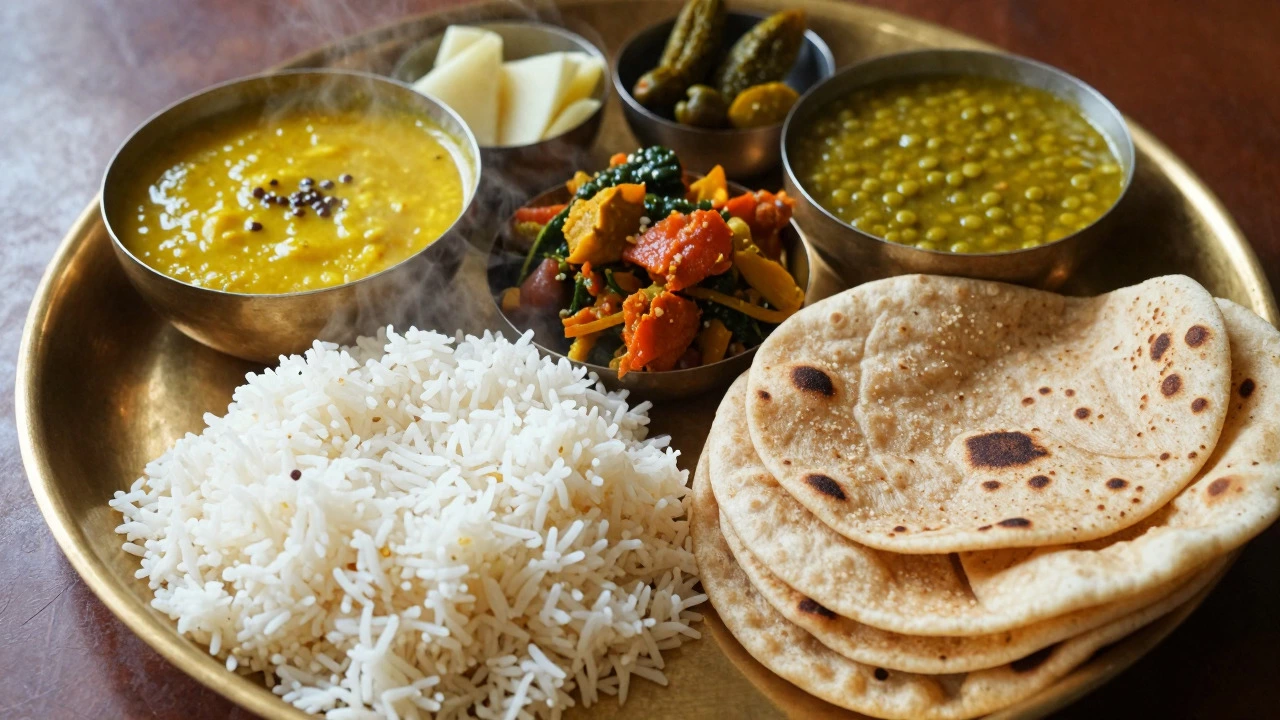
Walk into any kitchen in Mumbai, Delhi, or Chennai, and you’ll notice one thing: there isn’t a single "national dish." Instead, there’s a complex web of regional habits that define what Indians actually eat. If you’re asking what is the most eaten food in India, the answer isn’t a fancy curry or a festive sweet. It’s the humble staple that forms the base of every meal. For the vast majority of the population, that’s rice and wheat-based breads. But which one wins the popularity contest? Let’s break down the data to find out.
The Staple Battle: Rice vs. Wheat
To understand Indian eating habits, you have to look at geography and agriculture. India is split roughly down the middle by dietary preference. In the south and east-states like Kerala, Tamil Nadu, Andhra Pradesh, West Bengal, and Odisha-Rice is the primary carbohydrate source consumed in nearly every meal. Here, rice is not just a side; it’s the plate itself. You’ll see steamed white rice, idli (fermented rice cakes), dosa (crepes made from rice batter), and pongal as standard breakfast and dinner options.
In contrast, North, Central, and Western India lean heavily on Wheat products. This includes Chapati (also known as roti), paratha, and puri. These flatbreads are made from whole wheat flour (atta) and are cooked on a tawa (flat griddle). Because wheat grows well in the drier northern plains, it became the dominant grain for these regions. So, if you’re trying to pinpoint the single most consumed food item by volume, it’s a tie between polished rice and whole wheat flour. However, when we factor in the sheer number of people who eat rice multiple times a day in the populous southern states, rice often edges out in total tonnage consumed.
Dal: The Protein Backbone
You can’t talk about the most eaten foods without mentioning Dal. While rice and wheat provide energy, dal provides protein. Dal is a lentil stew, and it appears on the table of over 80% of Indian households daily. But "dal" is a category, not a single dish. The specific type varies by region:
- Tur Dal (Arhar): Common in South and East India, usually tempered with mustard seeds and curry leaves.
- Moong Dal: Popular in North India, often served yellow (toor) or green (kada). It cooks faster and is lighter on the stomach.
- Urad Dal: Used extensively in South India for making idli and dosa batters, but also cooked as a thick stew.
Dal is cheap, nutritious, and versatile. It pairs perfectly with both rice and chapati. In fact, the combination of "Dal-Chawal" (lentils and rice) or "Dal-Roti" (lentils and flatbread) is considered a complete meal in traditional Indian nutrition. It’s rare for an Indian household to skip dal for dinner, even if other dishes are present.
Vegtables: The Regional Twist
If staples are the constant, vegetables are the variable. What counts as "most eaten" here depends entirely on where you are. In North India, Aloo (Potato) is arguably the most popular vegetable. Dishes like Aloo Gobi (potatoes and cauliflower) and Aloo Matar (potatoes and peas) are everyday meals. Potatoes are affordable, store well, and absorb spices beautifully.
In the South, Cabbage and Beans take the lead. Cabbage is often stir-fried with mustard seeds and dried red chilies. In coastal areas like Goa and Karnataka, coconut is not just a flavoring agent but a core ingredient, appearing in curries, chutneys, and even desserts.
Here’s a quick comparison of top vegetables by region:
| Region | Top Vegetable 1 | Top Vegetable 2 | Common Preparation |
|---|---|---|---|
| North India | Potato | Cauliflower | Dry roasts (Sabzi), Curries |
| South India | Cabbage | Green Beans | Stir-fry, Sambar accompaniment |
| West India | Okra (Bhindi) | Tomato | Fried, Curry base |
| East India | Bamboo Shoots | Lettuce (Gobhi) | Machha Jhol (Fish curry base) |
Breakfast Habits: Where the Day Starts
Many people assume Indians start their day with heavy curries, but breakfast is often light and fermented. This is where specific dishes rise to the top of the "most eaten" list. Sadhu Paratha and Poha (flattened rice) are massive in Maharashtra and Gujarat. Poha is quick to make, requires minimal oil, and is often seasoned with peanuts and lemon.
In the South, Idli and Dosa rule the morning. Idli is a soft, steamed cake made from fermented rice and urad dal batter. It’s healthy, easy to digest, and typically eaten with sambar (a vegetable-lentil stew) and coconut chutney. Dosa is the crispy crepe version of the same batter. Both require overnight fermentation, which makes them probiotic-rich-a key reason they remain staples despite the effort involved in preparing the batter.
Street Food: The Hidden Champion
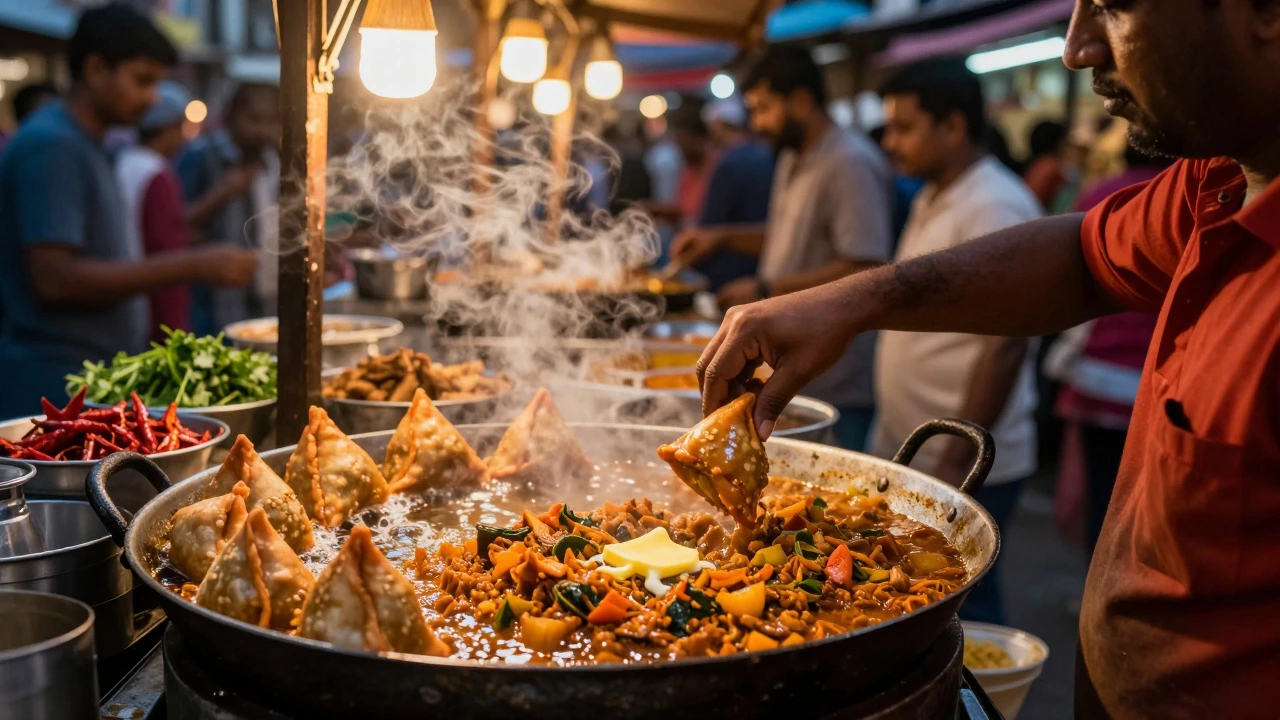
While home-cooked meals dominate statistics, street food accounts for a significant portion of daily caloric intake for urban populations. Chaat is a broad category of savory snacks, but specific items like Pani Puri (golgappa) and Pav Bhaji are incredibly popular. Pav Bhaji, a mashed vegetable curry served with buttered bread rolls, originated in Mumbai and has become a nationwide favorite due to its comfort-food appeal.
Another contender is Samosa. Whether filled with spiced potatoes and peas or meat, the samosa is a portable, fried pastry that serves as a snack, a lunch, or a midnight bite. Its versatility and low cost ensure it remains a top seller across all demographics.
Regional Variations That Matter
It’s crucial to remember that "India" is not a monolith. Dietary patterns shift dramatically based on climate, religion, and local agriculture. In Kashmir, for example, Kahwa (spiced tea) and saffron-heavy dishes are central to the culture. In Kerala, Appam (lacy fermented rice pancakes) is a staple that differs significantly from the crispier dosas found further north.
Religion also plays a role. In Hindu-majority areas, vegetarianism is common, leading to high consumption of paneer (cottage cheese) and soybeans. In Muslim-majority regions or among non-vegetarians, chicken and mutton curries are frequent main courses. However, even among non-vegetarians, the staple base (rice or wheat) rarely changes-it’s the topping that does.
Why Do These Foods Dominate?
Several factors keep rice, wheat, and dal at the top of the consumption charts:
- Affordability: Rice and wheat are subsidized by the government through the Public Distribution System (PDS), making them accessible to lower-income households.
- Shelf Life: Grains store well, unlike fresh vegetables or meats, which was critical before modern refrigeration.
- Nutritional Balance: The combination of grain + lentil + vegetable creates a complete amino acid profile, ensuring adequate protein without needing expensive animal sources.
- Cultural Rituals: Many festivals and religious ceremonies mandate specific foods (e.g., laddu during Diwali, prasad during temple visits), reinforcing these habits across generations.
Modern Shifts in Eating Habits
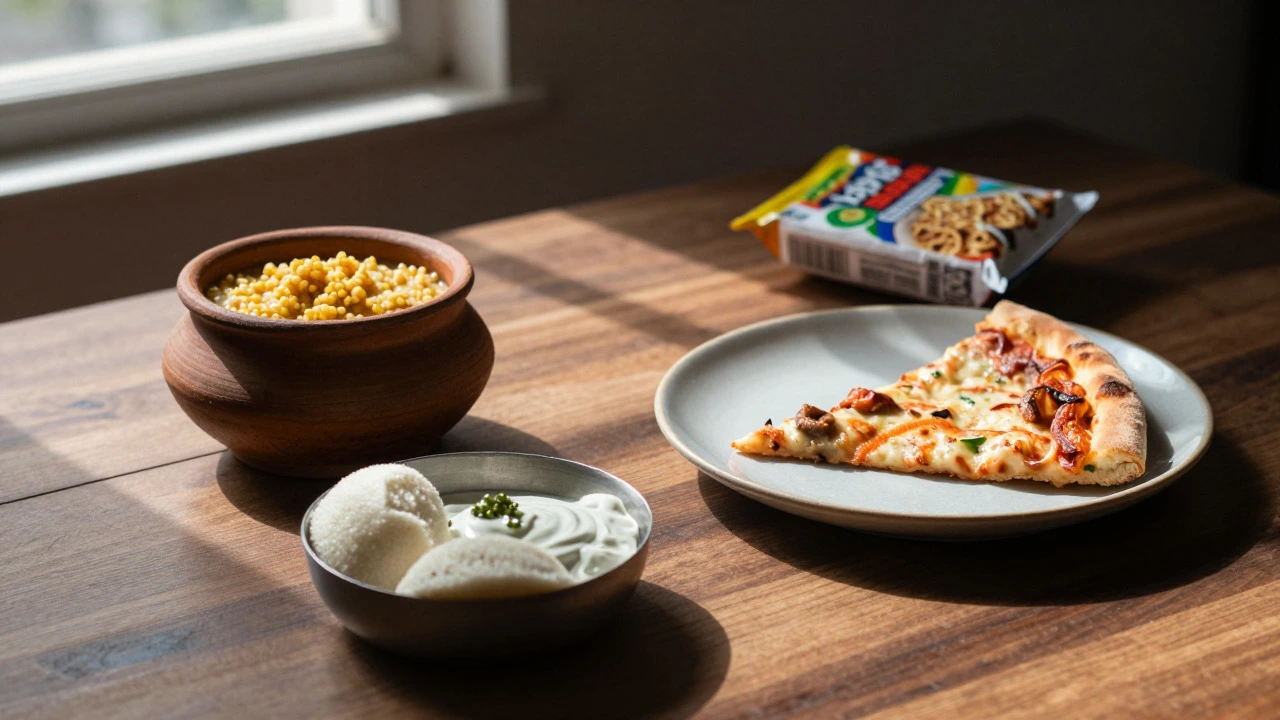
While staples remain unchanged, how they’re prepared is evolving. Urban Indians are increasingly adopting quick-cooking methods. Instant noodles and frozen pizzas are gaining ground among younger generations, but they haven’t displaced traditional staples yet. Instead, they coexist. A typical young professional in Bangalore might have poha for breakfast, a leftover dal-chawal for lunch, and pizza for dinner. The traditional foods are still there, just competing for time rather than taste.
Additionally, health trends are influencing choices. There’s a growing interest in millet-based foods like jowar (sorghum) and bajra (pearl millet) as alternatives to refined rice and wheat. Government campaigns promoting millets aim to reduce diabetes rates, which could shift the "most eaten" rankings in the next decade.
Frequently Asked Questions
Is rice really more popular than wheat in India?
It depends on the region. Rice is the dominant staple in South and East India, while wheat is preferred in North and West India. Nationally, they are close competitors, but rice often leads in total tonnage due to higher per-capita consumption in populous southern states.
What is the most common protein source in Indian diets?
Lentils (dal) are the most common protein source because they are affordable and widely available. Among animal proteins, chicken is the most consumed, followed by eggs and fish in coastal areas.
Which vegetable is eaten the most in North India?
Potato (Aloo) is the most consumed vegetable in North India. It is used in dry roasts, curries, and snacks like samosas and pakoras.
Do Indians eat the same food every day?
The staples (rice/wheat and dal) remain consistent, but the accompanying vegetables and spices change daily based on seasonality and availability. This ensures variety while maintaining nutritional balance.
What is the role of milk in the Indian diet?
Milk is a cultural staple, consumed as tea, coffee, or plain. It is also processed into ghee (clarified butter), paneer, and yogurt (dahi), which are integral to cooking and desserts.