Biryani Flavor Secrets: How to Unlock Deep, Authentic Taste in Every Bite
When you think of biryani, a layered rice dish from India with meat, spices, and saffron, often cooked slowly to lock in flavor. It's not just a meal—it's a layered experience where every spice, every grain of rice, and every step matters. The secret isn’t in one ingredient. It’s in how they work together. Most people think biryani is just about adding more chili or garam masala. But the real flavor comes from patience, layering, and timing—things you can’t rush.
Basmati rice, a long-grain aromatic rice native to India and Pakistan, known for its fragrance and fluffy texture when cooked is the foundation. Boil it just right—not too soft, not too hard. Too much water? Your biryani turns mushy. Too little? It’s crunchy in the middle. The perfect rice is par-boiled, soaked, then drained. It’s not cooked all the way. It’s meant to finish cooking in the pot, under steam, with the meat and spices. That’s called dum cooking, a slow-steaming technique where the pot is sealed with dough or foil to trap heat and aroma. No lid leaks. No steam escapes. That’s how the flavors marry.
Then there’s the spice layer. Cumin, cardamom, cloves, cinnamon—yes. But what most home cooks miss is the yogurt marinade, a tenderizing blend of yogurt, ginger, garlic, and spices used to coat meat before cooking. It’s not just for tenderness. It’s a flavor carrier. The yogurt breaks down proteins, lets spices stick, and adds a subtle tang that balances the richness. And don’t forget the saffron. Soak a pinch in warm milk. Drizzle it over the rice. That’s the golden touch that turns color into aroma.
People ask why restaurant biryani tastes better. It’s not magic. It’s control. Control over heat. Control over timing. Control over layering—meat at the bottom, rice on top, fried onions, herbs, and nuts in between. The pot sits low and slow. The steam rises. The flavors sink. That’s the real biryani flavor secrets.
You’ll find posts here that break down exactly how long to boil the rice, why soaking matters, which spices to toast first, and how to fix a dry biryani without starting over. Some show you how to make it vegetarian. Others reveal regional twists—from Hyderabad’s fiery version to Lucknow’s subtle, sweet one. No fluff. No guesswork. Just what works, tested in real kitchens.
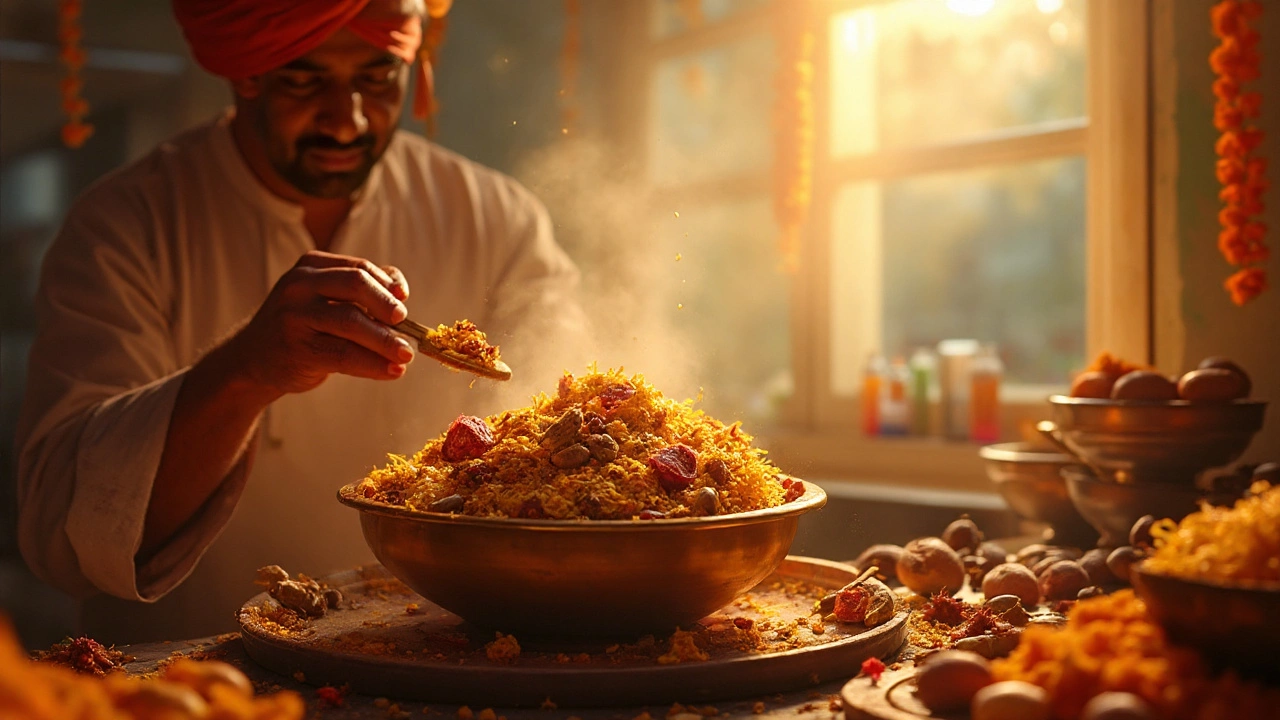
What Makes Biryani Irresistibly Delicious? The Secret Taste Revealed
Discover the real reason behind biryani’s mind-blowing taste. Find out the spices, secrets, and techniques that make biryani so unforgettable.