Canning Chutney: How to Preserve Indian Flavors for Year-Round Use
When you canning chutney, the process of sealing spicy, tangy Indian condiments in jars for long-term storage. Also known as chutney preservation, it’s how generations of Indian households kept flavors like mango, tamarind, and garlic alive through dry seasons and monsoons. This isn’t just about saving leftovers—it’s about capturing the punch of fresh ingredients at their peak so you can use them months later, whether you’re topping a plate of dal or spicing up a simple rice bowl.
Chutney isn’t jam. It’s not sweet, smooth, or meant for toast. Indian chutney, a savory, spicy, and often chunky condiment made with fruits, vegetables, herbs, and spices thrives on heat, vinegar, salt, and oil—all natural preservatives. When you can it properly, you’re not just extending its life, you’re deepening its flavor. The vinegar breaks down fibers, the salt pulls out moisture, and the oil seals out air. Together, they create a shelf-stable flavor bomb that outshines anything you’ll find in a grocery aisle.
Many people think canning chutney requires fancy equipment or a chemistry degree. It doesn’t. You need clean jars, a pot of boiling water, and the confidence to trust your senses. If it smells right, looks right, and tastes right after cooling, it’s safe. The key is acidity—always use enough vinegar or lemon juice to keep the pH below 4.6. That’s the line between tasty and risky. You’ll find recipes in the posts below that use tamarind, green mango, coconut, even mint—all perfect for canning because they’re naturally high in acid or can be balanced with it.
What you’ll discover in these posts isn’t just how to seal chutney in jars. You’ll learn why some chutneys last a year without refrigeration while others turn sour in weeks. You’ll see which spices boost shelf life, how sugar affects texture, and why certain fruits like raw mango or pomegranate are ideal for canning. You’ll also find warnings you won’t get from YouTube videos: don’t use metal lids with vinegar-based chutneys, don’t skip the water bath, and never assume store-bought vinegar is strong enough.
There’s a reason your grandmother kept a shelf of chutneys in the pantry. It wasn’t nostalgia—it was smart cooking. Canning chutney means you never run out of flavor, even when ingredients are out of season. It means you can gift jars to friends who don’t know how to make it. It means you can skip the plastic-wrapped, preservative-loaded bottles at the supermarket. This collection gives you the real, tested methods—no fluff, no guesswork—just what works in Indian kitchens, from Mumbai balconies to Kerala backyards.
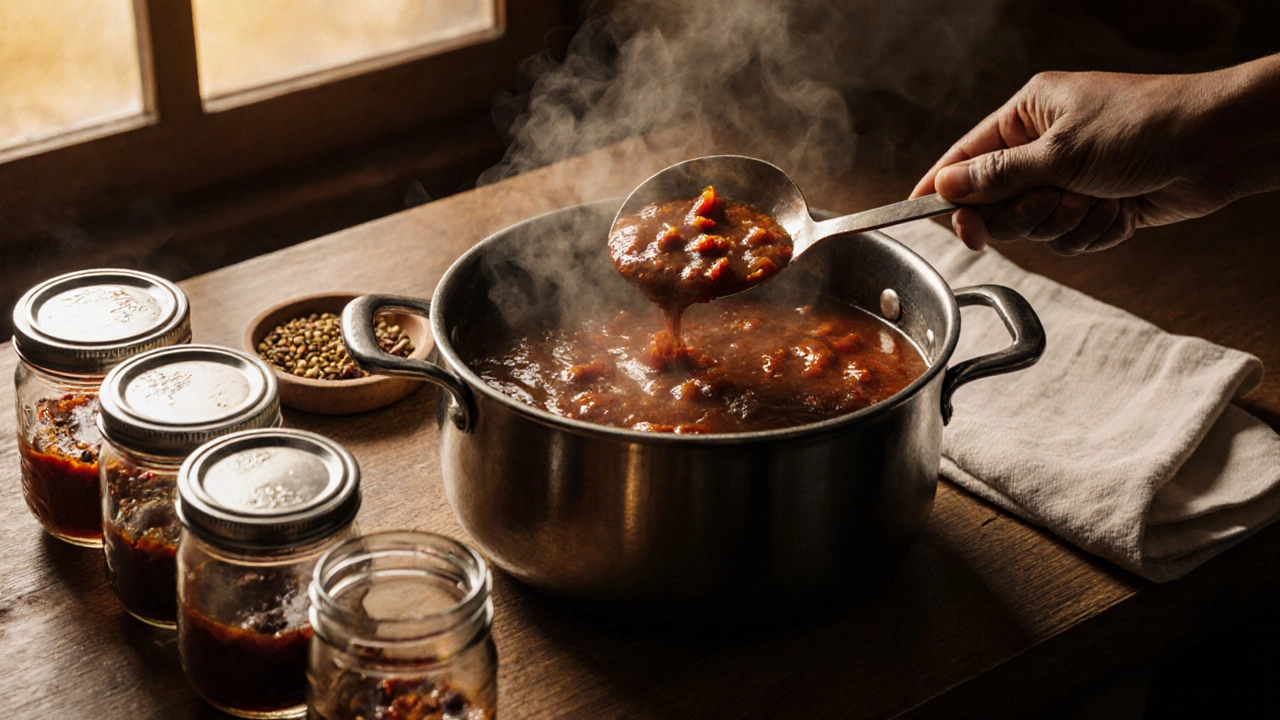
Do You Jar Up Chutney Hot or Cold? The Right Way to Preserve Flavor and Safety
Learn why jarring chutney while hot is essential for safety, flavor, and long-term storage. Avoid mold and spoilage with this step-by-step guide to proper chutney canning.