Chutney Jar: Hot or Cold? What Really Matters for Flavor and Freshness
When you open a chutney jar, a tangy, spicy condiment made from fruits, herbs, or vegetables, often fermented or cooked with spices. Also known as Indian chutney, it's a flavor booster that turns simple meals into something unforgettable. But here’s the real question: should you serve it hot or cold? Most people just grab it straight from the fridge or leave it on the counter—without thinking about what that does to taste, texture, or even how long it lasts.
The truth is, temperature changes everything. Cold chutney, straight from the fridge, feels sharp and bright—perfect for cutting through rich dishes like biryani or fried samosas. But when you let it sit at room temperature for 20 minutes, the oils in mustard seeds, the warmth of ginger, and the sweetness of tamarind wake up. That’s when you taste the full depth. It’s not just about comfort—it’s chemistry. Heat makes volatile compounds evaporate, releasing aromas that cold chutney hides. That’s why many households in South India keep their coconut chutney at room temperature during meals, even in humid weather.
Storage matters too. If you store chutney in a sealed jar in the fridge, it lasts longer—but loses punch. If you leave it out in a cool, dry spot, it ferments slightly, deepening flavor over days. But don’t leave it out if it’s got fresh herbs like cilantro or mint—they turn brown and bitter fast. The best practice? Keep your main jar in the fridge, but spoon out a small portion into a side dish before serving. Let that sit for 15 minutes. That’s the trick street vendors use to make their chutney taste like it’s fresh off the grinder.
And don’t confuse chutney with jam. While jam is sweet, smooth, and meant for toast, chutney is savory, chunky, and built to balance spice, salt, sour, and crunch. It’s not a spread—it’s a seasoning. That’s why it’s served alongside roti, rice, or even eaten with plain yogurt. The temperature you choose isn’t about tradition—it’s about control. Cold chutney gives you clarity. Warm chutney gives you complexity.
Some people swear by heating chutney—especially tomato or tamarind varieties—to kill bacteria or meld flavors. But unless you’re making it from scratch, there’s no need. Store-bought or homemade chutney made with vinegar, salt, and oil is already preserved. Heating it just changes the experience. It doesn’t make it safer. It makes it different.
So next time you open a jar, ask yourself: do I want clean and crisp, or deep and layered? Don’t just grab it cold because that’s what’s convenient. Try it both ways. Taste the difference. You’ll start noticing how temperature shifts the whole meal. And once you do, you’ll never treat chutney the same way again.
Below, you’ll find real tips from home cooks who’ve mastered chutney storage, pairing, and serving—whether they keep it chilled, let it breathe, or warm it gently before serving.
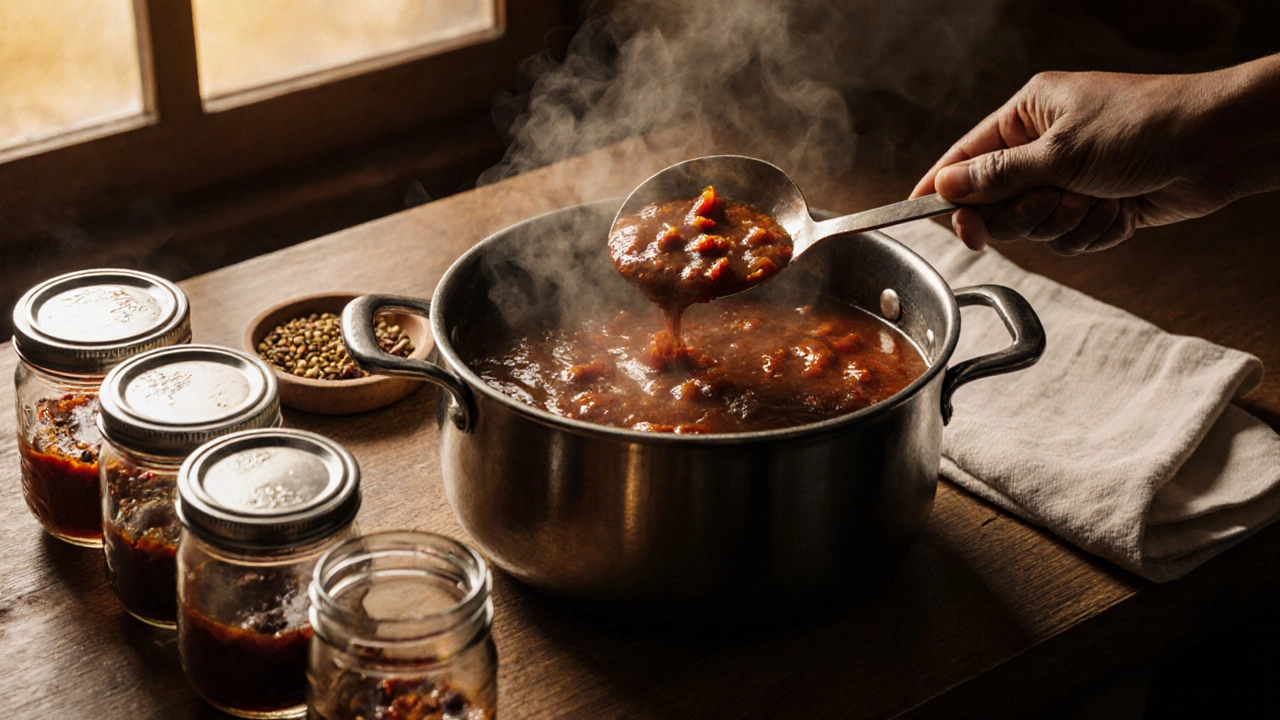
Do You Jar Up Chutney Hot or Cold? The Right Way to Preserve Flavor and Safety
Learn why jarring chutney while hot is essential for safety, flavor, and long-term storage. Avoid mold and spoilage with this step-by-step guide to proper chutney canning.