Chutney Preservation: How to Keep Indian Chutneys Fresh Longer
When you make chutney, a tangy, spicy condiment made from fresh herbs, fruits, or vegetables, commonly used in Indian meals, you’re not just making a side dish—you’re making flavor that lasts. But without the right chutney preservation, techniques to extend the shelf life of homemade chutneys using natural methods like oil, salt, and storage practices, even the best batch can spoil in days. The good news? Indian households have been keeping chutneys fresh for generations—no refrigerators, no chemicals, just smart habits.
What makes chutney, a tangy, spicy condiment made from fresh herbs, fruits, or vegetables, commonly used in Indian meals last longer isn’t just the ingredients—it’s how you handle them. oil, a natural barrier used in Indian kitchens to seal out air and bacteria from chutneys is your best friend. A thin layer of mustard or coconut oil on top of your cooled chutney stops mold and keeps moisture locked in. Salt and sugar aren’t just for taste—they’re preservatives. More salt in a tomato chutney? Longer life. Less water in your grinding process? Better storage. And don’t forget the container: clean, dry, glass jars with tight lids beat plastic every time. Plastic breathes. Glass doesn’t.
Some chutneys, like coconut or coriander, are more delicate. They need the fridge. Others, like tamarind or mint, can sit at room temperature for weeks if sealed right. The trick? Always use a clean, dry spoon to serve. Never dip a wet or dirty spoon into the jar—that’s how mold starts. If you make a big batch, freeze portions in ice cube trays. Pop out a cube when you need a burst of flavor. No thawing needed—just drop it straight into dal or rice.
You’ll find plenty of these tricks in the posts below. Some show you how to make chutneys that last months. Others explain why some chutneys go bad faster than others. There’s even one that compares chutney to jam—because people mix them up, and that’s where mistakes happen. Whether you’re storing a batch of green chutney for the week or making a big jar of mango pickle-style chutney for winter, you’ll find the exact steps that work in real Indian kitchens. No fluff. Just what keeps your chutney tasting fresh, not funky.
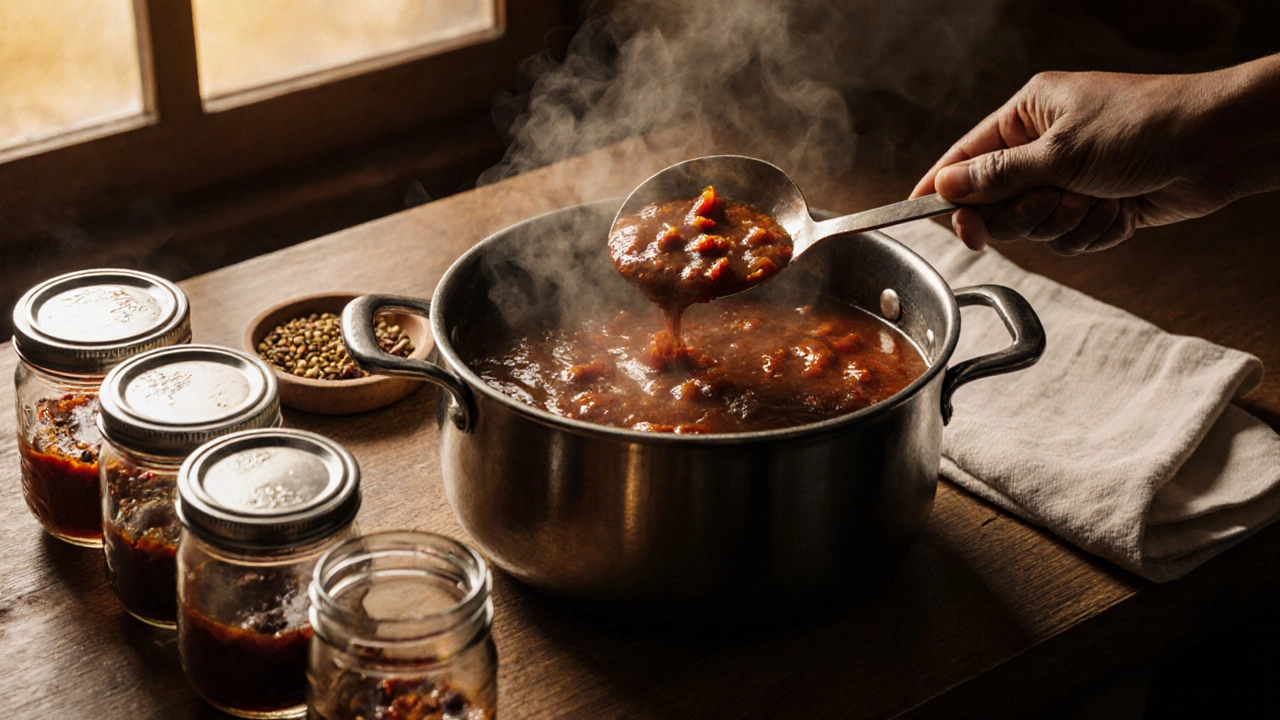
Do You Jar Up Chutney Hot or Cold? The Right Way to Preserve Flavor and Safety
Learn why jarring chutney while hot is essential for safety, flavor, and long-term storage. Avoid mold and spoilage with this step-by-step guide to proper chutney canning.