Chutney Recipes: Fresh, Flavorful, and Easy to Make at Home
When you think of chutney, a thick, flavorful condiment made from fruits, vegetables, herbs, and spices, commonly used in Indian meals to add tang, sweetness, or heat. Also known as chatni, it's not just a side—it's the flavor booster that turns a simple meal into something unforgettable. Whether it’s cooling mint with yogurt, spicy tomato with garlic, or sweet tamarind with jaggery, chutney is the secret behind the depth in so many Indian dishes. And the best part? You don’t need fancy tools or hours of prep. Most chutneys come together in under ten minutes using what’s already in your kitchen.
What makes Indian chutney so special isn’t just the ingredients—it’s how they work together. tamarind, a sour fruit pulp used to add depth and balance to chutneys, especially in South Indian and coastal recipes cuts through richness, while green chilies, fresh, fiery peppers that bring heat and brightness to chutneys without overpowering wake up the palate. Then there’s cumin, a warm, earthy spice that anchors chutney flavors and aids digestion. These aren’t random additions—they’re a science. Studies show that the turmeric, ginger, and garlic often found in chutney have real anti-inflammatory effects, making your condiment not just tasty, but good for you too.
Some people think chutney is just for snacks or street food. But it’s so much more. Use it as a dip for samosas, a spread on toast, a topping for grilled veggies, or even stirred into yogurt for a quick raita. The way you store it matters too. Jarring chutney while it’s hot isn’t just tradition—it’s how you prevent mold and lock in flavor for months. And if you’ve ever wondered why your homemade chutney tastes different from the store-bought kind, it’s because fresh ingredients and no preservatives make all the difference.
In this collection, you’ll find real, tested chutney recipes that actually work—no fluff, no guesswork. You’ll learn how to fix bitter chutney, how to make it last without refrigeration, and which spices boost its health benefits. There’s a recipe for quick coconut chutney for dosa, a fiery coriander chutney for chaat, and even one that fights inflammation using everyday Indian spices. You’ll also find tips on what to pair with each kind, how to adjust heat levels, and why some chutneys taste better after a day in the fridge. This isn’t just a list of recipes—it’s a guide to making chutney work for you, every single day.
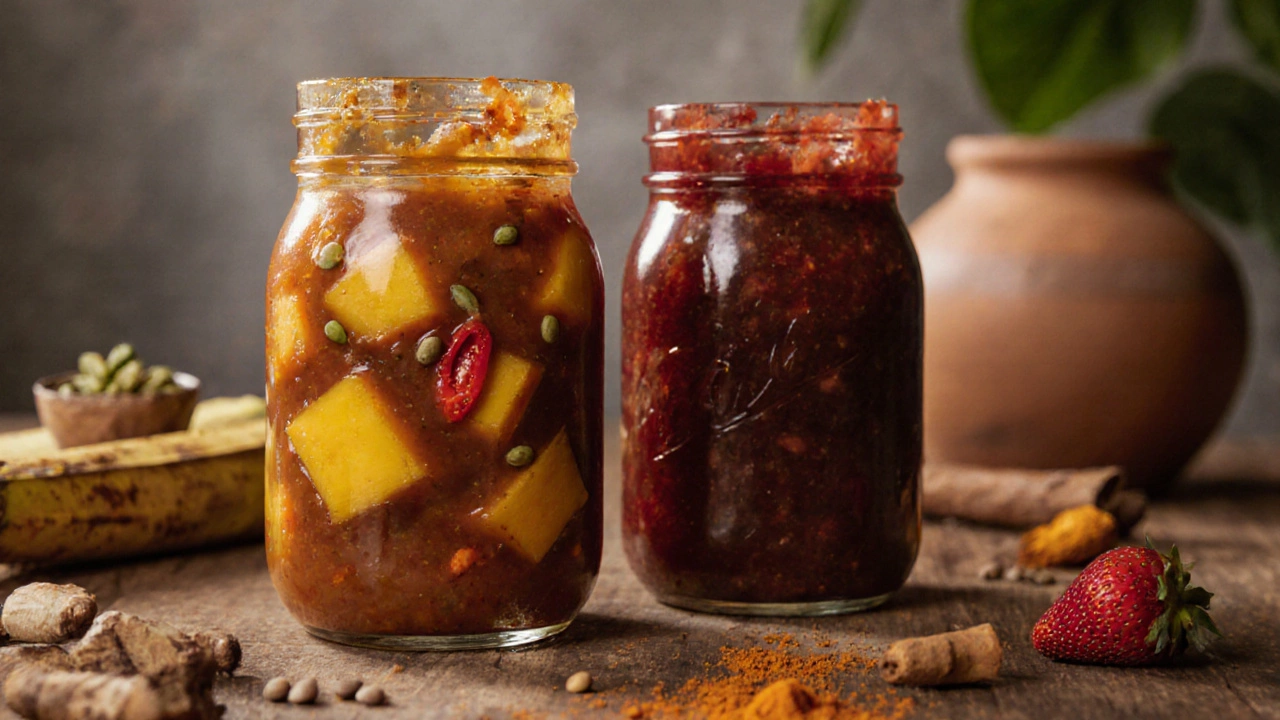
What Is a Chutney vs Jam? Key Differences in Flavor, Texture, and Use
Chutney and jam look similar but are totally different. Chutney is spicy, tangy, and savory-made for pairing. Jam is sweet, smooth, and spreadable-made for toast. Know the difference to cook better.
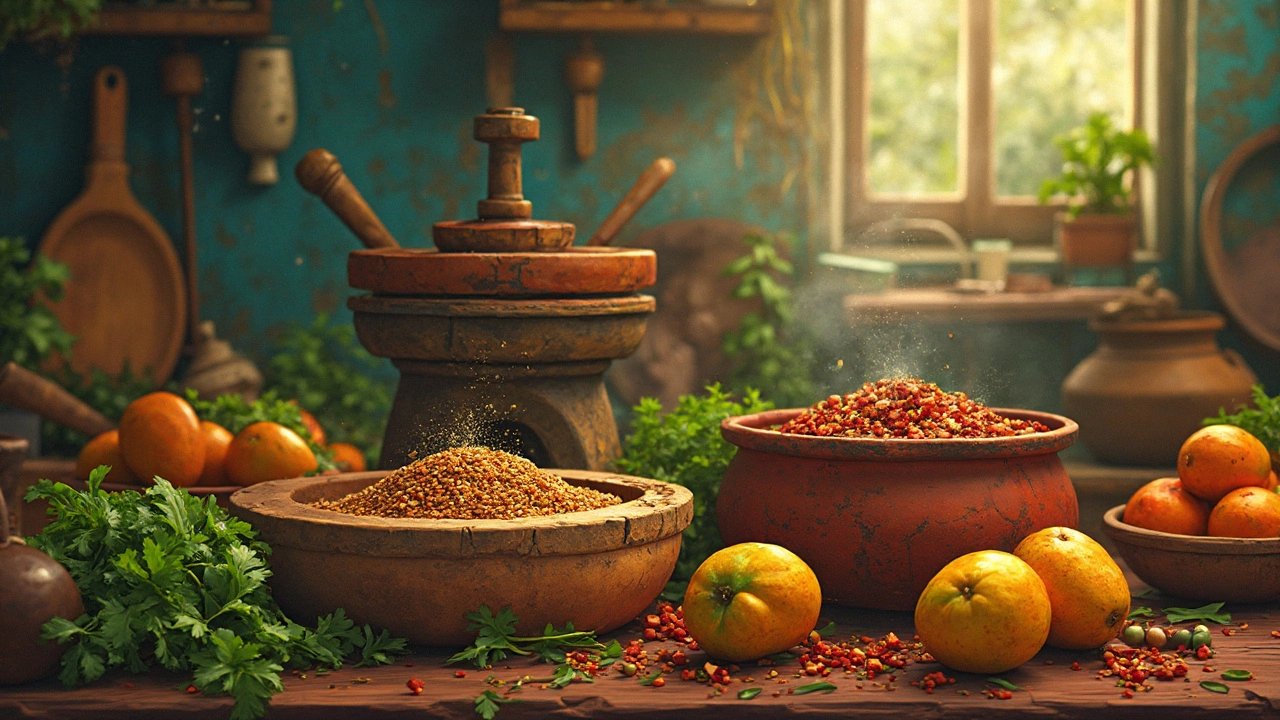
Understanding the Distinct Flavors of Indian and British Chutney
Chutney, a delightful condiment, differs significantly between Indian and British culinary traditions. Indian chutneys are diverse, often spicy, and served fresh, while British chutneys lean towards sweet and tangy, made with cooked fruit and vinegar. This article explores the backgrounds and flavors, offering tips for crafting these unique condiments. Whether you're a fan of heat or mildness, there's a chutney to suit every palate.

Exploring the Potential Drawbacks of Chutney in Your Diet
Chutney, a popular condiment originating from the Indian subcontinent, is known for adding a burst of flavor to meals. While its vibrant taste and versatility are widely celebrated, there are certain potential disadvantages to consider. These include its high sugar and salt content, the potential for allergic reactions, and its preservation concerns. Understanding these factors can help chutney enthusiasts make informed dietary choices while enjoying this zesty accompaniment.