Chutney Storage: How to Keep Your Indian Chutney Fresh Longer
When you make a batch of chutney, a spicy, tangy condiment made from fresh herbs, fruits, or vegetables, commonly used in Indian meals. Also known as chutney paste, it's meant to be eaten fresh—but you don’t have to use it all in one day. The real question isn’t whether you can store it, but how to store it so it still tastes like it was made this morning.
Refrigeration, the most common method for preserving homemade chutney. Also known as cold storage, it’s the first line of defense against spoilage. Most chutneys last 2–3 weeks in the fridge if sealed tight in a clean, dry glass jar. No plastic. No metal. Glass keeps flavors pure and stops reactions. Always use a clean spoon every time you scoop out chutney—dipping a dirty spoon introduces bacteria and kills the batch faster.
Oil, a natural preservative used in traditional Indian chutney recipes. Also known as cooking oil layer, it’s not just for taste—it’s a barrier. A thin layer of oil on top of your chutney blocks air, which is what makes mold grow. Coconut oil, mustard oil, or even neutral vegetable oil works. Pour it gently over the surface after cooling. It’s a trick passed down through generations, and it still works better than any chemical preservative.
Freezing, the best way to store chutney for months without losing flavor. Also known as long-term chutney storage, it’s perfect if you make big batches during monsoon or festival season. Pour chutney into ice cube trays, freeze, then pop the cubes into a zip-lock bag. You get perfect single servings—no thawing the whole jar. Coconut chutney, mint chutney, tamarind chutney—they all freeze well. Just label the bag. You’ll forget what’s inside in three months.
Some people think vinegar or lemon juice alone keeps chutney safe forever. That’s not true. Acid helps, but it doesn’t replace clean jars or cold temps. A chutney made with fresh cilantro and green chilies will turn slimy in a week if left out. Even if it smells fine. Trust your eyes, not your nose.
And don’t store chutney in the fridge door. That’s the warmest spot. Put it on a back shelf, where the temperature stays steady. If you live in a hot city, that’s even more important. Humidity and heat are chutney’s worst enemies.
You’ll find posts here that explain how to make different kinds of chutney—from coconut to tamarind, from mint to garlic. You’ll also see what happens when you store them wrong, how to revive dried-out chutney, and why some chutneys last longer than others. Some recipes use jaggery or roasted spices that naturally extend shelf life. Others rely on fermentation, which changes the game entirely.
Whether you’re making a quick coriander chutney for dosa or a slow-cooked mango chutney for winter, the rules are the same: clean tools, tight lids, cold storage, and oil on top. Get those right, and your chutney stays bright, bold, and ready to eat—even weeks later.
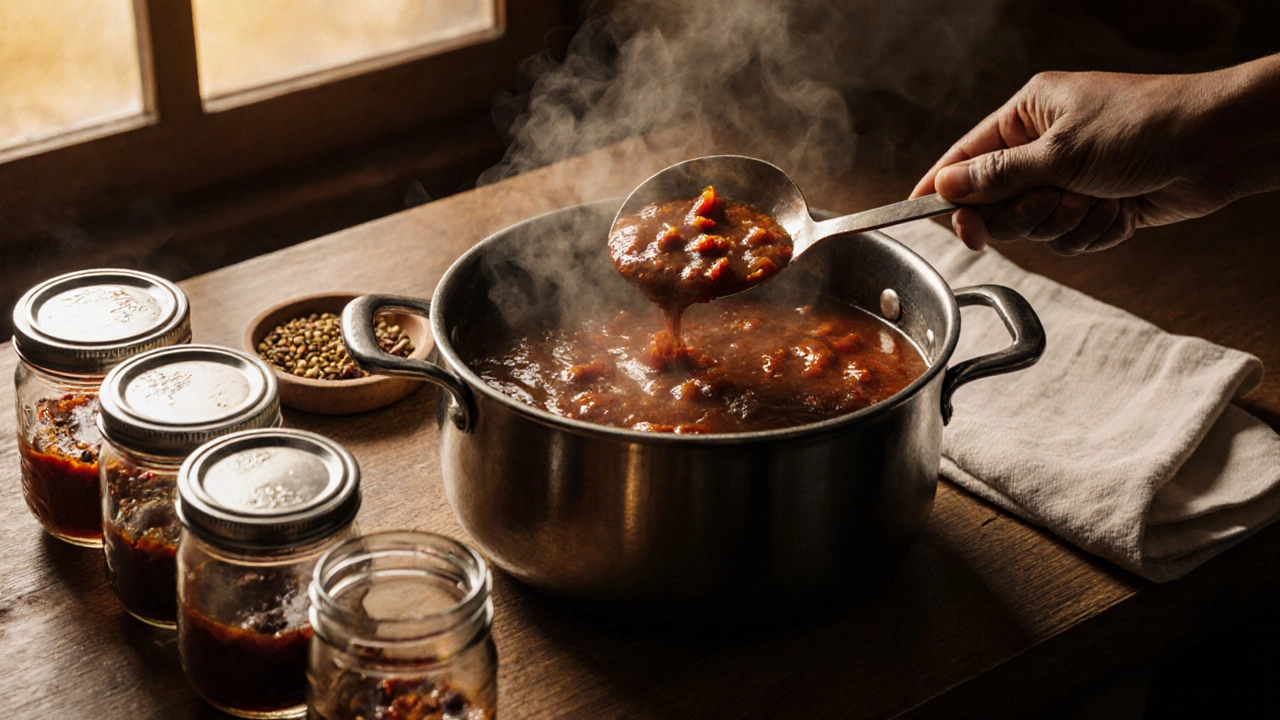
Do You Jar Up Chutney Hot or Cold? The Right Way to Preserve Flavor and Safety
Learn why jarring chutney while hot is essential for safety, flavor, and long-term storage. Avoid mold and spoilage with this step-by-step guide to proper chutney canning.