Chutney vs Jam: What's the Real Difference and Why It Matters in Indian Kitchens
When you think of chutney, a spicy, tangy, or sweet condiment made from fruits, vegetables, or herbs, often used in Indian meals to balance flavors. Also known as pickle-like relish, it's not just a side—it's the flavor engine behind biryanis, dosas, and even sandwiches. Many people mix it up with jam, a sweet spread made from fruit, sugar, and pectin, typically eaten on toast or baked goods. Also known as fruit preserve, it’s a breakfast staple in Western homes, but rarely finds its way into an Indian meal the same way. The difference isn’t just in taste—it’s in purpose, texture, and how they’re made.
Indian chutney is built for contrast. Think green chutney with its raw cilantro, mint, green chilies, and lemon—bright, sharp, and punchy. Or coconut chutney, mildly sweet with roasted lentils and curry leaves, served alongside idli. It’s not meant to be spread thick. It’s a splash, a squeeze, a quick dip that wakes up the whole plate. Jam, on the other hand, is about sweetness and texture. It’s thick, sticky, and slow-cooked. It doesn’t need spices. It doesn’t need heat. It just needs bread. Chutney uses vinegar, tamarind, or lemon for tang and preservation. Jam uses sugar as its main preservative. That’s why you can keep chutney for months in the fridge without it turning into syrup. Jam? It’ll ferment if you don’t seal it right.
And here’s the kicker: chutney is alive. The spices, the garlic, the ginger—they don’t just sit there. They keep working. That’s why a jar of mango chutney from last monsoon still tastes better than the one you bought last week. Jam doesn’t do that. It’s static. It’s sweet. It’s done. In Indian kitchens, chutney isn’t a topping—it’s a seasoning. It’s the salt, the acid, the crunch you didn’t know you were missing. That’s why recipes like chutney preservation show up so often here: people aren’t just storing flavor—they’re storing tradition. You won’t find a single Indian meal where chutney is optional. But jam? You’d be lucky to see it next to roti.
What you’ll find in the posts below isn’t just a list of recipes. It’s a breakdown of how chutney works—why you jar it hot, how it fights inflammation, what spices make it last, and why it’s nothing like the jam on your grocery shelf. You’ll learn how to make it, store it, and use it so it actually improves your food—not just sits there looking pretty. This isn’t about swapping one for the other. It’s about knowing which one belongs where—and why Indian cooking got it right all along.
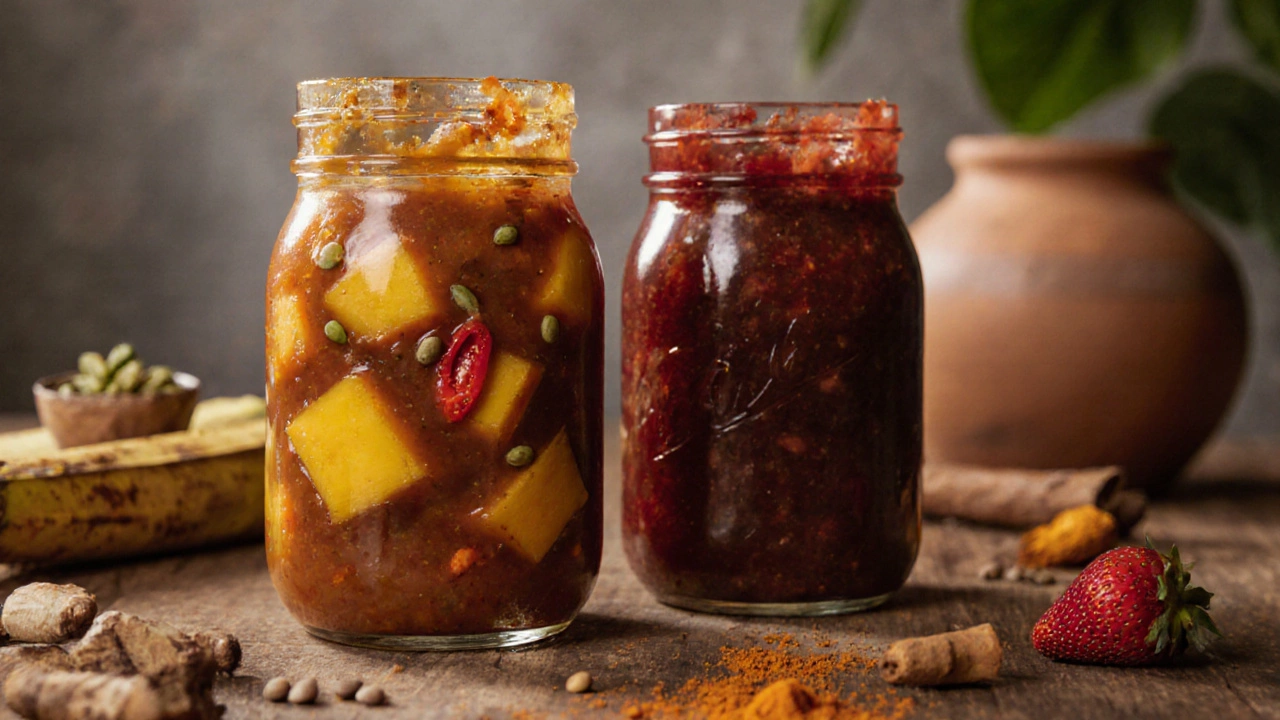
What Is a Chutney vs Jam? Key Differences in Flavor, Texture, and Use
Chutney and jam look similar but are totally different. Chutney is spicy, tangy, and savory-made for pairing. Jam is sweet, smooth, and spreadable-made for toast. Know the difference to cook better.