Dosa Batter Fermentation: How to Get Perfect Fermentation Every Time
When you make dosa batter fermentation, the natural process where rice and lentils break down with wild yeast and bacteria to create light, airy, tangy batter. It's not magic—it's microbiology you can control. Skip this step, and your dosa turns into a flat, tough disc. Get it right, and you get crisp edges, soft centers, and that unmistakable sour aroma that makes South Indian breakfasts unforgettable.
Fermentation time, how long the batter sits before cooking depends mostly on temperature. In winter, it can take 12 to 18 hours. In summer, 6 to 8 hours is enough. If your kitchen is cold, put the bowl near a warm appliance—like a running oven with the light on—or wrap it in a towel and set it on a heating pad. Don’t use the microwave. Don’t add yeast. The wild microbes in your flour and water are the ones you want. Adding yeast ruins the flavor and texture.
Urad dal, the black lentil used in dosa batter, is the star. It’s what gives the batter its fluffiness. If you use too little, or grind it too coarse, your dosa won’t puff. Always soak it separately from rice, and grind it until it’s silky smooth and slightly fluffy. The rice? Use idli rice or short-grain parboiled rice. Long-grain basmati won’t work—it doesn’t release enough starch. And don’t skip the salt. It helps the bacteria grow and stops bad mold.
When your batter doesn’t rise, it’s not broken. It’s just waiting. Try adding a tablespoon of cooked rice or a pinch of fenugreek seeds to the mix before soaking. Both help kickstart fermentation. If it smells sour but didn’t double in size, it’s still fine to cook. The flavor’s there—just give it a gentle stir before using. Never beat it hard. That knocks out the air.
Some people swear by adding a bit of leftover fermented batter from last time. That’s called a starter, and it works. But you don’t need it. Your kitchen has enough microbes. Just keep the batter covered with a cloth, not a lid. Airflow matters. Condensation builds up under lids and makes the top layer soggy.
Once fermented, store the batter in the fridge for up to five days. It will slow down but keep working. Take it out an hour before using. Cold batter makes dense dosas. Always bring it to room temperature.
You’ll find posts here that explain how to fix sour or flat batter, why some regions use rice-to-lentil ratios like 3:1 and others use 4:1, and what happens when you ferment too long. Some people leave it for two days and get crispy dosas. Others get over-fermented batter that smells like alcohol—still edible, just not ideal. We cover all of it.
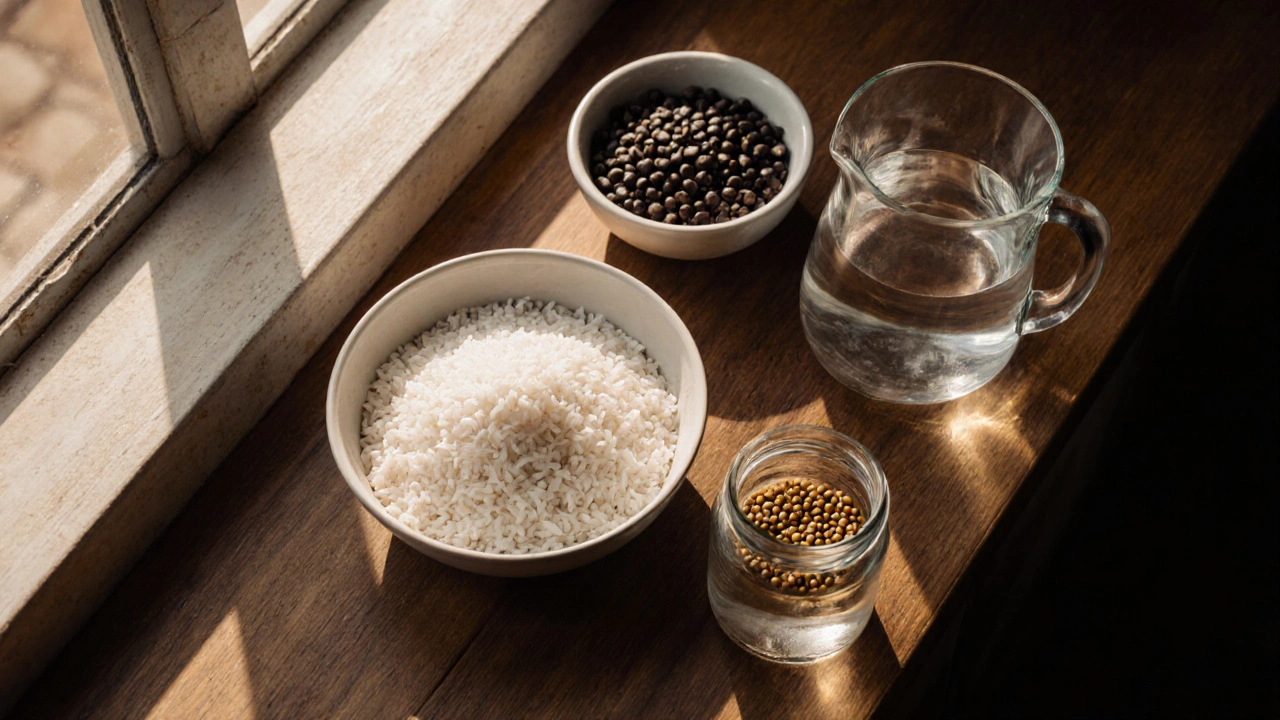
Dosa Batter Ingredients: What Goes Into the Classic South Indian Batter
Learn exactly what goes into traditional dosa batter, how each ingredient works, fermentation tips, alternative grains, and common troubleshooting for perfect, crisp dosas.