Dosa vs Rice: Which Indian Staple Is Better for You?
When it comes to Indian meals, dosa, a thin, fermented crepe made from rice and lentils, commonly eaten across South India and rice, a staple grain cooked plain or as part of biryani, pulao, or everyday meals are two of the most common carbs on the table. But they’re not interchangeable. One’s crispy, tangy, and packed with protein from lentils. The other’s soft, neutral, and delivers quick energy. Which one you pick depends on what your body needs—not just taste.
Most people think rice is the default carb, but dosa has a hidden edge. Because it’s fermented, the rice and urad dal batter breaks down starches and phytic acid, making it easier to digest and better for blood sugar. Studies show fermented foods like dosa can improve gut health and nutrient absorption. Rice, especially white rice, spikes blood sugar faster and lacks the fiber and protein boost from lentils. That’s why many South Indian families eat dosa for breakfast and save rice for lunch or dinner. It’s not tradition for no reason.
Then there’s the practical side. Dosa takes time to ferment—overnight, usually. Rice? Just boil it. If you’re rushing in the morning, rice wins. But if you’ve got a little patience, dosa gives you more staying power. It’s also naturally gluten-free and often vegan, unless you’re slathering it in ghee. Rice is simpler, but it doesn’t bring the same depth of flavor or texture. You can’t swap dosa for rice in a meal like sambar or chutney—it just doesn’t work the same way. And you can’t use rice as a wrap for spicy fillings like you can with dosa.
Both are part of everyday Indian life, but they serve different roles. Dosa is a vehicle—for chutney, for sambar, for veggies, for flavor. Rice is the base—for curries, for dal, for comfort. One’s a snack. The other’s a meal. And while rice might be more common across India, dosa has a growing fanbase in cities because it’s lighter, more nutritious, and still satisfying. If you’re trying to eat cleaner, choose dosa more often. If you need quick energy after a long day, rice is fine. But don’t treat them like twins. They’re cousins with different jobs.
Below, you’ll find real posts that break down exactly how dosa batter works, why rice is served over roti, how to make both healthier, and what other carbs stack up against them. No fluff. Just facts, tips, and the kind of insights you won’t find in a generic recipe blog.
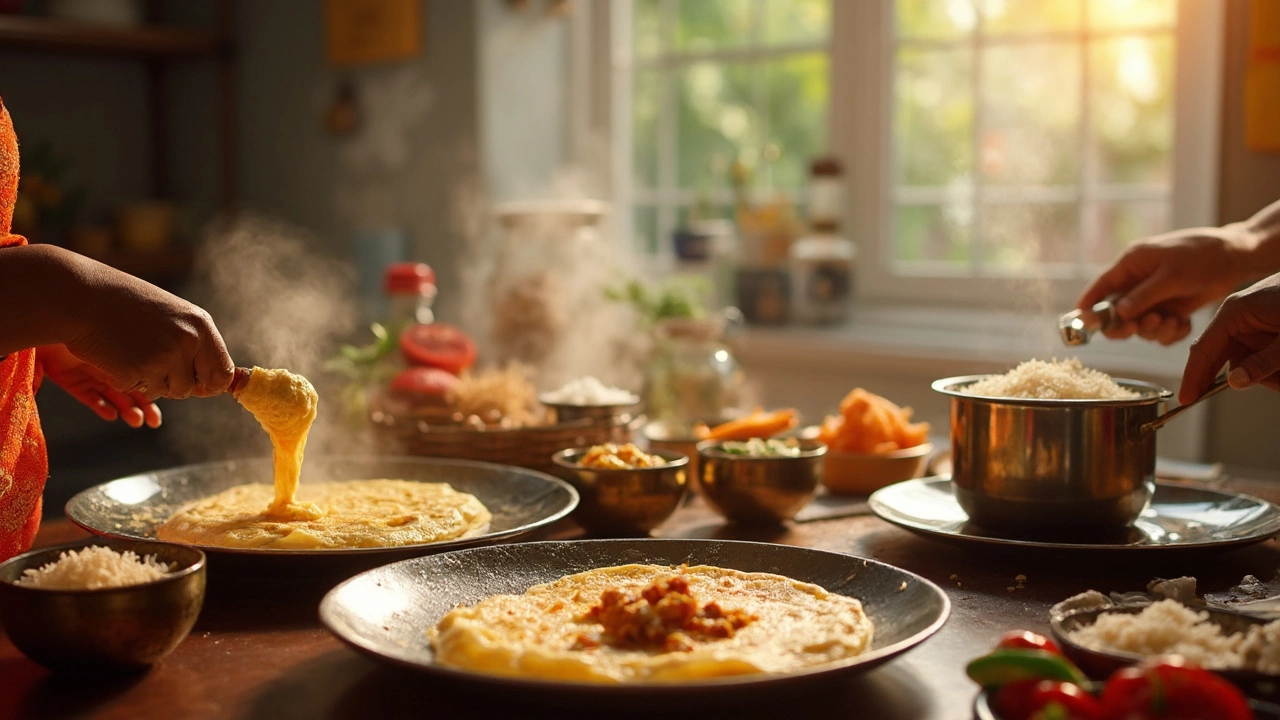
Is Dosa Healthier or Rice? Nutrition Facts You Should Know
Figuring out if dosa is healthier than plain rice isn’t as clear-cut as you’d think. Both are staple foods you’ll find on most Indian tables, but their nutrition, benefits, and impact on your body can be surprisingly different. This article breaks down calories, nutrients, and even little-known facts about how they’re made. If you’re torn between dosa and rice, or simply want to know which fits better into your diet, you’ll find practical answers here. You’ll also get useful tips to make both options healthier at home.