Flavorful Biryani: How to Get Perfect Spice, Rice, and Layering Every Time
When you think of flavorful biryani, a layered rice dish from India packed with aromatic spices, tender meat or vegetables, and fragrant basmati rice. It's not just food—it's an experience that varies from kitchen to kitchen, city to city. What makes one biryani unforgettable and another just okay? It’s not just the recipe. It’s how the rice is boiled, how the spices bloom in oil, and how the layers are sealed for that slow steam cook called dum, the traditional method of cooking biryani in a sealed pot over low heat to lock in flavor and moisture. You can’t rush dum. You can’t skip soaking the rice. And you definitely can’t ignore the spice blend—because biryani spices, a mix of whole and ground spices like cardamom, cloves, cinnamon, bay leaves, and saffron that build depth without overwhelming. are the soul of the dish.
Most people think biryani is just chicken and rice. But the real magic happens in the details. The rice needs to be parboiled just right—not fully cooked, not raw. Too soft, and it turns to mush under steam. Too hard, and it stays crunchy in the middle. The biryani rice, long-grain basmati rice known for its aroma and ability to stay separate after cooking. should be soaked for 30 minutes, boiled for 7 minutes, then drained. That’s it. No more, no less. And the meat? It’s not just marinated—it’s slow-cooked in yogurt and spices until it falls off the bone before it even hits the pot. Layering isn’t random. It’s a sequence: rice, meat, fried onions, saffron milk, herbs, then repeat. Each layer adds flavor, texture, and scent. And when you seal the pot with dough or foil? That’s when the steam does its work, turning separate ingredients into one unified, fragrant masterpiece.
Regional versions matter too. Hyderabadi biryani uses kewra water and rose water. Lucknowi is milder, with more yogurt. Kolkata biryani even includes boiled eggs. But no matter the style, the goal is the same: every bite should hit you with spice, aroma, and tenderness. That’s why the posts below cover everything from flavorful biryani rice timing to how to fix dry meat, how to make vegetarian versions that don’t taste like an afterthought, and why some cooks swear by fried onions as the secret weapon. You’ll find real fixes, real steps, and real results—not just theory. Whether you’re making biryani for the first time or trying to perfect your grandma’s version, the guides here give you the exact details you need to get it right. No guesswork. No fluff. Just the kind of clarity that turns good biryani into great biryani.
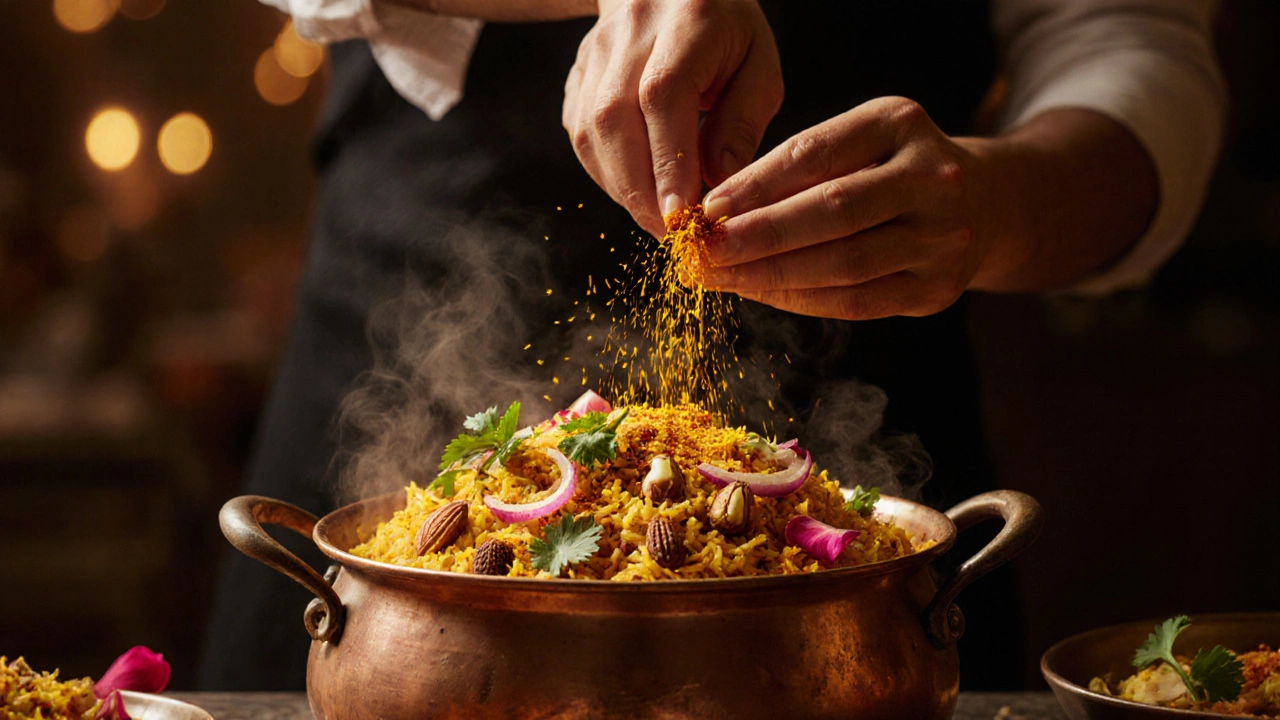
Creative Ways to Make Biryani More Interesting - Tips & Twists
Discover fresh tricks to turn ordinary biryani into a show‑stopper with spices, textures, garnish ideas and regional twists for an unforgettable meal.