Fruit Jam: Easy Ways to Make and Use Fresh Fruit Jam at Home
When you make fruit jam, a sweet, thick spread made by cooking fruit with sugar and sometimes pectin. Also known as fruit preserves, it’s one of the oldest ways to capture summer’s flavor for winter. Unlike store-bought versions packed with corn syrup and artificial flavors, homemade jam lets you taste the real fruit—ripe, juicy, and full of character. You don’t need fancy tools, just a pot, some fruit, sugar, and a little patience.
Jam making, the process of cooking fruit with sugar to create a spreadable preserve is simple, but there are tricks that make all the difference. Not all fruits work the same. Berries like strawberries and raspberries break down easily and set well. Stone fruits like peaches and plums need a bit more time but reward you with deep flavor. Even apples and mangoes, often skipped, make amazing jam when cooked down. The key? Use fruit that’s just ripe—not overripe, not underripe. Overripe fruit turns mushy; underripe fruit lacks sugar and won’t thicken properly. And yes, you can skip pectin. Many traditional Indian households make jam without it, relying on slow cooking and natural pectin in the fruit skins and seeds.
When you jar your jam, you’re not just preserving fruit—you’re preserving time. A jar of mango jam from July can taste like monsoon sunshine in December. That’s why so many Indian homes, especially in rural areas, still make jam every season. It’s not just about saving money. It’s about holding onto flavor. And it’s safer than you think. Jarring jam while hot, as seen in chutney preservation guides, kills bacteria and creates a vacuum seal. No preservatives needed. Just clean jars, boiling water, and a good lid.
Once you’ve made your fruit preserves, a broader term that includes jams, jellies, and marmalades, the uses are endless. Spread it on warm roti. Swirl it into yogurt. Mix it into dal for a sweet-sour twist. Use it as a glaze for paneer or chicken. Even add a spoonful to your morning chai for a fruity kick. It’s not just dessert—it’s flavor insurance.
What you’ll find below are real, tested ways people in India make jam today. No complicated recipes. No rare ingredients. Just fruit, sugar, heat, and jars. Some posts show you how to fix jam that’s too runny. Others tell you which fruits pair best with cardamom or ginger. You’ll learn how to store it without refrigeration, how to tell if it’s gone bad, and why some jams last years while others mold in weeks. This isn’t theory. It’s what your grandmother did—and what smart home cooks still do today.
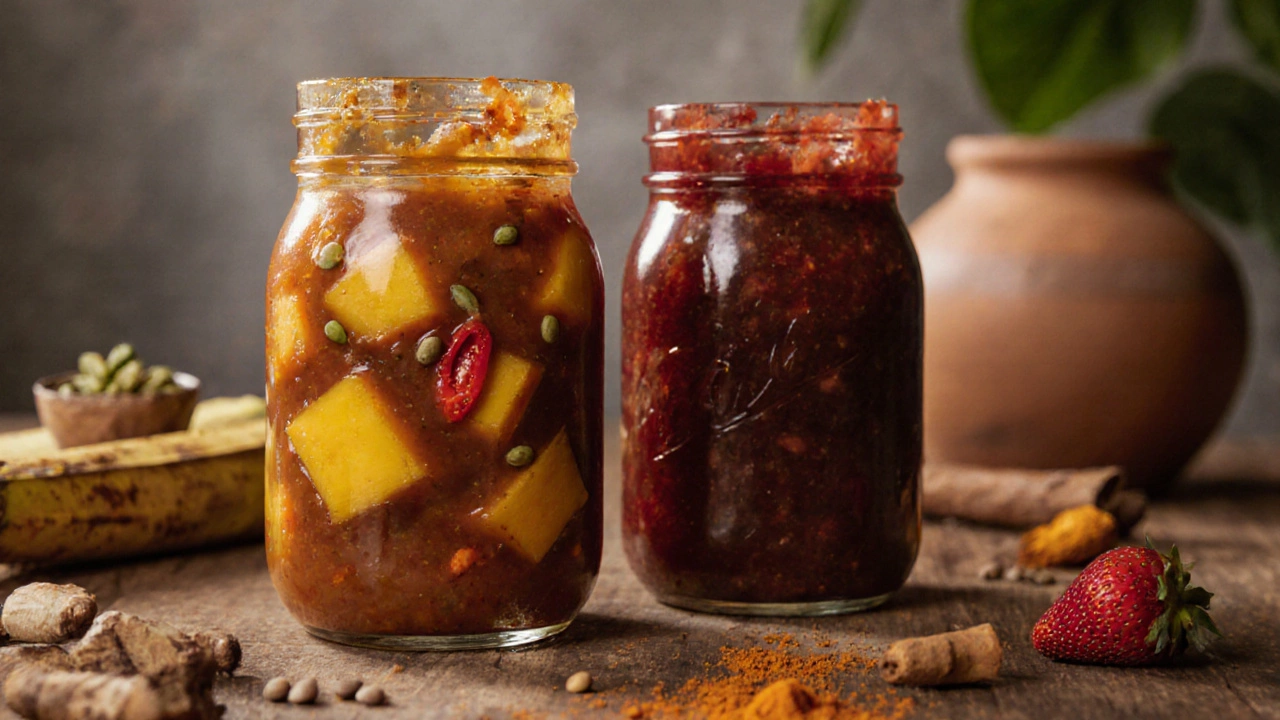
What Is a Chutney vs Jam? Key Differences in Flavor, Texture, and Use
Chutney and jam look similar but are totally different. Chutney is spicy, tangy, and savory-made for pairing. Jam is sweet, smooth, and spreadable-made for toast. Know the difference to cook better.