Indian Bread Storage: How to Keep Roti, Naan, and Chapati Fresh Longer
When you make Indian bread, flatbreads like roti, chapati, and naan that are staples in Indian households. Also known as chapati, it isn’t just about rolling and cooking—it’s about keeping it soft after it cools. Many people toss their leftover bread into the fridge and wonder why it turns hard as a rock by morning. The truth? Indian bread storage isn’t about temperature alone. It’s about moisture, wrapping, and timing.
Think of roti, a soft, unleavened flatbread made from whole wheat flour, water, and salt. It’s delicate. Too much air, and it dries out. Too little wrapping, and it sticks together or gets soggy. Then there’s naan, a slightly leavened, often butter-brushed bread cooked in a tandoor. It’s richer, so it goes stale faster. And chapati, often used interchangeably with roti, but sometimes thinner and cooked on a griddle—same rules apply. The key is sealing in steam right after cooking, using clean cotton cloth or parchment paper, then storing in an airtight container. No plastic bags unless they’re breathable. No fridge unless you’re planning to keep it over three days.
Some folks swear by stacking hot rotis with a damp cloth on top—this traps the steam and keeps them pliable. Others freeze them in single layers, separated by wax paper, and reheat in a dry pan for 20 seconds. Both work. What doesn’t work? Leaving them uncovered on the counter overnight. Or microwaving them without a splash of water. You’ll get rubbery bread, not soft. The posts below cover every trick you need: how to store roti for a week, why some families keep bread in clay pots, how to revive stale naan, and what to do when your chapati sticks together. You’ll find real-life tips from home cooks who’ve cracked the code—no fluff, no theory, just what makes bread stay soft, warm, and ready to eat.
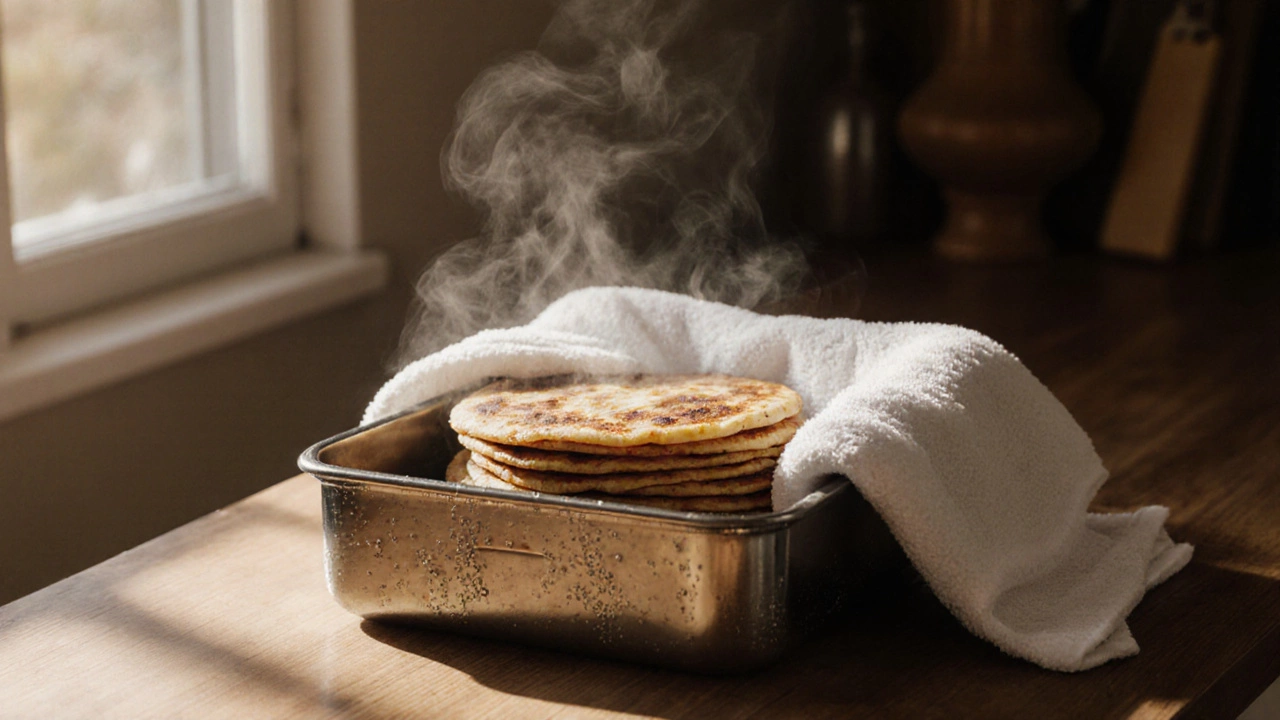
How to Keep Roti Soft for Days: Simple Tricks That Actually Work
Learn how to keep roti soft for days with simple steps: proper dough, perfect cooking, smart wrapping, and smart reheating. No preservatives needed.