Indian Chutney: Types, Uses, and How to Make It Last
When you think of Indian chutney, a vibrant, spicy-sweet condiment made from fresh herbs, fruits, or vegetables, often blended with spices and used to elevate meals. Also known as chatni, it's the secret weapon behind countless Indian dishes, from samosas to biryani. It’s not just a side—it’s the spark that wakes up bland food. Whether it’s mint-cilantro, tamarind-date, or coconut, each type brings its own personality to the plate.
Homemade chutney, made with fresh ingredients like green chilies, ginger, garlic, and raw mango. Also known as fresh chutney, it’s far more than store-bought versions—no preservatives, no sugar overload, just pure flavor. The difference shows in the texture, the punch, and how long it lasts. That’s why so many Indian households make it in batches, especially during monsoon or festival seasons. And if you’ve ever wondered why your chutney turns moldy after a week, it’s not the recipe—it’s how you jar it. Chutney storage, the method of preserving chutney in sterilized jars while still hot to prevent bacterial growth is the real game-changer. Hot jarring isn’t just tradition—it’s science. Cool chutney in a warm jar? That’s how mold sneaks in.
And it’s not just about taste. Anti-inflammatory chutney, a version packed with turmeric, ginger, and garlic to help reduce body inflammation is gaining traction in home kitchens. The same spices that make your dal pop also fight swelling. A simple cilantro-mint chutney with a pinch of turmeric isn’t just tasty—it’s a daily dose of wellness. You don’t need pills when your condiment rack has this kind of power.
What you’ll find below isn’t just a list of recipes. It’s a practical guide to making, storing, and using Indian chutney the way families across India do—no guesswork, no fluff. You’ll learn how to fix bitter chutney, why some types last months while others spoil fast, and which ingredients boost shelf life without vinegar. Whether you’re new to Indian cooking or just tired of wasting chutney, these posts give you the real tricks—tested, proven, and straight from Indian kitchens.
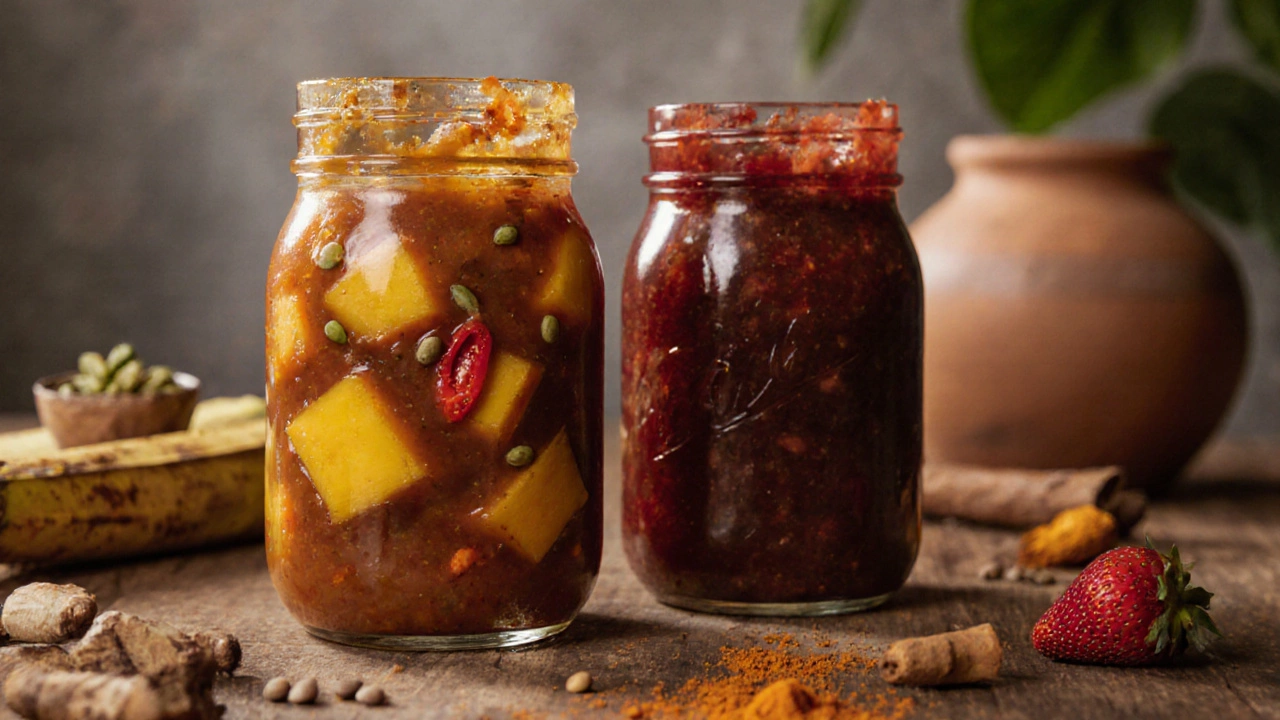
What Is a Chutney vs Jam? Key Differences in Flavor, Texture, and Use
Chutney and jam look similar but are totally different. Chutney is spicy, tangy, and savory-made for pairing. Jam is sweet, smooth, and spreadable-made for toast. Know the difference to cook better.
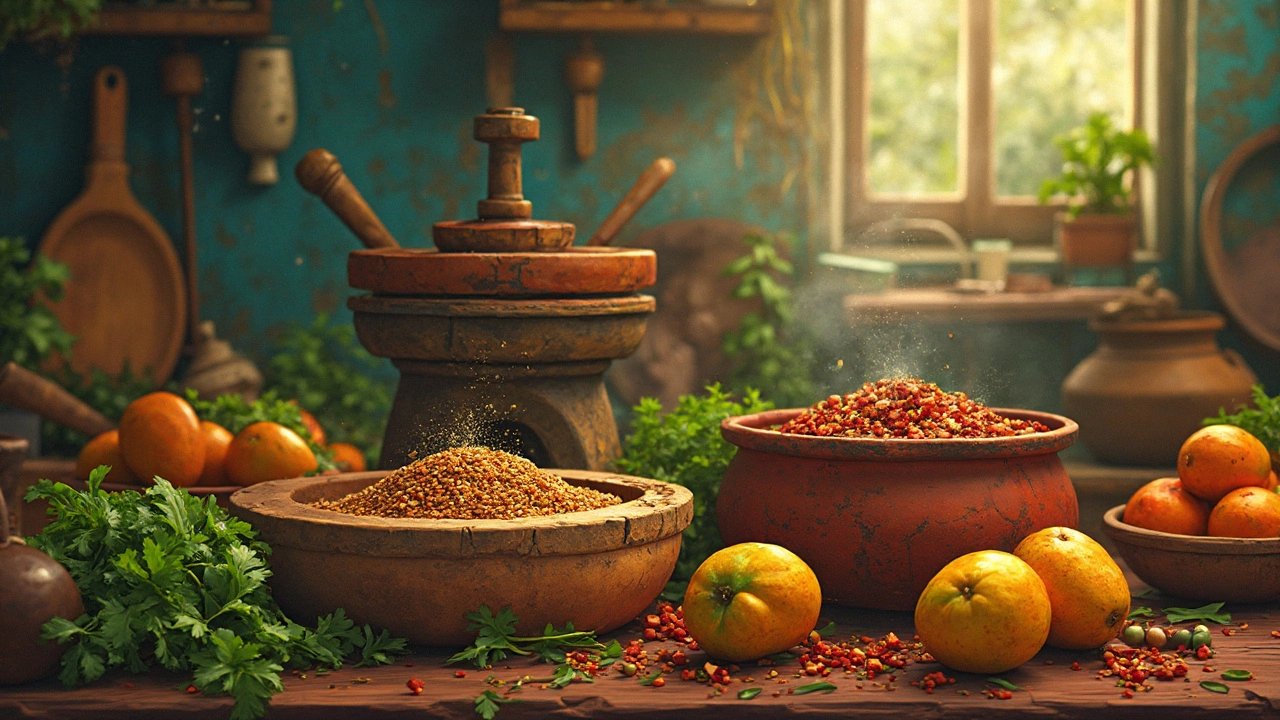
Understanding the Distinct Flavors of Indian and British Chutney
Chutney, a delightful condiment, differs significantly between Indian and British culinary traditions. Indian chutneys are diverse, often spicy, and served fresh, while British chutneys lean towards sweet and tangy, made with cooked fruit and vinegar. This article explores the backgrounds and flavors, offering tips for crafting these unique condiments. Whether you're a fan of heat or mildness, there's a chutney to suit every palate.