Jam vs Chutney: What’s the Real Difference?
When you think of jam, a sweet spread made from fruit, sugar, and sometimes pectin, often eaten on toast. Also known as fruit preserve, it’s a global staple for breakfasts and snacks. But in Indian kitchens, chutney, a spicy, tangy, or sweet condiment made from fresh ingredients like tamarind, mint, coconut, or mango, often used to balance meals. Also known as chatni, it’s not just a side—it’s the flavor engine of the plate. They both come in jars. Both use fruit. Both can be sweet. But that’s where the similarity ends. Jam is about preserving sweetness. Chutney is about preserving flavor—heat, sourness, crunch, and aroma—all in one bite.
Chutney doesn’t need pectin. It doesn’t rely on long cooking to thicken. It uses vinegar, lime, salt, and spices like mustard seed or dried red chilies to preserve itself. That’s why you’ll find jars of green mango chutney sitting on kitchen counters for months, while jam needs the fridge. The science is simple: chutney’s acidity and salt content create a hostile environment for bacteria. Jam? It’s sugar that keeps it safe. And sugar doesn’t do much for digestion or spice lovers. Indian households make chutney in batches—tomato, coconut, coriander, tamarind—and store it for weeks. You won’t find a single Indian meal without it. Even street vendors keep a jar of mint chutney behind the counter, ready to dollop on every samosa.
And here’s the thing most people miss: jam is meant to be eaten alone. Chutney is meant to be eaten with something else. It’s the punch to the bland. The zing to the rice. The fire to the dal. That’s why recipes like chutney and inflammation or chutney jar hot or cold show up in our collection—because chutney isn’t just food. It’s medicine, tradition, and flavor science all wrapped in a small glass jar. Meanwhile, jam? It’s just sweet. And that’s okay. But if you’ve ever wondered why Indian meals feel so alive, it’s not the spices alone. It’s the chutney.
Below, you’ll find real, tested recipes and tips from home cooks who make chutney every week—some with mango, some with coconut, some with tamarind and jaggery. You’ll also see why lemon substitutes matter in paneer, how roti storage affects your meals, and why tandoori chicken tastes better with a side of mint chutney. This isn’t a list of random posts. It’s a map of how flavor works in Indian kitchens. And if you’ve ever tried to make chutney and it turned out too sweet, too sour, or too runny—you’re not alone. We’ve got the fixes.
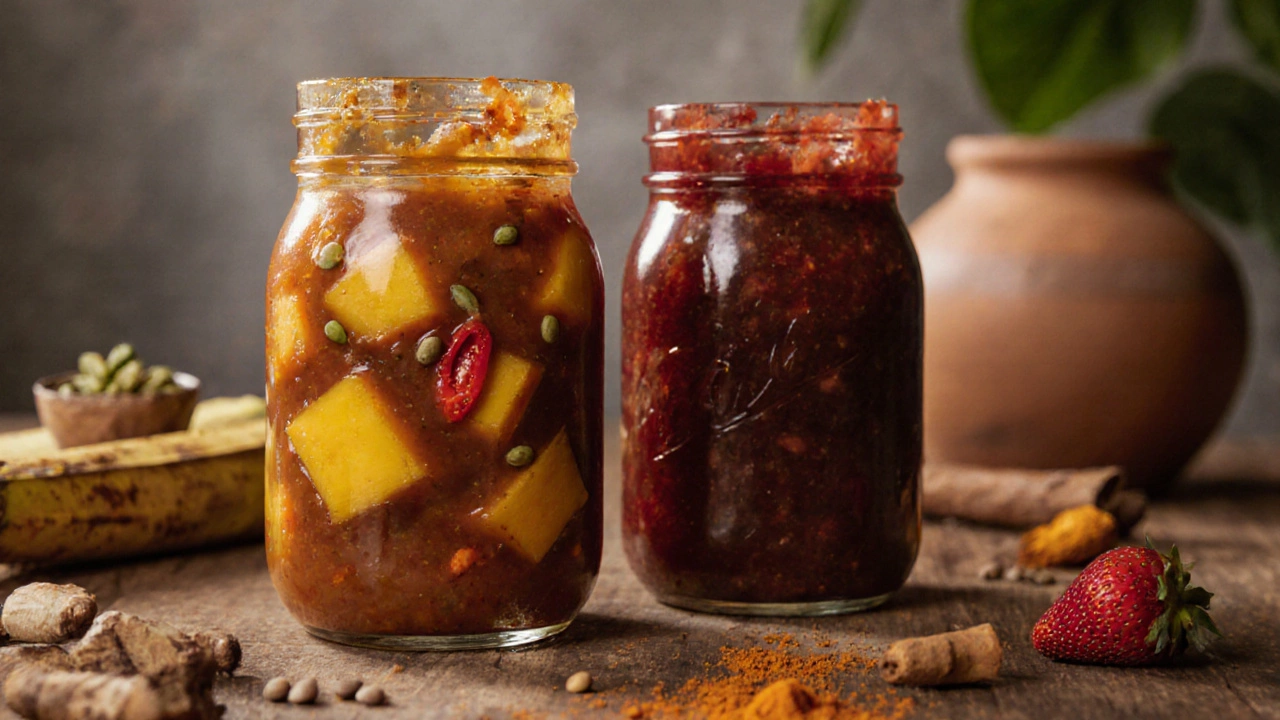
What Is a Chutney vs Jam? Key Differences in Flavor, Texture, and Use
Chutney and jam look similar but are totally different. Chutney is spicy, tangy, and savory-made for pairing. Jam is sweet, smooth, and spreadable-made for toast. Know the difference to cook better.