How to Keep Roti Soft: Tips, Tricks, and Common Mistakes
When you make roti, a soft, round flatbread made from whole wheat flour and water, commonly eaten across India. Also known as chapati, it's meant to be pliable, warm, and easy to tear—yet so many home cooks end up with dry, stiff pieces that crack instead of fold. The problem isn’t the recipe. It’s usually what happens after cooking.
Keeping roti soft isn’t about fancy tools or secret ingredients. It’s about managing heat, moisture, and time. A hot tawa gives you the right char, but if you stack them without trapping steam, they dry out fast. Even if your dough is perfect, skipping the cloth wrap after cooking is the #1 reason roti turns hard. You don’t need a pressure cooker or a microwave trick—just a clean kitchen towel and a little patience. The same goes for storage: leaving roti out on the counter? That’s a fast track to stale bread. Wrap them while they’re still warm, and they’ll stay soft for hours—even the next day.
Some people think adding oil or ghee to the dough makes roti softer. It helps, yes—but only if you’re also handling the cooking and storage right. Others swear by brushing butter on each roti after cooking. That works too, but it’s not the core fix. The real secret? Moisture retention. That’s why restaurants keep stacks of roti under damp cloths. You can do the same at home with a clean cotton cloth and a sealed container. And if you’re making roti ahead of time, reheating it briefly on a dry pan brings back the softness better than any microwave setting.
It’s also worth noting that the type of flour matters. Atta flour with the right protein content gives better elasticity. But even if you’re using store-bought atta, the difference between a soft roti and a hard one often comes down to how you treat it after it leaves the tawa. Don’t let it sit uncovered. Don’t pile them too tight before they cool slightly. And don’t assume that because your roti looked good when it came off the stove, it’ll stay that way.
What you’ll find below are real, tested methods from home cooks who’ve cracked the code. From dough hydration ratios that actually work, to the exact number of rotis you can stack before they stick or dry out, to what to do if you forgot to wrap them—every tip here is practical, no fluff. These aren’t theories. They’re what works in kitchens across India, day after day.
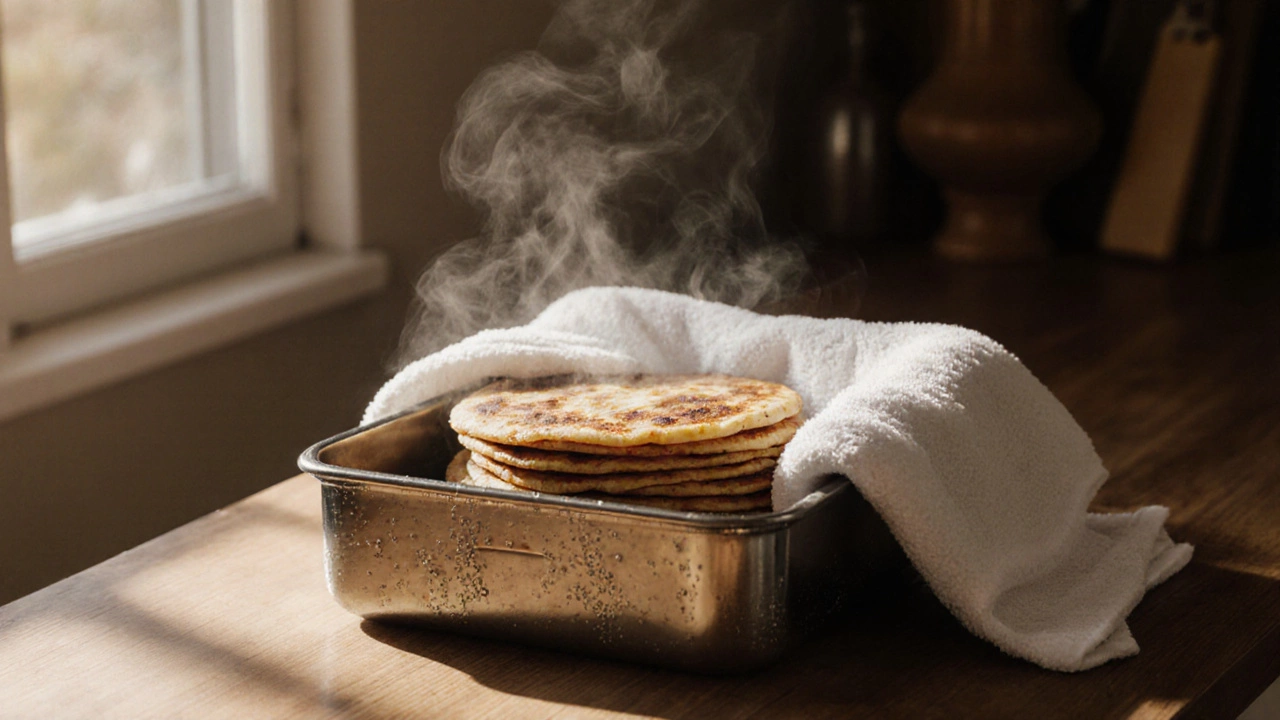
How to Keep Roti Soft for Days: Simple Tricks That Actually Work
Learn how to keep roti soft for days with simple steps: proper dough, perfect cooking, smart wrapping, and smart reheating. No preservatives needed.