Naan: The Soft, Fluffy Indian Bread Everyone Loves
When you think of Indian bread, naan, a leavened flatbread baked in a tandoor oven, known for its soft interior and charred spots. Also known as Indian flatbread, it’s the kind of bread that disappears fast—whether it’s smothered in butter, dipped in curry, or just eaten plain with a sprinkle of garlic. Unlike roti or chapati, naan isn’t cooked on a griddle. It’s slapped onto the hot walls of a clay oven called a tandoor, a cylindrical clay oven used in South Asian cooking to bake bread and roast meats at high temperatures. That’s what gives naan its signature char, puff, and slight smokiness. You won’t find that in a regular skillet.
What makes naan different isn’t just the oven—it’s the dough. Most recipes use yogurt, milk, or sometimes even eggs to make it tender. That’s why it’s softer than roti, which is just flour, water, and salt. The yeast or baking powder helps it rise, creating those air pockets you love. And while traditional naan is baked in a tandoor, you can make it at home on a stovetop, under a broiler, or even on a pizza stone. It’s not magic—it’s just technique. Many Indian households keep naan on the table for every meal, whether it’s a simple dal or a rich butter chicken. It’s not just a side. It’s the tool you use to scoop, soak, and savor.
And if you’ve ever wondered why naan is so often paired with tandoori chicken or paneer dishes, it’s because it’s the perfect vehicle. Its texture holds up to thick sauces without falling apart, yet it’s delicate enough to tear easily. You don’t need a fork. Just grab a piece, wrap it around a bite, and eat. It’s practical. It’s satisfying. It’s part of the rhythm of Indian meals.
Below, you’ll find posts that dig into the details: how to make naan without a tandoor, what happens if you skip the yogurt, why some versions are stuffed with garlic or cheese, and how it compares to other Indian breads like roti or paratha. Whether you’re trying to recreate restaurant-style naan at home or just want to understand why it tastes so different from regular bread, you’ll find real, tested tips here—no fluff, no guesswork.
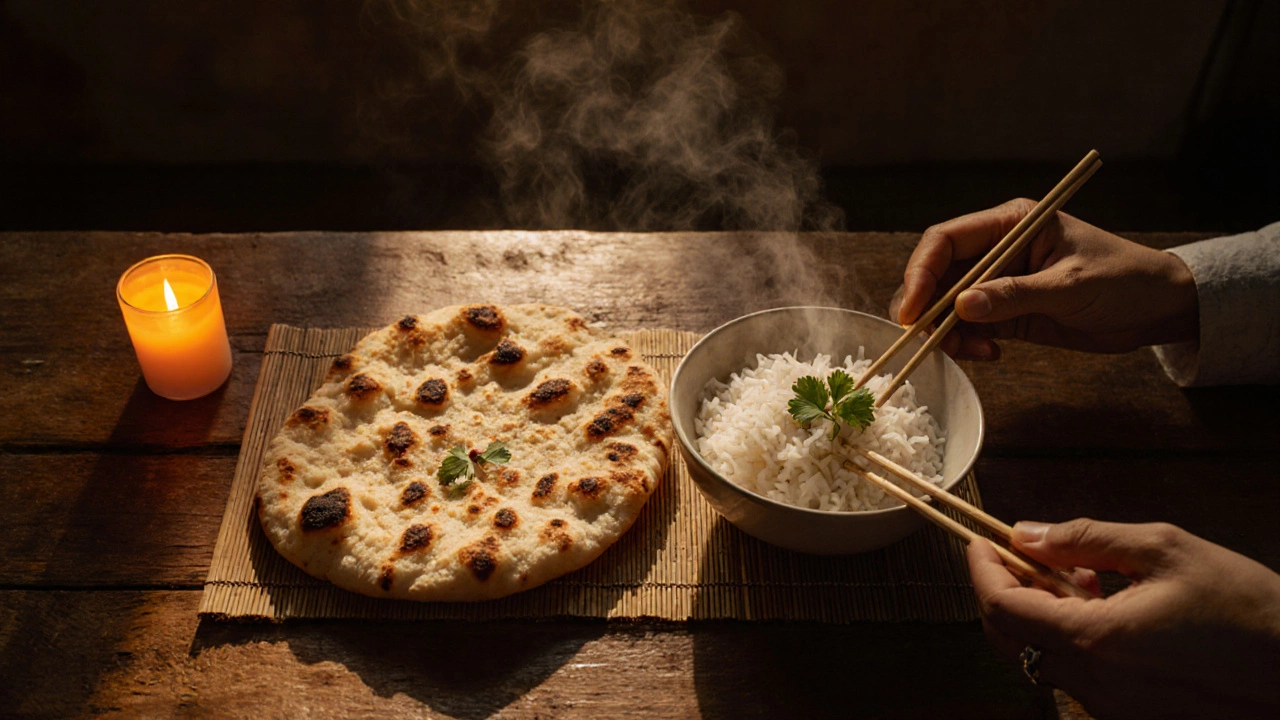
Naan vs Rice: Which Carbohydrate Does Your Body Prefer?
Explore the nutrition differences between naan and rice, covering calories, glycemic impact, protein, fiber, gluten concerns and practical tips for choosing the right carb for your health goals.
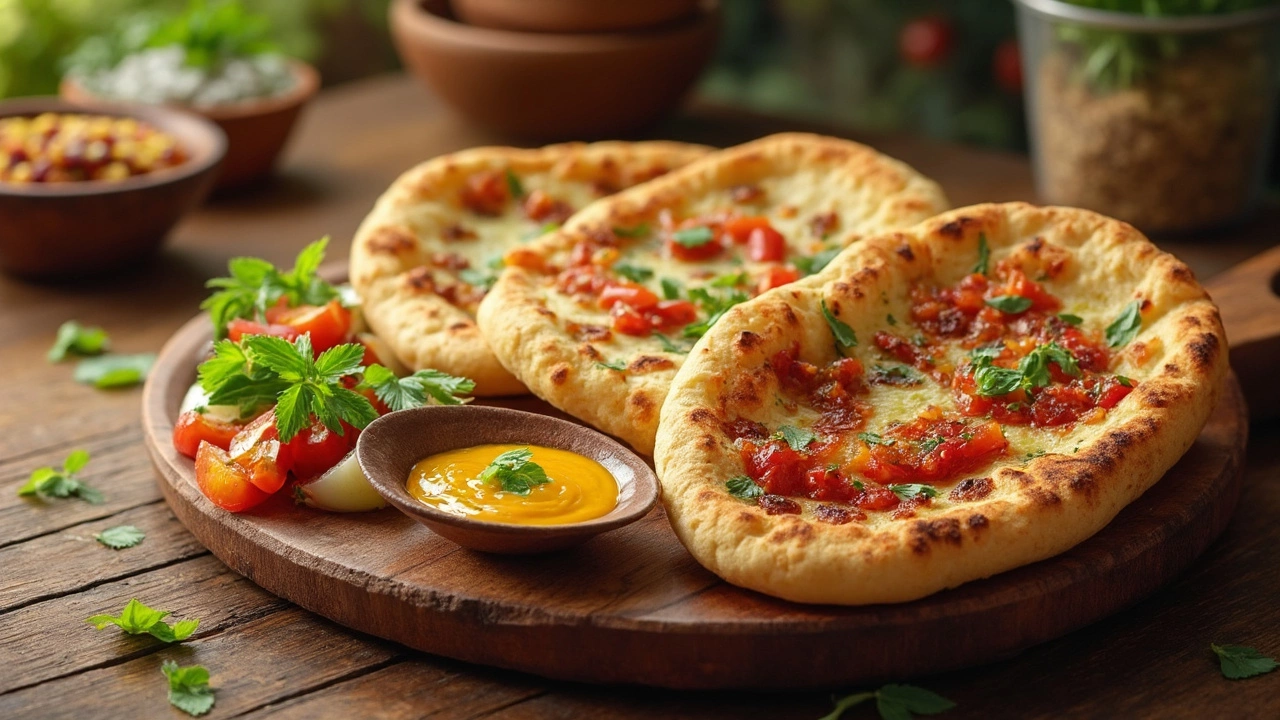
Is Naan a Healthy Choice for Weight Loss?
Exploring the role of naan in a weight loss journey, this article delves into its nutritional value, offering insights and tips on how to include naan in a balanced diet. Find out if naan can be your go-to snack while trying to shed some pounds and discover healthier alternatives to traditional naan.

Discovering the Downside: The Disadvantages of Naan
Naan, a popular Indian bread, is a staple in many cuisines, but it comes with certain disadvantages that might surprise you. Despite its delightful taste and texture, naan can be high in calories and often lacks in nutritional value. Its preparation methods and ingredients might not always align with dietary restrictions or health-conscious cooking. This article delves into these drawbacks and offers practical tips for more nutritious alternatives.