Roti Cooking Tips: How to Make Soft, Round Chapatis Every Time
When you’re making roti, a simple, unleavened Indian flatbread made from whole wheat flour and water. Also known as chapati, it’s the backbone of countless Indian meals—from dal and curry to paneer and pickles. It’s not just bread. It’s a tool for eating, a vessel for flavor, and a daily ritual in millions of homes. But if your roti comes out hard, lopsided, or stuck to the pan, you’re not alone. The problem isn’t your skill—it’s missing the small, crucial details most recipes leave out.
Getting perfect roti isn’t about fancy equipment or hours of practice. It’s about three things: dough texture, rolling pressure, and heat control. The dough needs to be soft, not stiff—like your earlobe. If it’s too dry, it cracks. Too wet, it sticks. Add water slowly, a tablespoon at a time. Let it rest for at least 20 minutes. That rest lets the gluten relax, so the roti puffs up instead of turning into a tough disc. And don’t skip the flour dusting on the rolling surface. A light coat prevents sticking without drying out the dough. Use a wooden rolling pin, not a glass bottle. It gives you better control and even pressure.
Heat matters more than you think. Your tawa or skillet should be medium-hot—not smoking, not cold. Test it with a drop of water. If it sizzles and evaporates in 2 seconds, you’re good. Press the roti lightly with your fingers as it cooks. That’s not just for fun—it helps the steam build inside, making it puff like a balloon. Flip it once, and if it doesn’t puff, press gently with a cloth. Don’t overcook it. A few brown spots? Perfect. Blackened edges? You went too far. And here’s the secret most won’t tell you: stack your cooked rotis in a cloth-lined container right after cooking. The trapped steam keeps them soft for hours. No plastic wrap. No microwave. Just cotton and patience.
These aren’t tricks from a chef’s cookbook. They’re the habits of Indian moms and grandmas who’ve made roti every day for decades. You’ll find these exact methods in the posts below—how to roll a perfectly round roti, how to store them for days without drying out, why some flours work better than others, and what to do when your roti refuses to puff. Whether you’re new to Indian cooking or just tired of rubbery chapatis, the tips here will change how you eat.
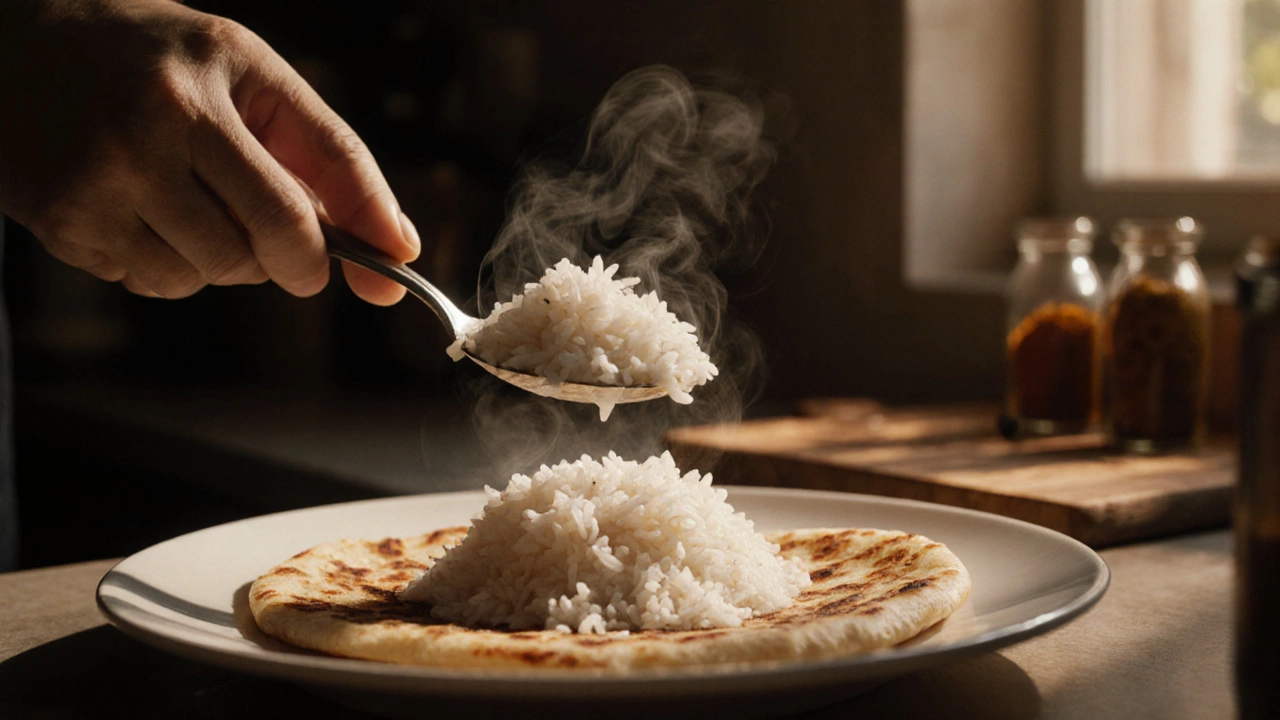
Why Put Rice Over Roti? The Surprising Reason & Handy Tips
Discover why many Indian homes serve rice over roti, the benefits, health tips, and step‑by‑step instructions for perfect layering.