Roti Storage: How to Keep Roti Fresh Longer and Avoid Waste
When you make a batch of roti, a soft, flatbread staple in Indian households made from whole wheat flour and water. Also known as chapati, it's meant to be eaten fresh—but life doesn’t always wait. Whether you’re meal prepping, leftovers are piling up, or you just made too much, knowing how to store roti properly keeps it from turning hard, stale, or moldy.
Storing roti isn’t just about tossing it in a plastic bag. The real issue is moisture control. Too much and it gets soggy or grows mold. Too little and it turns into a brick. The key is balancing air, temperature, and time. Most Indian kitchens use a clay pot, a traditional container that naturally regulates humidity and keeps roti soft for up to two days. But if you don’t have one, a sealed container with a clean kitchen towel underneath and on top works just as well. The towel soaks up excess steam without trapping it, which is why many families swear by this method.
For longer storage, freezing is your best friend. Wrap each roti individually in parchment paper, then stack them in a ziplock bag. Freeze them flat so they don’t stick together. When you need one, pop it straight into a dry pan—no thawing needed. In under a minute, it’ll be warm, soft, and taste like it was made that morning. This trick is used by busy working parents, students, and even professional chefs who batch-cook for the week. You can also store cooked roti in the fridge for up to 3 days, but only if you layer them with paper towels and seal them tight. Skip the fridge if you plan to eat them within 24 hours—it can dry them out faster than room temperature.
And don’t forget the enemy: moisture buildup. Never store hot roti in an airtight container right after cooking. Let them cool for 10–15 minutes first. That little pause lets steam escape naturally instead of turning your roti into a damp sponge. Also, avoid storing roti next to strong-smelling foods like onions or pickles. Bread absorbs odors like a sponge, and no one wants their roti tasting like chutney.
Some people try storing roti in the microwave with a cup of water—don’t. It might seem like a quick fix, but it makes the surface rubbery and uneven. Others wrap them in foil—fine for short-term, but it traps moisture and ruins texture over time. The truth is, simple works best. Cloth, paper, cool air, and a little patience beat fancy gadgets every time.
What you’ll find below are real, tested methods from home cooks across India—some passed down for generations, others learned the hard way after a ruined batch of roti. You’ll learn how to fix dry roti, how long they last in different conditions, and what not to do (yes, even the ‘microwave trick’ is covered). Whether you’re new to cooking Indian bread or you’ve been making roti for years, there’s something here that’ll save you time, money, and frustration.
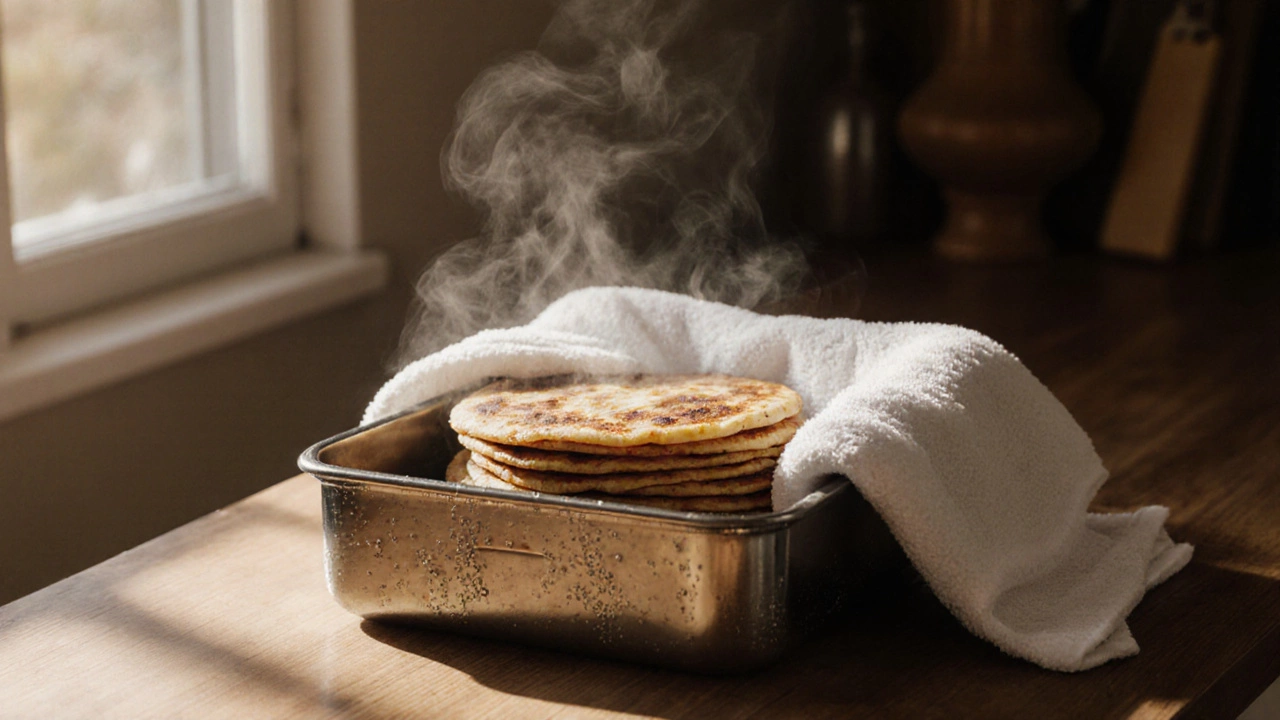
How to Keep Roti Soft for Days: Simple Tricks That Actually Work
Learn how to keep roti soft for days with simple steps: proper dough, perfect cooking, smart wrapping, and smart reheating. No preservatives needed.