Safe Chicken Cooking: How to Cook Chicken Without Risk in Indian Kitchens
When you cook safe chicken cooking, the practice of preparing chicken in a way that kills harmful bacteria and prevents foodborne illness. Also known as chicken food safety, it’s not just about heat—it’s about timing, handling, and cleanliness every step of the way. In Indian homes, chicken is often marinated overnight, grilled in tandoors, or slow-cooked in curries. But if you skip the basics, even the tastiest dish can make you sick. The problem isn’t the spice—it’s the slip-up.
Raw chicken, a common ingredient in Indian non-vegetarian meals carries salmonella and campylobacter. These germs don’t disappear just because you added garlic, ginger, or yogurt. They die at 74°C (165°F)—not when the chicken looks done, not when the juices run clear, but when a thermometer says so. Most people guess. That’s risky. A $10 digital thermometer beats instinct every time. And don’t wash chicken before cooking—it spreads bacteria around your sink. Just pat it dry, season it, and get it into the pan or oven.
Cross-contamination, when raw chicken touches other foods, surfaces, or tools is the silent killer in Indian kitchens. You chop onions on the same board you used for raw chicken? You use the same spoon to stir the curry after dipping it in raw marinade? That’s how food poisoning starts. Keep separate cutting boards—one for meat, one for veggies. Wash your hands after touching raw chicken. And never reuse a marinade unless you boil it first. These aren’t fancy rules—they’re survival steps.
Indian recipes often call for slow cooking or high-heat grilling, which helps—but only if you start right. Tandoori chicken? Great. But if the chicken sat out for hours before going into the oven, the marinade won’t save you. Chicken tikka? Delicious. But if you left it in the fridge for five days, it’s not safe anymore. Freshness matters. Store raw chicken below 4°C (40°F) and use it within two days. Freeze it if you’re not cooking it soon. And when you reheat leftovers, make sure the center hits 74°C too.
Street food vendors in India serve chicken dishes daily—some safely, some not. That’s why knowing chicken hygiene, the daily habits that prevent contamination from farm to fork helps you choose wisely. Look for vendors who cook chicken fresh, not pre-cooked and reheated. Watch if they use gloves or tongs. If the chicken looks gray or smells off, walk away. You don’t need to avoid street food—you just need to know what to watch for.
What you’ll find below are real recipes and tips from Indian kitchens that get chicken right—not just tasty, but safe. From perfect tandoori chicken to simple curries, every post here focuses on how to handle chicken so you never have to wonder if it’s safe. No guesswork. No myths. Just clear, practical steps that work in a busy Indian home.
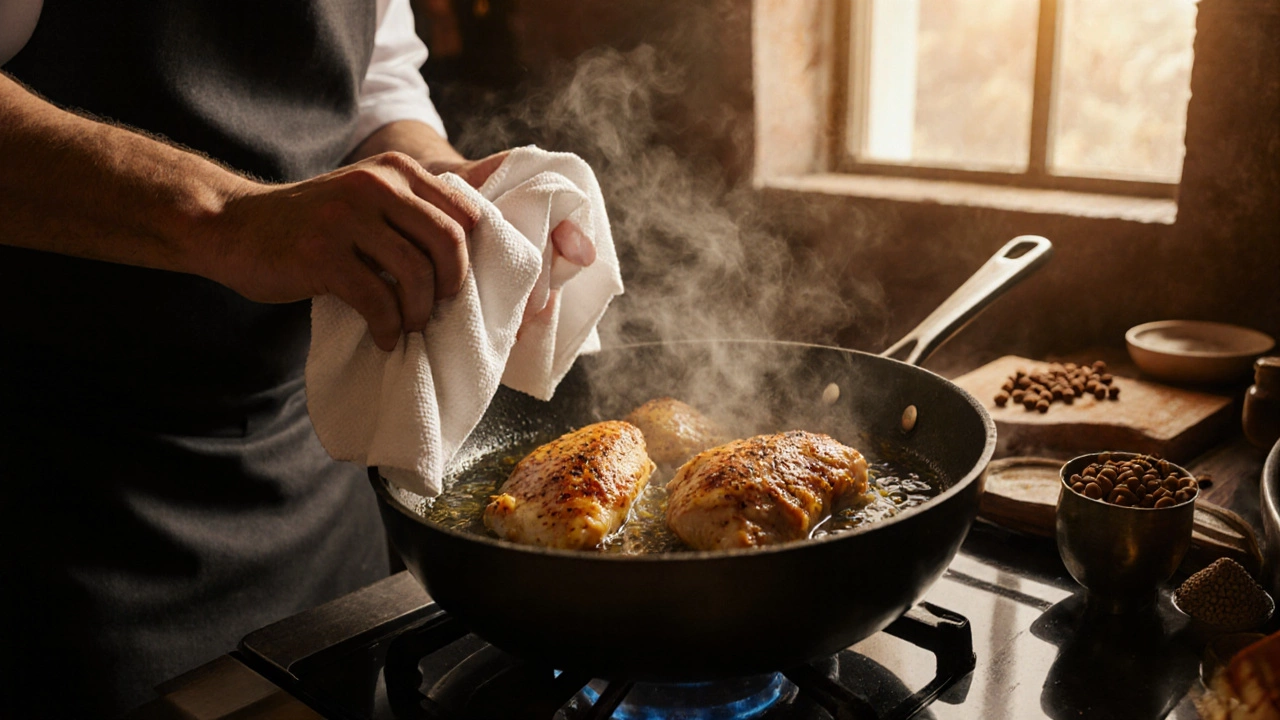
Can You Put Raw Chicken Into a Curry? The Safe, Simple Way to Cook It Right
Yes, you can put raw chicken into a curry-but only if you sear it first and cook it to 74°C. Learn the right way to add raw chicken for tender, flavorful results every time.