Soft Paneer: How to Make It, Use It, and Fix Common Mistakes
When you think of soft paneer, a fresh, unaged Indian cheese made by curdling milk with acid or rennet. Also known as Indian cottage cheese, it's the star of dishes like palak paneer, paneer butter masala, and even grilled street snacks. But most people end up with dry, crumbly, or rubbery paneer—not the pillowy, melt-in-your-mouth kind you get at a good restaurant. The difference isn’t magic. It’s technique.
Getting soft paneer starts with the milk. Full-fat, whole milk gives you the richest texture. Skim or low-fat milk? You’ll get chalky results. Then there’s the curdling agent. While lemon juice is common, vinegar or citric acid work just as well—and sometimes better. The key isn’t just what you use, but how you handle the curds after they form. Drain them too fast, press too hard, or skip the soaking step, and you’ll end up with something that snaps instead of melts.
After curdling, letting the paneer rest in warm water for 20 minutes makes a huge difference. It softens the texture, removes excess acidity, and helps it hold shape in gravy without falling apart. And don’t skip the weight when pressing. A heavy plate with a few cans on top for 30 minutes is all you need. Too little pressure? It stays too soft and crumbles. Too much? It turns into a brick.
Once you’ve nailed the base, soft paneer becomes your canvas. Fry it lightly for crispy edges, soak it in spiced milk for extra flavor, or cube it and toss it into a simmering curry just before serving. It’s not just for vegetarian dishes either. Pair it with spicy chutneys, use it in wraps, or even blend it into smoothies for extra protein. The most common mistake? Overcooking. Paneer doesn’t need to boil—it just needs to warm through. Keep it gentle, and it stays tender.
You’ll find plenty of recipes here that show you how to make paneer from scratch, how to fix it when it goes wrong, and what to swap in if you’re out of lemon. Some posts dive into the science behind why yogurt-based curdling gives a different texture than vinegar. Others show you how to store it so it stays fresh for days without drying out. There are even tips on using leftover whey, which most people throw away.
Whether you’re new to cooking Indian food or just tired of tough paneer, this collection gives you the real tricks—not the ones from fancy chefs, but the ones used in homes across India. No fluff. No jargon. Just clear steps that work, whether you’re making paneer for the first time or trying to fix your tenth batch.
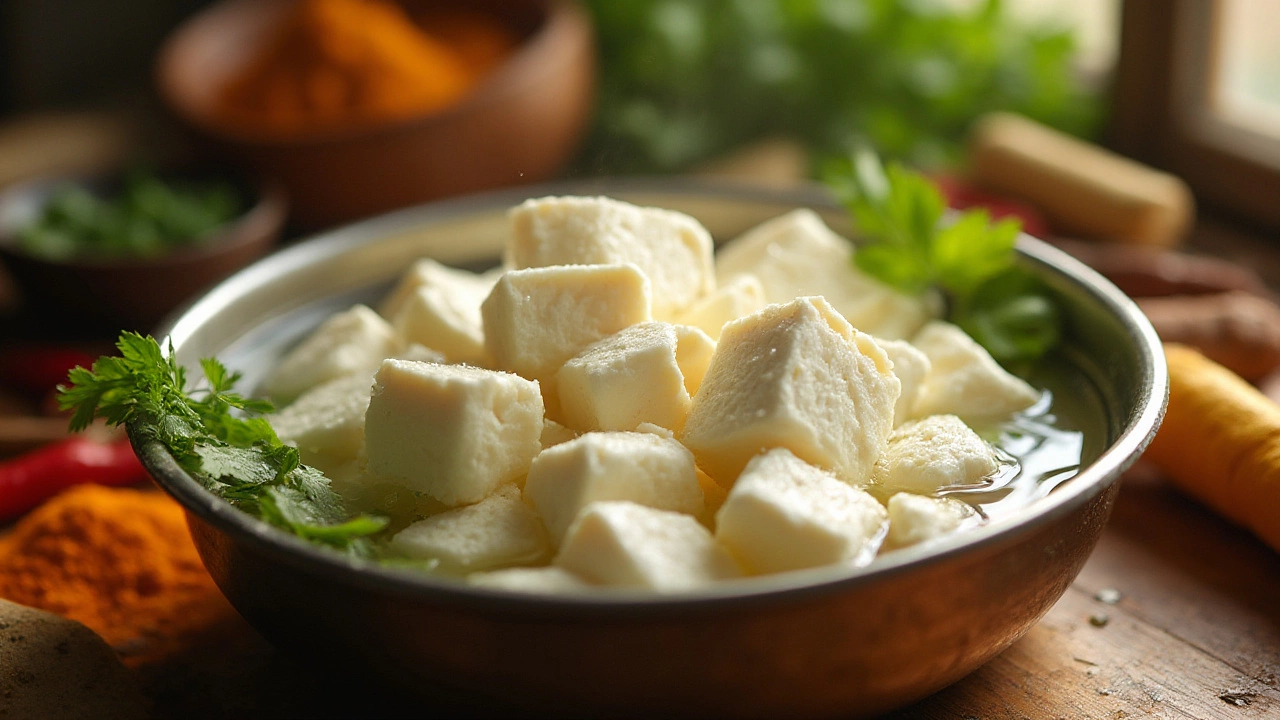
Why Soak Paneer in Water? Secrets to Soft and Tasty Paneer Dishes
Ever wondered why people soak paneer in water before cooking? Discover the real reasons and pro tips for getting the softest, tastiest paneer in your dishes.