Tandoori vs Tikka: What’s the Real Difference?
When you think of tandoori, a style of Indian cooking where meat is marinated in yogurt and spices, then cooked in a clay oven called a tandoor. Also known as tandoori-style chicken, it’s the dish that turns plain chicken into something smoky, juicy, and deeply spiced. Many people assume tikka, a method where bite-sized pieces of meat are marinated and grilled, often on skewers. Also known as chicken tikka, it’s the same base technique used in the world-famous Chicken Tikka Masala. But here’s the thing: they’re not interchangeable. Tandoori is about the whole piece—usually a drumstick or breast—slow-roasted in the tandoor until the outside chars slightly and the inside stays tender. Tikka is all about cubes. Smaller. Faster. Often served as an appetizer or tossed into a curry.
The difference isn’t just size. Tandoori marinade leans heavy on yogurt, lemon juice, garlic, ginger, and a blend of red spices like Kashmiri chili and paprika. It’s meant to coat the meat evenly and penetrate deep. Tikka uses a similar base, but it’s usually thicker, with more oil and sometimes cream or cashew paste to cling to the small pieces. That’s why tikka often looks glossier and richer. Tandoori is more about the smoky char from the oven. Tikka is about the spice clinging to every bite.
You’ll find both on menus across India, but they serve different roles. Tandoori chicken is a full meal—often paired with onions, lemon, and mint chutney. Tikka is the starter, the snack, the party food. One is slow-cooked in a clay oven; the other can be grilled on a stovetop or even cooked in an air fryer. The tandoor oven, a traditional Indian clay oven that reaches extremely high temperatures, used for baking bread and roasting meats. Also known as tandoor, it’s the secret behind that signature char isn’t just a tool—it’s the soul of tandoori. Without it, you’re just grilling. With it, you’re making history.
And here’s what most recipes get wrong: they treat them as the same thing. But if you’ve ever had real tandoori chicken from a roadside dhaba in Delhi, you know the difference. The skin is crisp, the meat underneath is tender, and the color is deep red—not orange. Tikka? It’s softer, saucier, and often eaten with naan or in a gravy. One is bold and rustic. The other is refined and adaptable.
Both are rooted in North Indian cooking, but they evolved differently. Tandoori comes from Punjab, where the tandoor was used daily for bread and meat. Tikka grew out of the need for quick, portable snacks—perfect for street vendors and travelers. That’s why you’ll find tandoori chicken in homes and restaurants, but tikka is everywhere—from airport food stalls to wedding buffets.
So when you’re picking a recipe, ask yourself: Do you want the smoky, whole-meat experience? Go tandoori. Do you want quick, flavorful bites you can toss into a salad or wrap? Go tikka. Neither is better. They’re just different sides of the same spicy, delicious coin.
Below, you’ll find real recipes, tips, and fixes from home cooks who’ve tried both—and learned what actually works. No fluff. No confusion. Just clear, tested ways to get both right in your kitchen.
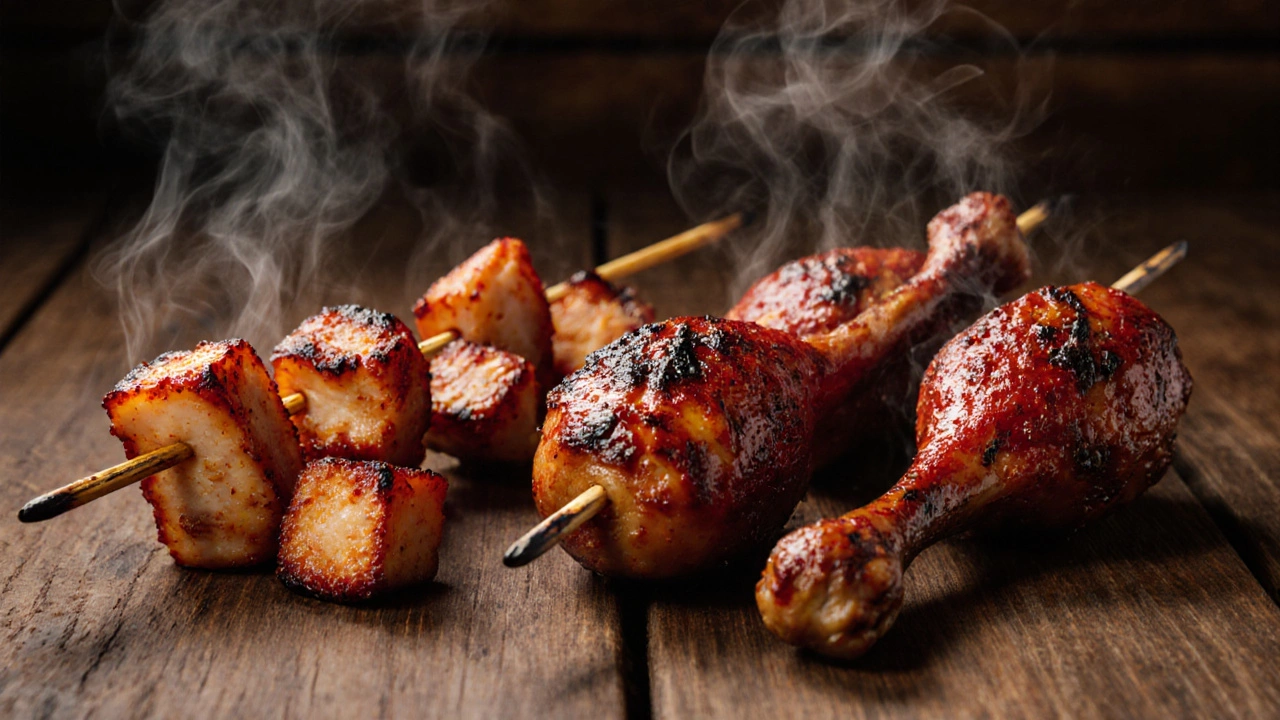
What's the Difference Between Chicken Tikka and Tandoori Chicken?
Chicken tikka and tandoori chicken look similar but differ in cut, marinade, color, and cooking method. Learn how to tell them apart and make each one at home.