Biryani Raisin Calculator
Calculate Your Biryani Raisins
Follow traditional biryani preparation with the right raisin quantity for perfect flavor balance
Recommended Raisins
For
Dark seedless raisins
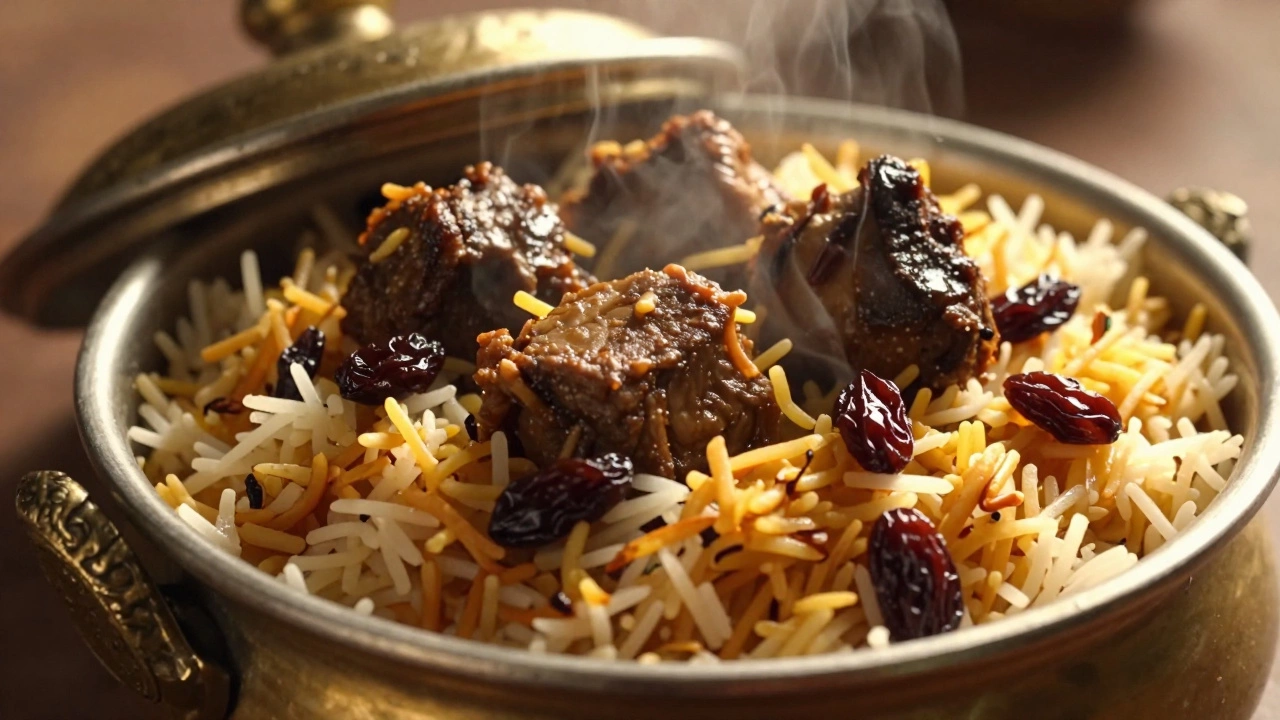
When you take a bite of rich, fragrant biryani, you might notice something sweet hiding among the spices and rice. It’s not sugar. It’s not candy. It’s a small, dark fruit that’s been soaked, plumped, and tucked into the layers - the unsung hero of this iconic dish. The fruit used in biryani is the raisin. Not just any raisin, but the plump, dark seedless kind, often called kishmish in Indian kitchens. It’s not there for sweetness alone. It’s there to balance heat, deepen flavor, and tie the whole dish together.
Why Raisins in Biryani? It’s Not Just Sweetness
Think of biryani as a flavor puzzle. On one side, you’ve got fiery chilies, earthy cumin, and sharp garlic. On the other, you’ve got saffron, cardamom, and rose water - delicate, floral notes. Where do raisins fit in? They bridge the gap. They soften the burn of chili, mute the raw bite of onion, and add a quiet, caramel-like depth that makes the spices feel more rounded.
It’s not about making biryani taste like dessert. It’s about balance. A pinch of sugar can do that, but sugar doesn’t carry the same texture or complexity. Raisins release their natural sugars slowly as they cook. They soften, burst slightly, and leave behind a sticky, fruity residue that clings to the rice grains. That’s why even the most meat-heavy Hyderabadi biryani always has a handful of raisins tucked in the bottom layer.
Not All Raisins Are Created Equal
If you’ve ever tried biryani with golden raisins or even dried cranberries, you’ve noticed something off. That’s because traditional biryani calls for specific types. In India, cooks use dark, small, seedless raisins - the kind you find in bulk at Indian grocery stores. They’re less sweet than American golden raisins and have a deeper, almost smoky flavor from sun-drying.
Some regions prefer soaked raisins. Others fry them lightly in ghee before adding. In Lucknow-style biryani, raisins are often soaked in warm milk for 20 minutes, then drained. This plumps them up and gives them a creamier texture that blends seamlessly into the rice. In contrast, in Kolkata biryani, raisins are sometimes fried with caramelized onions to add a touch of crunch and contrast.
Don’t use raisins that are hard, shriveled, or overly sticky. They won’t soften properly during cooking. Look for plump, soft, dark raisins with a slight sheen. If they feel dry to the touch, they’re past their prime.
How Much Should You Use?
There’s no fixed rule, but most home cooks use between 1 to 2 tablespoons of raisins per 2 cups of rice. That’s about 20-40 raisins. Too few, and you won’t notice the difference. Too many, and it starts tasting like a fruit salad with rice.
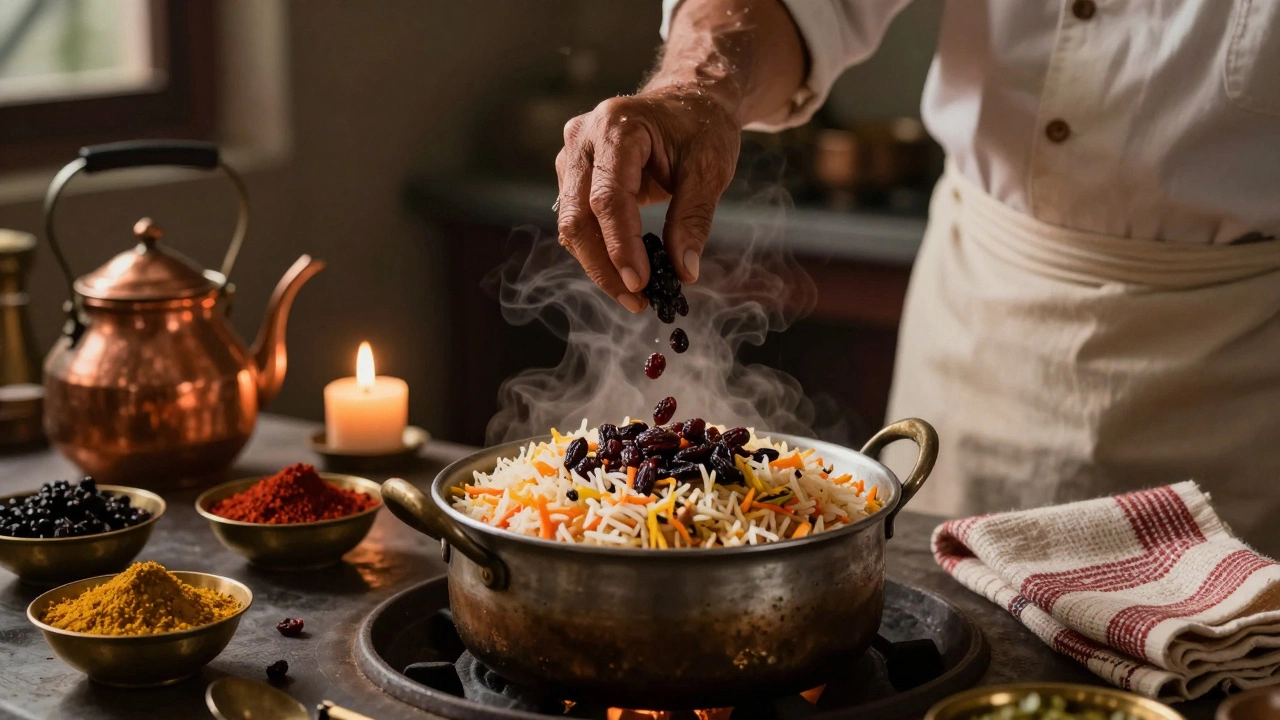
The key is distribution. Don’t dump them all on top. Layer them in the middle - between the rice and the meat or vegetables. This lets them steam slowly and release flavor evenly. Some cooks even press a few into the top layer just before sealing the pot, so they caramelize slightly and give a little burst when you bite into them.
Other Fruits Sometimes Used - But Not in Traditional Biryani
You might see recipes online that add dried apricots, dates, or even apple chunks. These aren’t wrong - they’re just not traditional. In modern fusion versions, especially outside India, cooks experiment. But if you’re aiming for authenticity, stick to raisins.
Even in regional variations, the fruit stays the same. In Sindhi biryani, they use raisins and fried onions. In Kashmiri biryani, it’s raisins and saffron. In Tamil Nadu, it’s raisins and fried cashews. The pattern holds. Raisins are the constant.
What Happens If You Skip Them?
Try making biryani without raisins once. You’ll notice the dish feels flat. The heat doesn’t mellow. The spices don’t sing as clearly. The rice lacks that subtle, lingering sweetness that makes you reach for another bite.
It’s like making pasta without garlic or curry without cumin. You can still eat it. But it’s missing something essential. Raisins aren’t decorative. They’re functional. They’re part of the flavor architecture.
Pro Tip: Soak Them, Don’t Just Add
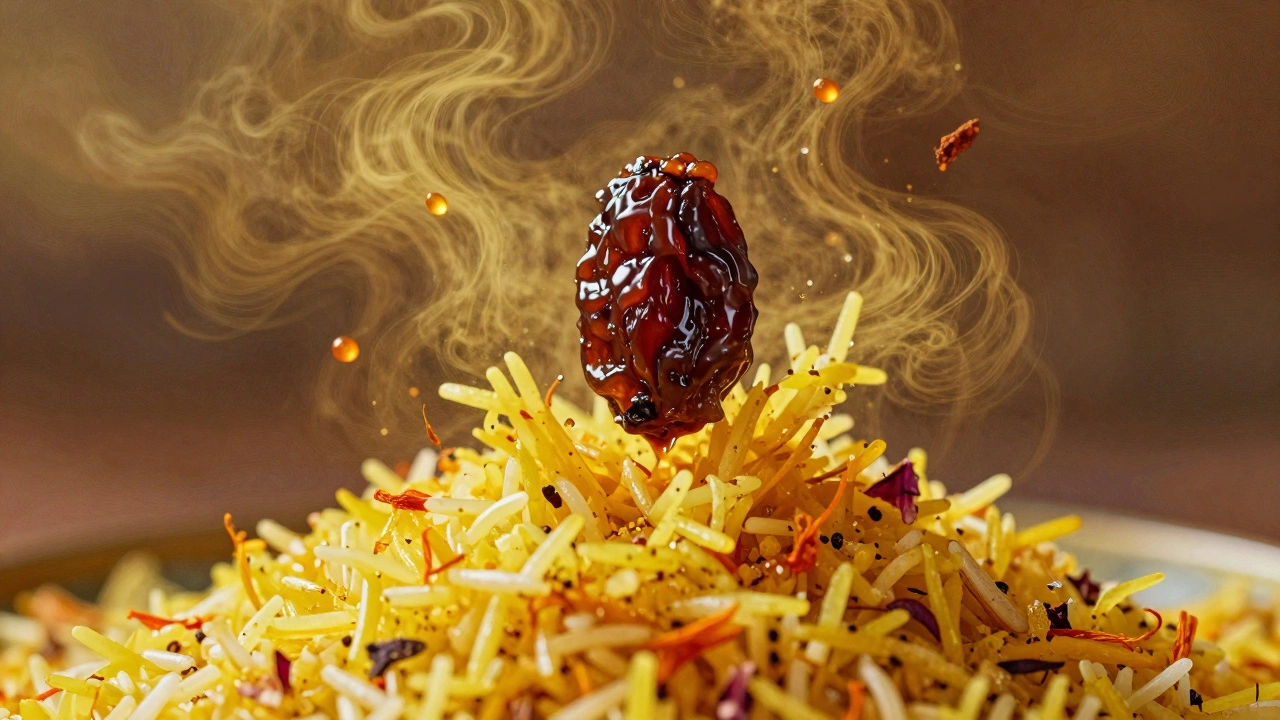
Most professional cooks soak raisins in warm water or milk for 15-20 minutes before adding them. This prevents them from burning during the dum cooking process. If you add dry raisins directly to a hot pot, they can turn bitter or hard instead of soft and sweet.
After soaking, drain them well. Pat them dry with a paper towel if needed. Then toss them into the pot with the meat or rice. If you’re frying onions, drop them in the ghee for 30 seconds before the rest of the ingredients - that’s when they get their best flavor.
Where to Buy the Right Raisins
If you’re outside India, look for Iranian or Turkish raisins at Middle Eastern or South Asian markets. They’re darker, smaller, and less processed than the ones in regular supermarkets. Brands like Roshan or Al Wadi are common in Indian stores. Avoid raisins with added oil or sulfites - they can change the flavor.
Online, search for "seedless dark raisins for biryani" or "kishmish for Indian cooking." Avoid "golden raisins" unless the recipe specifically calls for them - they’re too sweet and lack depth.
Real-Life Example: My Biryani Experiment
Last monsoon, I made biryani for friends using golden raisins because I couldn’t find dark ones. The dish tasted fine - sweet, even. But one guest said, "It’s missing that little something." I didn’t get it until I made it again with proper kishmish. The second version had warmth, complexity, a quiet sweetness that lingered after the spice faded. That’s the difference.
It’s not about being fancy. It’s about getting the details right. And in biryani, the fruit isn’t just an ingredient. It’s the quiet note that makes the whole song work.
Is it okay to skip raisins in biryani?
You can skip them, but the dish will lose its balance. Raisins soften the heat, deepen the flavor, and add texture. Without them, biryani tastes one-dimensional - spicy or aromatic, but not layered. They’re not optional in traditional recipes; they’re essential.
Can I use dried cranberries or apricots instead?
You can, but it won’t be traditional. Dried cranberries are too tart, and apricots are too fibrous. They change the flavor profile and texture. In fusion or modern recipes, they might work, but for authentic biryani, stick to dark seedless raisins. They’re the only fruit that blends seamlessly without overpowering.
Why do some biryanis have no fruit at all?
Some regional versions, like certain Telangana or Andhra styles, use very little or no fruit to keep the heat front and center. But even then, it’s rare. Most Indian households, even in the south, include at least a few raisins. If a recipe omits them entirely, it’s likely a modern shortcut or a personal preference, not tradition.
Should I soak raisins before adding them?
Yes, always. Soaking them in warm water or milk for 15-20 minutes helps them plump up and cook evenly. Dry raisins can burn or stay hard during the slow dum cooking process. Soaked raisins release their sweetness gently and blend into the rice without getting stuck or bitter.
Do vegetarian biryanis use the same fruit?
Yes. Whether it’s vegetable, paneer, or mushroom biryani, the same raisins are used. The fruit isn’t tied to meat - it’s tied to flavor balance. Even in simple home versions with just potatoes and peas, a few raisins make a noticeable difference in depth and harmony.