Paneer Substitute Checker
Select Your Criteria
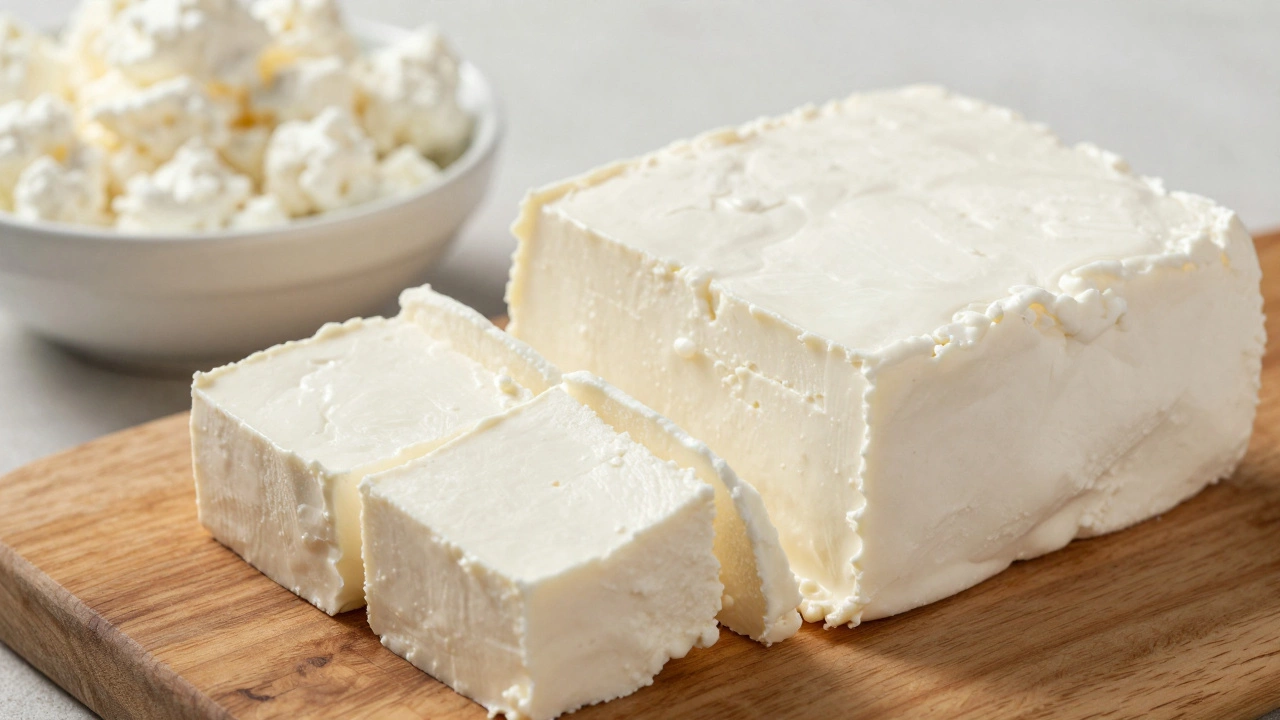
Here is the short answer that saves you from awkward moments at the grocery store: paneer does not have a direct, single-word equivalent in English. If you are looking for the closest match, it is cottage cheese which is a mild, soft, non-melting fresh cheese common in Western cuisine. However, calling it just "cottage cheese" can be misleading because there are significant texture and fat differences between the two.
If you are trying to explain what paneer is to someone who has never tasted it, or if you are swapping ingredients in a recipe, knowing the nuance matters. You cannot simply swap standard American cottage cheese into a curry and expect the same result. Let’s break down exactly why this translation is tricky and what you should actually use instead.
The Direct Translation vs. Culinary Reality
Linguistically, paneer translates to "cheese" or more specifically "fresh cheese." In Hindi and other Indian languages, the word *paneer* itself refers to the block of curdled milk. There is no fancy Latin name like Mozzarella or Cheddar for it. It is a functional food, born out of necessity and tradition.
In the UK, where I live, we often hear people call it "Indian cottage cheese." This is the most accepted descriptive term. But here is the catch: British and American cottage cheese usually contains small curds suspended in a creamy liquid (buttermilk). Paneer is pressed into a solid block. It holds its shape. It doesn’t fall apart when you stir it into a hot dish. That structural integrity is what makes paneer special, and that is what "cottage cheese" fails to capture fully.
Why Standard Cottage Cheese Fails as a Substitute
If you grab a tub of regular cottage cheese from your local supermarket, you will notice three major differences immediately:
- Fat Content: Traditional paneer is made from full-fat buffalo or cow milk. It is rich and dense. Most commercial cottage cheese is low-fat or skimmed, making it watery and bland by comparison.
- Texture: Cottage cheese is crumbly and moist. Paneer is firm, slightly spongy, and dry enough to be fried without disintegrating.
- Melting Point: This is the big one. Paneer is an acid-set cheese. It does not melt. Cottage cheese also doesn't melt in the traditional sense, but it breaks down and becomes grainy when heated. Paneer stays intact.
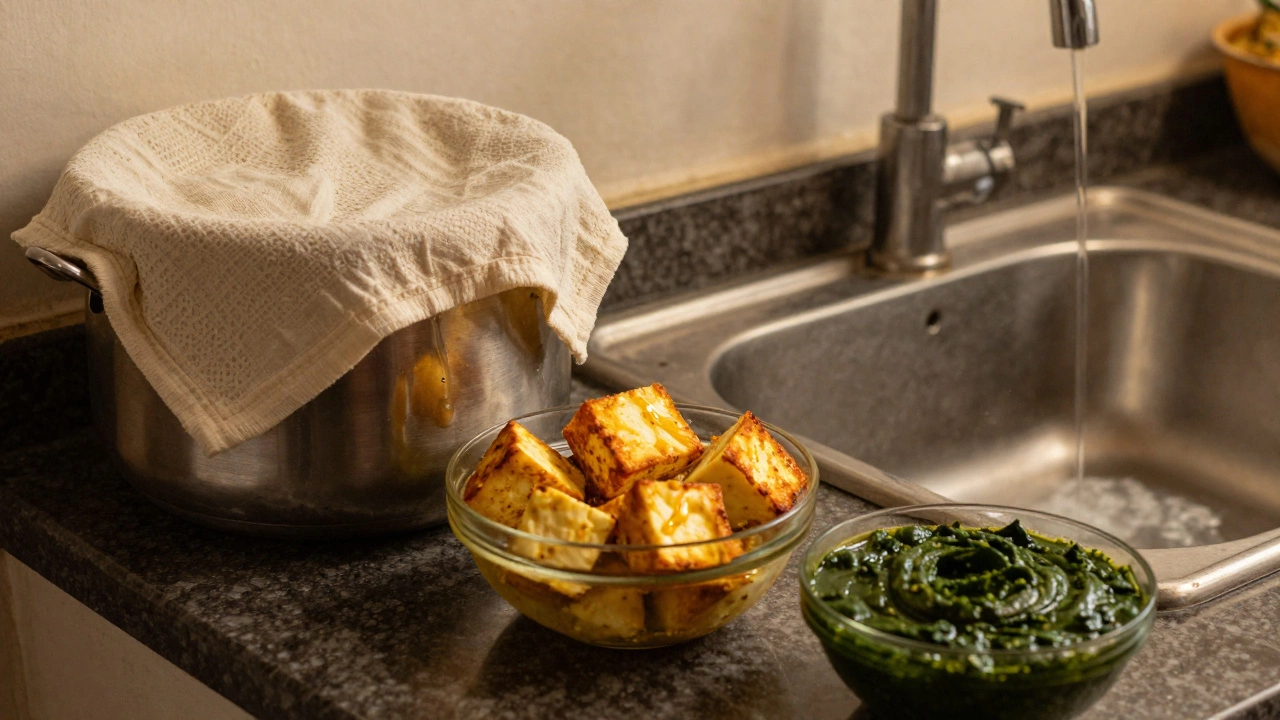
So, if you try to make a Palak Paneer which is a popular Indian dish consisting of paneer cubes cooked in a pureed spinach sauce. using regular cottage cheese, your spinach soup will end up with floating white bits rather than satisfying chewy cubes.
Better English Alternatives for Recipes
If you cannot find paneer at your local Asian grocer, don't settle for standard cottage cheese. Instead, look for these specific types of fresh cheeses that behave more like paneer:
| Cheese Type | Texture Match | Fat Content | Best Use Case |
|---|---|---|---|
| Paneer | Firm, non-melting | High (Full Fat) | Curries, grilling, frying |
| Feta Cheese | Firm, crumbly | Medium-High | Salads, baking (salty taste) |
| Ricotta Salata | Firm, sliceable | Medium | Grating, slicing (mild flavor) |
| Hellim | Firm, fryable | High | Frying, grilling (goat/sheep milk) |
| Standard Cottage Cheese | Soft, wet, crumbly | Low-Medium | Eating plain, smoothies (not cooking) |
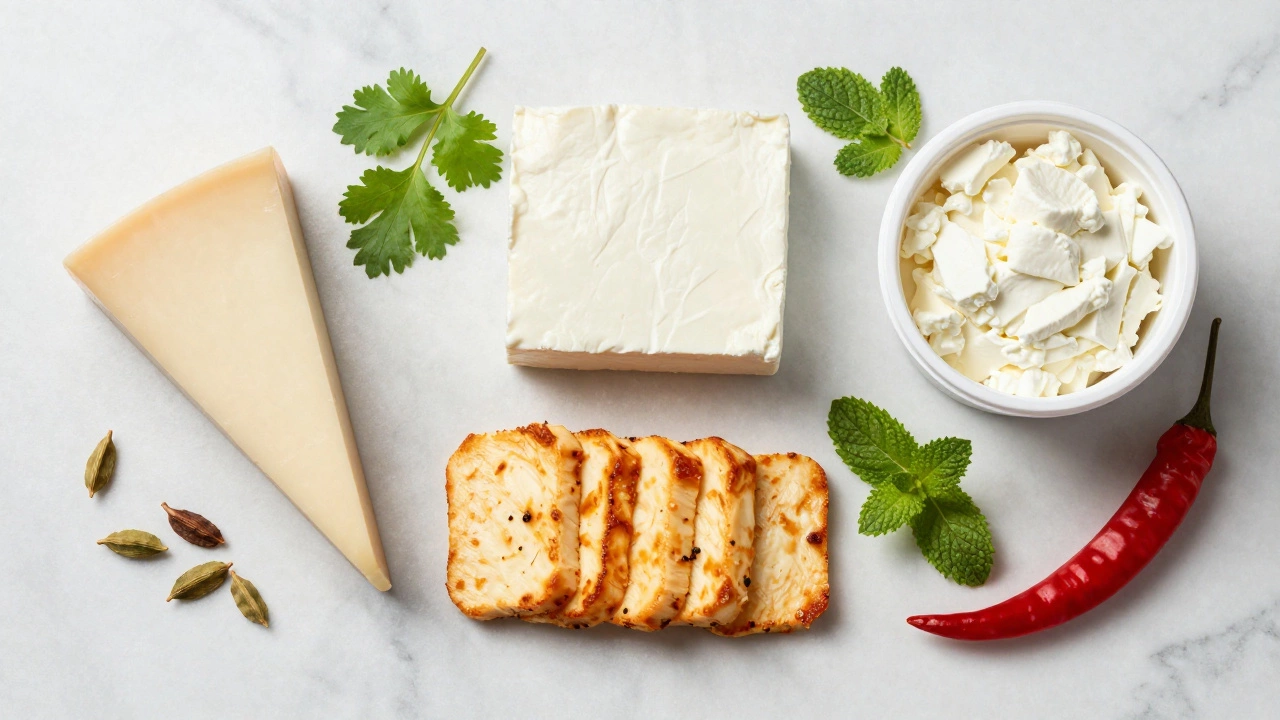
Feta cheese which is a brined curd cheese made primarily from sheep's milk. is often suggested as a substitute because it holds its shape. However, feta is salty and tangy due to the brine. Paneer is virtually salt-free and very mild. If you use feta, rinse it well under cold water to remove some of the salt, but remember the flavor profile will still be different.
A better option, if available, is Ricotta Salata which is a pressed, salted, and dried variety of ricotta cheese.. Unlike fresh ricotta, which is spreadable, Ricotta Salata is firm and sliceable. It mimics the texture of paneer quite well, though it has a slight sweetness that paneer lacks.
How to Make Paneer at Home (The Real Solution)
Since buying the right substitute is hit-or-miss, many home cooks in the diaspora learn to make paneer themselves. It is surprisingly easy and takes about 20 minutes. You don't need special equipment, just a pot, a cloth, and patience.
The process relies on acidification. When you add an acid to boiling milk, the proteins coagulate and separate from the whey. Here is the simple method:
- Boil Milk: Start with one liter of full-fat milk. Whole milk is crucial; skim milk will not yield enough curds. Bring it to a rolling boil.
- Add Acid: Turn off the heat or lower it to a simmer. Add 2-3 tablespoons of lemon juice or vinegar. Stir gently. You will see the milk curdle immediately, separating into white solids (curds) and greenish liquid (whey).
- Rest: Let it sit for 5 minutes. This ensures complete separation.
- Strain: Line a colander with a clean cotton cheesecloth or muslin cloth. Pour the mixture through it. Gather the corners of the cloth and tie them tightly.
- Press: Hang the bundle over a sink or place it in a bowl with a heavy weight on top (like a few cans of beans). Let it drain for 1-2 hours. The longer you press it, the firmer the paneer becomes.
This homemade version tastes far superior to store-bought paneer, which often contains stabilizers to keep it moist during shipping. Homemade paneer has that distinct milky aroma and a tender bite that melts in your mouth-without actually melting!
Cultural Context: Why Does Paneer Exist?
Understanding the origin helps explain why it’s unique. In India, Hindu dietary laws which are religious guidelines that prohibit the consumption of beef and often encourage vegetarianism. play a huge role in food culture. For millions of people, meat is not an option. Paneer provides a high-protein, dairy-based alternative that satisfies the craving for substantial, savory dishes.
Unlike Europe, where cheese aging and rennet (an enzyme from animal stomachs) were developed for preservation, Indian cuisine focused on fresh, immediate consumption. Paneer is eaten within days of making. It is a staple in North Indian cuisine, featuring in dishes like Matar Paneer which is a classic dish of paneer cubes cooked with green peas in a tomato-onion gravy. and Kadai Paneer which is a spicy paneer dish prepared in a wok-like vessel called a kadai..
In South India, you might encounter Chenna which is a softer, unpressed version of paneer used in sweets.. Chenna is similar to paneer but not pressed firmly. It is used to make desserts like Rasgulla. So, while paneer and chenna are technically the same base ingredient, their preparation determines their culinary use.
Buying Paneer: What to Look For
If you do decide to buy pre-made paneer, check the packaging carefully. Fresh paneer has a very short shelf life-usually only 2-3 days in the fridge. Store-bought versions often last longer because they are soaked in water or contain preservatives like sodium citrate.
To keep store-bought paneer fresh, soak it in warm water for 10-15 minutes before cooking. This rehydrates it and removes any chemical aftertaste from preservatives. If you make it at home, store it submerged in water in the refrigerator, changing the water daily. It will stay fresh for up to a week.
Remember, the next time someone asks you what paneer is in English, you can confidently say it is "Indian fresh cheese" or "firm cottage cheese," but always add the caveat about the texture. It’s not just a translation issue; it’s a culinary distinction that defines a whole category of delicious vegetarian cooking.
Is paneer exactly the same as cottage cheese?
No, they are not the same. While both are fresh cheeses, paneer is pressed into a firm block and has a higher fat content, making it suitable for frying and grilling. Cottage cheese is typically loose, moist, and lower in fat, falling apart easily when heated.
Can I use mozzarella instead of paneer?
Not really. Mozzarella is a melting cheese. If you use it in a curry, it will turn into a gooey mess rather than staying as distinct cubes. Paneer is prized for its ability to hold its shape in hot sauces.
Why is my homemade paneer rubbery?
This usually happens if you squeeze the cheese too hard or let it hang for too long. Gentle pressing is key. Also, ensure you are using full-fat milk; low-fat milk results in a tougher, less yielding texture.
Does paneer expire quickly?
Yes, fresh paneer has a short shelf life. Homemade paneer lasts 2-3 days in the fridge if stored in water. Store-bought paneer may last slightly longer due to preservatives, but it should still be consumed within a week.
What is the best substitute for paneer if I can't make it?
Ricotta Salata or Halloumi are the best substitutes for texture. Feta works if you rinse it well to reduce saltiness. Avoid standard cottage cheese or mozzarella for cooking applications.