Biryani Sweetness Calculator
Natural Sweetness Balance
Calculate how saffron, onions, and dried fruit contribute to biryani's authentic sweetness without sugar.
Ever taken a bite of biryani and wondered-why does it taste just a little sweet? Not like dessert sweet, but that quiet, warm hint that makes the whole dish feel complete. It’s not a mistake. It’s not sugar sprinkled on accident. That sweetness is intentional, carefully placed, and absolutely essential to real biryani.
The Sweetness Isn’t Sugar-It’s the Rice
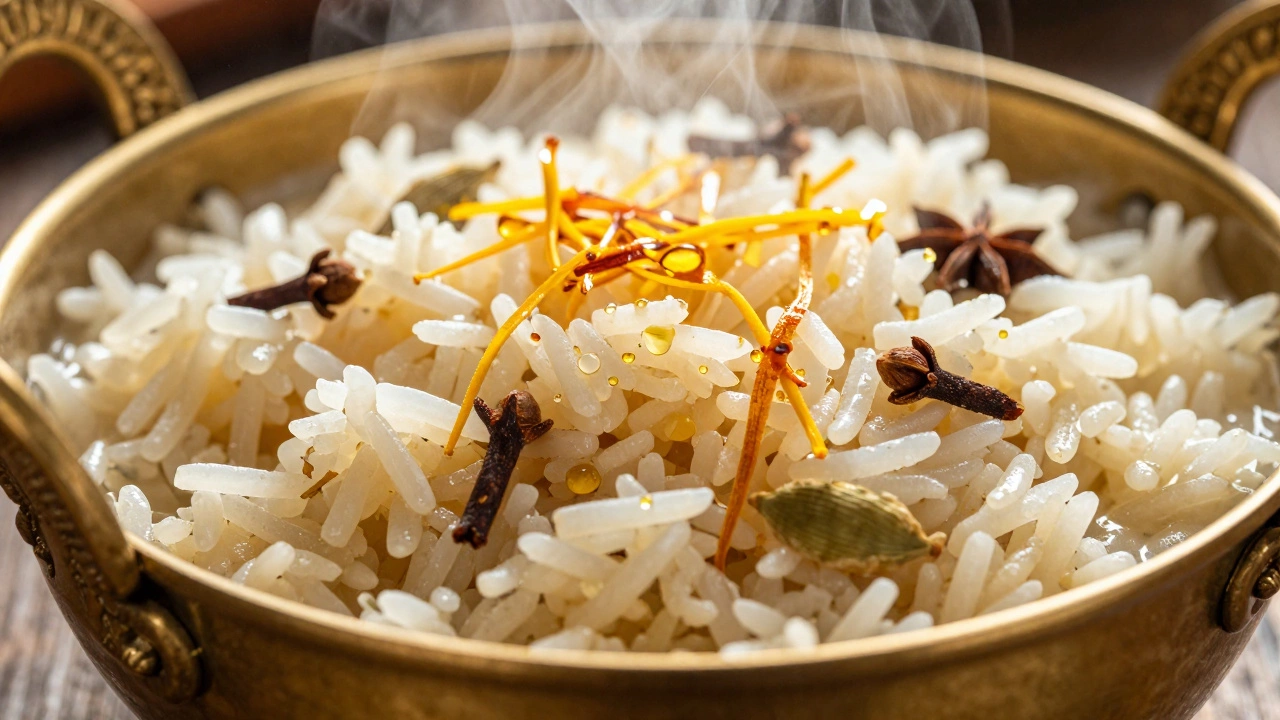
The main source of sweetness in biryani isn’t added sugar. It’s the rice itself. Long-grain basmati rice, when cooked properly, releases its natural starches and subtle nutty aroma. But that’s only part of it. The real magic happens when the rice is parboiled in water with whole spices like cardamom, cinnamon, and cloves. These spices don’t just add flavor-they gently coax out the rice’s own sweetness. Think of it like how a roasted carrot tastes sweeter than a raw one. Heat and time transform the natural sugars in the grain.
Saffron: The Quiet Sweetener
Then there’s saffron. A few threads soaked in warm milk or water, then drizzled over the rice before layering. Saffron doesn’t taste sugary on its own. But it has a honeyed, floral depth that lingers on the tongue. In traditional recipes from Hyderabad or Lucknow, saffron is used not just for color, but because it rounds out the spices. It softens the heat of chili, balances the tang of yogurt, and adds a quiet sweetness that makes the dish feel luxurious. You won’t find a single authentic biryani recipe from South India or the Mughal kitchens that skips saffron.
Onion Caramelization: The Hidden Hero
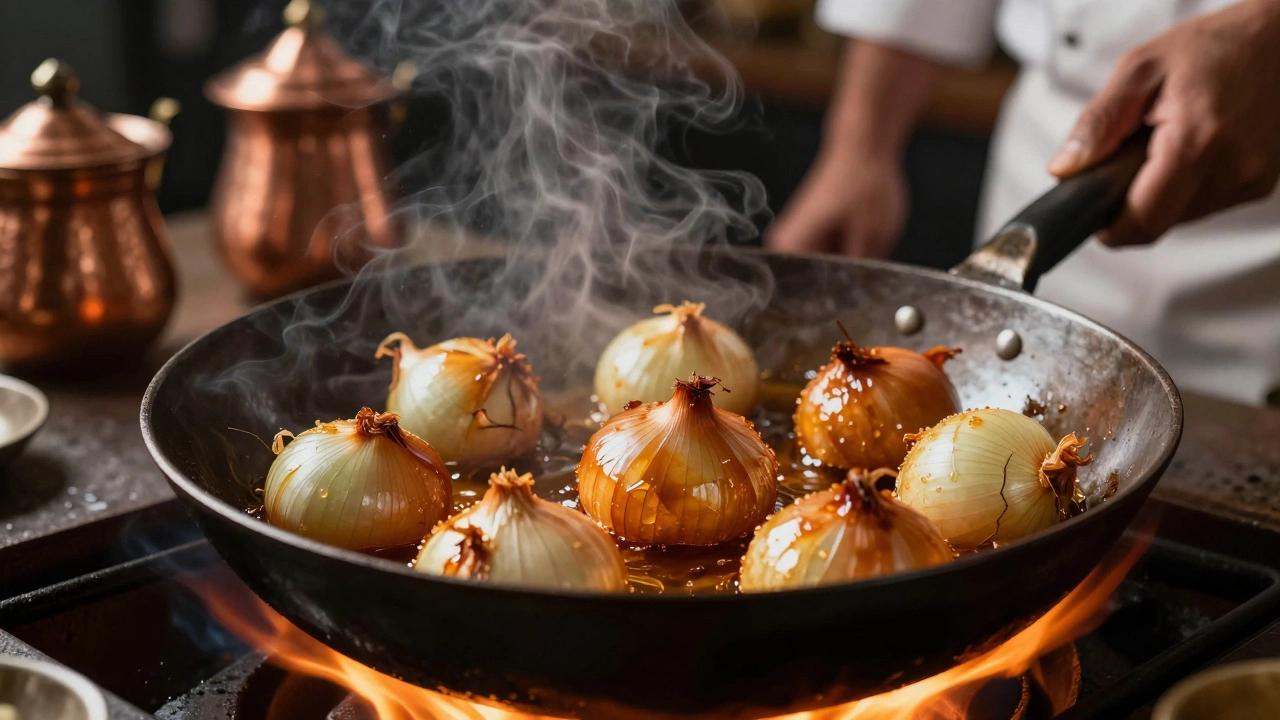
Look closely at the base of your biryani-the layer of fried onions on top. Those aren’t just crispy garnish. They’re slowly caramelized over low heat until they turn golden brown, almost amber. This process breaks down the onion’s natural sugars into something deeper, richer, and undeniably sweet. In Hyderabad-style biryani, fried onions are mixed into the meat gravy, not just layered on top. That’s where the sweetness hides-in the gravy, not the rice. A good biryani chef will fry onions for 20 to 30 minutes, stirring constantly. Rush it, and you get bitter, not sweet.
Dried Fruit: The Traditional Touch
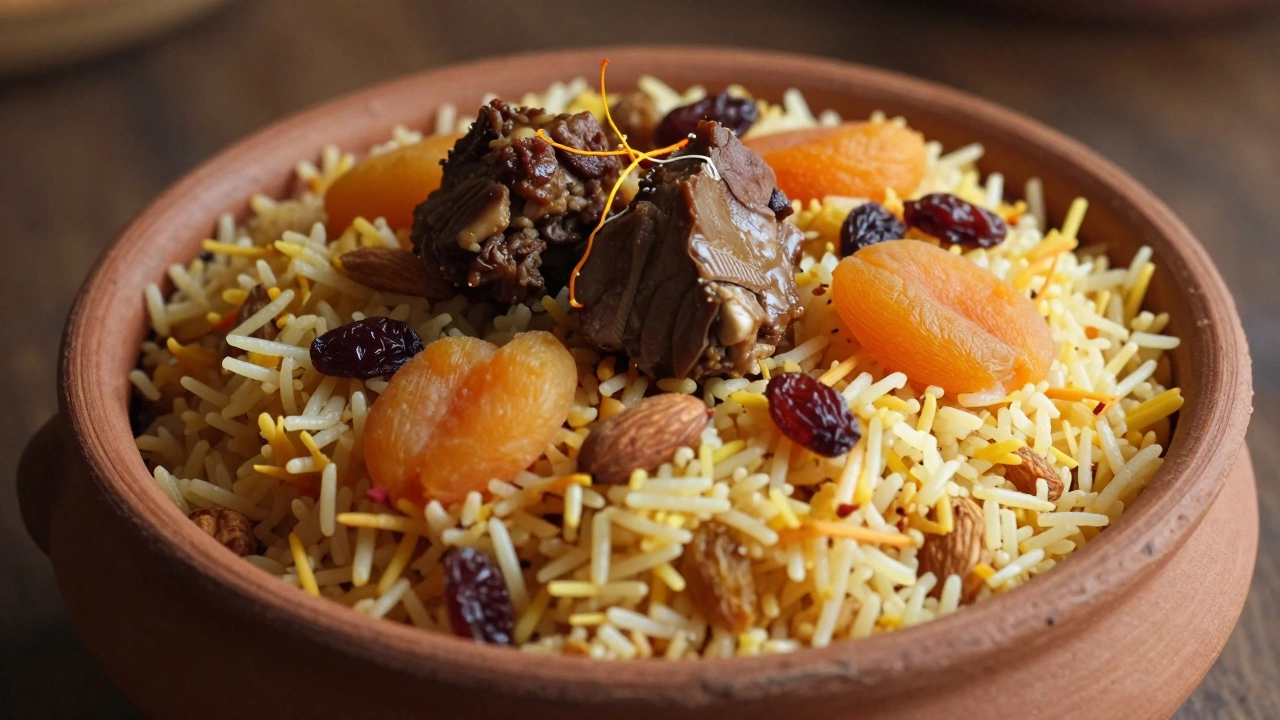
Some versions of biryani, especially those from the royal kitchens of Awadh, include dried fruits. Raisins, cashews, almonds, and even dried apricots are gently toasted and folded into the rice. These aren’t there for crunch. They’re there for balance. A single raisin in each serving adds a burst of concentrated sweetness that contrasts with the savory meat and spicy masala. It’s not dessert. It’s harmony. If you’ve ever had a biryani that tasted too sharp or one-dimensional, chances are it skipped the dried fruit. Modern shortcuts often leave them out-but traditional cooks know they’re the secret to depth.
Why Do Some Biryani Recipes Use Sugar?
You might see a recipe that calls for a teaspoon of sugar. That’s not traditional. It’s a modern fix. Sometimes, tomatoes used in the gravy are too acidic. Or the meat is lean and lacks natural fat to carry flavor. A pinch of sugar can smooth out those rough edges. But in authentic cooking, you don’t reach for sugar-you reach for better ingredients. Better tomatoes. Better meat. Better caramelized onions. If you’re using sugar, you’re covering up a flaw. Real biryani doesn’t need it.
The Balance: Sweetness as a Tool, Not a Flavor
The sweet elements in biryani aren’t meant to make it taste sweet. They’re meant to make it taste whole. Think of it like a well-made curry: the salt brings out the flavor, the acid cuts through the richness, and the sweetness ties it all together. Without that quiet sweetness, biryani can feel flat. Too much, and it becomes cloying. The best biryani has sweetness you notice only when it’s gone. You don’t say, “This is sweet.” You say, “This is perfect.”
How to Get the Right Sweetness in Your Biryani
- Use aged basmati rice-fresh rice lacks the natural depth.
- Soak saffron in 2 tablespoons of warm milk for 15 minutes before adding.
- Fry onions slowly over medium-low heat until they’re deep golden, not just brown.
- Add 10-12 raisins per pot, soaked in warm water for 10 minutes to plump them.
- Never add sugar unless your tomatoes are sour and you’ve tried everything else.
What Happens When You Skip the Sweetness?
Try making biryani without saffron, without caramelized onions, without dried fruit. You’ll get something that tastes like spiced rice and meat. It’s edible. But it won’t make you close your eyes and sigh. That’s the difference between a recipe and a dish that carries history. The sweetness isn’t an ingredient-it’s a technique. It’s patience. It’s knowing that flavor isn’t just about what you add, but what you reveal.
Regional Differences: Sweetness Varies by City
In Hyderabad, the sweetness is subtle-mostly from saffron and fried onions. In Lucknow, it’s more pronounced, with dried fruits and rose water sometimes added. In Kolkata, a touch of potato and sometimes even a hint of apple is used to sweeten the gravy. In Tamil Nadu, biryani is spicier and less sweet, relying more on coconut milk for body. But even there, the rice is cooked with whole spices that bring out its own natural sweetness. No matter the region, the principle stays the same: sweetness is never shouted. It’s whispered.
Final Thought: It’s Not About Taste. It’s About Memory.
The sweet note in biryani isn’t just about flavor. It’s about comfort. It’s the smell of a grandmother’s kitchen, the sound of onions sizzling for hours, the way the saffron stained your fingers. That’s why you remember it. That’s why you crave it. You don’t need sugar to make biryani sweet. You just need time, care, and respect for the ingredients.
Is sugar added in traditional biryani recipes?
No, sugar is not part of traditional biryani recipes. Authentic versions rely on natural sweetness from caramelized onions, saffron, dried fruits, and the inherent sugars in basmati rice. Sugar is a modern shortcut used to fix overly acidic tomatoes or bland meat, but it’s not authentic.
What gives biryani its sweet flavor if not sugar?
The sweetness comes from four natural sources: caramelized onions, saffron, dried fruits like raisins, and the natural starches in basmati rice. When these are cooked slowly and layered properly, they release subtle, complex sweetness that balances the spices.
Why is saffron used in biryani if it’s expensive?
Saffron is used because it adds a unique floral, honeyed depth that no other spice can replicate. Even a few threads enhance the aroma and flavor profile, making the dish feel special. It’s not about color-it’s about balance. Cheaper alternatives like turmeric or food coloring don’t offer the same complexity.
Can I make biryani sweet without using dried fruits?
Yes, you can. Caramelized onions and saffron alone provide enough natural sweetness for a balanced biryani. Dried fruits are an extra layer, common in Lucknowi or royal-style biryani, but not essential. Focus on slow-cooked onions and properly soaked saffron for the best results.
Why does my biryani taste too sour?
Sourness usually comes from undercooked or overly acidic tomatoes. To fix it, cook the tomatoes longer until they break down and turn jammy. Add a pinch of ground cardamom or a few soaked raisins to balance it naturally. Avoid sugar-improve the ingredients instead.