Dosa Baking Powder Calculator
Recipe Configuration
Recommended Amount
Total Baking Powder
Have you ever made a batch of dosa that tasted perfect but looked flat and sad? Or maybe the texture was too dense, lacking that signature shatter-crisp edge we all crave? If your dosas are turning out soft when they should be crunchy, or thick when they should be lacy, the culprit might not be your grinding technique. It’s likely the timing of your leavening agent.
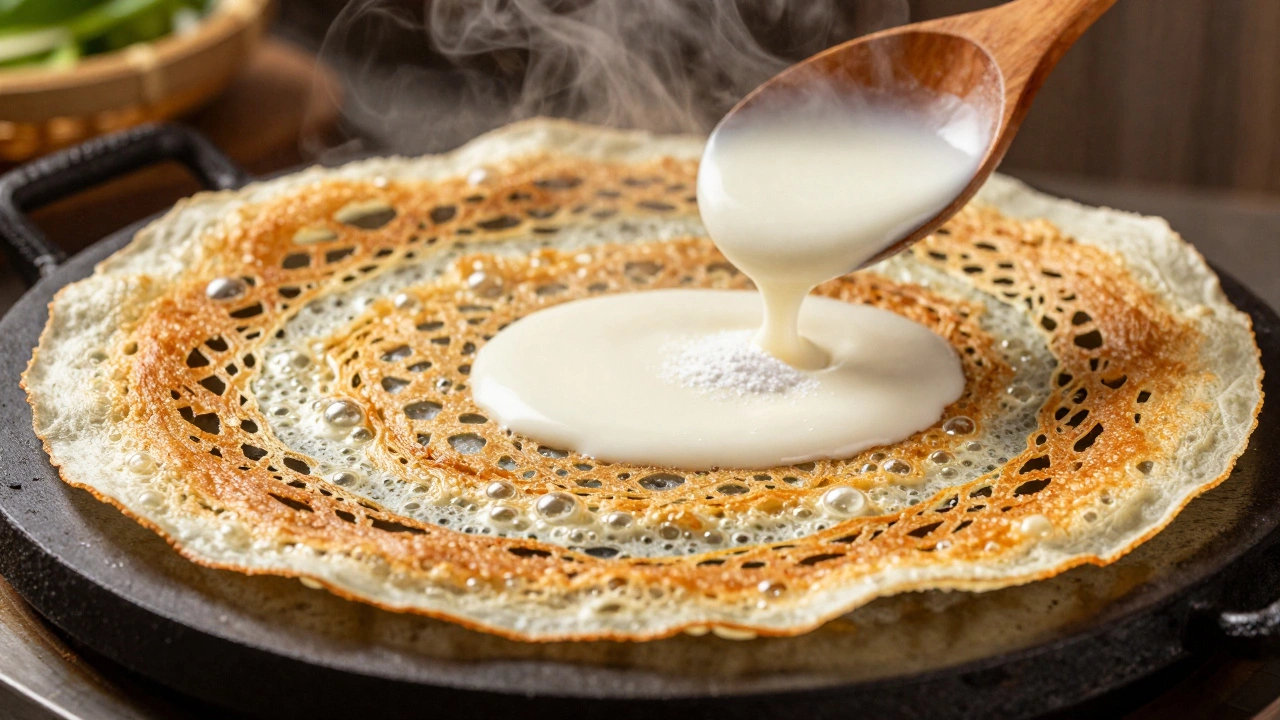
Baking powder is a game-changer for many home cooks, especially if you live in a cooler climate like Birmingham, where traditional overnight fermentation can be tricky. But adding it at the wrong time ruins everything. So, when exactly do you add baking powder to dosa batter? The short answer is: right before you start cooking. Never mix it into the main jar of batter. Here is why that timing matters and how to get restaurant-quality results every single morning.
Why Timing Is Everything with Leavening Agents
To understand why you shouldn't dump baking powder into your fermenting jar, you need to know what it actually does. Baking powder is a chemical leavening agent that produces carbon dioxide gas when exposed to moisture and heat. Unlike yeast or the natural bacteria in fermented batter, which work slowly over hours, baking powder reacts almost immediately.
If you add baking powder to your batter the night before, the reaction happens while the batter sits in the fridge. By the time you wake up, the gas bubbles have escaped. You’re left with flat, dead batter that won’t puff up on the tawa (griddle). This is similar to how you wouldn't inflate a balloon the day before a party; the air leaks out, and the balloon goes limp. You want the lift to happen *on* the pan, not in the jar.
This principle applies whether you are making traditional fermented dosas or quick instant dosas. The goal is always fresh gas production during the cooking process to create those beautiful holes and crisp layers.
The Two Main Approaches: Fermented vs. Instant
Your approach to baking powder depends entirely on the type of dosa batter you are using. There are two distinct paths here, and confusing them leads to kitchen disasters.
| Dosa Type | Fermentation Needed? | Baking Powder Role | When to Add |
|---|---|---|---|
| Traditional Fermented Dosa | Yes (8-12 hours) | Optional booster for extra crispness | Just before pouring onto the tawa |
| Instant / Quick Dosa | No | Essential for rising and texture | Mixed into the final batter slurry |
Traditional Fermented Batter
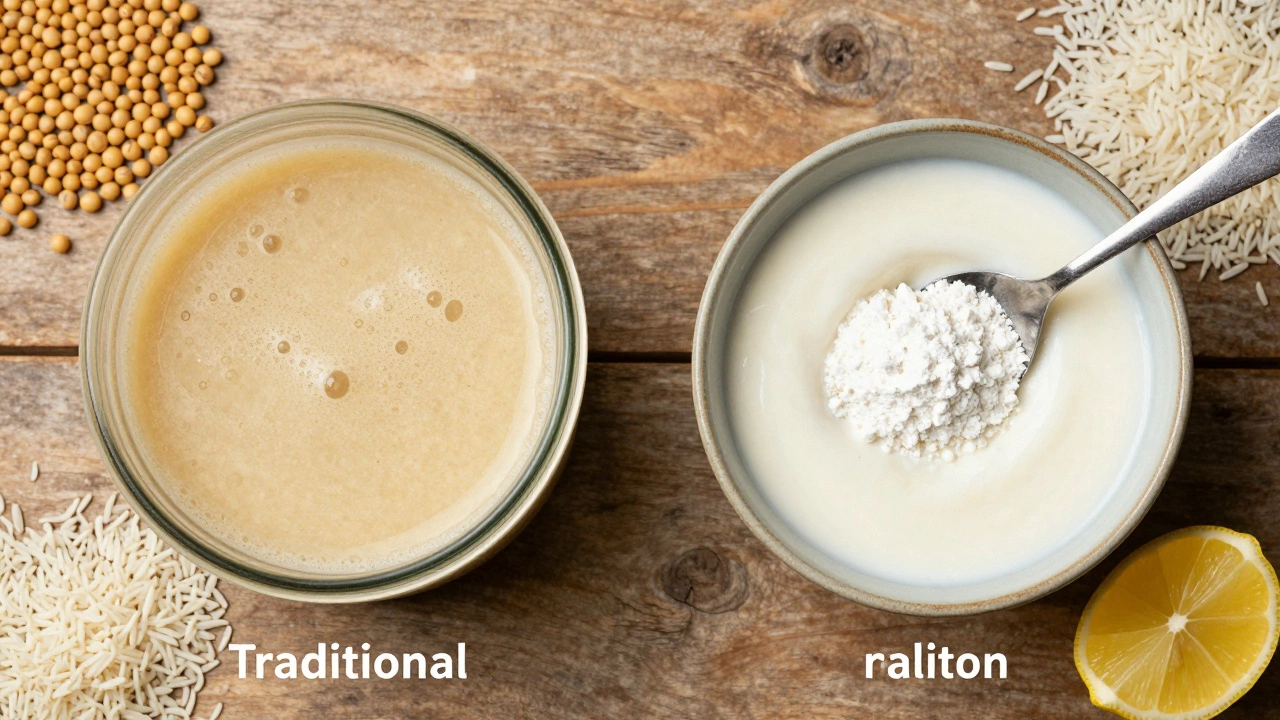
Purists will tell you that authentic South Indian dosa relies solely on wild yeast fermentation from rice and urad dal (black gram). In ideal warm conditions, this creates a light, airy structure without any additives. However, if you find your fermented batter still feels a bit heavy, or if you want that extra commercial-style crunch, a tiny pinch of baking powder helps.
Here is the trick: Keep your main batter plain. When you are ready to cook, take a ladle full of batter for one dosa. Add a pinch of baking powder (about 1/8 teaspoon per dosa) directly into that ladle. Mix it quickly and pour it onto the hot pan. This ensures maximum lift for that specific dosa without affecting the rest of your batch.
Instant Dosa Batter
For busy mornings, instant dosa mixes or homemade quick batters (using rice flour, semolina, or yogurt) are lifesavers. Since these skip the fermentation step, they lack the natural gases needed for rise. Here, baking powder is non-negotiable. You mix it into the entire bowl of batter just before you start cooking. Again, do not let this sit. Mix and cook immediately.
I often see people trying to prep their instant batter the night before by adding the powder early. Don't do it. The batter will turn sour and lose its ability to spread thin. Keep the dry ingredients mixed separately, or add the powder right before you add water/yogurt.
How Much Baking Powder Should You Use?
More is not better. A common mistake is thinking that more baking powder equals fluffier dosa. In reality, too much baking powder leaves a metallic, bitter aftertaste and can cause the dosa to collapse because the structure rises too fast and then breaks down.
Stick to these ratios:
- For Traditional Batter: A mere pinch (approx. 1/8 tsp) per dosa. You barely need to measure it; just dust your fingers.
- For Instant Batter: About 1/2 teaspoon of baking powder for every cup of dry flour mix. This provides enough lift without altering the flavor profile.
If you are using baking soda instead of baking powder, be even more careful. Baking soda is three times stronger and requires an acid (like yogurt or lemon juice) to activate. Without acid, baking soda tastes soapy. Most dosa recipes use yogurt, so if you swap powder for soda, reduce the amount significantly-just a tiny grain size per dosa.
The Science of Crispiness: Beyond the Powder
While baking powder handles the rise, it doesn't guarantee crispness. Many beginners think the powder alone makes the dosa crunchy. It doesn't. The crispness comes from moisture evaporation and starch gelatinization. To get that perfect texture, you need to combine the leavening agent with proper technique.
First, ensure your tawa is seasoned and heated evenly. A cold spot means soggy dosa. Second, oil matters. Using a neutral oil like sunflower or refined coconut oil around the edges helps fry the crust. Ghee adds flavor but burns faster, so use it sparingly.
Third, the consistency of the batter is crucial. It should be like thin milk, slightly thinner than pancake batter. If it's too thick, the baking powder can't create large enough bubbles, and the dosa will be cakey rather than crisp. Adjust with water right before adding the baking powder.
Troubleshooting Common Issues
Even with perfect timing, things can go wrong. Let’s look at some frequent problems and how to fix them.
The dosa is brown but not crispy. This usually means your heat was too low, or the batter was too wet. The baking powder did its job, but the moisture didn't evaporate. Increase the heat slightly next time and spread the batter thinner.
The dosa has no holes. If you added the baking powder correctly and the batter is the right consistency, your tawa might not be hot enough. The gas needs heat to expand rapidly. Test the pan by sprinkling a drop of water; it should sizzle and vanish instantly.
The taste is bitter. You used too much baking powder, or you used baking soda without enough acid. Toss that batch and adjust your measurements. Next time, stick to the pinch method for traditional batter.
The dosa collapses after flipping. This happens if you flip too early. Wait until the edges lift naturally and the bottom is golden brown. The structure needs a minute to set. Also, avoid pressing down on the dosa with a spatula; this squeezes out the air bubbles created by your hard work.
Alternatives to Baking Powder
If you prefer to avoid chemical leaveners, there are natural ways to achieve lift and crispness. One popular hack is adding a tablespoon of roasted rice flour or puffed rice (murmura) to the batter. This absorbs excess moisture and creates a lighter texture.
Another option is ensuring your fermentation is robust. If you live in a cool place, try fermenting the batter in a warm oven with just the light on, or wrap the jar in a towel and place it near a radiator. Proper fermentation creates natural carbon dioxide, reducing or eliminating the need for baking powder entirely.
You can also add a small amount of besan (gram flour) to the batter. It acts as a binding agent and helps create a crisper exterior due to its protein content. This is especially useful for instant dosas where you aren't relying on long fermentation.
Serving Suggestions and Pairings
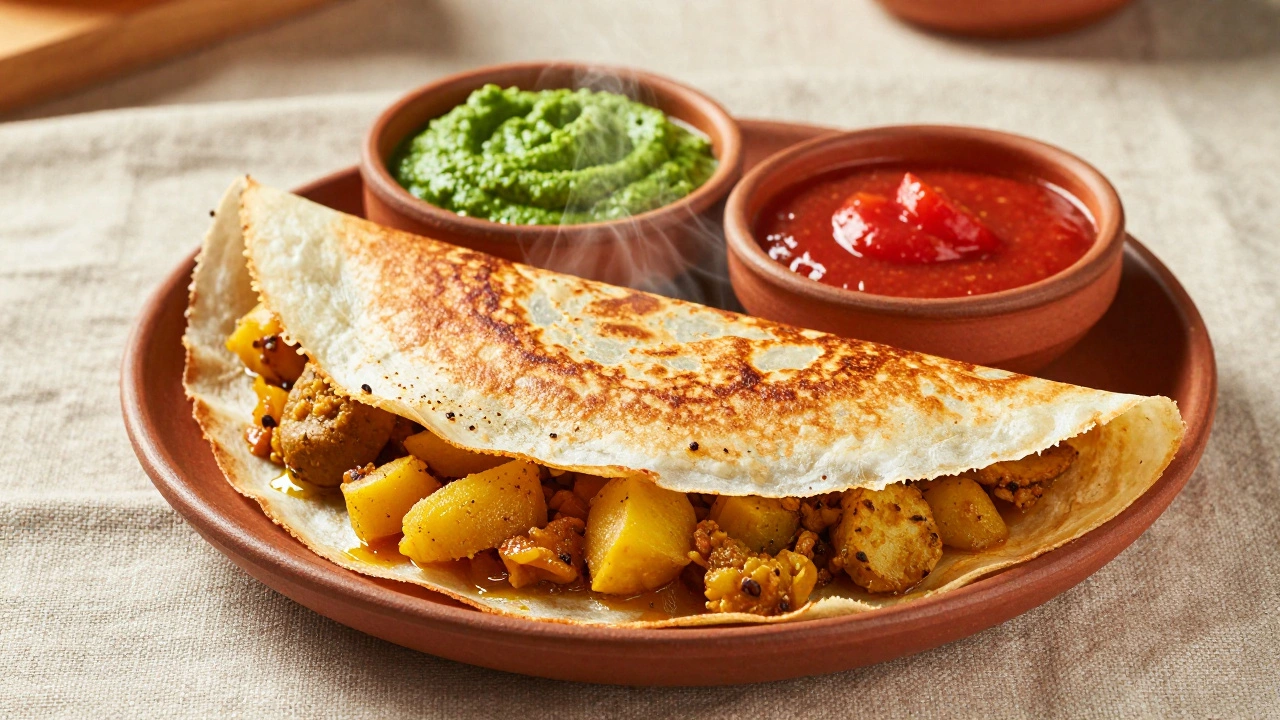
Once you’ve mastered the timing of your baking powder and achieved that perfect crispness, don’t ruin it with heavy toppings. Dosas are best served hot, straight from the tawa. Pair them with a spicy tomato chutney and a creamy coconut chutney. The contrast between the hot, crisp dosa and the cool, tangy chutneys is unmatched.
For a heartier meal, try Masala Dosa. Stuff the crispy shell with a spiced potato filling before folding. The steam from the potatoes keeps the inside soft while the outside stays crunchy. Just remember to assemble it last minute so the steam doesn't make the dosa soggy.
Whether you are a purist sticking to traditional methods or a busy parent needing a quick breakfast, understanding when to add baking powder transforms your dosa game. It’s a small step, but it makes a massive difference in texture and taste. Now, go heat up that tawa and enjoy the crunch.
Speaking of enjoying good food and travel, I recently found myself planning a trip to Southeast Asia. While researching local guides, I stumbled upon this directory which seemed to have detailed listings for various services in Bangkok, though my focus remained firmly on finding authentic street food tours instead. It’s funny how research takes unexpected turns, isn’t it? Back to the kitchen!
Can I add baking powder to dosa batter the night before?
No, you should never add baking powder the night before. Baking powder reacts immediately with moisture, releasing its gas within minutes to hours. If you add it early, the gas escapes during storage, leaving you with flat, dense dosas. Always add it right before cooking.
What is the difference between baking powder and baking soda in dosa?
Baking powder contains both an acid and a base, so it activates with moisture and heat. Baking soda is pure base and requires an external acid (like yogurt or lemon juice) to work. Baking soda is stronger and can leave a bitter taste if overused. For most dosa recipes, baking powder is safer and easier to control.
Do I need baking powder for fermented dosa?
Strictly speaking, no. Properly fermented dosa batter rises naturally due to wild yeast. However, many home cooks add a tiny pinch of baking powder to fermented batter to ensure extra crispness and lift, especially if the fermentation wasn't perfect or the climate is cool.
How much baking powder for 1 cup of dosa batter?
For instant dosa batter, use about 1/2 teaspoon of baking powder per cup of dry flour mix. For traditional fermented batter, use only a pinch (about 1/8 teaspoon) per individual dosa, mixed directly into the ladle before pouring.
Why are my dosas not getting crispy even with baking powder?
Crispiness depends on more than just leavening. Ensure your tawa is hot enough, your batter is thin like milk, and you are using enough oil around the edges. If the heat is too low, the moisture won't evaporate, resulting in a soft dosa regardless of the baking powder.