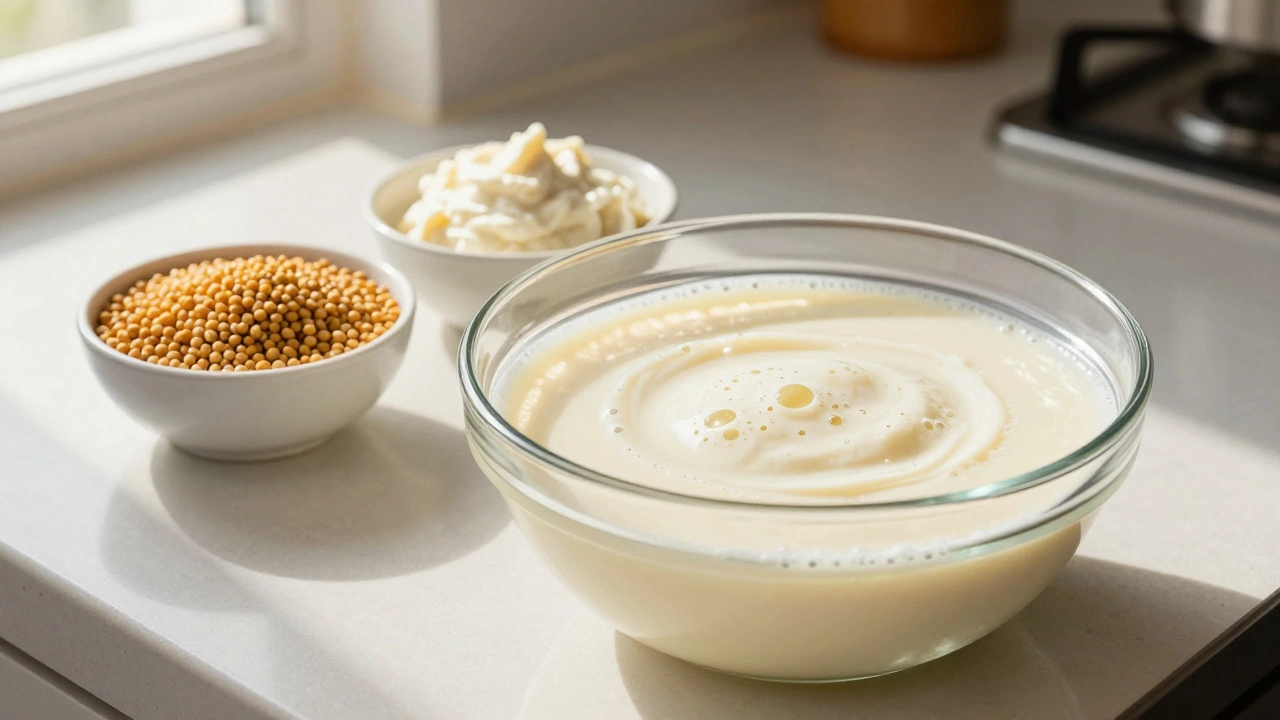
Quick Dosa Method Planner
Curd & Baking Soda
Best Texture
~45 MinsBeer Batter Trick
Crispy & Lacy
~60 MinsEno / Fruit Salt
Fastest Speed
~30 MinsYou want crispy, fluffy dosas for breakfast, but you forgot to soak the rice last night. Or maybe your kitchen is too cold for that slow, traditional 12-hour fermentation. It happens to the best of us. The good news? You don’t need magic, and you certainly don’t need commercial yeast to get a decent rise in just a few hours.
Traditional dosa batter is a fermented mixture of rice and urad dal (black gram) that relies on wild lactobacilli bacteria to create air pockets and tangy flavor. This process usually takes 8 to 12 hours at room temperature. But when time is short, we can hack the biology. We can speed up the acid production and gas formation using simple kitchen ingredients like curd, baking soda, or even beer. Here is how you do it right, without ruining the texture.
The Science of Speed: Why Traditional Fermentation Takes Time
To speed something up, you first need to know what you are speeding up. Traditional fermentation works because wild yeasts and bacteria present on the grains break down starches into sugars and then into carbon dioxide and lactic acid. The CO2 creates bubbles (rise), and the lactic acid gives that signature sour taste.
This natural process needs two things: warmth and time. If your house is below 70°F (21°C), those bacteria go dormant. That’s why grandmothers in South India wrap their batter jars in blankets or keep them near the stove. When you try to rush this with nothing but heat, you often end up with flat, dense pancakes that taste bland.
So, how do we cheat? We introduce stronger leavening agents or acidic components that force the reaction to happen faster. We aren't replacing the culture entirely; we are giving it a massive boost. Think of it like adding turbo fuel to an engine.
Method 1: The Curd & Baking Soda Hack (Best for Texture)
This is my go-to method when I have zero time. It mimics the acidity of fermentation instantly. The curd provides the lactic acid, and the baking soda reacts with that acid to release carbon dioxide immediately.
| Ingredient | Quantity | Purpose |
|---|---|---|
| Idli Rice | 2 cups | Provides structure and crispness |
| Urad Dal | ½ cup | Provides protein and lift |
| Fenugreek Seeds | ½ tsp | Aids digestion and adds slight bitterness |
| Curd (Yogurt) | ¼ cup | Acid source for quick rise |
| Baking Soda | ½ tsp | Leavening agent |
Here is the step-by-step process:
- Grind separately: Soak the rice and fenugreek seeds for just 30 minutes. Soak the urad dal for 30 minutes as well. Grind the dal first until it is fluffy and airy-this is crucial. Then grind the rice to a smooth paste with less water.
- Mix: Combine both batters in a large bowl. Add salt to taste.
- Add the accelerators: Mix in the curd and the baking soda. Do not add the baking soda earlier, or it will lose its potency before you cook.
- Rest briefly: Let the batter sit for 15-20 minutes. You will see small bubbles forming on the surface almost immediately. This is the chemical reaction working.
- Cook: Spread thin on a hot tawa (griddle). These dosas will be slightly denser than fermented ones but still crisp and delicious.
Why does this work? The baking soda (sodium bicarbonate) neutralizes the acid in the curd, creating sodium lactate, water, and CO2 gas. That gas expands in the heat of the pan, lifting the batter. It’s chemistry, not biology, but the result is satisfyingly light.
Method 2: The Beer Batter Trick (For Crispy, Lacy Dosas)
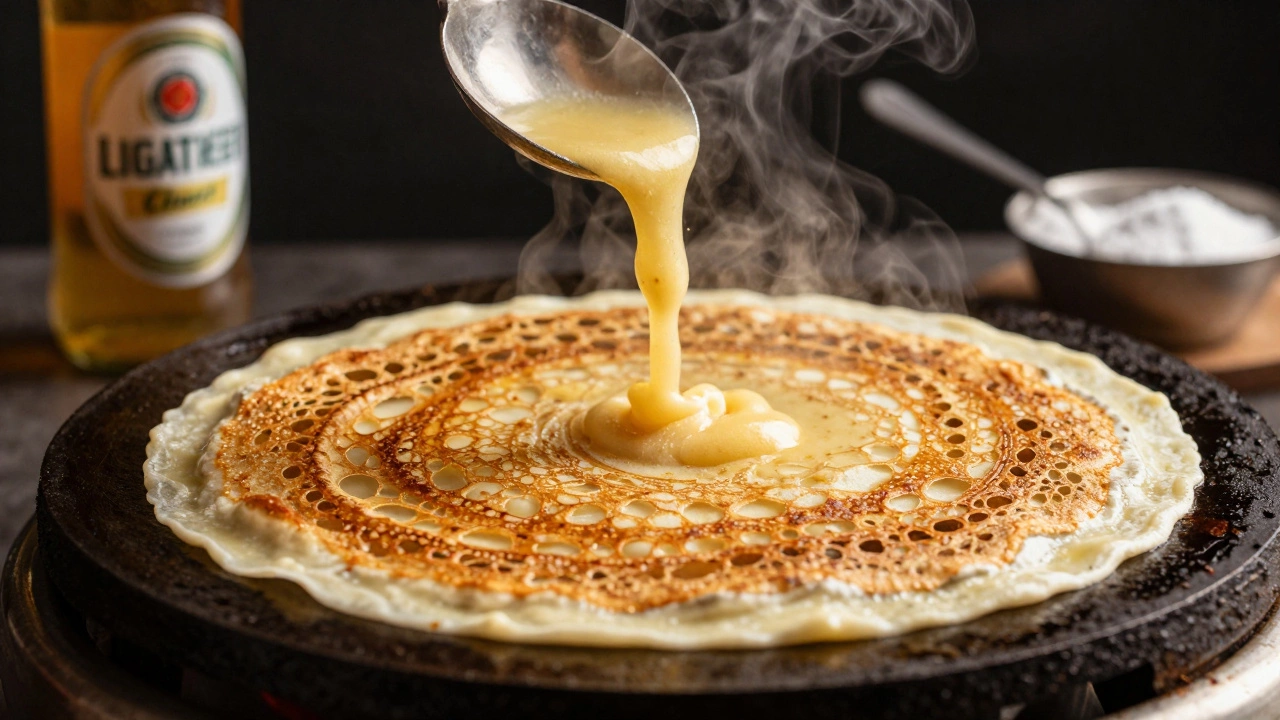
If you have a bottle of lager or pilsner beer in the fridge, you might already have your fermenting agent. Beer contains active yeast and carbonation. Using beer instead of water during grinding introduces millions of yeast cells directly into the batter.
I tried this once in Birmingham when a rainy weekend ruined my outdoor plans, and I needed a quick dinner. I replaced half the water in the rice grinding stage with chilled beer. The batter didn't need to rest long. Within an hour, it had risen noticeably. The alcohol cooks off completely, leaving behind a subtle maltiness that pairs surprisingly well with coconut chutney.
Use a light-colored beer. Dark beers like stout will turn your dosas brown and bitter. Aim for a ratio of 1 part beer to 1 part water when grinding the rice. Skip the baking soda here; the yeast in the beer does the heavy lifting. Just ensure the beer is fresh and not flat.
Method 3: The Idli Yeast Substitute (Eno Fruit Salt)
In many Indian households, Eno Fruit Salt is an effervescent powder used as a leavening agent in idlis and dosas. It is essentially a mix of sodium bicarbonate, citric acid, and sodium carbonate. When it hits water, it fizzes violently.
This is the fastest method available. You don't even need to wait 15 minutes. Grind your rice and dal as usual (soaked for 30 mins). Once ground, stir in 1 teaspoon of Eno per cup of batter. Watch it foam up. Stir gently to incorporate the air, then pour immediately onto the tawa.
The downside? The texture is more like a crepe or a pancake than a traditional dosa. It lacks the complex, sour depth of true fermentation. But if you are feeding hungry teenagers who just want carbs and speed, this is unbeatable. It’s also great for making paper-thin dosas because the batter spreads so easily.
Critical Tips for Success Without Long Fermentation
Rushing fermentation comes with risks. The biggest one is density. Without the long breakdown of starches by bacteria, the gluten network in the dal can become tough. Here is how to avoid that:
- Grinding Temperature Matters: Keep your batter cool while grinding. Friction heats up the stone grinder or blender jar. Hot batter kills yeast and denatures proteins, leading to a sticky mess. Add ice cubes while grinding if your kitchen is warm.
- Dal Consistency: Your urad dal batter should be aerated. It should look like whipped cream. If it’s liquidy, your dosas won’t rise. If it’s doughy, they’ll be hard. Aim for a thick, fluffy paste.
- Rice Ratio: For quick methods, increase the rice-to-dal ratio slightly. Try 3:1 or 4:1 instead of the traditional 2:1. More rice means more starch to crisp up, compensating for the lack of structural development from long fermentation.
- Heat Control: Quick-batch dosas require a very hot tawa. If the pan isn’t hot enough, the batter will stick and burn before it sets. Test by sprinkling a drop of water; it should sizzle and evaporate instantly.
Comparing the Methods: Which One Should You Choose?
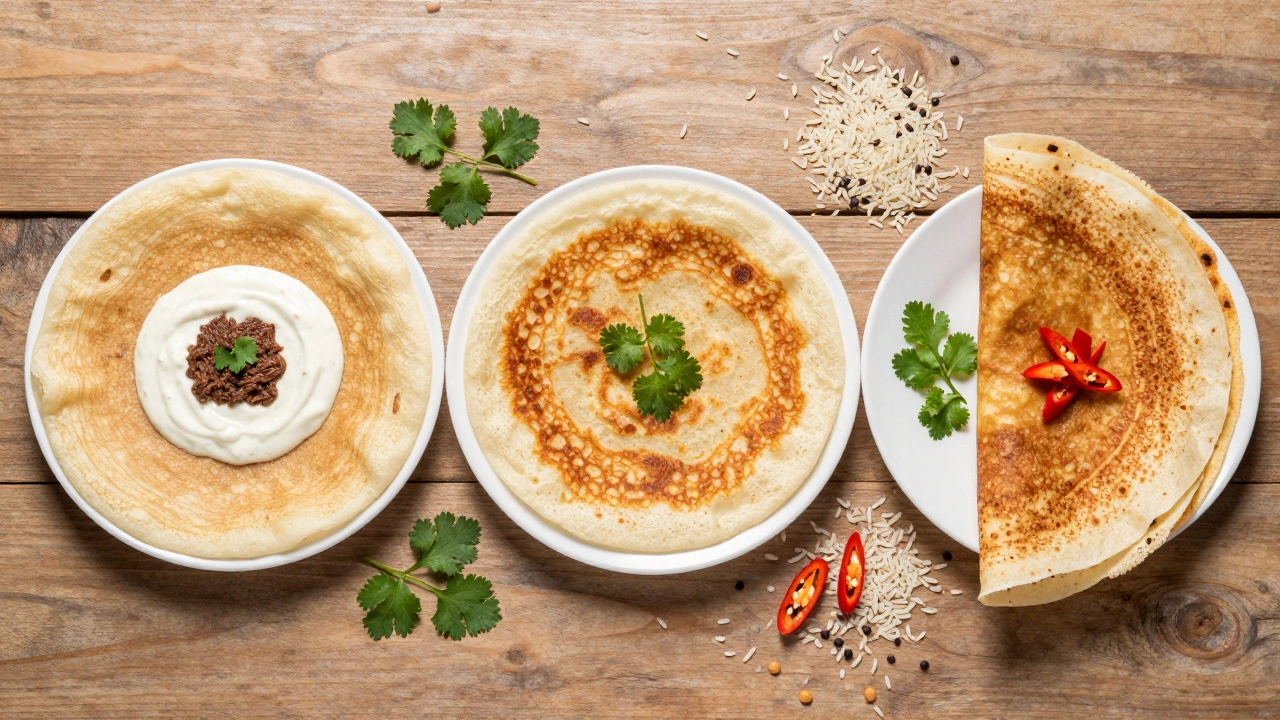
Not all quick methods are created equal. Your choice depends on what you value most: taste, texture, or speed.
| Method | Prep Time | Taste Profile | Texture | Best For |
|---|---|---|---|---|
| Curd + Baking Soda | 45 mins | Slightly sour, mild | Soft, fluffy | Breakfast, family meals |
| Beer | 60 mins | Neutral, slight malt hint | Crispy, lacy | Evening snacks, guests |
| Eno / Baking Powder | 30 mins | Flat, no sourness | Crepelike, thin | Emergency dinners, kids |
| Traditional (Control) | 12+ hours | Tangy, complex | Light, airy | Weekends, special occasions |
If you have a bit more time, say 4-5 hours, you can combine methods. Use a little curd and let the batter sit in a warm spot (like inside an oven with just the light on). This hybrid approach gives you better flavor than the instant methods but saves you half a day compared to the traditional route.
Troubleshooting Common Issues
Even with shortcuts, things can go wrong. Here is how to fix them:
The dosas are sticking to the pan. This usually means your batter is too wet or your pan isn’t seasoned properly. For quick batters, which lack the natural lubrication of long-fermented oils, ensure your tawa is well-oiled. A cast-iron skillet works best. Also, check if you added too much water during grinding. The batter should flow like heavy cream, not milk.
The dosas are dark and bitter. You likely used too much baking soda or Eno. These agents leave a metallic aftertaste if overused. Stick to the measurements: ½ tsp baking soda per cup of batter is plenty. If it tastes bitter next time, reduce the amount by half.
The dosas are hard and chewy. This indicates under-grinding or over-cooking. Make sure your dal is ground to a fine, fluffy consistency. If it has grainy bits, it will never soften. Also, cook on medium-high heat. Low heat dries out the batter before it crisps, resulting in a rubbery texture.
Final Thoughts on Quick Fermentation
While nothing beats the soulful tang of a 12-hour fermented dosa made by your grandmother, these quick methods are lifesavers. They prove that you don’t need perfect conditions to enjoy South Indian cuisine. Whether you use the acidity of curd, the yeast in beer, or the fizz of Eno, you are manipulating the same basic principles of leavening. Experiment with these ratios, find what suits your palate, and enjoy the crunch without the wait.
Can I use baking powder instead of baking soda for quick dosa batter?
Yes, you can. Baking powder contains both baking soda and an acid (usually cream of tartar), so it doesn't require curd to activate. Use 1 teaspoon of baking powder per cup of batter. However, baking soda with curd tends to give a lighter texture because you control the acid level better.
Does using beer make the dosa alcoholic?
No. The alcohol content in beer is low, and it evaporates completely during the cooking process. The high heat of the tawa ensures that only the flavor compounds and yeast remain, resulting in a non-alcoholic dish safe for all ages.
How long can I store quick dosa batter in the fridge?
Quick batter containing baking soda or Eno should be cooked immediately. The leavening action starts as soon as it hits moisture. If you use the curd method without baking soda, you can store it in the fridge for up to 24 hours, but it may become overly sour. It's best to make quick batter only as much as you need.
Can I use instant oats for a quick dosa?
What is the best rice variety for quick dosa batter?
Parboiled rice or Idli rice works best. Parboiled rice is partially cooked, which speeds up the softening process during soaking. It also yields a crispier dosa compared to raw white rice, which can sometimes turn mushy if not ground perfectly.
Why do my quick dosas turn out yellow?
A slight yellow tint is normal due to the turmeric often added to urad dal. However, if they are bright orange or brown, you may have used too much fenugreek seeds or allowed the batter to oxidize. Ensure you use fresh ingredients and cook promptly after mixing the leavening agents.