Vegetarian Indian Meal Builder
Build a balanced vegetarian Indian meal using the essential components from the article: grains, dal, vegetables, and dairy. Each meal provides optimal protein and nutrients.
Your Balanced Meal
Ever sat down to a plate of steaming rice, golden dal, and a stack of warm rotis and wondered, what is a vegetarian Indian meal? It’s not just a list of dishes. It’s a full-day rhythm of flavors, textures, and traditions that millions of Indians follow without even thinking about it. No meat. No fish. No eggs. Just vegetables, legumes, grains, dairy, and spices - but not in a boring, health-food way. This is food that sings.
It Starts with the Staples
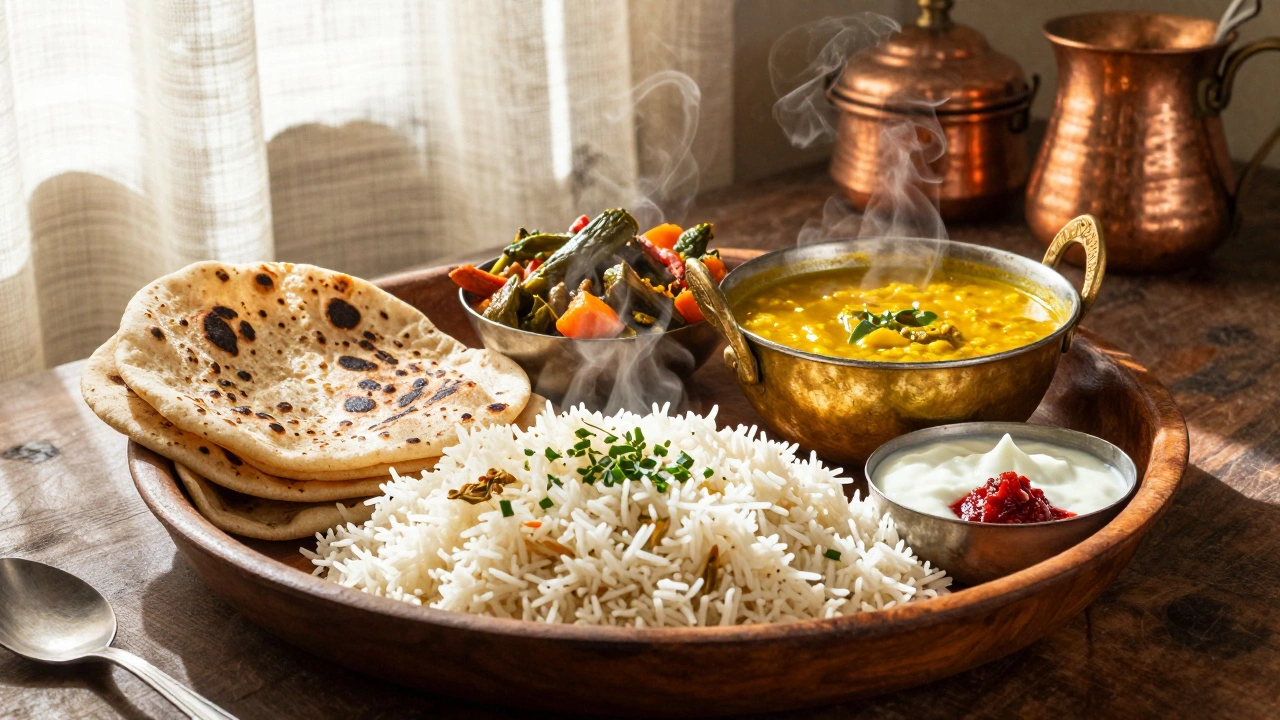
A vegetarian Indian meal isn’t built around one star dish. It’s a balance. Every plate has a purpose. You’ll find:
- Grains: Rice (basmati, red, or brown) or flatbreads like roti, chapati, or paratha. In the north, roti is king. In the south, rice rules.
- Dal: Lentils cooked soft, spiced with cumin, turmeric, and garlic. Not just side dish - it’s protein. Daily. One bowl of dal gives you 18 grams of protein - more than an egg.
- Vegetables: Cauliflower in achaari masala, potatoes in aloo gobi, spinach in saag, eggplant in bharta. Seasonal. Local. Never imported.
- Dairy: Paneer cubes fried in tandoor, yogurt stirred into raita, ghee drizzled over rice. Milk, curd, and butter are everyday ingredients, not just for tea.
These aren’t optional extras. They’re the skeleton of the meal. Skip one, and the plate feels incomplete.
How a Typical Day Looks
Think of a vegetarian Indian meal as a cycle, not a single plate.
Morning: A simple breakfast - poha (flattened rice cooked with mustard seeds and peanuts) or upma (semolina with veggies). Often served with coconut chutney or a cup of masala chai. No heavy carbs. Just enough to wake up the body.
Lunch: The main event. Rice or roti, two kinds of dal (one thin, one thick), one dry vegetable curry (like bhindi sabzi), one wet curry (like baingan bharta), a side of yogurt, and a spoon of pickle. Every bite has a different texture - crunchy, creamy, tangy, spicy. It’s designed to balance heat, coolness, and digestion.
Dinner: Lighter. Often just roti, dal, and a single vegetable dish. Sometimes paneer tikka or aloo paratha. Leftovers from lunch are common. No one eats five-course meals every night.
Snacks? Oh yes. Samosas, dhokla, khandvi, roasted chana - all vegetarian. And always made fresh. No frozen food.
Spices Are the Soul, Not Just Flavor
People think Indian food is just hot. It’s not. It’s layered. A typical spice blend for a vegetarian meal might include:
- Turmeric - for color and anti-inflammatory power
- Cumin - earthy, aids digestion
- Coriander - citrusy, cuts through richness
- Asafoetida (hing) - adds depth, replaces garlic in some traditions
- Mustard seeds - popped in oil, they burst like tiny fireworks
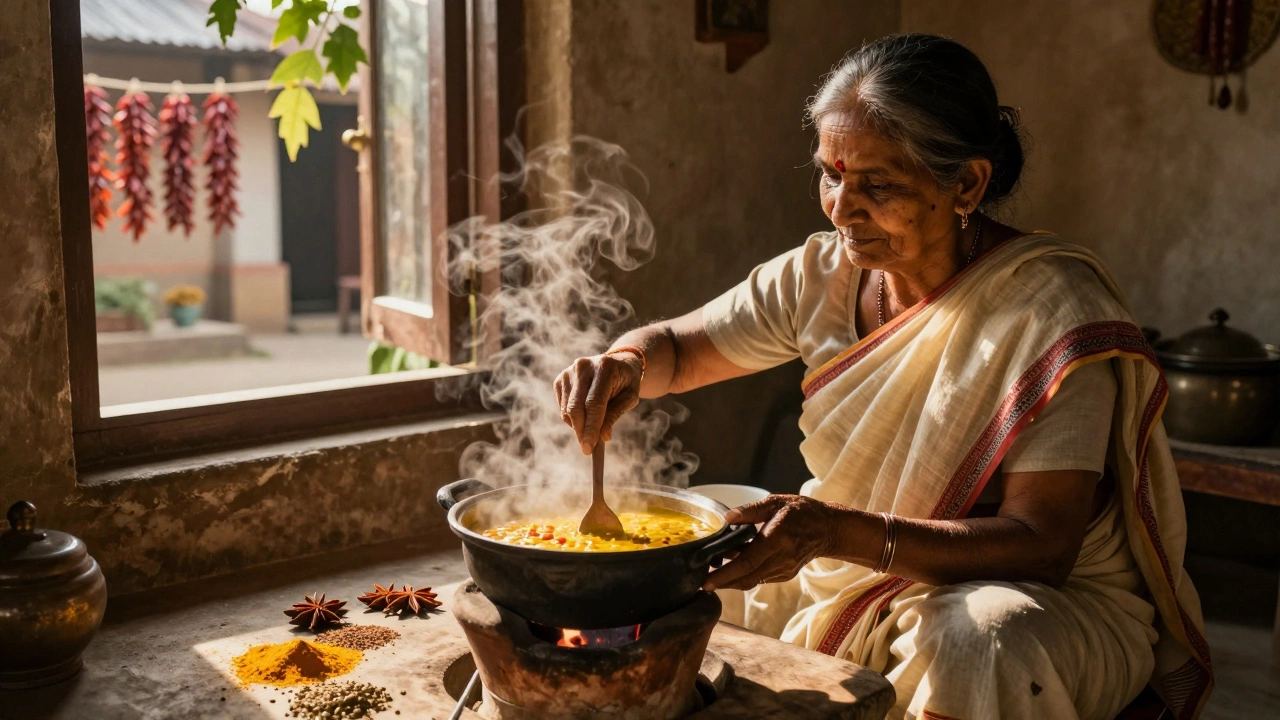
These aren’t sprinkled randomly. They’re toasted in oil first. That’s called tadka - the sizzle that unlocks flavor. A spoon of dal without tadka? It’s like coffee without brewing. Barely there.
Regional Differences Matter
North India? Paneer and butter chicken (even if vegetarian) are common. Roti, creamy curries, ghee-heavy cooking.
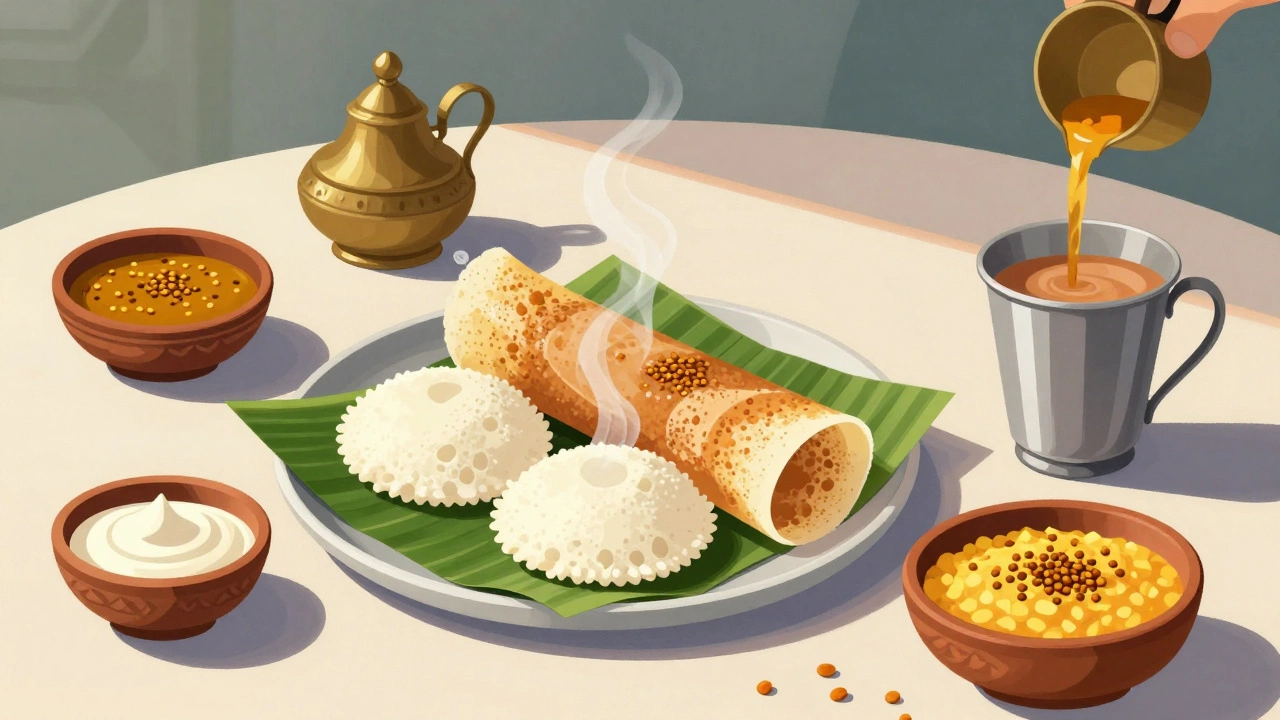
South India? Rice, coconut, tamarind, and lentils dominate. Dosa, idli, sambar, rasam - all plant-based. No cream. No butter. Just fermented batter and sour broth.
West India? Gujarati meals are sweet-savory. A plate might have khichdi, dhokla, and a sweet chutney. Maharashtrian meals use peanut and sesame pastes.
East India? Mustard oil, fish (but vegetarian versions use lotus stem or eggplant), and rice. Bengal’s shukto - a bitter vegetable stew - is an acquired taste, but it’s vegetarian, and it’s traditional.
One thing stays the same: no meat. Ever. Not even in disguise.
Why It Works So Well
Vegetarian Indian meals aren’t trendy. They’re ancient. And they’re balanced.
A 2023 study from the Indian Council of Medical Research found that traditional vegetarian diets in rural India had lower rates of type 2 diabetes and hypertension than non-vegetarian diets - even when calorie intake was similar. Why? Because the meals are high in fiber, low in saturated fat, and packed with phytonutrients from spices and legumes.
And it’s not about being perfect. It’s about variety. One day, you eat rajma (kidney beans). The next, chana (chickpeas). The next, masoor (red lentils). Your body gets different amino acids. No need for protein powders.
Even the way food is eaten matters. Meals are eaten slowly. With hands. The warmth of the fingers helps you feel full faster. No one finishes a plate and immediately grabs dessert. There’s always a pause. A sip of buttermilk. A moment.
What You Won’t Find
Forget fake meats. No Beyond Meat in traditional homes. No vegan cheese. No soy curls. Real Indian vegetarian food doesn’t need to mimic meat. It has its own identity.
No eggs. Even in places where eggs are cheap, they’re not part of the vegetarian meal. In many households, eggs are considered non-vegetarian - not because they’re meat, but because they’re seen as potential life.
No onion or garlic in some homes. Jain communities avoid root vegetables entirely. No potatoes, no onions, no garlic. Their food is still rich - made with dried ginger, fennel, and sesame.
And no dairy substitutes. Real milk, real yogurt, real ghee. They’re not optional. They’re part of the ritual.
How to Build Your Own Vegetarian Indian Meal
Start simple. You don’t need 10 dishes. Just three core elements:
- One grain - rice or roti
- One dal - even canned lentils work
- One vegetable curry - frozen peas with cumin and turmeric counts
Add: a spoon of yogurt, a pinch of pickle, and a dollop of ghee. That’s it. You’ve made a real vegetarian Indian meal.
Try this combo: brown rice, chana dal, sautéed spinach with garlic and mustard seeds. Serve with plain yogurt. That’s a complete, balanced plate. No fancy ingredients. Just what’s in your kitchen.
It’s Not a Diet. It’s a Way of Eating
Vegetarian Indian meals aren’t about restriction. They’re about abundance. Abundance of color. Abundance of texture. Abundance of flavor. You don’t miss meat because you’re too busy enjoying the lentils, the spices, the yogurt, the warmth of fresh bread.
It’s food that’s been refined over centuries - not by chefs, but by mothers, grandmothers, and village cooks who knew that good food doesn’t need to be complicated. Just real.
Is Indian vegetarian food healthy?
Yes, when it’s traditional. Indian vegetarian meals are rich in fiber, plant protein, and antioxidants from spices like turmeric and cumin. Studies show lower rates of heart disease and diabetes in communities that eat this way daily. The key is avoiding fried snacks and too much ghee - balance matters.
Can you get enough protein on a vegetarian Indian diet?
Absolutely. Dal (lentils), paneer, yogurt, chickpeas, and peanuts are all high-protein staples. One cup of cooked chana dal has 18 grams of protein. Most people eat dal twice a day. Combined with rice or roti, you get complete amino acids. No supplements needed.
Do all Indian vegetarians avoid eggs?
In traditional households, yes. Even though eggs aren’t meat, they’re considered non-vegetarian in most Indian cultures, especially among Hindus and Jains. Some urban families may eat eggs, but it’s not part of the classic vegetarian meal structure.
What’s the difference between vegetarian and vegan in India?
In India, vegetarian almost always includes dairy - milk, yogurt, ghee, paneer. Veganism is rare and often seen as a Western concept. Traditional meals use ghee for cooking and yogurt as a side. If you’re vegan, you’ll need to ask for substitutions - like coconut oil instead of ghee.
Are Indian vegetarian meals boring?
Not even close. The spices alone create hundreds of flavor combinations. A single potato can be cooked six different ways in one week - roasted, fried, stewed, spiced, mashed, or stuffed. The texture changes with every dish. You’ll never get tired of it.