Indian Street Food: What It Is, Why It Matters, and What to Try
When you think of Indian street food, vibrant, fast, and deeply rooted in local culture, sold by vendors on sidewalks and bustling corners across the country. Also known as roadside eats, it’s not just about hunger—it’s about connection, rhythm, and taste that changes with every city. From the sizzle of tandoori chicken at dusk to the crunch of a freshly fried samosa at dawn, Indian street food is the heartbeat of daily life. It doesn’t need fancy restaurants or Michelin stars. It thrives in the noise of traffic, the smell of cumin and chili, and the quick handoff of a paper cone full of pani puri.
This isn’t just food—it’s a cultural language. The way vendors say "Tata" instead of "bye" isn’t a mistake; it’s part of the rhythm of street life. The way chutney is jarred hot to keep it safe, or how roti stays soft for days without preservatives—these aren’t tricks. They’re inherited wisdom passed down through generations of cooks who know how to feed people well, fast, and affordably. And yes, street food hygiene, the practices that keep these meals safe despite open-air cooking matters. You can enjoy it without getting sick if you know what to look for: clean oil, fresh ingredients, and vendors who turn over stock quickly.
Indian street food culture, the unspoken rules, traditions, and social rituals around eating on the go is what makes it special. It’s not just what you eat—it’s who you eat with, how fast you eat it, and where you sit (or stand). You’ll find families sharing a plate of pav bhaji, students grabbing a quick bhel puri between classes, and office workers grabbing a hot jalebi on their way home. This is food that adapts: vegan dosas in the south, spicy kebabs in the north, sweet jalebis in the east, and tangy chaat everywhere.
Some of the most popular dishes you’ll find in this collection aren’t just snacks—they’re stories. Tandoori chicken isn’t just grilled meat; it’s yogurt, spices, and fire working together. Chutney isn’t just a condiment; it’s a flavor weapon that cuts through grease and balances heat. And yes, even the humble roti has its science—how it’s rolled, cooked, and stored makes all the difference. You’ll also find answers to questions like: Is Indian street food healthy? What’s the real difference between a chutney and a jam? Why do some people serve rice over roti?
This isn’t a tourist guide. It’s for anyone who’s ever stood at a roadside stall, smelled the spices, and wondered: "How do they make this so good?" The posts here don’t just list dishes. They explain the why behind the how—whether it’s the fermentation of dosa batter, the science of frying without bitterness, or why certain snacks are naturally vegan. You’ll learn what to avoid, what to seek out, and how to eat street food like someone who’s been doing it for years.
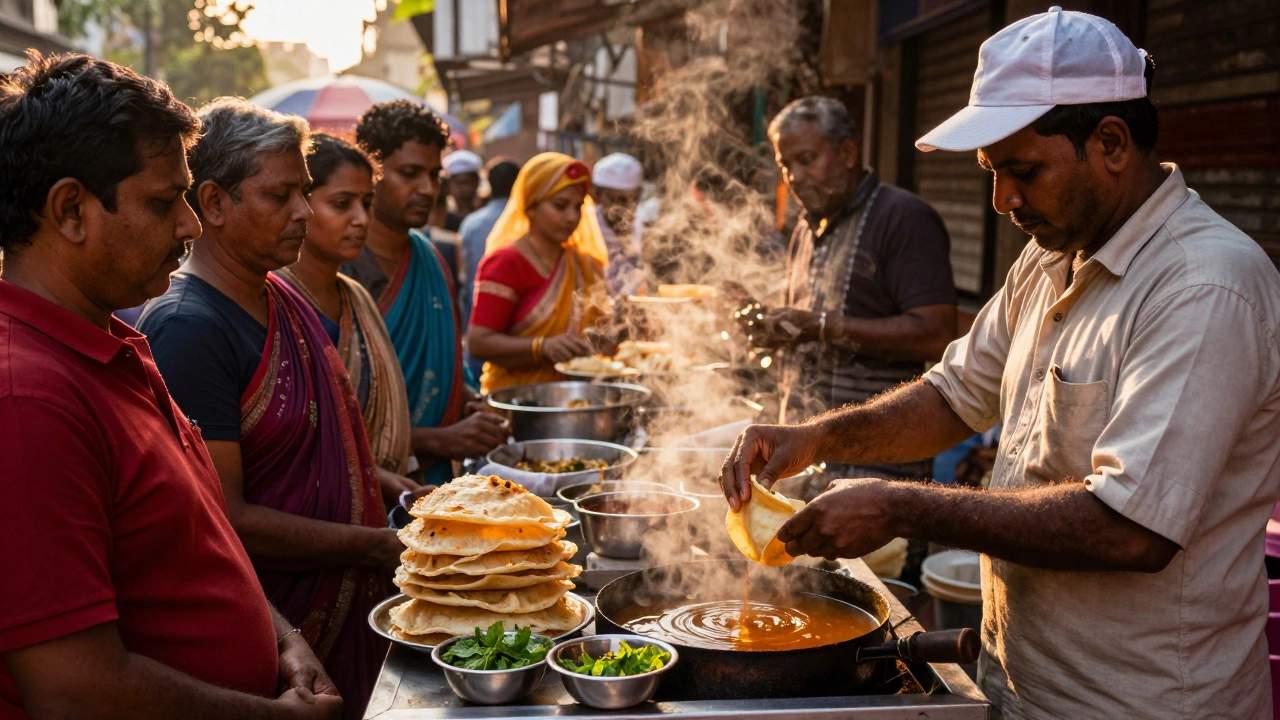
What Is the Main Street Food in India? Top Picks Across the Country
India doesn't have one single main street food, but pani puri comes closest-eaten from Mumbai to Kolkata, it's cheap, crunchy, and bursting with flavor. Discover the top street dishes across regions and how to eat them like a local.
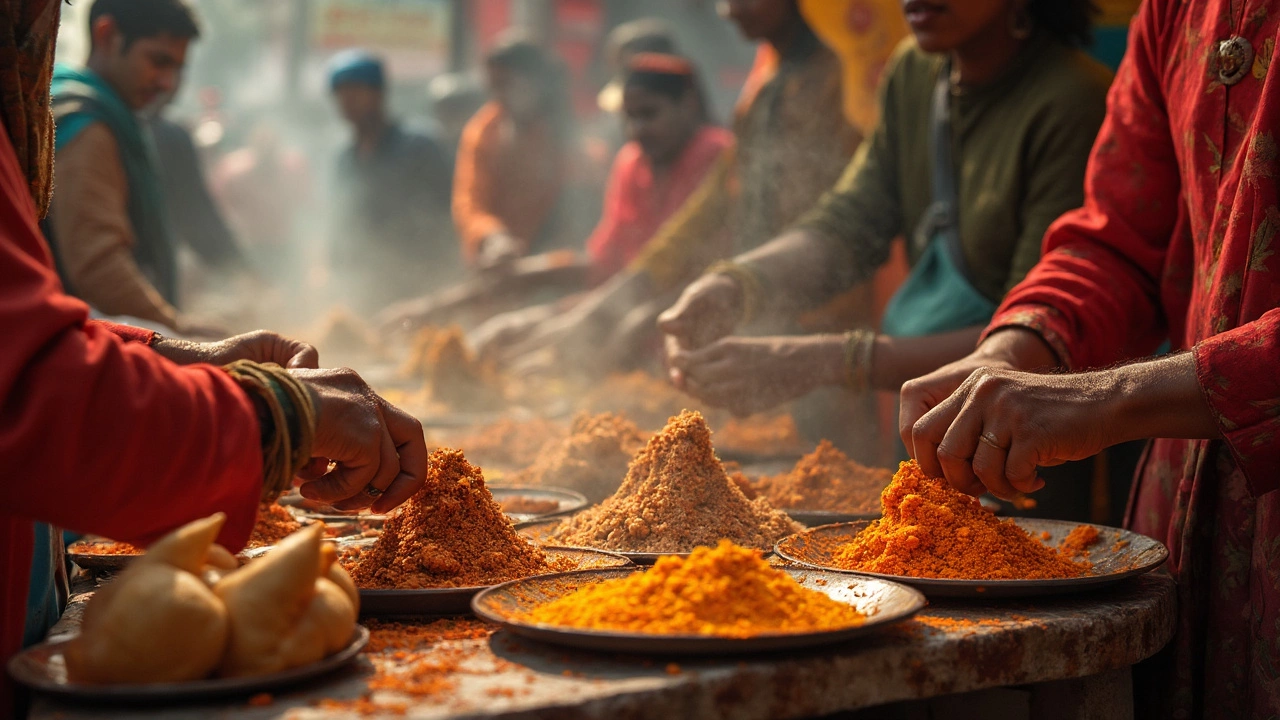
Indian Street Food: Why Eating With Hands is Key
Indian street food bursts with flavors, colors, and the unique habit of eating with hands. This article explores why hands matter so much on India's bustling streets. You'll learn about tradition, science, and how vendors actually make things tastier and faster by hand. The article spills useful tips for visitors on embracing this messy, delicious style. There's a deeper story here, blending practicality, flavor, and community.
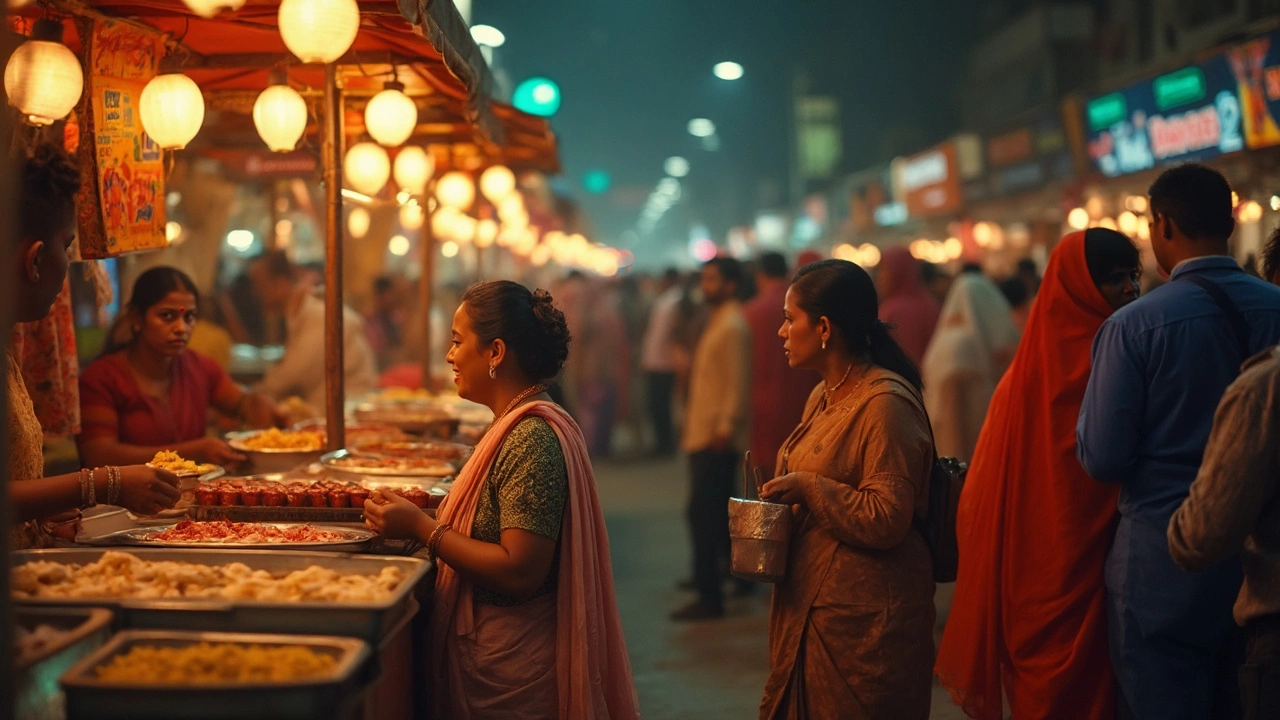
Is it OK to Eat Beef in India? Street Food Realities and Surprises
Eating beef in India isn’t as straightforward as grabbing a plate of momos or chaat. The rules, attitudes, and what you actually find on the street can be confusing depending on where you are. This article breaks down why eating beef is complicated, where you might find it, and which places to skip if you’re hoping for a beefy snack. If you’ve ever wondered if locals really eat beef or just tourists hunt for it, this gives you the whole picture—no sugarcoating.