Indian Street Food Region Finder
Ask anyone who’s ever walked through the crowded lanes of Mumbai, Delhi, or Kolkata, and they’ll tell you: Indian street food isn’t just a snack-it’s a daily ritual. But if you’re wondering what the main street food in India is, there’s no single answer. Unlike countries where one dish dominates the sidewalks, India’s street food scene is a patchwork of regional flavors, textures, and traditions. What’s popular in Gujarat won’t be the same in Tamil Nadu. Still, one dish stands out across borders, generations, and budgets: pani puri.
Pani Puri: The Unofficial National Street Food
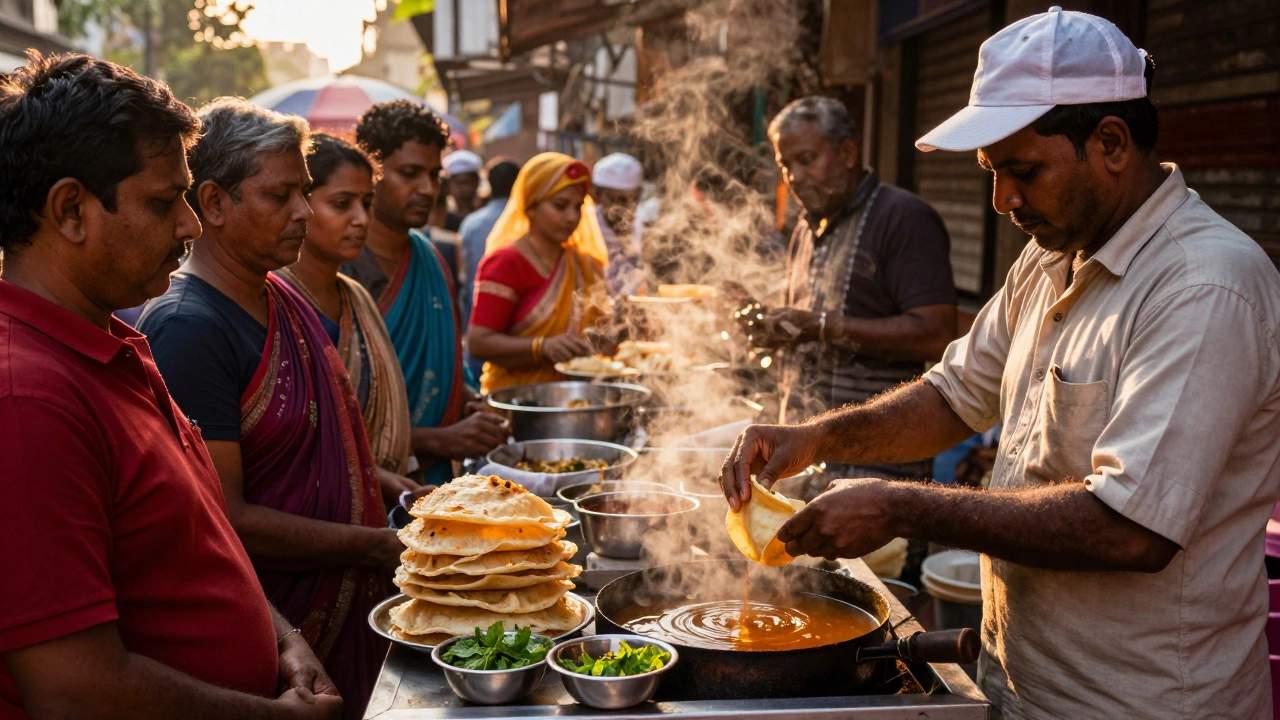
Pani puri-also called golgappa, puchka, or phuchka depending on the region-is a bite-sized explosion of flavor. A crisp, hollow puri is filled with spiced potato, chickpeas, and onion, then dunked in tangy tamarind water, mint-coriander chutney, and a dash of spicy green water. You pop it whole into your mouth, and the crunch gives way to a burst of sweet, sour, spicy, and cool all at once. It’s messy, it’s loud, and it’s addictive.
It’s sold everywhere: from plastic stools beside bus stops in Lucknow to carts outside temples in Varanasi. In Mumbai, vendors serve it in clusters of six or eight, calling out ‘Pani puri, fresh!’ as they assemble them in seconds. In Bengal, it’s called phuchka, and the water is often more peppery. In Rajasthan, the puri is thicker, and the filling is simpler. Yet the experience is the same-quick, cheap, and unforgettable.
Why does it dominate? Because it’s cheap-often under ₹10 ($0.12 USD)-and fast. You don’t need a fork or plate. You eat it standing up, right after it’s made. And unlike many other street foods, it’s naturally vegetarian and gluten-free if made with traditional semolina. It’s also adaptable: some vendors add boiled egg, cheese, or even mango for a sweet twist. No other street food in India is so universally loved, so widely available, and so deeply personal.
Other Major Contenders Across India
But pani puri isn’t the only star. India’s street food map is full of strong competitors, each with loyal followings.
Vada pav, from Mumbai, is often called the Indian burger. A spicy potato fritter (vada) is tucked into a soft bread roll (pav), then slathered with chutneys and sometimes a sprinkle of sev. It’s the go-to breakfast for office workers and students alike. In 2023, a survey by the Mumbai Municipal Corporation found that over 3 million vada pav units are sold daily-more than any other street food in the city.
Samosa is the classic fried snack found from Kashmir to Kerala. Crispy pastry filled with spiced potatoes, peas, and sometimes minced meat. It’s often served with tamarind or mint chutney. While it’s eaten at home too, its street version is different: hotter, crunchier, and served fresh off the fryer. In Delhi, you’ll find samosas the size of your fist. In Hyderabad, they’re smaller, with a hint of garam masala and dried fruit.
Dosa rules the south. A fermented rice and lentil batter is spread thin on a hot griddle, then folded around a potato filling or served plain with coconut chutney and sambar. In Chennai, you’ll find masala dosas that are 18 inches long. In Bengaluru, they’re served on banana leaves. Some street vendors even make cheese dosas or chocolate dosas now-though purists roll their eyes.
Chaat is a category, not a single dish. It includes bhel puri (puffed rice with sev and chutneys), aloo tikki (fried potato patties), and ragda pattice (chickpea curry with potato cutlets). Chaat means ‘to lick’-and once you taste it, you’ll understand why. The balance of sweet, sour, salty, and spicy is engineered for maximum pleasure. In Delhi’s Chandni Chowk, chaat stalls operate 24/7, and queues stretch around the block.
What Makes Street Food in India So Special?
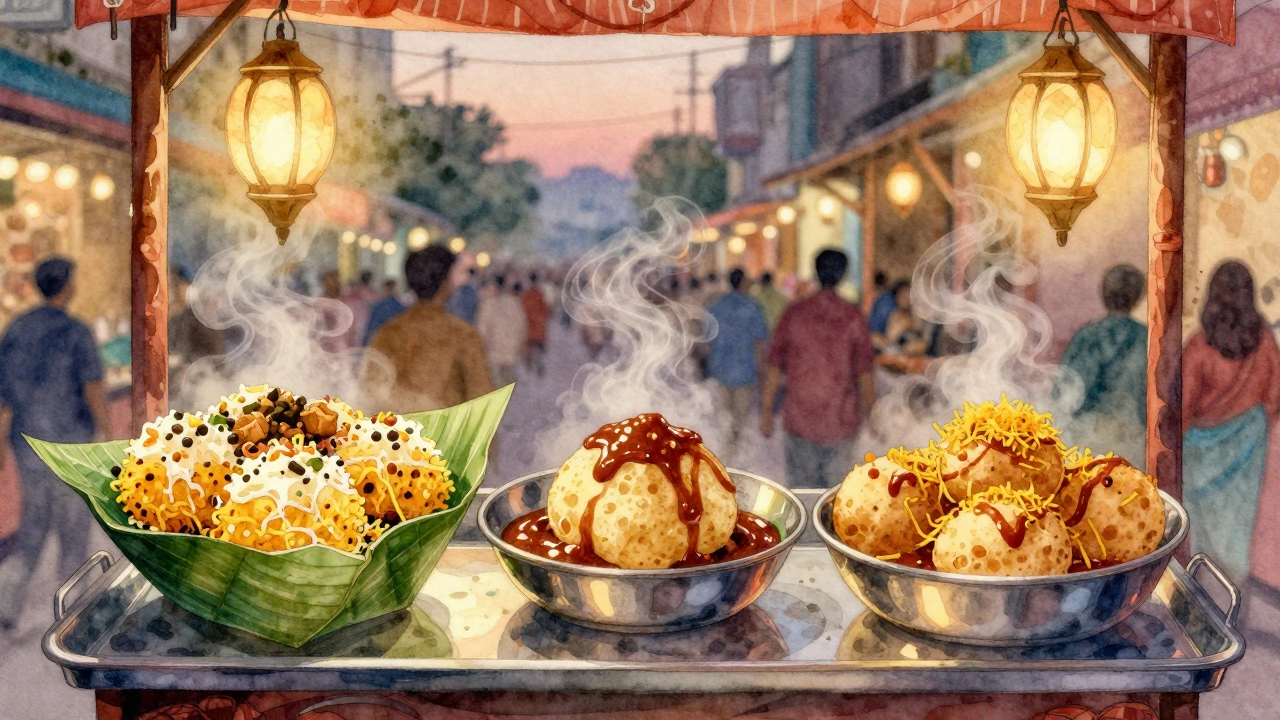
It’s not just about taste. Indian street food is deeply tied to culture, class, and community. For many, it’s the only affordable, hot meal they get during the day. A construction worker in Jaipur eats pani puri for lunch. A college student in Pune survives on vada pav and chai. A grandmother in Kolkata buys puchka for her grandkids after school.
Unlike restaurant food, street food changes daily. Vendors adjust spice levels, chutney recipes, and even filling ratios based on the weather, customer feedback, or the price of potatoes. There’s no menu. You point, you watch, you taste. And if you like it, you come back tomorrow.
It’s also incredibly safe. Despite rumors, most street vendors follow hygiene practices passed down for generations. The oil is changed daily. The chutneys are made fresh. The water is boiled. In fact, a 2024 study by the Indian Institute of Public Health found that street food in major cities had lower bacterial counts than some packaged snacks sold in supermarkets.
Regional Variations You Should Try
Don’t assume all street food is the same. Here’s what to look for in different parts of India:
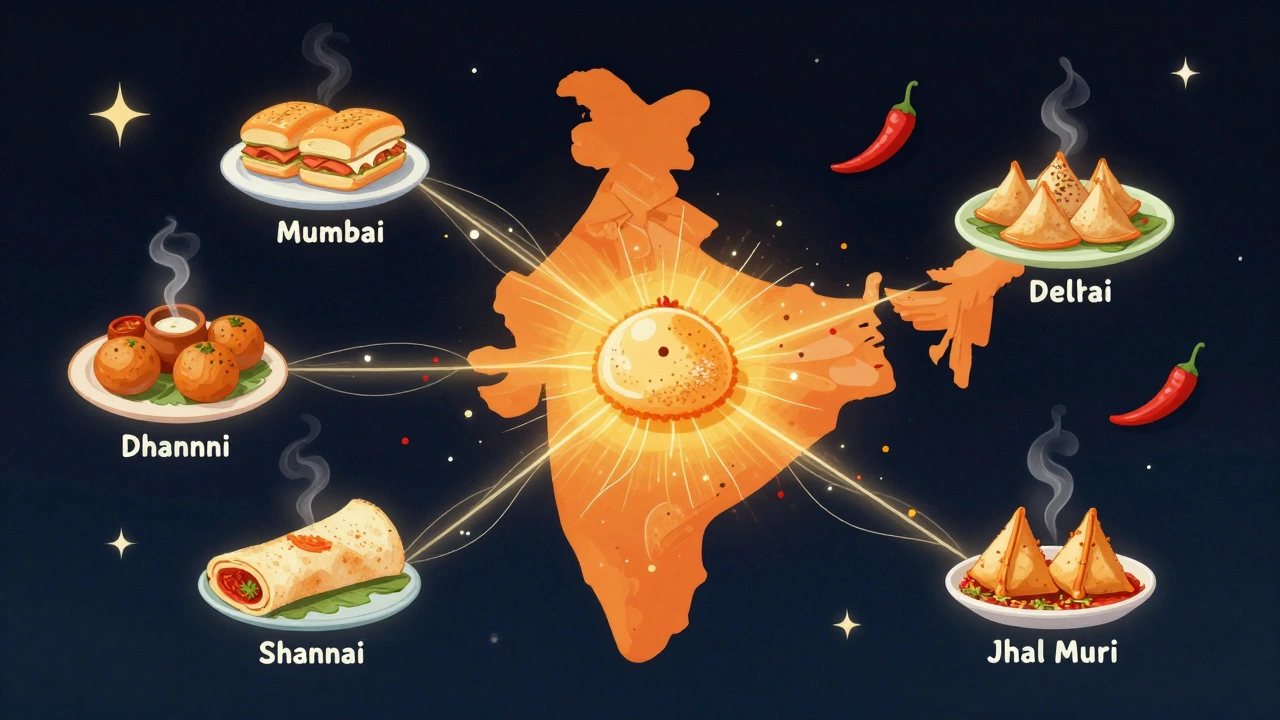
- Mumbai: Vada pav, pani puri, sev puri, misal pav
- Delhi: Chole bhature, parathas, kebabs, golgappa
- Kolkata: Jhal muri (spicy puffed rice), kathi rolls, telebhaja (fritters)
- Chennai: Masala dosa, bonda, murukku, filter coffee
- Hyderabad: Mirchi bajji, haleem (during Ramadan), double ka meetha
- Jaipur: Pyaaz kachori, ghewar, dal baati churma
- Guwahati: Jadoh (rice with pork), momos, chhang
Each region has its own signature. In the north, you’ll find more bread-based snacks. In the south, fermented batters and lentils dominate. In the east, fish and rice rule. In the west, peanuts and coconut are common.
How to Eat Street Food Like a Local
If you’re new to Indian street food, here’s how to dive in without regret:
- Watch the vendor. If they’re busy and the food is moving fast, it’s fresh.
- Look for stalls with high turnover. Crowds mean repeat customers.
- Go for the spicy version. Most vendors will ask, ‘Mild or hot?’-choose hot. That’s how it’s meant to be.
- Don’t be afraid to eat standing up. That’s the norm.
- Bring cash. Most vendors don’t take cards.
- Start small. Try one item first. Don’t overload your plate.
- Drink bottled water. Even if the food is safe, tap water isn’t.
And if you’re worried about your stomach? Start slow. Eat at busy stalls. Avoid raw salads. Stick to hot, fried, or boiled items. Most travelers who follow these tips have zero issues.
Why There’s No Single ‘Main’ Street Food
India is too big, too diverse, too rich in history for one dish to claim the title. But if you had to pick the one that unites the most people across caste, language, and region-it’s pani puri. It doesn’t require utensils. It doesn’t need a table. It doesn’t care if you’re rich or poor. You just need a hand, a mouth, and the courage to pop it in.
That’s why, even though vada pav feeds Mumbai, dosa feeds Chennai, and samosa feeds the whole country, pani puri is the heartbeat of Indian street food. It’s the snack that connects every corner of India-and every person who’s ever tasted it.
Is Indian street food safe to eat?
Yes, most Indian street food is safe if you choose busy stalls with high turnover. Vendors typically use fresh ingredients, change oil daily, and boil water for chutneys. A 2024 study by the Indian Institute of Public Health found street food in major cities had fewer harmful bacteria than some packaged snacks. Stick to hot, fried, or boiled items, avoid raw salads, and drink bottled water.
What’s the cheapest street food in India?
Pani puri is often the cheapest, costing as little as ₹5-₹10 (about $0.06-$0.12 USD) for a plate of six. Samosas and bhel puri are also under ₹15. In rural areas, you can find a simple aloo tikki for ₹10 or a small dosa for ₹20. Street food is designed to be affordable-many people rely on it for daily meals.
Can vegetarians eat Indian street food?
Absolutely. Most Indian street food is vegetarian by default. Pani puri, vada pav, dosa, samosa, chaat, and bhel puri are all plant-based. Even in cities like Hyderabad or Kolkata, where meat dishes exist, vegetarian options dominate the streets. Just ask if anything contains egg or ghee made from animal fat-some vendors use dairy, but it’s rare.
What’s the most popular street food in Delhi?
Chole bhature is Delhi’s signature street food-fried bread served with spicy chickpea curry. But pani puri and parathas are just as popular. In Chandni Chowk, chaat stalls like Kuremal Mohan Lal and Gali Paranthe Wali draw crowds from dawn till late. Many locals eat paratha for breakfast, pani puri for evening snacks, and chole bhature for lunch.
Do street vendors in India use fresh ingredients?
Yes. Most vendors prepare chutneys, fillings, and batters fresh every morning. Potatoes are boiled and mashed daily. Lentils are soaked and ground fresh. Even the oil is changed regularly-many vendors use a single batch for no more than 8-10 hours. In fact, the freshness is what makes street food better than many restaurants. You’re eating food made minutes before you order it.
What’s the best time to try Indian street food?
Late afternoon to early evening-between 4 PM and 8 PM-is ideal. That’s when the snacks are freshly made and crowds are biggest, meaning high turnover and freshness. In cities like Mumbai and Delhi, some stalls open as early as 6 AM for breakfast. Night markets in Kolkata and Hyderabad stay open until midnight, especially on weekends.