How to Make Paneer: Simple Methods, Substitutes, and Tips
When you make paneer, a fresh, unaged Indian cheese made by curdling milk with acid. Also known as Indian cottage cheese, it’s the backbone of dozens of popular dishes—from palak paneer to paneer tikka. Unlike aged cheeses, paneer doesn’t melt, which is exactly why it holds up so well in curries and grills. You don’t need fancy tools or specialty ingredients. Just milk, an acid, and a bit of patience.
Most recipes call for lemon juice, but what if you’re out? Or maybe you don’t like the tang? That’s where vinegar, a common household substitute that works just as well to curdle milk. Also known as white distilled vinegar, it’s cheaper, more predictable, and leaves no citrus flavor behind. You can also use citric acid, a powdered form of the same compound found in citrus, often used in commercial paneer production. Also known as lemon salt, it gives you full control over the curdling process without any flavor interference. These aren’t hacks—they’re standard alternatives used in homes across India, especially when lemon season is over or when you’re making large batches.
Why does this matter? Because store-bought paneer is expensive. The price isn’t just for the cheese—it’s for packaging, transport, and markup. When you make paneer at home, you cut that cost by more than half. You also know exactly what went in: no preservatives, no additives, just milk and acid. Plus, you can tweak the texture. Want it soft for kofta? Use less pressure. Need it firm for grilling? Press it longer. It’s that simple.
And it’s not just about the cheese itself. Making paneer connects you to the rhythm of Indian kitchens—where fresh is normal, not a trend. You’ll notice how the milk smells when it’s ready to curdle, how the curds separate cleanly, how the whey drains off like clear gold. It’s a quiet skill, passed down through generations, and now it’s yours to learn.
Below, you’ll find real tips from people who’ve made paneer dozens of times. Some swapped lemon for vinegar and never looked back. Others figured out how to save whey for bread or soups. A few even cracked the code on why their paneer turned out rubbery—turns out, it wasn’t the acid, it was the heat. You’ll see what works, what doesn’t, and why.
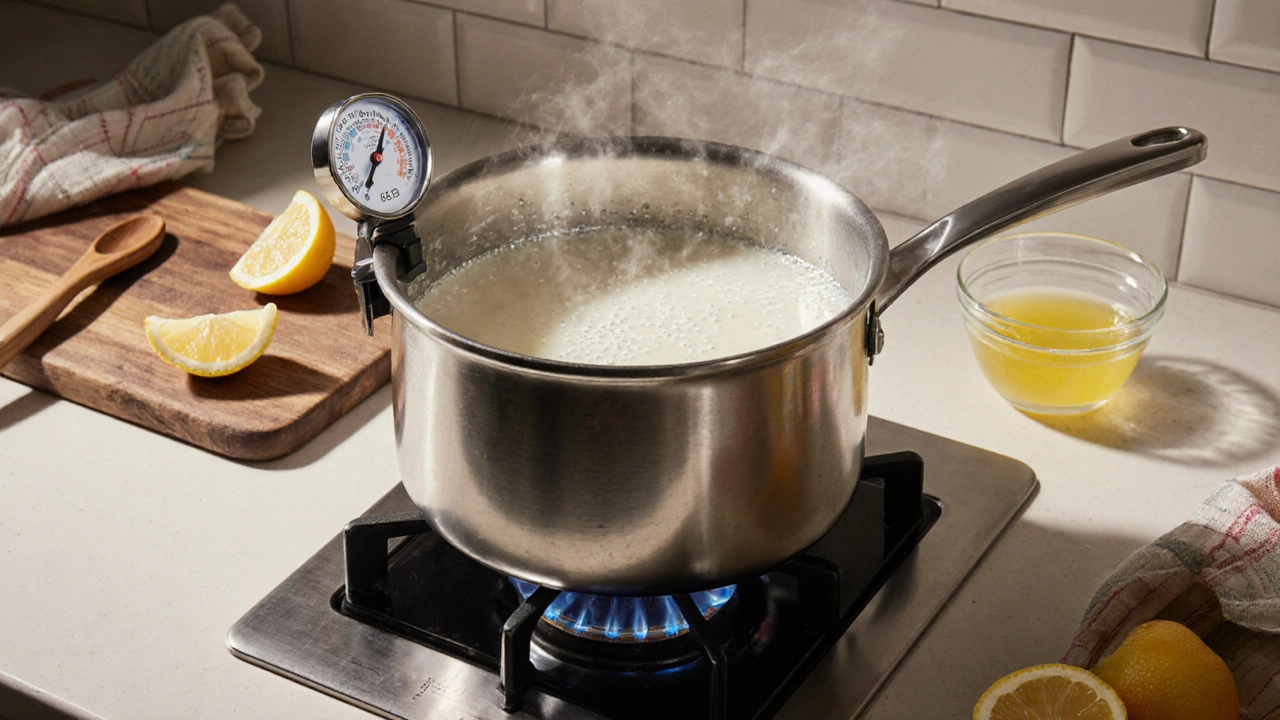
Homemade Paneer: Step‑by‑Step Recipe from Fresh Milk
Learn how to make fresh paneer at home with step‑by‑step instructions, ingredient tips, pressing tricks, storage advice, and FAQs for perfect cheese every time.