Saffron in Biryani: Why It Matters and How to Use It Right
When you think of saffron in biryani, a premium spice used to elevate rice dishes with color, fragrance, and richness. Also known as kesar, it's not just a garnish—it's the soul of a good biryani. You don’t need a lot—just a few threads—to turn ordinary rice into something special. But most people mess it up. They soak it in water, dump it in, and wonder why their biryani looks dull and tastes flat. Here’s the truth: saffron doesn’t work like turmeric or cumin. It needs warmth, time, and the right liquid to release its magic.
The best way to use saffron? Steep it in two tablespoons of warm milk or water for 15 minutes. Don’t boil it. Don’t microwave it. Just let it sit. That liquid becomes your flavor carrier. Drizzle it over the rice layers just before sealing the pot for the dum. The heat from the rice pulls out every drop of aroma, and the milk helps it cling to the grains. Skip the milk? Use rosewater instead. It’s a trick from Lucknow kitchens. It won’t taste like roses—it’ll taste like luxury.
And if you can’t find real saffron? Don’t panic. Many home cooks use food coloring or turmeric to mimic the color. But that’s cheating. You lose the scent, the nuance, the whole point. A better substitute? A pinch of ground marigold petals or a tiny bit of annatto powder. They won’t be the same, but they’ll get you closer than yellow dye. Real saffron is expensive, yes—but one gram lasts for ten biryanis. Think of it as an investment in flavor, not a cost.
Saffron in biryani connects to other key elements too. The rice you use matters—basmati rice for biryani, long-grain, aromatic, and aged. Also known as traditional Indian rice, it’s the base that holds everything together. Without it, your saffron threads float in a mushy mess. And then there’s the spice blend—biryani spices, a mix of cardamom, cloves, cinnamon, and bay leaves that build the foundation. Also known as garam masala for biryani, it’s what makes the saffron sing. You can’t have one without the others.
What you’ll find below isn’t a list of recipes. It’s a collection of real, tested tips from people who cook biryani every week. You’ll learn how to get the rice just right, why some cooks skip saffron entirely (and still make it taste amazing), and what common mistakes ruin even the best ingredients. Whether you’re making it for Diwali or just a quiet Sunday dinner, these posts will help you cook with confidence—not guesswork.
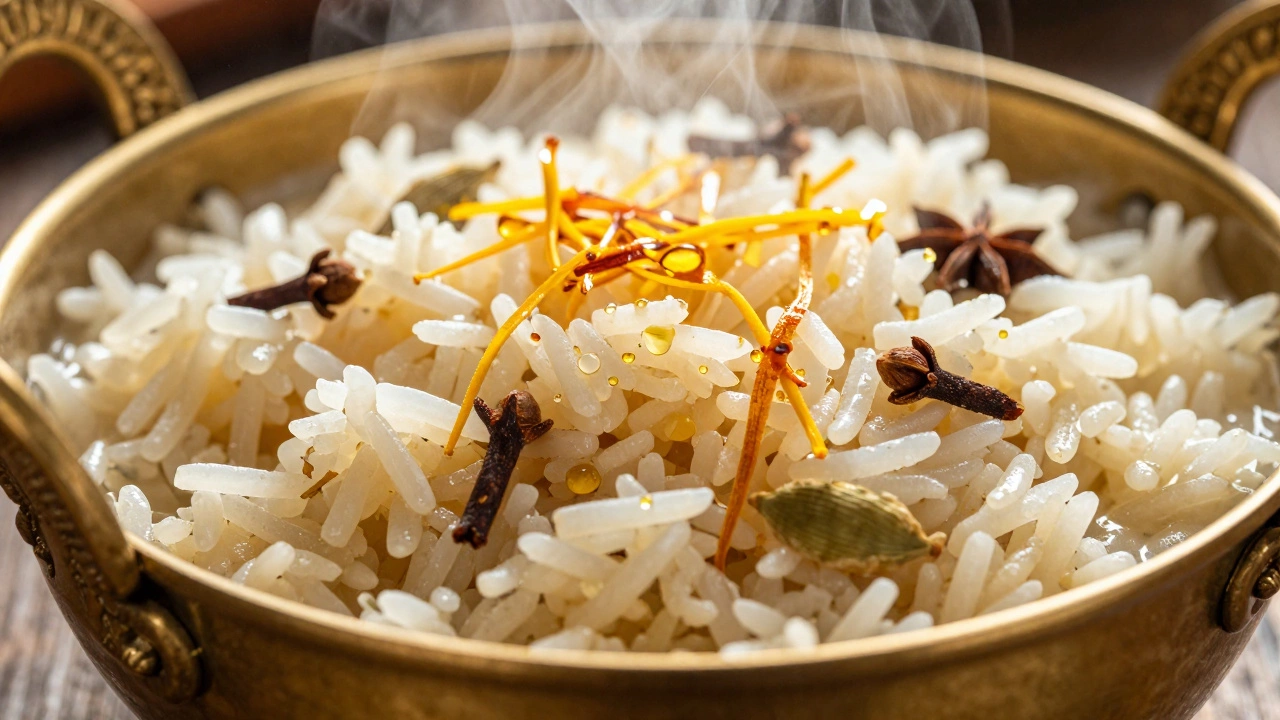
What Is the Sweet Thing in Biryani? The Secret Ingredient Explained
The sweet note in biryani doesn't come from sugar-it's from caramelized onions, saffron, dried fruits, and the natural sugars in basmati rice. Learn how these ingredients create balance and depth in every bite.