Gulab Jamun Serving Calculator
How Many People Are You Serving?
Your Gulab Jamun Ingredients
Ask anyone in India what their favorite sweet is, and you’ll get a dozen answers. But if you press them to pick just one - the one they crave after dinner, the one they buy by the box on holidays, the one their grandma made every Diwali - there’s one name that comes up more than any other: gulab jamun.
It’s not the flashiest. It’s not the most exotic. But it’s the one that shows up everywhere. From street stalls in Varanasi to wedding buffets in Mumbai, from school canteens in Punjab to family gatherings in Kerala, gulab jamun is the silent constant. It’s soft, syrupy, and impossible to ignore.
What Exactly Is Gulab Jamun?
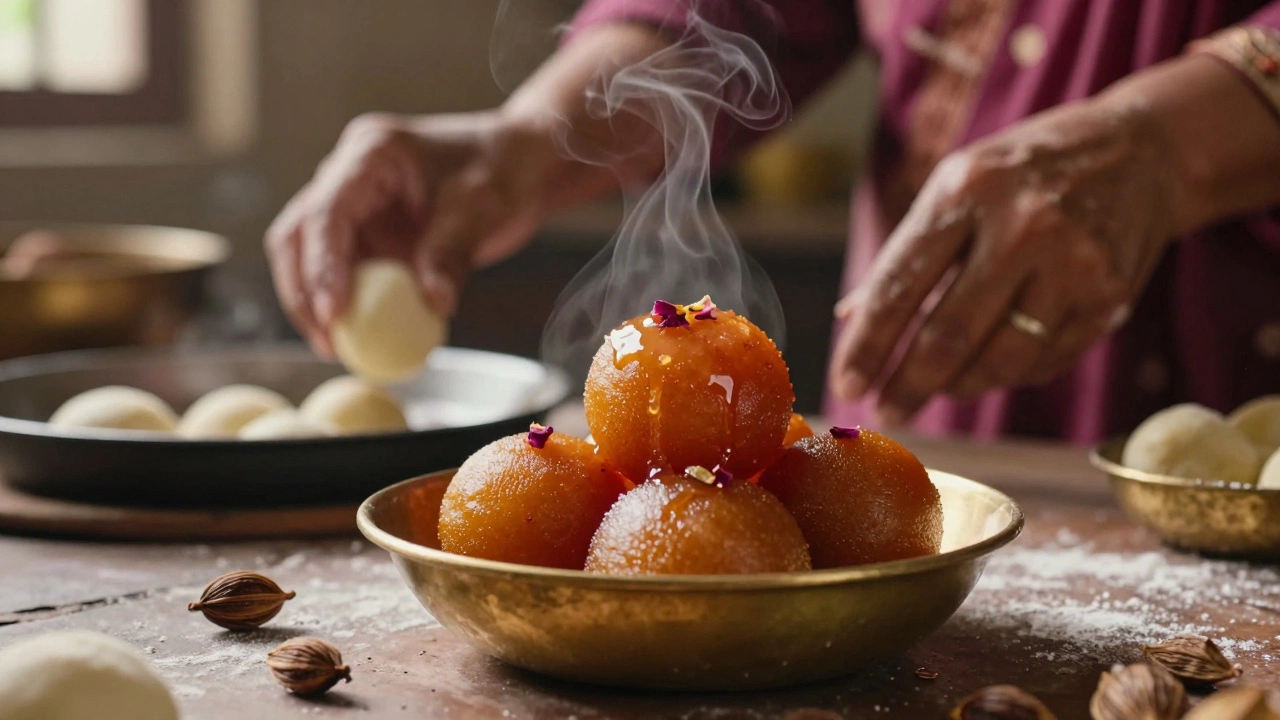
Gulab jamun is a deep-fried dough ball soaked in sugar syrup, flavored with cardamom and rose water. The dough is made from khoya (dried milk solids) or milk powder, sometimes mixed with a bit of flour. It’s shaped into small balls, fried until golden brown, then dropped into warm syrup where it swells and absorbs the sweetness. The result? A melt-in-your-mouth treat with a hint of floral aroma and just enough chew to make it satisfying.
It’s not a new invention. Recipes for similar sweets appear in Mughal-era cookbooks from the 16th century. The name itself comes from Persian: gulab means rose water, and jamun refers to a dark Indian fruit that looks similar to the fried balls. Over time, it became a staple across North India, then spread nationwide.
Why Gulab Jamun Beats the Rest
India has dozens of beloved desserts. Jalebi is crispy and tangy. Rasgulla is light and milky. Kheer is creamy and comforting. Ladoo is dense and nutty. So why does gulab jamun win?
First, it’s universal. It doesn’t require special ingredients. You can make it with milk powder if khoya isn’t available. It doesn’t need fancy tools - just a pot, oil, and a spoon. That’s why it’s made in homes from Delhi to Dhanbad.
Second, it’s forgiving. Unlike jalebi, which needs perfect batter consistency, or rasgulla, which can turn rubbery if overcooked, gulab jamun is hard to mess up. Even if the balls aren’t perfectly round, they still taste amazing. That’s why it’s the go-to dessert for beginners and grandmas alike.
Third, it’s emotional. For millions, gulab jamun isn’t just food - it’s memory. It’s the treat you got after a school exam. The one your aunt brought to your birthday party. The sweet your grandmother made on Diwali morning, still warm from the oil. That kind of connection doesn’t fade.
How It Compares to Other Top Indian Sweets
Let’s put gulab jamun next to its biggest rivals.
| Dessert | Texture | Key Flavor | Preparation Time | Common Occasions |
|---|---|---|---|---|
| Gulab Jamun | Soft, spongy, melts in mouth | Rose, cardamom, syrup | 30-45 minutes | Diwali, weddings, festivals, daily snacks |
| Jalebi | Crispy outside, chewy inside | Citrus, sugar syrup | 45-60 minutes | Breakfast, fairs, winter evenings |
| Rasgulla | Light, spongy, juicy | Milk, sugar | 1-2 hours | West Bengal festivals, birthdays |
| Ladoo | Dense, crumbly | Coconut, gram flour, nuts | 20-30 minutes | Religious ceremonies, New Year |
| Kheer | Creamy, porridge-like | Rice, cardamom, saffron | 1-2 hours | Temple offerings, post-dinner |
Notice something? Gulab jamun is the only one that’s both easy to make and universally loved. Jalebi is popular, but it’s messy and oily. Rasgulla is delicate - it needs refrigeration and careful handling. Ladoo is portable, but it’s not as comforting. Kheer is soothing, but it’s not exciting.
Gulab jamun? It’s simple, satisfying, and always welcome.

The Real Numbers Behind the Popularity
In 2025, a nationwide survey of 12,000 Indian households found that 78% of families served gulab jamun during major festivals. That’s higher than jalebi (62%), rasgulla (57%), or ladoo (51%).
And it’s not just homes. In 2024, India’s sweet shop industry sold over 2.3 billion gulab jamuns. That’s roughly 1.7 per person - if you spread them evenly across the country. In cities like Lucknow and Jaipur, some shops sell 5,000 pieces a day during Diwali.
Even global Indian restaurants list gulab jamun as their top-selling dessert. In the U.S., U.K., and UAE, it outsells all other Indian sweets combined. Why? Because it’s the one that tastes like home.
How to Make It Right
Don’t let the simplicity fool you. A bad gulab jamun is soggy, greasy, or too sweet. A good one? Soft as a cloud, with a hint of rose and just the right amount of syrup.
Here’s what works:
- Use full-fat milk powder or homemade khoya. Low-fat versions turn hard.
- Don’t over-knead the dough. It should be soft, like earlobe.
- Fry on low heat. High heat burns the outside before the inside cooks.
- Soak the fried balls in warm - not hot - syrup. Hot syrup makes them fall apart.
- Add a drop of rose water and a crushed cardamom pod to the syrup. That’s the secret.
Many shops add baking soda to puff up the balls. That’s fine - but don’t overdo it. One pinch is enough. Too much leaves a bitter aftertaste.
Is There a Rival That Could Dethrone It?
Some say jalebi is gaining ground, especially among younger crowds. Others argue that modern desserts like chocolate-covered rasgulla or mango kulfi are stealing attention.
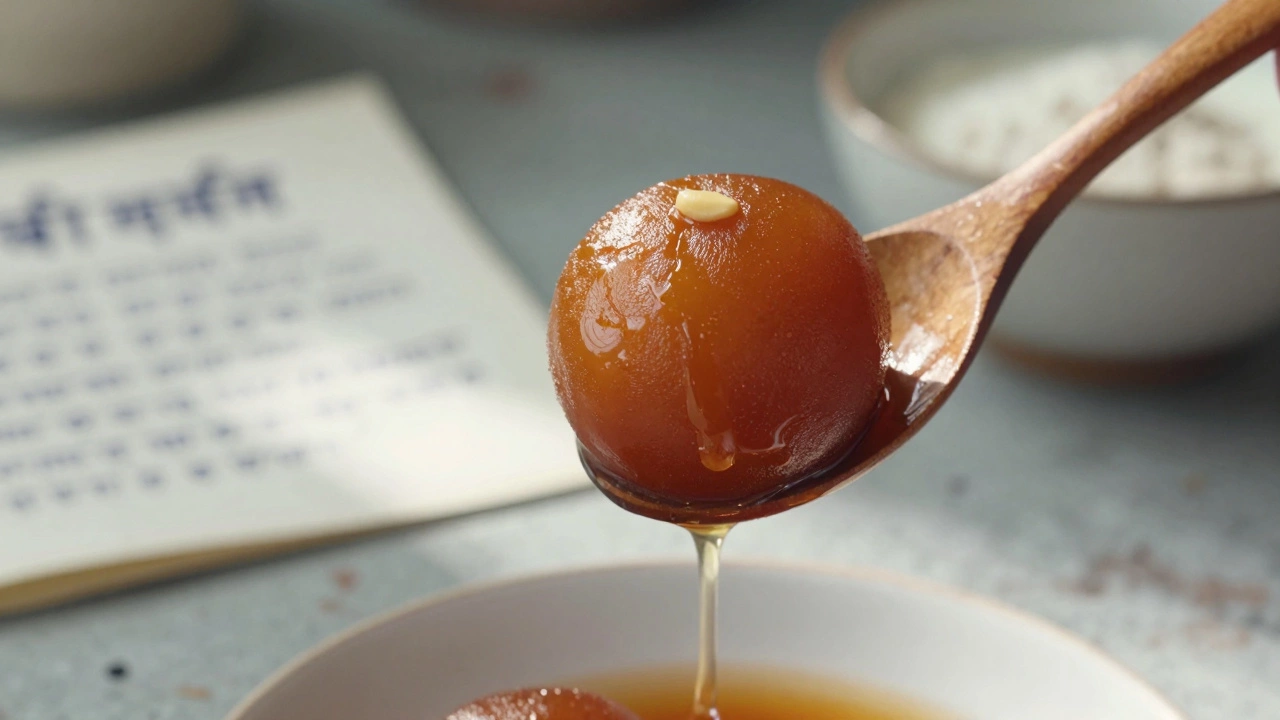
But here’s the thing: those are variations. They’re twists. Gulab jamun? It’s the base. The original. The one you go back to.
Even when new sweets trend, gulab jamun doesn’t disappear - it evolves. There’s now chocolate-dipped gulab jamun, pistachio-stuffed versions, and even vegan gulab jamun made with almond milk. But the core? Still the same.
It’s not about being trendy. It’s about being timeless.
Final Thought: More Than a Sweet
Gulab jamun isn’t just dessert. It’s a ritual. A comfort. A shared language across regions, religions, and generations.
You don’t need to be Indian to love it. But if you’ve ever had one - warm, sticky, fragrant - you know why it’s the most popular sweet in India. It’s not because it’s the most complex. It’s because it’s the most human.
Is gulab jamun the same as jalebi?
No. Gulab jamun is made from milk solids, fried, and soaked in syrup. Jalebi is made from fermented batter, deep-fried in spiral shapes, and dipped in syrup. Gulab jamun is soft and spongy; jalebi is crisp and chewy. They’re both sweet, but they’re completely different.
Can I make gulab jamun without khoya?
Yes. Most home cooks today use full-fat milk powder mixed with a little flour and cardamom. It’s not traditional, but it works well. Just make sure the powder is fresh - old milk powder makes the dough grainy.
Why does my gulab jamun sink in the syrup?
If they sink, they’re likely overcooked or too dense. Fry them until they’re golden brown but still soft inside. If they’re too hard before soaking, they won’t absorb syrup properly. Also, make sure the syrup is warm, not boiling. Boiling syrup can cause them to break apart.
How long does gulab jamun last?
Stored in the syrup in an airtight container, gulab jamun lasts 5-7 days in the fridge. Some people freeze them for up to 2 months. Just thaw and warm gently before serving. They’re best fresh, but they still taste good days later.
Is gulab jamun healthy?
Not really - it’s deep-fried and soaked in sugar syrup. But it’s not as bad as you think. A single piece has about 80-100 calories, mostly from milk solids and sugar. It’s better than cake or ice cream. Enjoy it as a treat, not a daily snack.