Crispy Snack Nutrition Calculator
Enter values and click calculate to see nutritional information
Craving something crunchy? Most people reach for chips, pakoras, or bhajis-foods that are crispy, satisfying, and deeply rooted in Indian kitchens. But here’s the truth: not all crispy snacks are created equal. Some leave you feeling sluggish, bloated, or worse. So what’s the healthiest crispy snack you can actually eat without guilt?
Why Crispy Snacks Get a Bad Reputation
Crispy snacks often get labeled as junk food because they’re fried in reused oil, loaded with salt, and made with refined flour. But the problem isn’t crispiness-it’s how they’re made. Deep-frying at high temperatures turns healthy ingredients into inflammatory, calorie-dense snacks. The real question isn’t whether you can have something crunchy-it’s whether you can have something crunchy that supports your health.
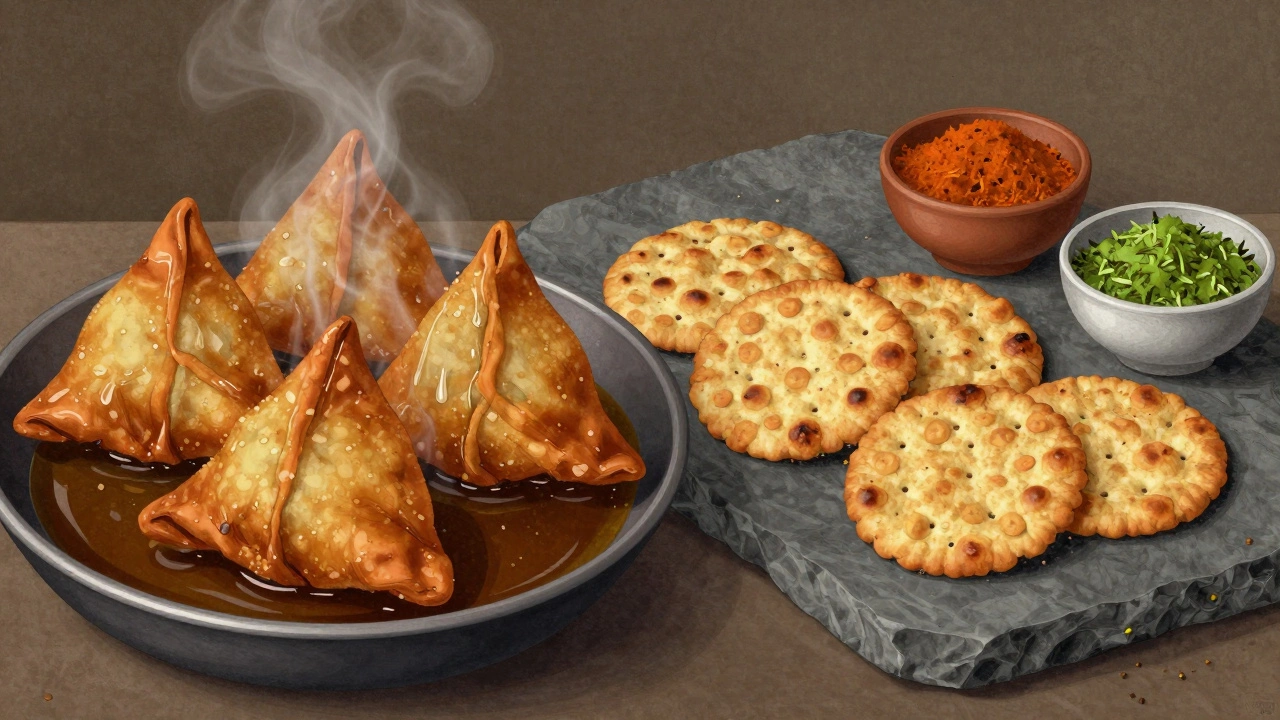
Take a typical samosa. The outer shell? Usually white flour and hydrogenated oil. The filling? Often high in sodium and low in fiber. Now compare that to a baked chickpea snack seasoned with cumin and chili. One is a quick energy spike. The other gives you protein, fiber, and minerals that keep you full longer.
The Healthiest Crispy Snack: Roasted Chana
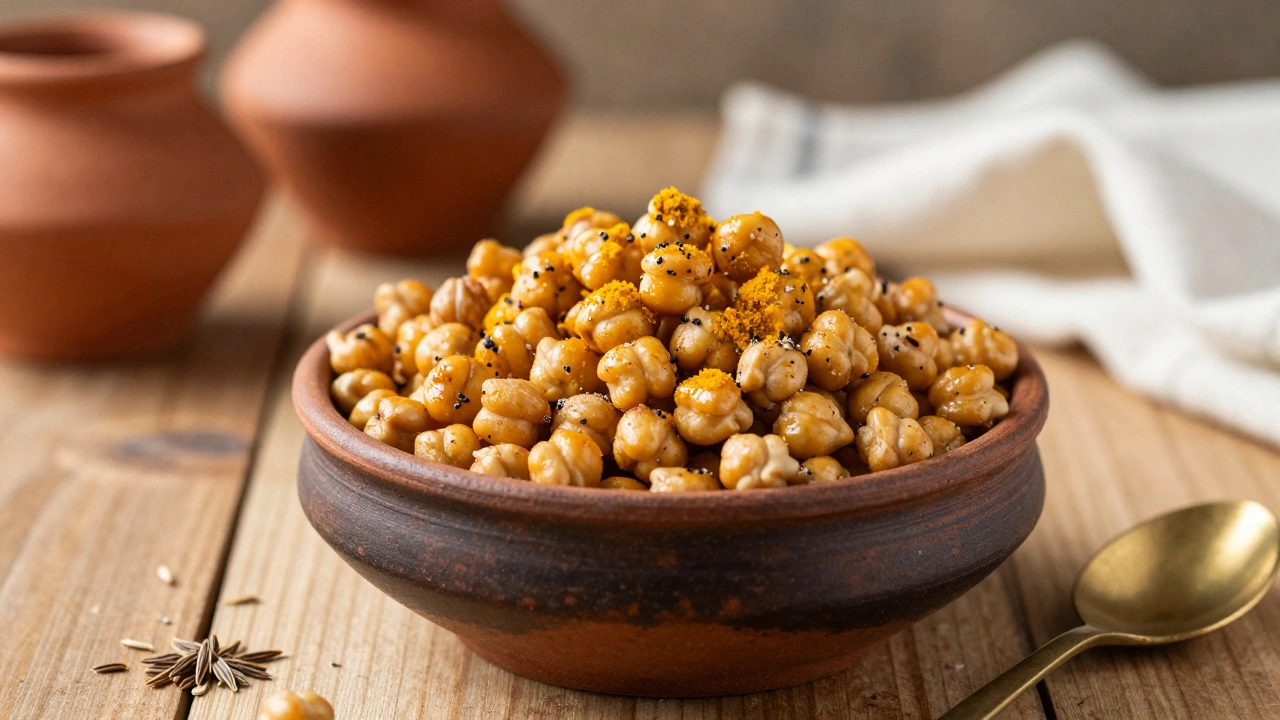
If you want one snack that ticks every box-crunchy, satisfying, nutrient-dense, and easy to make-it’s roasted chana (roasted chickpeas). Not the canned kind. Not the sugary candy-coated version. Real, dry-roasted chickpeas, seasoned simply with turmeric, black salt, and a pinch of asafoetida.
Here’s why they win:
- One cup (164g) has 21g of protein and 12g of fiber
- Low glycemic index-won’t spike your blood sugar
- Rich in iron, magnesium, and folate
- Contains no added sugar or artificial preservatives
- Can be stored for weeks in an airtight jar
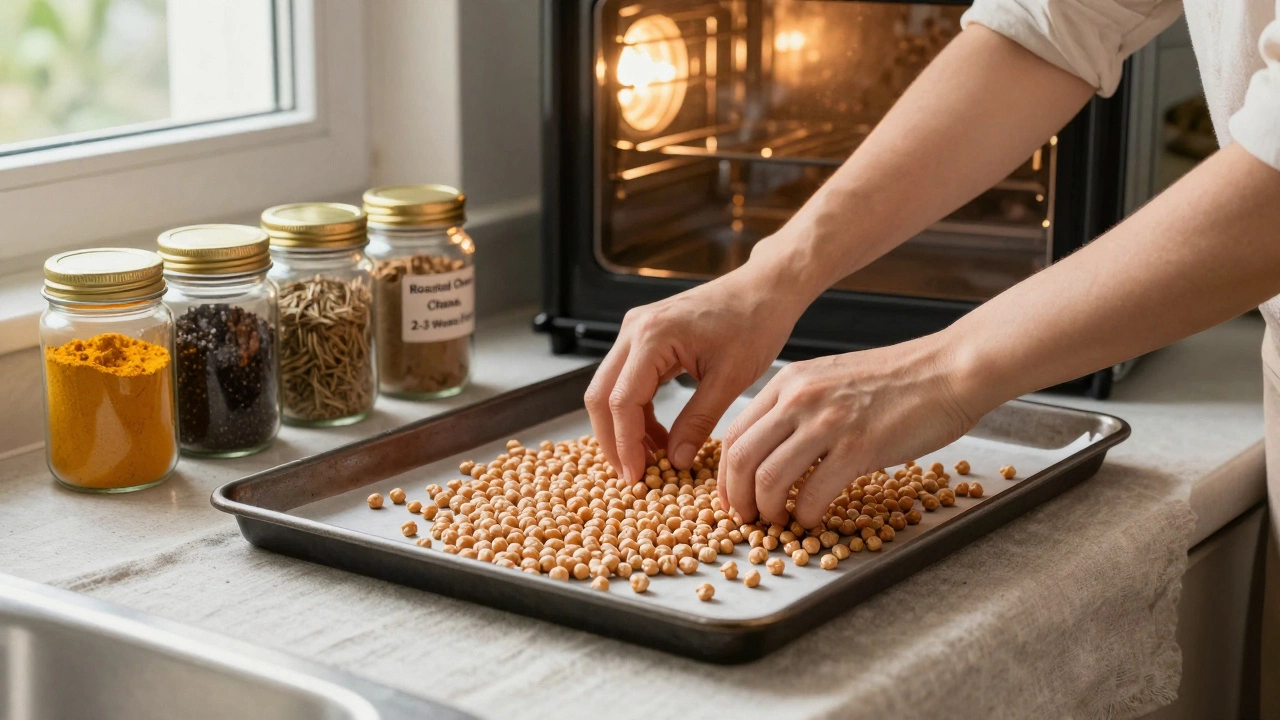
Roasting them at home takes 30 minutes in the oven at 200°C. Toss dried chickpeas with a teaspoon of olive oil, your favorite spices, and bake until they crackle. No deep fryer needed. No greasy hands. Just pure, crunchy satisfaction.
Other Healthy Crispy Snacks Worth Trying
Roasted chana is the top pick, but it’s not the only option. Here are five other Indian crispy snacks that are genuinely good for you:
- Baked Suji Sev - Made from semolina, water, and spices, then baked instead of fried. Lower in fat than traditional sev, and you can control the salt.
- Quinoa Pattice - Mashed potatoes mixed with cooked quinoa, shaped into patties, and baked. Adds complete protein and crunch without frying.
- Roasted Makhana (Fox Nuts) - A traditional Ayurvedic snack from Bihar. Light, airy, and naturally low in calories. Roast them with a dash of cumin and sea salt. One serving has just 90 calories and 4g of fiber.
- Whole Wheat Khakra - Thin, crisp flatbreads made from whole wheat flour, sesame seeds, and minimal oil. Often sold in packs, but easy to make at home. High in complex carbs and slow-digesting energy.
- Crispy Lentil Crackers - Blend cooked red lentils with spices, spread thin on a baking sheet, and bake until brittle. These are gluten-free, high in plant protein, and crunchier than most store-bought crackers.
What to Avoid: The Hidden Dangers of ‘Healthy’ Snacks
Just because something says ‘Indian snack’ or ‘natural’ doesn’t mean it’s good for you. Watch out for these traps:
- Fried papadum - Often fried in the same oil used for chicken or samosas. High in trans fats and sodium.
- Instant namkeen mixes - These blends may look colorful and traditional, but they’re loaded with monosodium glutamate (MSG), artificial colors, and hydrogenated oils.
- Coated nuts - Almonds or peanuts covered in sugar, honey, or chocolate? They’re still nuts, but the coating turns them into candy. Stick to raw or dry-roasted.
- Store-bought chana chaat - Even if it’s labeled ‘healthy,’ many versions use refined oil and preservatives to extend shelf life.
The rule of thumb? If you can’t name every ingredient on the label, skip it. Homemade is always better.
How to Make Crispy Snacks at Home (Simple Guide)
You don’t need fancy tools. Just a baking sheet, oven, and basic spices.
- Choose your base: chickpeas, lentils, makhana, or whole wheat flour
- Drain and dry thoroughly (wet ingredients won’t crisp up)
- Toss with 1 tsp of olive oil or coconut oil per cup
- Add spices: cumin, black salt, chili powder, amchur, or carom seeds
- Bake at 200°C for 20-30 minutes, shaking halfway
- Let cool completely-they crisp up as they sit
Pro tip: Store in glass jars with a paper towel at the bottom to absorb moisture. Keeps for 2-3 weeks.
Why This Matters Beyond Snacking
Snacks aren’t just about hunger. They’re about habits. If your go-to snack is fried and sugary, your body gets used to quick fixes. Over time, that leads to energy crashes, cravings, and even weight gain. Switching to whole-food, crispy snacks like roasted chana or makhana trains your body to crave real flavor-not salt and grease.
Studies show that people who snack on high-fiber, plant-based foods like legumes have lower LDL cholesterol and better gut health. One 2023 study in the Journal of Nutrition and Metabolism found that participants who replaced fried snacks with roasted legumes saw a 12% drop in inflammation markers over eight weeks.
It’s not about perfection. It’s about progress. Swap one fried snack a day with a baked alternative, and in a month, you’ll notice the difference-more energy, less bloating, and fewer cravings.
Final Thought: Crunch Doesn’t Have to Cost You
You don’t need to give up crunch to eat healthy. Indian cuisine has always had smart, simple ways to make food satisfying without frying. Roasted chana isn’t new-it’s ancient. It’s been eaten in villages for centuries because it’s filling, affordable, and good for you.
So next time you reach for a bag of chips or a box of fried snacks, ask yourself: Is this giving me energy-or draining it? The healthiest crispy snack isn’t the one that tastes the most like junk food. It’s the one that leaves you feeling strong, satisfied, and ready for the next thing.
Is roasted chana really healthier than chips?
Yes. One cup of roasted chana has over 20g of protein and 12g of fiber, while a typical bag of potato chips has less than 2g of protein and 3g of fiber. Roasted chana is also free of trans fats and artificial additives. It keeps you full longer and stabilizes blood sugar, unlike chips that cause spikes and crashes.
Can I eat crispy snacks if I’m trying to lose weight?
Absolutely-if you choose the right ones. Snacks like roasted makhana and baked lentil crackers are low in calories but high in fiber and protein, which help control appetite. A 30g serving of roasted chana has about 120 calories and keeps you full for hours. Avoid fried versions and sugary coatings.
Are store-bought healthy Indian snacks worth buying?
Most aren’t. Even snacks labeled as ‘natural’ or ‘low-fat’ often contain hidden oils, preservatives, and excess sodium. Always check the ingredient list. If it has more than five ingredients or includes words like ‘hydrogenated,’ ‘monosodium glutamate,’ or ‘artificial flavor,’ skip it. Homemade is cheaper and healthier.
What’s the best spice to use on healthy crispy snacks?
Turmeric, cumin, black salt, and amchur (dry mango powder) are top choices. Turmeric has anti-inflammatory properties, cumin aids digestion, black salt adds a savory umami note without excess sodium, and amchur gives tanginess without vinegar or sugar. Avoid pre-mixed masalas that contain MSG or artificial colors.
How long do homemade crispy snacks last?
When stored in an airtight glass jar with a paper towel to absorb moisture, roasted chana, makhana, and lentil crackers last 2-3 weeks at room temperature. Avoid plastic bags-they trap moisture and make snacks soggy. If they lose their crunch, pop them back in the oven at 160°C for 5 minutes.
What to Try Next
If you liked roasted chana, explore other legume-based snacks like lentil flour bhakri or baked besan cheela. Try pairing your crispy snacks with homemade mint chutney or yogurt dip for a balanced bite. Over time, you’ll find that real flavor doesn’t come from oil-it comes from spices, texture, and intention.