Indian Snack Calorie Calculator
When you think of Indian food, you might picture rich butter chicken, crispy samosas, or creamy kheer. But not all Indian food is heavy. In fact, some of the most flavorful dishes are also some of the lightest-perfect for anyone watching their calories without giving up taste. If you’re looking for the least fattening Indian food, you’re not just chasing a diet trend. You’re tapping into a centuries-old tradition of smart, plant-based eating that’s built on balance, not deprivation.
Why Indian Snacks Can Be Surprisingly Light
Indian cuisine didn’t evolve around frying and ghee. It grew around seasonal vegetables, legumes, fermented batters, and spices that boost metabolism. Many traditional snacks were designed for laborers, travelers, and farmers-people who needed energy without weight gain. That’s why you’ll find dishes made with chickpea flour, lentils, yogurt, and steamed doughs that are naturally low in fat and high in fiber.
Here’s the truth: most packaged Indian snacks you find in supermarkets are loaded with oil, sugar, and refined flour. But the real deal-made at home or at local street stalls-is often far lighter. The key is knowing what to look for.
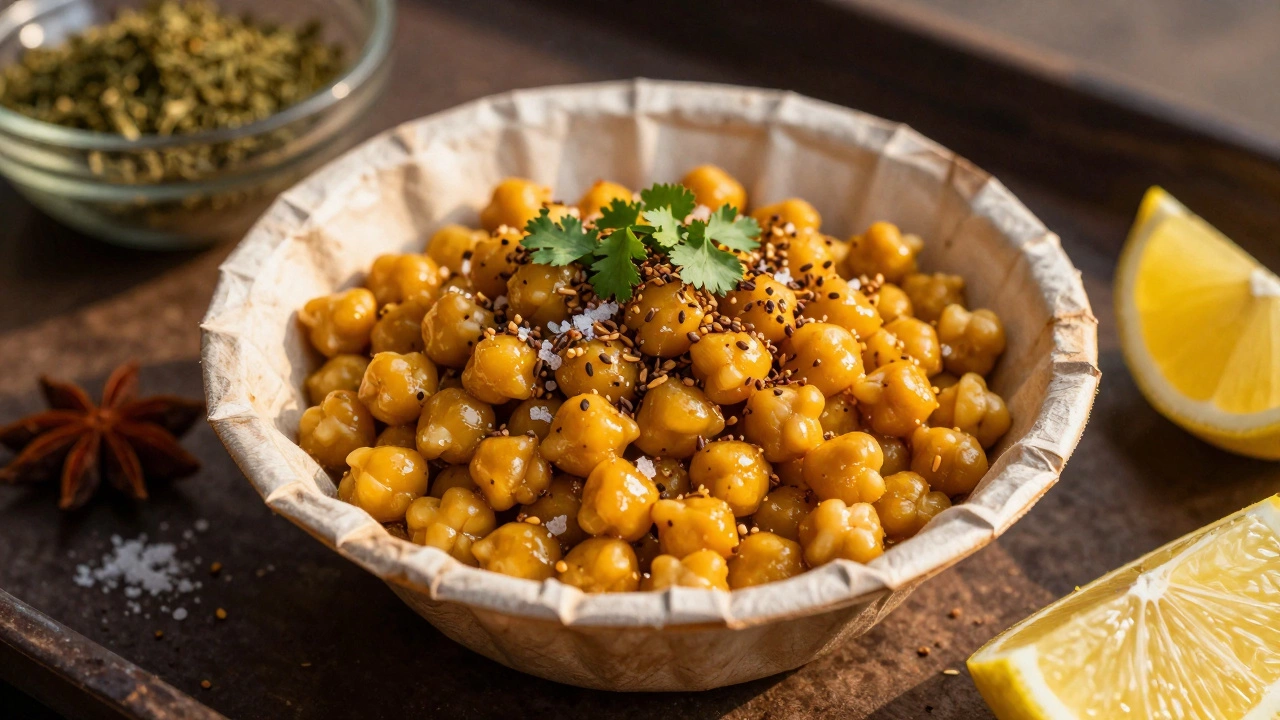
1. Masala Chana (Spiced Chickpeas)
One of the most underrated snacks in India, masala chana is simply boiled chickpeas tossed with lemon juice, roasted cumin powder, black salt, red chili, and a pinch of coriander. No oil. No frying. Just protein and fiber.
A 100-gram serving has about 127 calories, 6 grams of protein, and 6 grams of fiber. That’s more fiber than a medium apple. It keeps you full for hours and stabilizes blood sugar. In cities like Mumbai and Delhi, street vendors sell it in paper cones-no plastic, no grease. You can make it at home in 10 minutes with canned chickpeas, a spice blend, and a squeeze of lemon.
2. Poha (Flattened Rice Breakfast)
Poha isn’t just breakfast-it’s a national favorite. Made from flattened rice, it’s lightly sautéed with mustard seeds, turmeric, curry leaves, peanuts, and diced vegetables like peas and carrots. The version you get in Maharashtra or Bihar uses barely a teaspoon of oil per serving.
One cup of cooked poha has around 150 calories. It’s gluten-free, easy to digest, and packed with complex carbs. The peanuts add healthy fats and protein, while turmeric gives it anti-inflammatory power. Skip the version with fried sev or excessive sugar, and you’ve got a snack that’s both light and satisfying.
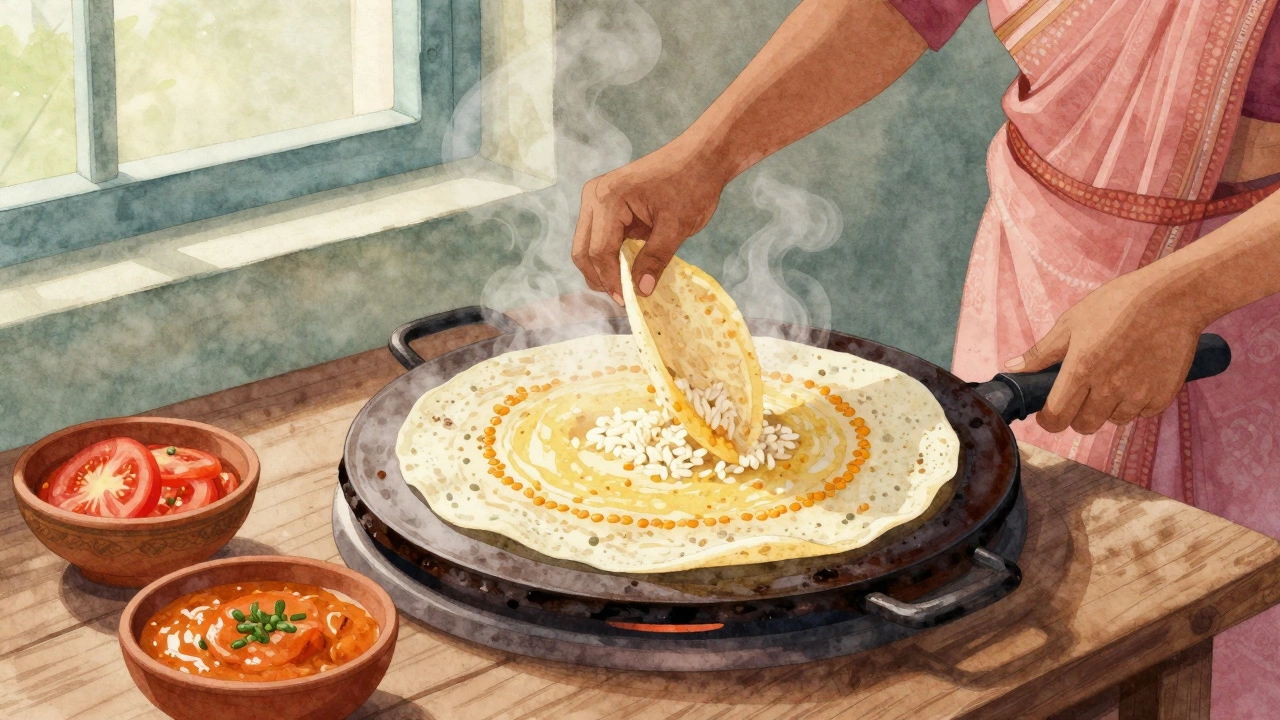
3. Dosa (Fermented Rice & Lentil Crepe)
Dosa is often misunderstood. The thin, crispy crepe made from fermented rice and black lentil batter is naturally low in fat-especially when you skip the coconut chutney and go for tomato chutney instead.
A plain dosa (100g) contains about 110 calories. The fermentation process breaks down starches, making it easier to digest and lowering its glycemic load. Add a side of sambar (lentil stew) instead of butter or cheese, and you’ve got a complete, balanced meal that won’t spike your insulin.
Pro tip: Ask for a thin, well-cooked dosa. Thicker ones soak up more oil. In South India, they’re often cooked on a hot griddle with zero oil-just the residual heat from the pan.
4. Moong Dal Cheela (Lentil Pancakes)
Moong dal cheela is a protein-packed alternative to pancakes or toast. Made from ground yellow lentils, water, ginger, green chilies, and spices, it’s poured onto a hot pan and cooked like a savory pancake. No flour. No eggs. No oil needed if your pan is non-stick.
One cheela (about 80g) has roughly 95 calories, 7 grams of protein, and 3 grams of fiber. It’s a favorite among yoga practitioners and athletes in India because it digests cleanly and doesn’t cause bloating. Top it with chopped onions, cilantro, and a dash of lemon-no chutney required.
5. Bhel Puri (Puffed Rice Snack)
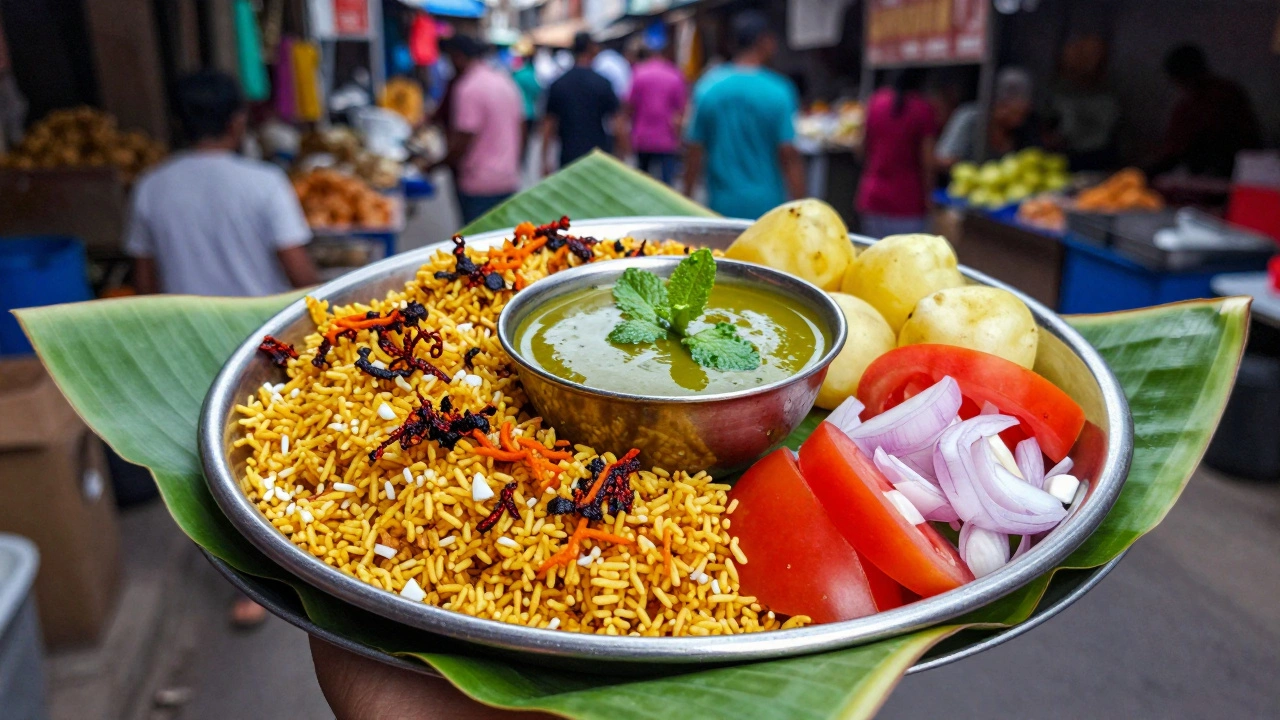
Bhel puri is Mumbai’s answer to a crunchy, tangy snack. It’s a mix of puffed rice, sev (thin fried noodles), chopped tomatoes, onions, boiled potatoes, tamarind chutney, and green chutney. Sounds heavy? It’s not.
Here’s why it works: puffed rice is air-popped, so it’s nearly calorie-free. The chutneys are made with minimal oil-tamarind is sour, not fatty. A typical serving (150g) runs about 180 calories. Compare that to a bag of potato chips (160g = 800+ calories).
The trick? Ask for less sev and skip the fried papdi. Many street vendors now offer a “light” version with roasted sev instead of fried. It’s still crunchy, still flavorful, but cuts the fat by 70%.
What to Avoid: The Hidden Fatteners
Even healthy-looking Indian snacks can sneak in calories. Watch out for:
- Deep-fried sev-it’s the fat bomb in most chaats. Look for roasted or air-fried versions.
- Coconut chutney-rich in saturated fat. Tomato or mint chutney is lighter.
- Refined flour (maida)-used in samosas, parathas, and bhajjis. Swap for whole wheat or besan (chickpea flour).
- Sugar in chutneys-many store-bought versions are syrupy. Make your own with dates or jaggery.
How to Eat Indian Snacks Without Gaining Weight
You don’t need to give up Indian snacks to stay lean. You just need to tweak how you eat them.
- Choose steamed or grilled over fried.
- Ask for less oil-most vendors will gladly comply.
- Pair snacks with protein: add boiled chickpeas, paneer cubes, or yogurt.
- Drink water before eating. Many cravings are just thirst.
- Make your own. Control the oil. Control the salt. Control the flavor.
Indian snacks aren’t the problem. The way they’re mass-produced and served in restaurants is. Go back to the basics-spices, legumes, grains, and fresh veggies-and you’ll find the least fattening Indian food isn’t some exotic superfood. It’s just good, old-fashioned home cooking.
Quick Reference: Calorie Comparison
| Snack | Calories | Fat (g) | Protein (g) | Fiber (g) |
|---|---|---|---|---|
| Masala Chana | 127 | 2.1 | 6.0 | 6.0 |
| Poha | 150 | 1.5 | 4.5 | 2.0 |
| Plain Dosa | 110 | 1.2 | 3.5 | 1.5 |
| Moong Dal Cheela | 95 | 0.8 | 7.0 | 3.0 |
| Bhel Puri (light) | 180 | 4.0 | 5.0 | 4.5 |
| Regular Samosa (fried) | 350 | 18.0 | 5.0 | 2.0 |
| Chips (potato, fried) | 536 | 35.0 | 5.0 | 3.0 |
Frequently Asked Questions
Is Indian food generally high in calories?
Not at all. While some dishes like butter chicken or kheer are calorie-dense, many traditional Indian snacks are plant-based, high in fiber, and cooked with minimal oil. The problem isn’t Indian food-it’s how it’s adapted in restaurants and packaged snacks. Stick to steamed, fermented, or boiled preparations, and you’ll find Indian cuisine is one of the most weight-friendly cuisines in the world.
Can I eat Indian snacks while trying to lose weight?
Absolutely. Snacks like masala chana, poha, and moong dal cheela are low in calories and high in protein and fiber, which help reduce hunger and prevent overeating. A 2023 study from the Indian Journal of Nutrition found that people who replaced fried snacks with legume-based ones lost 3-5% more body fat over 8 weeks. The key is portion control and avoiding fried add-ons like sev or fried papdi.
What’s the healthiest Indian snack for diabetics?
Moong dal cheela and masala chana are top choices. Both have a low glycemic index (GI under 40) and are rich in soluble fiber, which slows sugar absorption. A 2022 trial in Pune showed that diabetics who ate moong dal cheela daily for 6 weeks saw a 12% drop in post-meal blood sugar spikes. Avoid sugary chutneys and refined flour snacks.
Are Indian street snacks safe for weight loss?
Some are, if you know how to order. Ask for "light oil," "no sev," or "only chutney on the side." In cities like Bangalore and Jaipur, vendors now offer "healthy chaat" versions with roasted ingredients. Don’t assume all street food is unhealthy-many still use traditional methods with fresh ingredients and minimal oil.
How can I make Indian snacks at home without oil?
Use a non-stick pan or air fryer. For dosas and cheelas, heat the pan, pour the batter, and let it cook with just residual heat. For snacks like bhel puri, use roasted sev instead of fried. Replace ghee with water or vegetable broth for sautéing spices. You’ll be surprised how much flavor comes from spices like cumin, mustard seeds, and asafoetida-even without oil.
Next Steps
If you’re ready to try this, start with one snack this week. Make a batch of masala chana on Sunday and keep it in the fridge. Swap your afternoon chips for a small bowl of poha. You don’t need to overhaul your diet-just make smarter swaps. Over time, you’ll notice you’re less hungry between meals, your energy stays steady, and you won’t feel guilty after snacking.
The least fattening Indian food isn’t some new diet fad. It’s the food your grandparents ate. It’s simple. It’s smart. And it’s still out there-if you know where to look.