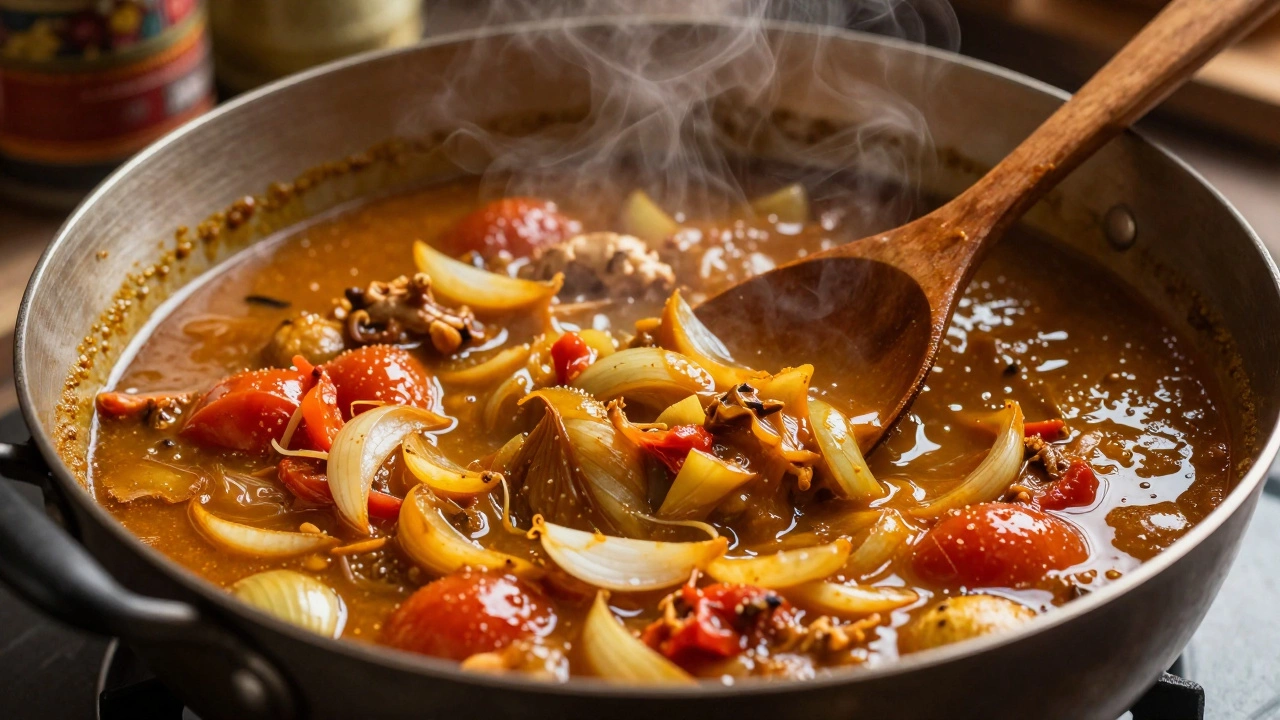
Curry Base Cooking Timer
Curry Base Cooking Timer
This timer will guide you through the critical 45-60 minute slow-cooking process for your onion-tomato-ginger-garlic base. The magic of authentic Indian curry happens here!
Recommended cooking time: 45-60 minutes
Stage 1: Softening (0-20 mins)
Onions soften and become translucent. Stir occasionally. Don't let them burn!
Stage 2: Caramelization (20-40 mins)
Onions turn golden brown. Tomatoes break down. The base develops rich color and deep flavor.
Stage 3: Ready (45-60 mins)
The base is thick and sticky. When you drag a spoon through it, it leaves a trail. This is when you add your spices.
Ever made chicken curry that tasted fine-maybe even good-but never quite reached that deep, unforgettable flavor you get at your favorite Indian restaurant? You’ve got the chicken, the onions, the tomatoes, the garlic, the ginger. You’ve even used store-bought curry powder. But something’s missing. It’s not the spice level. It’s not the oil. It’s not the salt. It’s the curry base-and more specifically, the slow-cooked onion-tomato-ginger-garlic paste that forms the soul of every great Indian curry.
Most home cooks think the secret is in the spices. They buy expensive blends, add more cumin, throw in a pinch of asafoetida, or even try cardamom pods. But here’s the truth: spices are just the accent. The real foundation-the thing that turns a pot of chicken into something that lingers on your tongue-is the base. And it’s not a spice at all. It’s patience.
The Base That Makes All the Difference
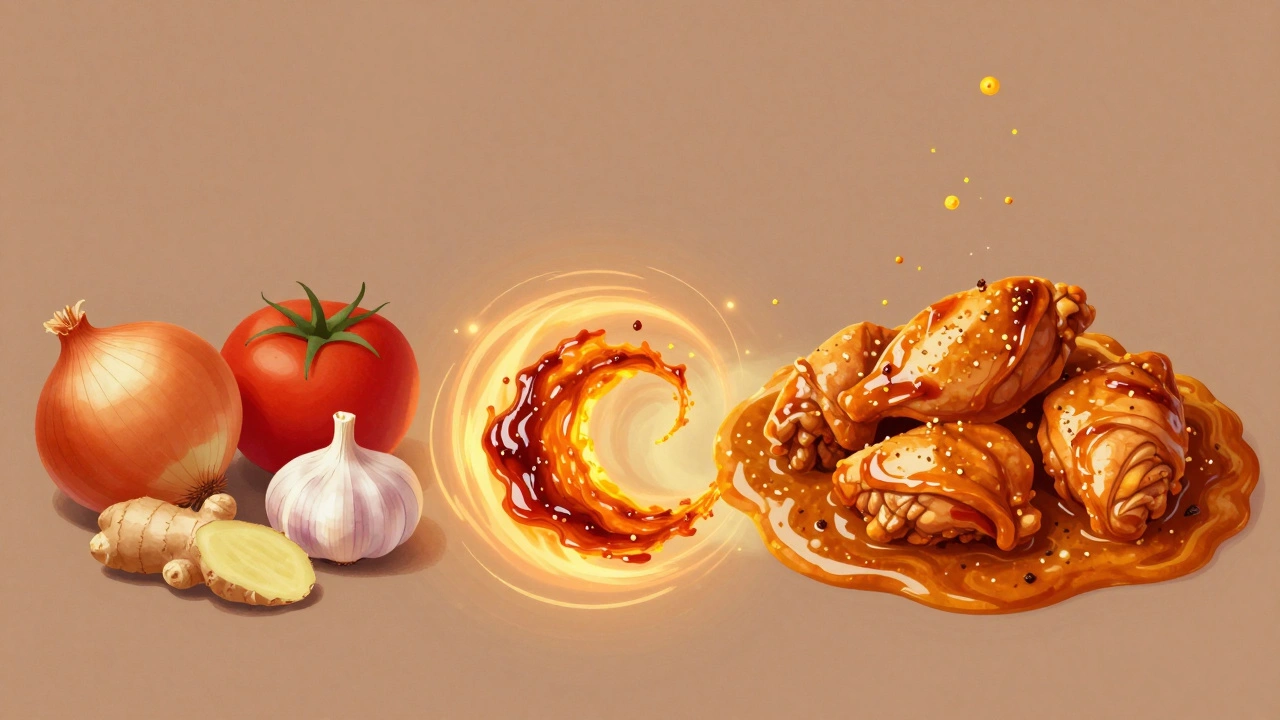
In Indian kitchens, from Mumbai street stalls to home kitchens in Birmingham, the foundation of chicken curry isn’t a single spice. It’s a paste. You take yellow onions, peeled and roughly chopped. You add garlic, ginger, and ripe tomatoes-about two cups of chopped tomatoes, the kind that are soft and juicy, not the hard ones you use for salads. Then you cook it all down.
Not sauté. Not stir-fry. Cook. On low heat. For 45 minutes to an hour. Stir occasionally. Let the onions turn deep golden brown, almost caramelized. The tomatoes break down into a thick, sticky sauce. The garlic and ginger lose their raw bite and melt into the mixture. This isn’t quick. It’s not convenient. But it’s non-negotiable.
When you skip this step and just fry your spices in oil with raw onions, you get flavor, yes-but it’s flat. One-dimensional. The slow-cooked base? It adds sweetness, depth, umami, and body. It’s what makes the curry cling to the chicken instead of sitting on top of it. This paste is the reason why restaurant curries taste richer, even when they use the same spices you do.
Why Store-Bought Curry Powder Falls Short
Curry powder is a British invention. It was created in the 18th century to mimic Indian flavors for people who’d never tasted them. It’s a blend of turmeric, coriander, cumin, fenugreek, chili, and sometimes cinnamon or cloves. It’s convenient. But it’s also stale by the time it hits your shelf.
Spices lose their volatile oils within weeks of grinding. If your curry powder has been sitting in your cupboard for more than six months, it’s mostly dust. Even if it’s fresh, it still lacks the complexity that comes from toasting whole spices and grinding them yourself-or, better yet, letting them simmer slowly with onions and tomatoes.
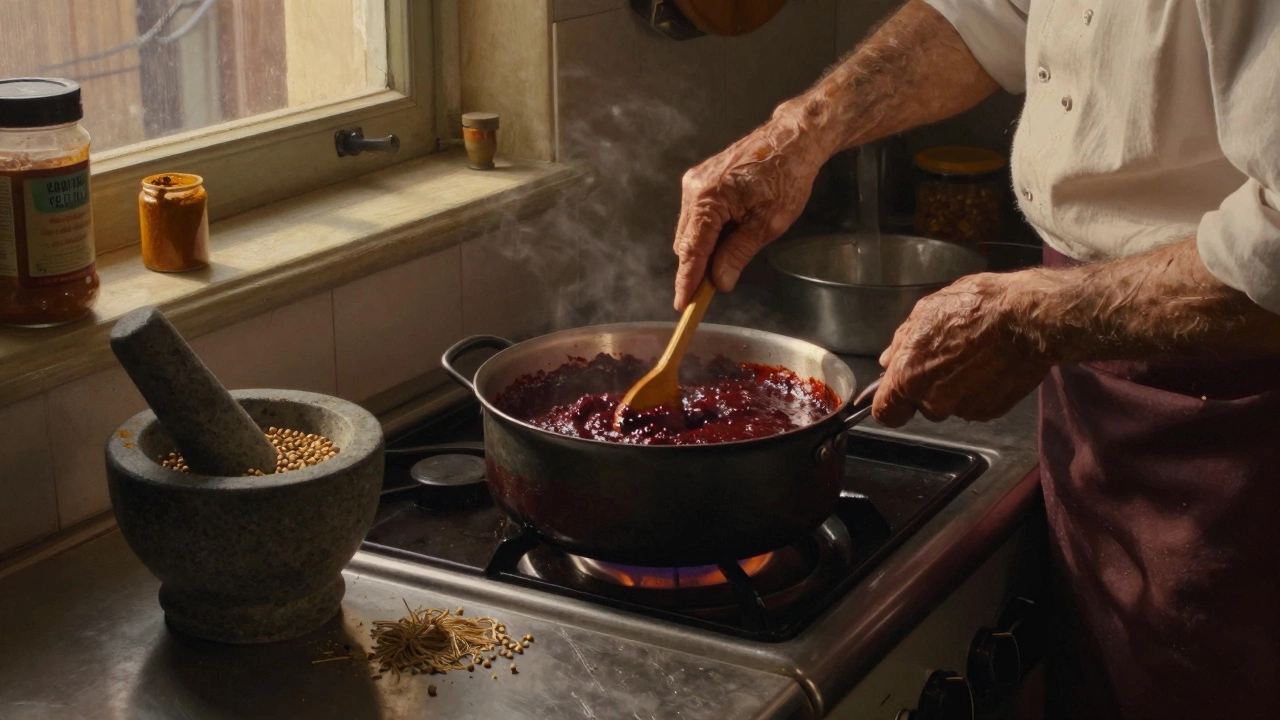
Instead of relying on curry powder, try this: toast whole cumin seeds, coriander seeds, and a small piece of cinnamon stick in a dry pan for 90 seconds until fragrant. Let them cool, then grind them with a mortar and pestle. Add a pinch of turmeric and a quarter teaspoon of ground black pepper. That’s your spice mix. Add it to your slow-cooked base. The difference is night and day.
The Role of Garam Masala-And When to Add It
Garam masala is often mistaken for the secret ingredient. It’s not. It’s the final flourish. A warm, aromatic blend of cinnamon, cardamom, cloves, black pepper, and sometimes nutmeg or bay leaf. But if you add it too early, the heat kills the delicate oils. It evaporates.
The right time? Right at the end. Turn off the heat. Stir in a teaspoon of garam masala. Let the residual warmth release the fragrance. That’s when you smell the curry. That’s when the aroma fills the kitchen. That’s the moment your family walks in and asks, “What’s cooking?”
Some cooks add it twice-once halfway through to build depth, and once at the end for brightness. But for beginners, one addition at the end is enough. Don’t overthink it. Just don’t add it with the onions.
What About Yogurt or Coconut Milk?
People think creaminess comes from dairy or coconut milk. It does-but only if the base is already rich. If your base is watery or undercooked, adding yogurt just makes the curry sour. Adding coconut milk makes it taste like soup.
Yogurt should be whisked until smooth, then stirred in slowly over low heat. Never add cold yogurt to a hot pot-it curdles. Same with coconut milk: stir it in after the chicken is nearly cooked. Let it simmer for five minutes, no more. The base holds everything together. The dairy or coconut just softens the edges.
Real-Life Example: My Kitchen in Birmingham
Last winter, I made chicken curry for a friend who’d never had authentic Indian food. I used the same spices she had at home. But I spent an hour making the base. I let the onions turn deep amber. I didn’t rush the tomatoes. I ground the spices fresh. When she tasted it, she paused. Then she said, “This tastes like my grandmother’s-but she never wrote down how she made it.”
That’s the secret. It’s not a spice. It’s not a trick. It’s time. It’s attention. It’s the quiet, slow work that happens before you even think about adding the chicken.
How to Build Your Curry Base (Simple Steps)
- Use 2 large yellow onions, chopped (not diced-rough pieces hold up better)
- 5 cloves garlic, crushed
- 1-inch piece ginger, grated
- 2 cups ripe tomatoes, chopped (canned San Marzano work fine in winter)
- 2 tablespoons oil (mustard or sunflower, not olive)
- Pinch of salt
Heat the oil on medium-low. Add the onions. Stir every few minutes. Don’t let them burn. After 20 minutes, they’ll start to soften. Add the garlic and ginger. Stir for 2 minutes. Add the tomatoes and salt. Lower the heat. Cook uncovered for 45 minutes, stirring every 10 minutes. When it’s thick enough to leave a trail when you drag a spoon through, you’re done. That’s your base. Now add your spices. Then your chicken.
Common Mistakes That Ruin the Base
- Using frozen onions-they release too much water and never caramelize properly
- Turning up the heat to speed things up-burnt onions taste bitter, not sweet
- Adding water to thin it out-steam evaporates. You lose flavor
- Skipping the tomato-without acidity, the curry tastes flat and heavy
- Using pre-made paste from a jar-it’s full of preservatives and lacks depth
If you’ve ever made a curry that felt “off,” one of these is why.
Why This Works Every Time
The science is simple: caramelization and Maillard reactions. When onions and tomatoes cook slowly, their sugars and amino acids break down and recombine into hundreds of flavor compounds. That’s what gives curry its complexity. It’s the same reason why slow-cooked beef stew tastes deeper than a quick one.
Indian cooks have known this for centuries. They didn’t need science to tell them. They just knew that good food takes time. And the best curries? They’re made with love, not just spices.
Is garam masala the secret ingredient in curry?
No. Garam masala is a finishing spice blend that adds aroma and warmth, but it’s not the foundation. The real secret is the slow-cooked onion-tomato-ginger-garlic base. Garam masala loses its flavor if added too early.
Can I use curry powder instead of whole spices?
You can, but it won’t taste the same. Most curry powders are pre-ground and old, losing their oils and flavor. For better results, toast and grind whole cumin and coriander seeds, then mix with a little turmeric and black pepper. Freshness makes all the difference.
Why does my chicken curry taste watery?
You likely skipped the slow-cooked base. If you just sautéed onions for 5 minutes and added water or stock, the curry won’t thicken properly. The base needs to reduce for at least 45 minutes to create a rich, sticky foundation. No shortcuts.
Should I add yogurt to my chicken curry?
Only if your base is already thick and flavorful. Add whisked yogurt slowly over low heat, or it will curdle. It softens the spice and adds tang, but it can’t fix a weak base.
Can I make the curry base ahead of time?
Yes. The base keeps for 5 days in the fridge or 3 months in the freezer. Make a big batch on the weekend. Then when you’re ready to cook, just add chicken, spices, and simmer. This is how Indian families save time without sacrificing flavor.
If you want your chicken curry to taste like it came from a kitchen that’s been making it for generations, stop chasing spices. Start chasing time. Let the onions brown. Let the tomatoes melt. Let the garlic and ginger disappear into the pot. That’s where the magic lives.