Nutritional Comparison Calculator
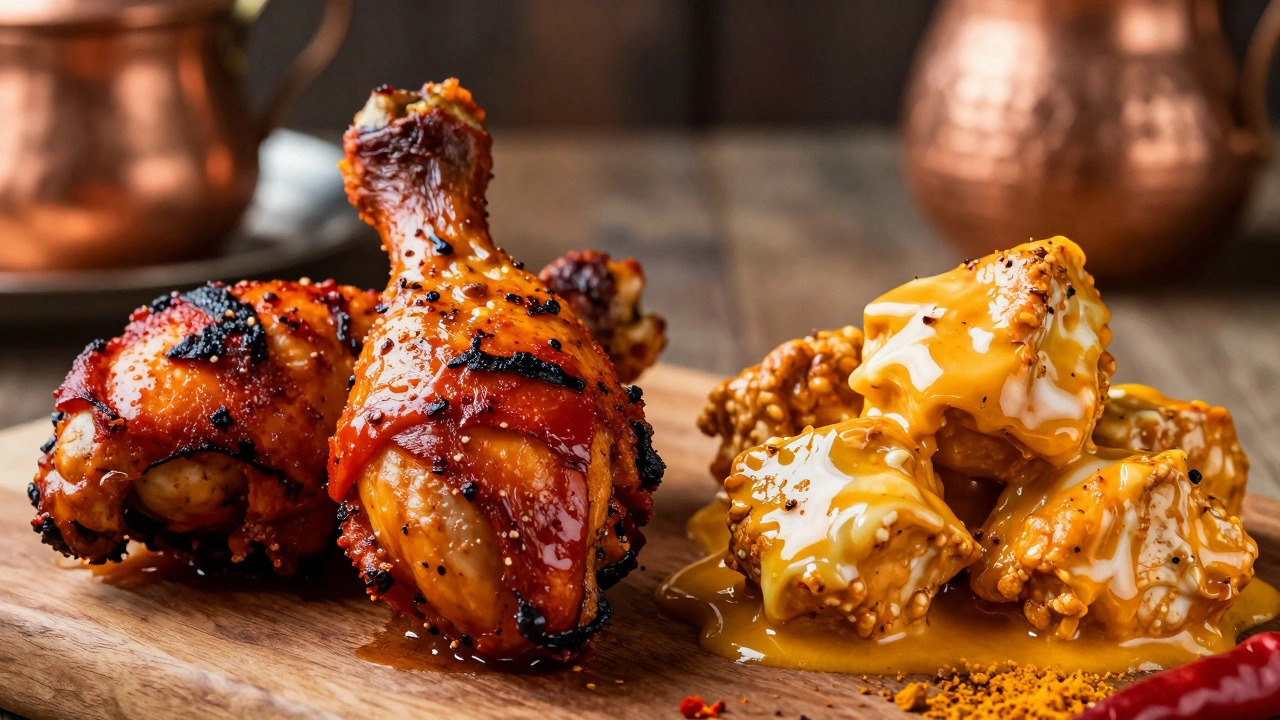
Tandoori Chicken
Chicken Tikka
Ever sat down with a plate of smoky, juicy chicken at your favorite Indian restaurant and wondered - is this chicken tikka or tandoori chicken? And more importantly, which one’s actually better for you? You’re not alone. These two dishes look similar, smell almost identical, and both come off the grill with that charred, appetizing crust. But when it comes to health, there’s a real difference - and it’s not just about the spice level.
What’s the real difference between chicken tikka and tandoori chicken?
At first glance, they’re twins. Both use boneless chicken pieces, marinated in yogurt and spices, then cooked in a tandoor oven. But the marinades? Totally different.
Chicken tikka is usually made with chicken breast or thigh, cut into bite-sized chunks. The marinade leans heavy on cream, butter, or sometimes even cashew paste. It’s rich, slightly sweet, and often includes ground almonds or coconut milk. The goal? Tender, creamy, and indulgent. That’s why it’s so popular in UK curry houses - it’s soft, mild, and easy to eat.
Tandoori chicken, on the other hand, is simpler. Traditional recipes use plain yogurt, lemon juice, garlic, ginger, and a punch of red chili powder and Kashmiri red chili for color. No cream. No butter. No sugar. Just spices, acid, and time. The chicken is usually left on the bone - drumsticks or thighs - which helps it stay juicy during high-heat cooking.
So right off the bat, you can see the health gap. One is a creamy indulgence. The other is a clean, protein-forward dish.
Calories and fat: The numbers don’t lie
Let’s get specific. A 100-gram serving of chicken tikka - the kind you get in most restaurants - has around 220-260 calories. Why so high? Because of the added dairy fats. Many places use heavy cream to make the marinade silky. Some even brush the chicken with melted butter before grilling. That’s extra fat you didn’t ask for.
Compare that to tandoori chicken: 160-190 calories per 100 grams. That’s a 25-30% drop in calories. And here’s the kicker - the fat content in tandoori chicken is usually under 8 grams per serving. Chicken tikka? Often hits 14-18 grams. That’s mostly saturated fat from cream and butter.
And it’s not just about the marinade. Restaurant chicken tikka is often cooked with oil sprays or brushed with ghee to get that glossy finish. Tandoori chicken? It’s cooked dry in a super-hot oven. The natural juices keep it moist. No added oil needed.
Protein and sodium: Who wins?
Both dishes are great sources of lean protein. A 100-gram portion of either gives you about 25-28 grams of protein. So if you’re looking to build muscle or stay full longer, you’re covered either way.
But sodium? That’s where things get tricky.
Chicken tikka often contains more salt - not just from the marinade, but because it’s usually served with sauces. Creamy tomato-based sauces or sweet tamarind chutney add a lot of hidden sodium. A single plate can push you over 1,200 mg of sodium - nearly half the daily limit recommended by the WHO.
Tandoori chicken? It’s naturally lower in sodium. The marinade relies on spices like cumin, coriander, and paprika for flavor, not salt. If you order it without sauce, you’re looking at under 600 mg of sodium per serving. That’s a big win for blood pressure and heart health.

What about the spices? Do they make a difference?
Yes - and it’s a good one.
Tandoori chicken gets its signature red color from Kashmiri chili powder, which is mild but rich in antioxidants. It also contains turmeric, garlic, and ginger - all proven to reduce inflammation. Studies from the Journal of Nutrition show that curcumin in turmeric helps lower oxidative stress, which is linked to chronic diseases.
Chicken tikka often skips these powerhouse spices. Instead, it uses food coloring (like red #40) to get that bright hue. And while the spices are still there, they’re often masked by sugar and cream. So you’re getting flavor without the health perks.
Real-world examples: What you’ll actually eat
Let’s say you’re in Birmingham and you order chicken tikka from your local takeaway. You get a plate with six pieces, a side of pilau rice, and a dollop of mango chutney. Total calories? Around 750. Sodium? Over 1,500 mg.
Now order tandoori chicken - two drumsticks, no rice, no sauce. You’re at 400 calories and under 700 mg sodium. You can even ask for extra lemon on the side. That’s a 45% calorie cut and 50% less sodium.
And if you’re meal-prepping? Tandoori chicken reheats beautifully. You can slice it and toss it into salads, wraps, or grain bowls. Chicken tikka? It gets soggy. The cream and fat break down. It’s not made for leftovers.

How to make tandoori chicken healthier at home
You don’t need a tandoor oven to make real tandoori chicken. A grill, broiler, or even a cast-iron pan works.
Here’s what to do:
- Use skinless chicken thighs - they’re juicier than breast and have more flavor.
- Marinate for at least 6 hours (overnight is best) in plain yogurt, lemon juice, garlic, ginger, cumin, coriander, paprika, and a pinch of turmeric.
- Don’t add sugar, cream, or butter. Skip the food coloring.
- Grill or broil until charred on the edges - no oil needed.
- Serve with cucumber raita or a simple salad.
That’s it. You’ve made a dish that’s high in protein, low in fat, and packed with anti-inflammatory spices. No guilt. No compromise.
Why chicken tikka still has its fans
Let’s be fair - chicken tikka tastes amazing. It’s creamy, comforting, and perfect for kids or people who don’t like spicy food. It’s also the reason Indian food became popular in the UK. But comfort doesn’t always mean healthy.
If you love chicken tikka, you can still enjoy it - just make it smarter. Use Greek yogurt instead of cream. Skip the butter. Add more spices. Make it at home, and you control what goes in.
But if your goal is to eat cleaner, lose weight, or manage blood pressure? Tandoori chicken is the clear winner.
Bottom line: Choose tandoori chicken for better health
Chicken tikka and tandoori chicken aren’t just different in taste - they’re different in nutritional impact. Tandoori chicken wins on calories, fat, sodium, and natural ingredients. It’s a dish rooted in tradition, not convenience. And it’s one of the healthiest ways to eat chicken in Indian cuisine.
Next time you’re ordering, ask for tandoori chicken. Skip the sauce. Add lemon. And enjoy the smoky, spicy, simple goodness that’s been feeding families in North India for generations - without the extra fat.
Is chicken tikka unhealthy?
Chicken tikka can be unhealthy if it’s made with cream, butter, or sugar - which most restaurant versions are. A single serving can have over 250 calories and 18 grams of fat, mostly saturated. It’s also often high in sodium due to sauces. But if you make it at home with Greek yogurt, no added fat, and no coloring, it can be a healthier option.
Can tandoori chicken help with weight loss?
Yes. Tandoori chicken is low in calories and high in protein, which helps you feel full longer. With only 160-190 calories per 100 grams and no added fats, it’s a great choice for weight loss when eaten without heavy sauces or rice. Pair it with vegetables or a salad for a balanced, satisfying meal.
Why is tandoori chicken red?
The red color comes from Kashmiri red chili powder, which gives heat and vibrant color without being overly spicy. It’s naturally rich in antioxidants. Some restaurants use artificial red dye, but authentic tandoori chicken gets its color from spices alone. Look for deep, earthy red - not bright, neon red - to know it’s natural.
Which has more protein: chicken tikka or tandoori chicken?
Both have nearly the same amount of protein - about 25-28 grams per 100 grams. The difference isn’t in protein content, but in how the chicken is prepared. Tandoori chicken keeps its natural juices and doesn’t add fillers, so you get pure protein without extra fat or sugar.
Is tandoori chicken good for heart health?
Yes. Tandoori chicken is low in saturated fat and sodium compared to chicken tikka. The spices like turmeric, garlic, and ginger have anti-inflammatory properties that support heart health. Studies show regular consumption of these spices can help lower LDL cholesterol and improve circulation. Avoiding cream and butter makes it even better.