Dosa Batter Consistency & Troubleshooter
Select the characteristics of your current batter to identify its consistency type.
Having trouble? Select your specific issue for a solution.
There is nothing more frustrating than pouring your fermented dosa batter onto a hot a flat pan used for making crepes and pancakes, typically made of cast iron or non-stick material only to watch it spread into a solid, unbroken disc that refuses to crisp up. Or worse, you pour it, and it runs off the edges like water, leaving you with a soggy mess that tastes like plain rice. If you have ever stared at your mixing bowl wondering why your dosas don't look like the ones from your favorite Chennai street stall, the answer usually lies in one specific variable: viscosity.
The question of whether dosa batter should be thick or thin depending on the desired outcome, ranging from crispy paper-thin dosas to fluffy thick dosas isn't just about preference; it's about physics. The thickness determines how the heat interacts with the starches and proteins in your mixture. It dictates whether you get a lace-like network of bubbles or a dense, pancake-like interior. Getting this right transforms your morning routine from a guessing game into a reliable ritual.
The Science Behind the Spread
To understand why consistency matters, we need to look at what happens when the batter hits the pan. When liquid meets heat, moisture evaporates rapidly. In a thin batter, this evaporation happens quickly across the entire surface area, allowing the outer layer to dry out and become brittle-this is where the crunch comes from. In a thick batter, the moisture is trapped deeper within the structure. The heat has to penetrate further before the center cooks, resulting in a softer, fluffier texture.
The ratio of rice to lentils plays a huge role here. Traditional parboiled rice, such as ponni rice, is a variety of rice partially boiled in the husk, which reduces stickiness and improves digestibility provides the necessary starch for crispness. urad dal (black gram) is a type of lentil essential for fermentation, providing protein and air pockets for leavening provides the protein and the frothy lift during fermentation. If your batter is too thick, you likely have too much rice relative to the dal, or not enough water added after grinding. If it's too thin, you may have over-diluted it or under-ground the ingredients, failing to release enough starch.
Thick Batter: The Fluffy Route
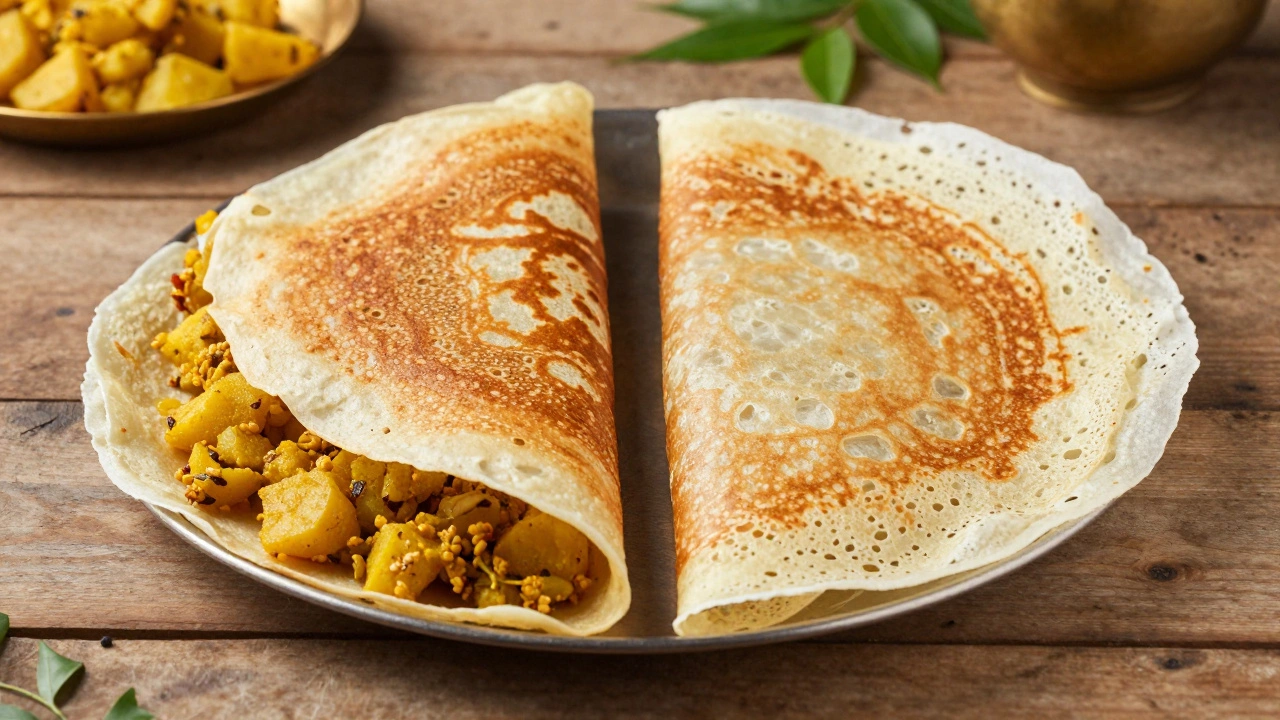
A thicker batter is generally preferred if you are aiming for Mysore Masala Dosa or a popular variant topped with spicy potato filling, requiring a sturdy base to hold the weight. These dosas need structural integrity. If the base is too thin, it will tear when you try to fold it around the heavy potato masala. A thick batter creates a dough-like consistency that holds its shape better.
This style also works well for Rava Dosa, although a variation made with semolina, often requires a different hydration approach entirely, but specifically for standard fermented batters, thickness yields a result closer to an American pancake than a French crepe. You lose some of the delicate lacy holes, but you gain volume. This is ideal for breakfasts where you want something substantial that stays filling for hours. However, the downside is significant: thick batters are prone to being raw in the middle. You have to cook them longer on lower heat, which can sometimes lead to burning the bottom before the top sets.
Thin Batter: The Crispy Ideal
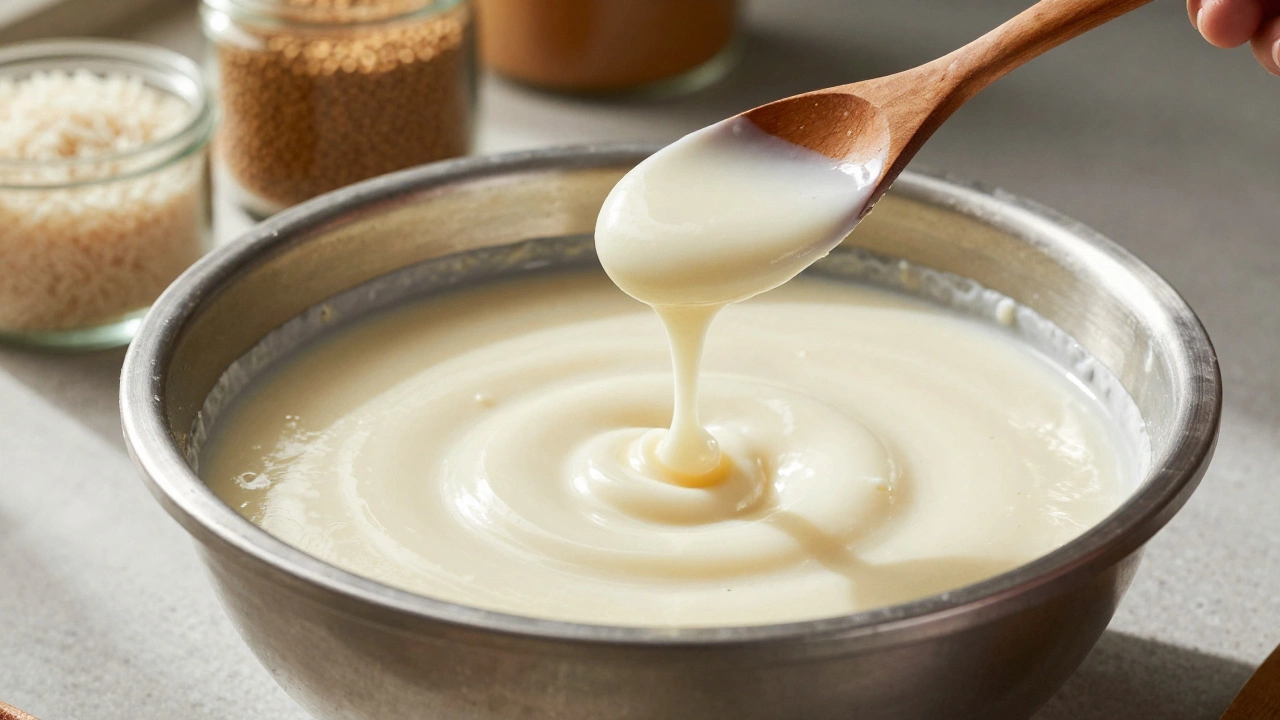
If your goal is the classic, shatteringly crisp Neer Dosa or a soft, steamed version, though traditional thin batter aims for the opposite extreme: maximum crispness, then thin is the way to go. The gold standard for thin batter is the "yogurt consistency" test. When you lift your spoon, the batter should fall off in a continuous, unbroken stream. It should coat the back of the spoon lightly without dripping heavily.
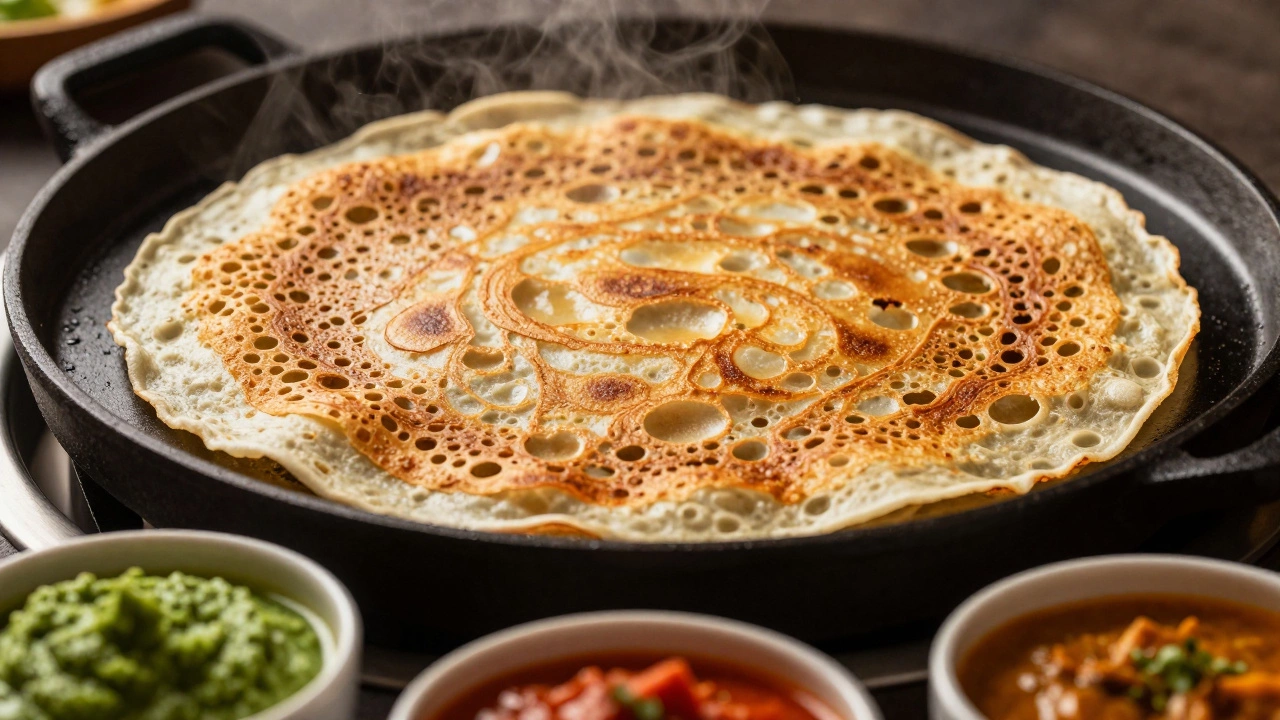
Thin batter allows for rapid spreading. You tilt the pan, and the batter races to the edges, creating a uniform thin layer. This maximizes the surface area exposed to direct heat. The result is a golden-brown crust with tiny, intricate bubbles that form a lacy pattern. This texture is beloved because it contrasts sharply with the tangy coconut chutney and spicy sambar. However, thin batter is unforgiving. If your pan isn't hot enough, the batter will stick. If it's too hot, it will burn before it cooks through. It requires a steady hand and a well-seasoned tawa or a flat griddle, preferably cast iron, which retains heat evenly for consistent cooking.
Factors That Change Consistency Overnight
One of the biggest traps home cooks fall into is assuming that the consistency you achieve right after grinding will remain the same after fermentation. It won't. Fermentation is a living process. As the wild yeast and bacteria in your fermented batter consume the sugars in the rice and lentils, producing carbon dioxide and alcohol, which alters the viscosity, the mixture expands and becomes lighter. Often, a batter that looks slightly thick immediately after grinding will loosen up significantly after 8-12 hours of rising.
Temperature is another critical factor. In Birmingham, where I live, the ambient temperature can vary wildly between winter and summer. Cold weather slows down fermentation. If your kitchen is chilly, the batter might not rise properly, remaining dense and thick even if you added enough water. Conversely, in a warm room, the batter can over-ferment, becoming too runny and sour-tasting. If your batter is too thin after fermentation, you cannot simply add more ground paste because the flavor balance will shift. Instead, you can mix in a little bit of freshly ground, unfermented batter to thicken it, or adjust by adding a small amount of roasted rice flour, which absorbs excess moisture without altering the taste drastically.
How to Test Your Batter Before Cooking
Before you even think about turning on the stove, perform the "stream test." Dip a ladle into the batter and lift it slowly. Watch how the batter flows back into the bowl.
- The Ribbon Test: If the batter falls in a thick ribbon that holds its shape for a second before breaking, it is likely too thick for a crispy dosa. This is good for thick, fluffy dosas but bad for crepes.
- The Stream Test: If it falls in a steady, thin stream like milk or light cream, it is perfect for thin, crispy dosas.
- The Drop Test: Take a teaspoon of batter and drop it onto a dry plate. Let it sit for two minutes. If it spreads naturally into a wide circle, it's thin enough. If it sits in a mound, it's too thick.
Remember, you can always thin out a thick batter by adding ice-cold water. Adding water gradually helps maintain the temperature shock that aids in crispiness. But you cannot easily thicken a thin batter without changing the ingredient ratios. Therefore, it is safer to grind your batter slightly thicker than you think you need, let it ferment, and then adjust with water just before cooking.
Adjusting for Different Rice Varieties
Not all rice behaves the same. If you are using basmati rice instead of long-grain aromatic rice, which is less starchy and produces a softer, less crispy dosa, your batter will naturally be thinner. Basmati lacks the high amylose content found in parboiled short-grain varieties. To compensate, you might need to reduce the water content during grinding. On the other hand, if you are using idli rice, which is a specific blend of parboiled rice designed for steaming, often resulting in a denser batter, you may need to add more water to achieve the desired flow. Understanding your grain is half the battle.
| Consistency Type | Best For | Texture Result | Risk Factor |
|---|---|---|---|
| Thin (Yogurt-like) | Crispy Paper Dosa, Plain Dosa | Lacy, brittle, golden brown | Burning if pan is too hot; sticking if pan is too cold |
| Medium (Cream-like) | All-purpose, beginner-friendly | Slightly crisp edges, soft center | Minimal risk; versatile for most fillings |
| Thick (Pancake-like) | Masala Dosa, stuffed dosas | Fluffy, dense, soft | Raw center if heat is too high; tough if over-mixed |
Troubleshooting Common Issues
If your dosa turns out rubbery, your batter was likely too thick, or you didn't cook it long enough. The starches didn't gelatinize fully. Next time, thin it with a splash of water and increase the cooking time. If your dosa breaks apart while flipping, the batter was too thin, or the pan wasn't seasoned properly. A well-oiled, preheated pan creates a barrier that prevents sticking. Always test with a small dollop first.
Another common issue is the lack of bubbles. Bubbles indicate proper fermentation and aeration. If your batter is thick and smooth with no air pockets, you might have over-ground the lentils, destroying their ability to trap gas. Grind the urad dal separately until it forms a fluffy paste, then mix it gently into the rice batter just before fermentation. This preserves the air bubbles crucial for both lift and texture.
Should I add salt before or after adjusting the consistency?
Always add salt after you have adjusted the water content. Salt draws out moisture from the grains through osmosis. If you add salt early, the batter may appear thicker than it actually is, leading you to add too much water later. Adjust the consistency first, then season.
Can I fix batter that is too thin?
It is difficult to thicken fermented batter without altering the taste. You can mix in a small amount of unfermented, freshly ground batter to absorb excess liquid. Alternatively, adding a tablespoon of roasted rice flour or semolina can help thicken it slightly, but use sparingly to avoid changing the flavor profile.
Why does my batter thicken overnight?
This usually happens in colder environments where fermentation is slow. The starches continue to absorb water passively even without active yeast growth. To prevent this, ensure your kitchen is warm (around 25-30°C) or place the batter in an oven with just the light on to encourage proper rising.
Does the type of grinder affect consistency?
Yes. Wet grinders tend to produce a smoother, finer paste that ferments faster and spreads easier. Dry grinders or blenders may leave the batter coarser, resulting in a thicker, grainier texture. For thin, crispy dosas, a wet grinder or high-speed blender is recommended.
How do I know if my pan is hot enough for thin batter?
Sprinkle a few drops of water on the tawa. If they sizzle and evaporate instantly, the pan is ready. If they pool and take time to dry, it's not hot enough. For thin batter, immediate evaporation is key to preventing sticking and ensuring crispness.