Dosa Batter Recipe: How to Make Perfect Crispy Dosa at Home
When you think of dosa batter recipe, a fermented blend of rice and lentils that transforms into thin, crispy Indian crepes. Also known as dosa batter, it's the foundation of one of India’s most beloved breakfast foods—light, tangy, and perfect with coconut chutney or sambar. This isn’t just a mix of rice and urad dal. It’s a living culture, shaped by time, temperature, and tradition. Get the fermentation right, and you get that signature crisp edge and soft center. Get it wrong, and you’re stuck with a dense, flat disc that doesn’t lift off the pan.
A good dosa batter, a fermented mixture of rice and black gram lentils used to make thin Indian crepes. Also known as dosa batter, it's the foundation of one of India’s most beloved breakfast foods—light, tangy, and perfect with coconut chutney or sambar. The secret isn’t in fancy tools. It’s in the ratio: 3 parts parboiled rice to 1 part whole urad dal. That’s it. Skip the soaking time? Your batter won’t ferment. Skip the salt before fermenting? It won’t rise right. And don’t even think about using cold water to grind—it kills the natural yeast. Most home cooks fail because they rush the process. Fermentation takes 8 to 12 hours in warm weather. In winter? You might need 18 hours. A warm corner near the stove, a wrapped towel, or a turned-off oven with the light on works better than any gadget.
What makes this batter different from idli batter? Not much—same ingredients, same process. But for dosa, you want it a little thinner, a little more sour. That’s why many add a pinch of fenugreek seeds when grinding. They help with fermentation and give that slight bitterness that balances the crispness. Some add cooked rice for texture. Others use beaten rice (poha) to speed things up. But the classic version? Just rice, urad dal, salt, and time.
Once your batter is bubbly and smells like sourdough bread, you’re ready. Don’t overmix. Just stir it gently. Pour it in a circular motion on a hot tawa. The batter should spread on its own. If it doesn’t, your batter’s too thick. If it spreads too fast, it’s too thin. A little oil around the edges? That’s what gives you the golden lace. Serve it hot with tomato chutney, mint-coriander, or just a squeeze of lemon. You don’t need a restaurant to make this. You just need patience and a little trust in the process.
What you’ll find below are real, tested approaches from people who’ve made hundreds of dosas—some with pressure cookers, some with clay pots, some in cold kitchens. You’ll see how to fix runny batter, how to store it for days, and why your dosa stuck to the pan (spoiler: it’s not the tawa). No fluff. No theory. Just what works.
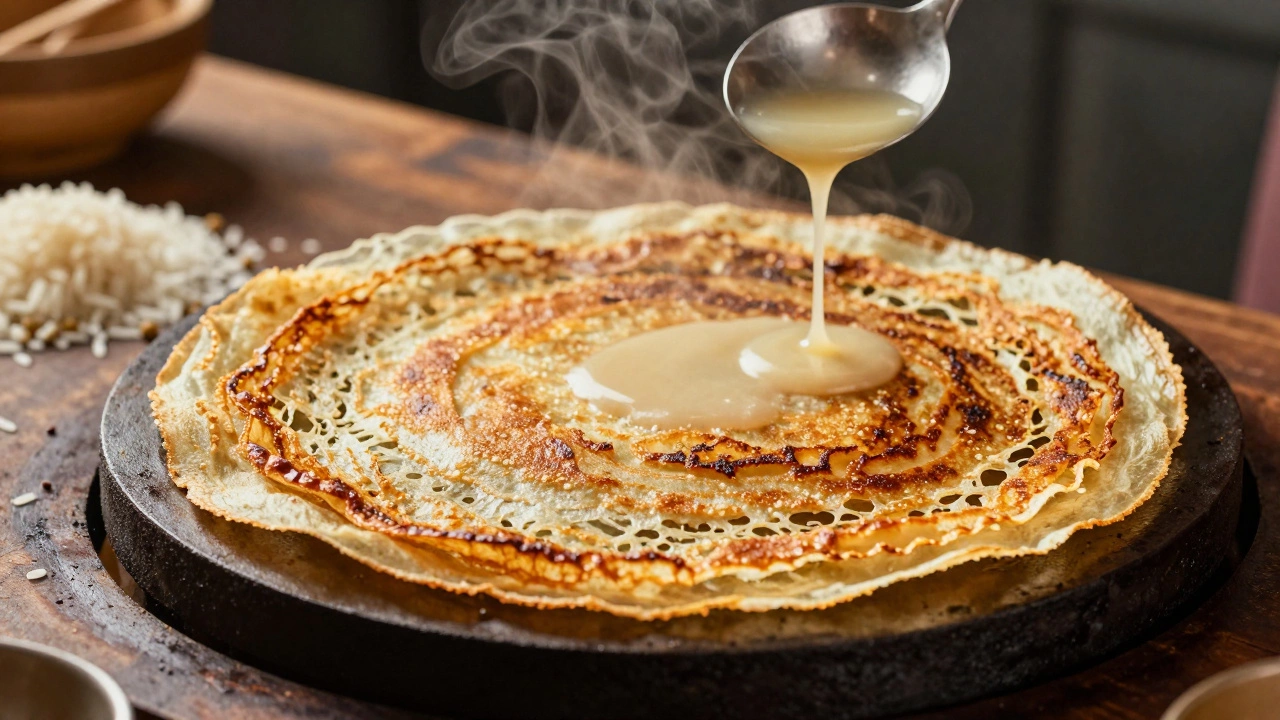
Why Is Dosa Not Crispy? Fix Your Dosa Batter Recipe Today
Learn why your dosa isn't crispy and how to fix your batter recipe with the right rice-to-lentil ratio, fermentation time, and cooking technique for perfect results every time.
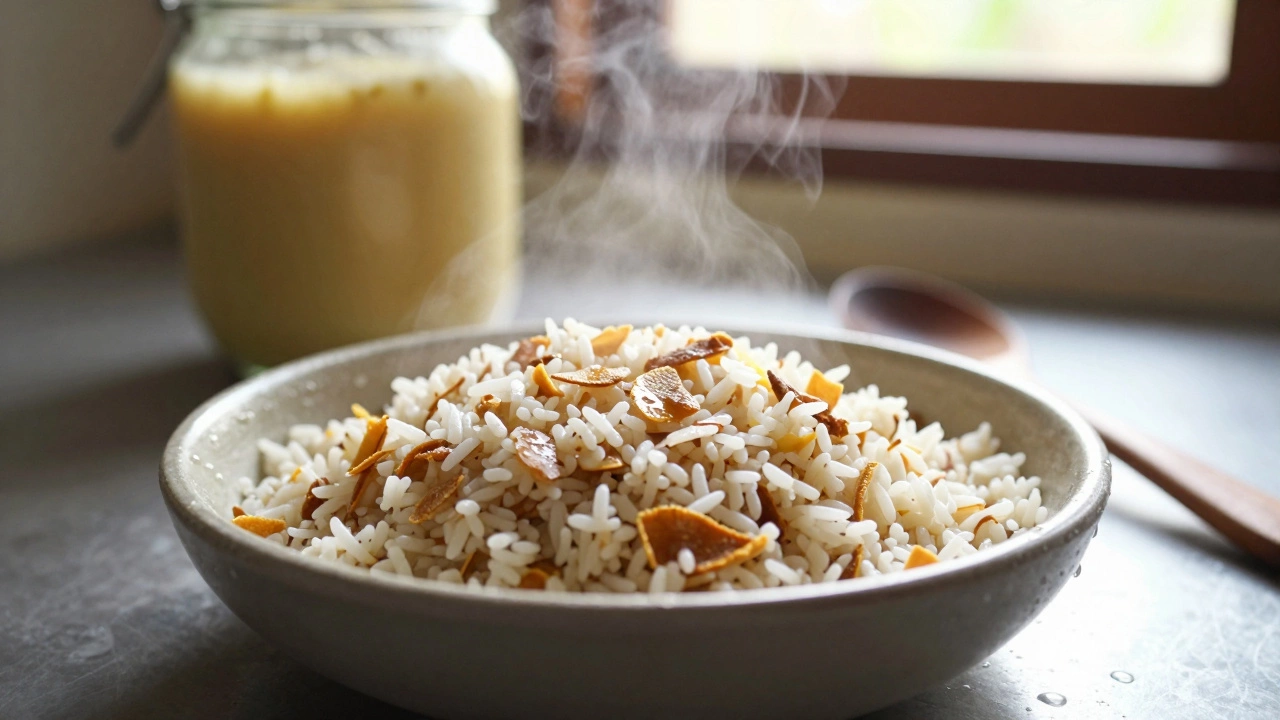
Why Is Poha Added to Dosa Batter? The Real Reason Behind This South Indian Secret
Adding poha to dosa batter isn't just tradition-it's science. It speeds up fermentation, improves crispness, and makes dosas lighter. Learn why this simple ingredient makes all the difference.
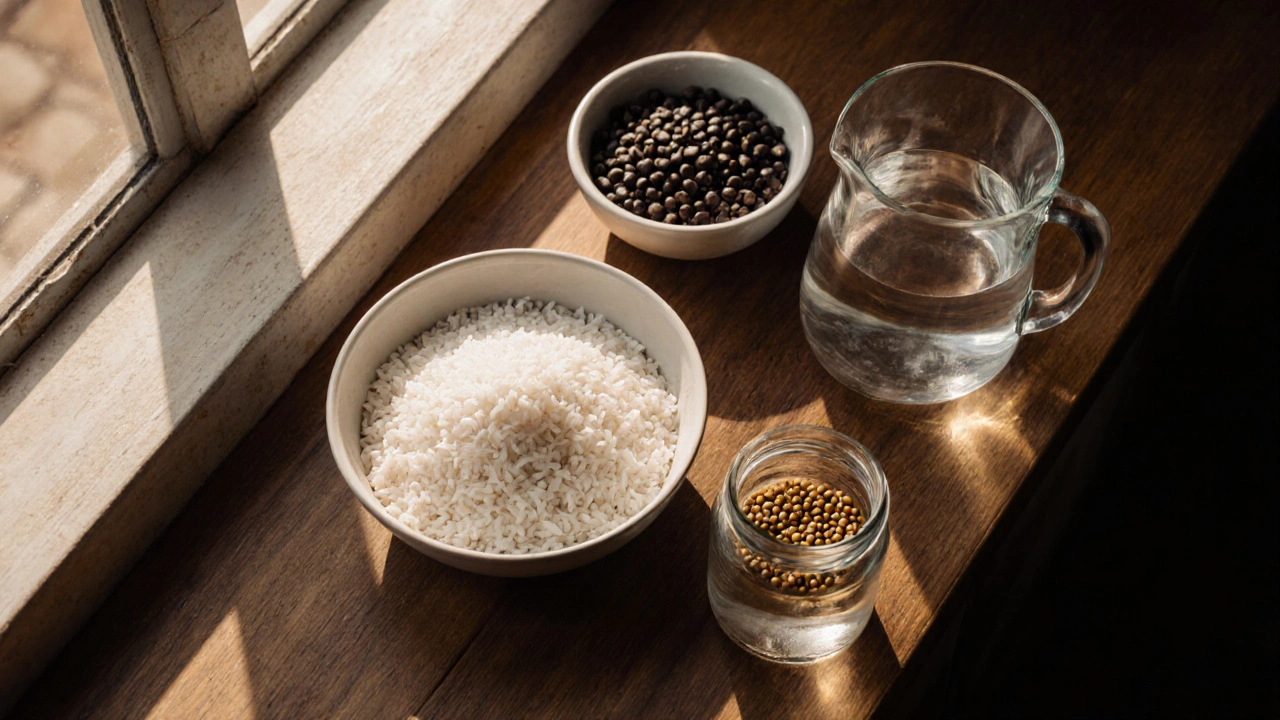
Dosa Batter Ingredients: What Goes Into the Classic South Indian Batter
Learn exactly what goes into traditional dosa batter, how each ingredient works, fermentation tips, alternative grains, and common troubleshooting for perfect, crisp dosas.
Is Dosa Healthier or Rice? Nutrition Facts You Should Know
Figuring out if dosa is healthier than plain rice isn’t as clear-cut as you’d think. Both are staple foods you’ll find on most Indian tables, but their nutrition, benefits, and impact on your body can be surprisingly different. This article breaks down calories, nutrients, and even little-known facts about how they’re made. If you’re torn between dosa and rice, or simply want to know which fits better into your diet, you’ll find practical answers here. You’ll also get useful tips to make both options healthier at home.
Reduce the Glycemic Index of Your Dosa: Tips and Tricks
Dosa, beloved across many households, can be a challenge for those managing blood sugar levels due to its glycemic index. By tweaking the traditional ingredients and preparation methods, you can lower the glycemic index, making dosa a healthier option without compromising on taste. Using whole grains, adding fiber, and fermenting correctly can significantly change its impact on blood sugar. Dive into these practical tips to transform your dosa into a lower GI treat.