Native American Breakfast Nutrition Calculator
Calculate Your Traditional Breakfast
Learn about the nutritional value and health benefits of authentic Native American breakfast dishes from different regions.
Nutrition Analysis
Per Serving
Glycemic Index
Health Benefits
Many people assume breakfast is the same everywhere-toast, cereal, pancakes. But for Native American communities across North America, morning meals have deep roots in land, season, and tradition. These aren’t just recipes passed down-they’re survival strategies shaped by thousands of years of living with the land, not against it.
Regional Differences Shape the Morning Plate
There’s no single Native American breakfast. The continent has over 570 federally recognized tribes, each with distinct environments and foodways. What a Hopi person eats at dawn is nothing like what a Wampanoag person eats.
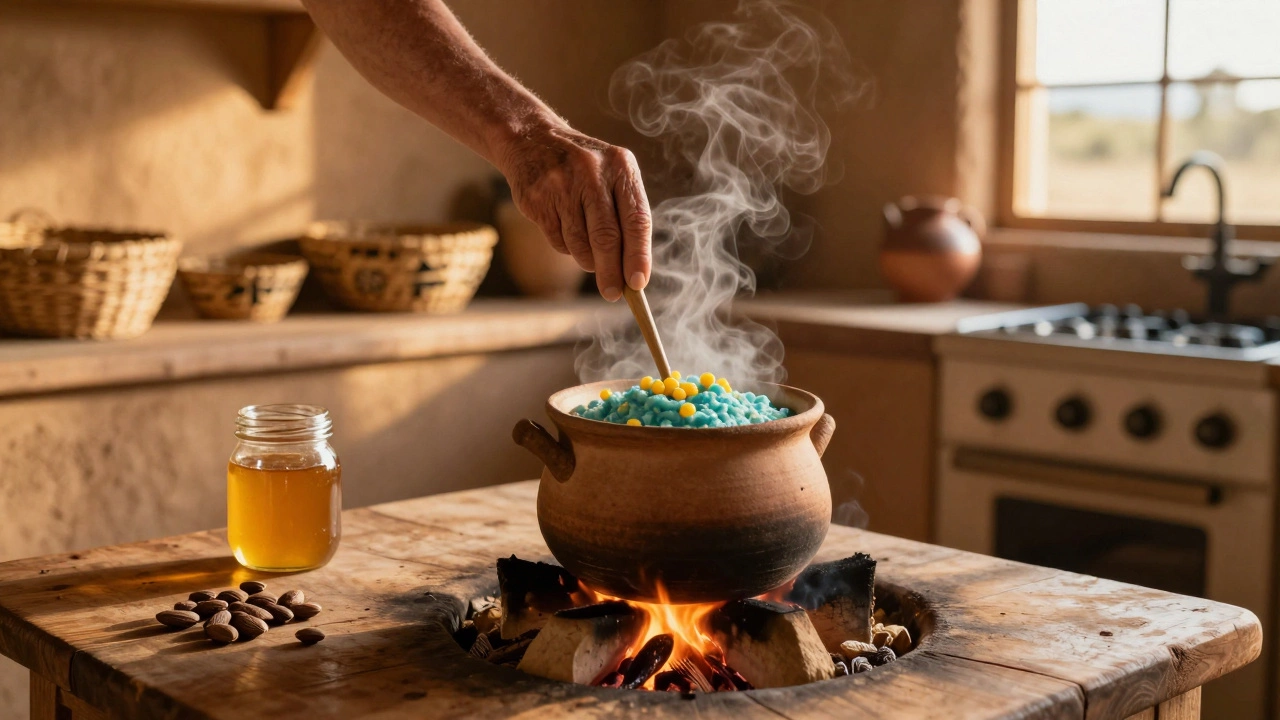
In the Southwest, where drought and desert dominate, corn is king. The Hopi and Navajo start their day with blue corn mush, cooked slowly with water and sometimes a pinch of ash to help release nutrients. It’s served plain or with a drizzle of wild honey or a side of dried pinyon nuts. Corn isn’t just food here-it’s sacred. The Hopi believe corn was a gift from the spirits, and every grain carries history.
On the Great Plains, where bison once roamed in the millions, breakfast meant meat. The Lakota and Cheyenne would eat thin slices of dried bison jerky with wild berries gathered in summer and stored in hide pouches. Sometimes, they’d mix the jerky with rendered fat and berries into a dense, energy-rich paste called pemmican. It didn’t need cooking-just chewing-and kept people going through long winter mornings.
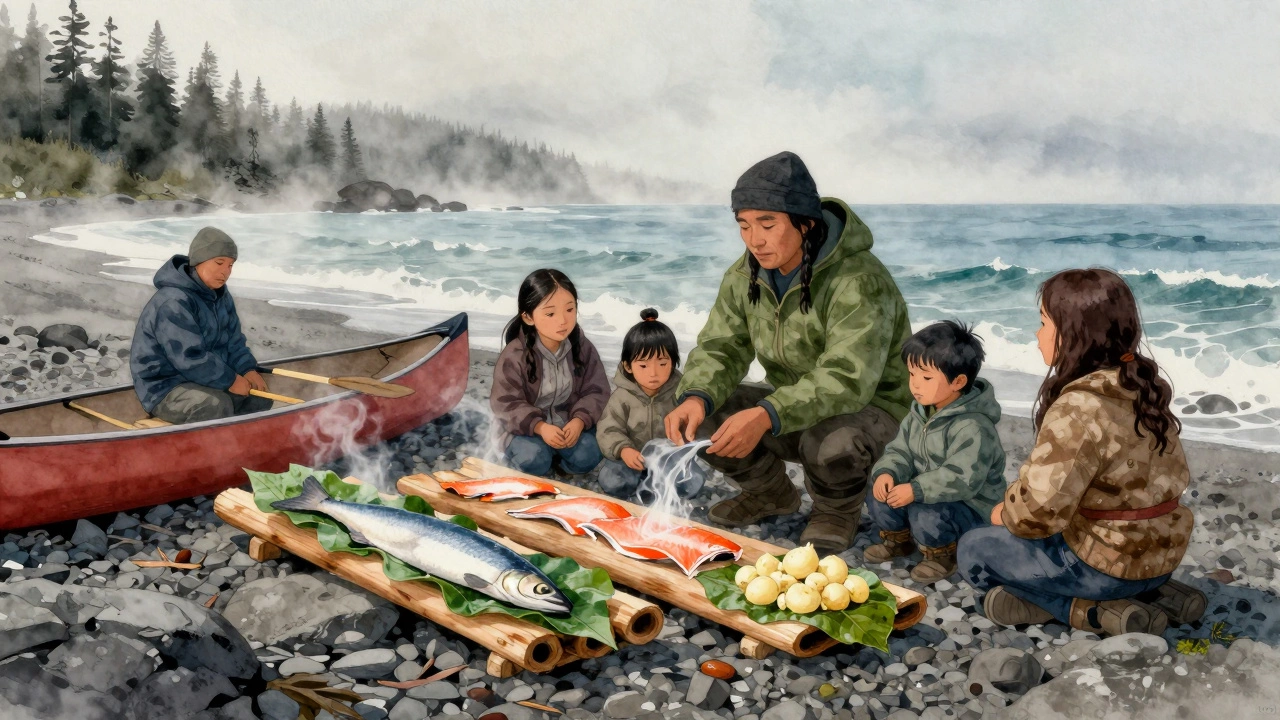
Along the Pacific Northwest coast, where rivers teemed with salmon, breakfast often began with smoked salmon flakes. The Tlingit and Haida would eat it with fermented herring eggs or mashed camas bulbs-sweet, starchy tubers dug from wet meadows. They’d wrap it all in wild greens like salal leaves or seaweed for a portable, nutrient-packed start.
Staples That Never Left the Table
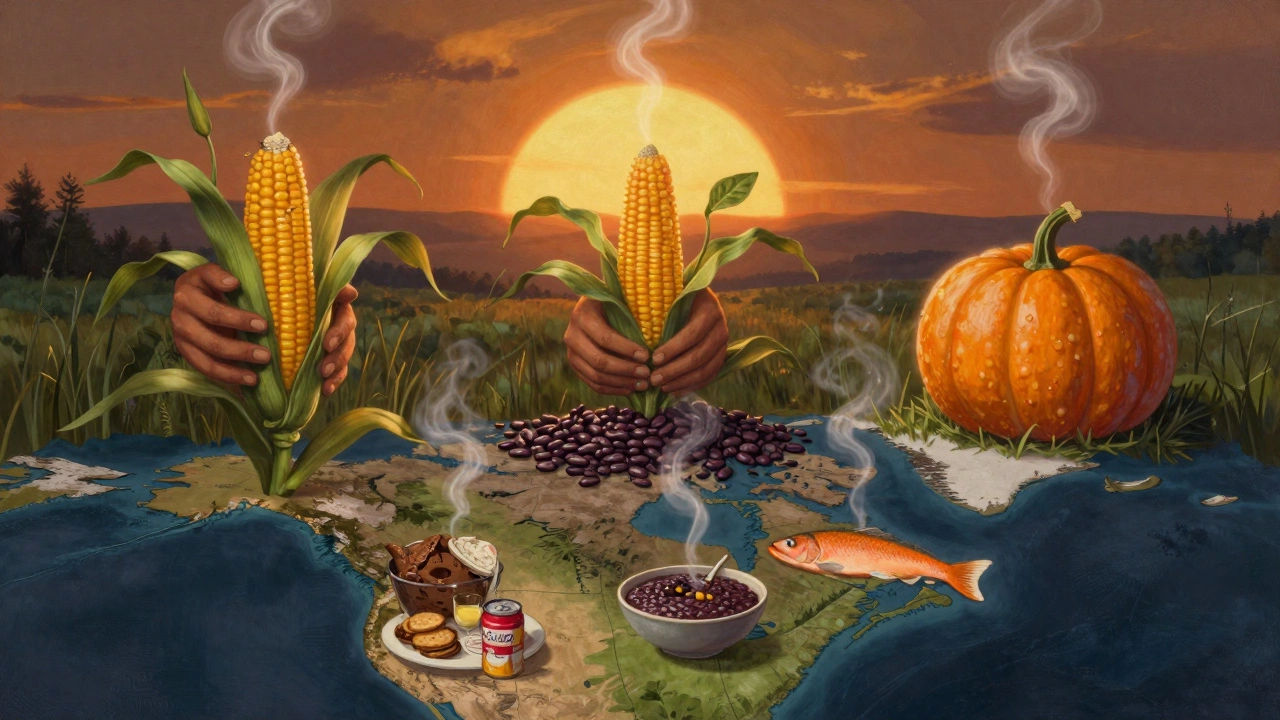
Three foods appear again and again across Native breakfast traditions: corn, beans, and squash-the Three Sisters. These aren’t just crops; they’re a farming system that works together. Corn gives structure for beans to climb, beans fix nitrogen in the soil, and squash spreads low to shade weeds and hold moisture. This partnership meant reliable nutrition.
For breakfast, corn was ground into meal and made into flatbreads, porridges, or dumplings. The Ojibwe made manoominikeg, a thick corn and wild rice porridge, often sweetened with maple syrup. The Pueblo peoples baked corn cakes in hot ashes. These weren’t fancy meals-they were practical, filling, and made from what the earth provided without needing outside inputs.
Beans showed up too. Black beans, tepary beans, and lima beans were dried and rehydrated overnight, then simmered into stews or mashed into spreads. Paired with corn, they formed a complete protein-something modern nutrition science only confirmed centuries later.
Foraging Was the Original Meal Prep
Native breakfasts didn’t come from supermarkets. They came from walking the land. Early morning was the best time to gather.
In the Eastern Woodlands, the Lenape and Iroquois picked wild strawberries, blueberries, and raspberries in spring and early summer. These were eaten fresh or dried for winter. They also collected wild onions, ramps, and fiddlehead ferns-each adding sharp, earthy flavor to morning meals.
Maple syrup wasn’t just a sweetener-it was liquid gold. The Anishinaabe and other tribes in the Great Lakes region tapped sugar maple trees in late winter. They boiled the sap down over open fires into thick syrup, stored in birch bark containers. A spoonful stirred into cornmeal porridge turned a simple meal into something special.
Even insects played a role. The Apache and Shoshone gathered grasshoppers and crickets in spring, roasted them over coals, and ate them with acorn flour cakes. High in protein and easy to collect in large numbers, they were a practical, overlooked breakfast protein.
What Changed After Colonization?
When settlers arrived, they brought wheat, dairy, sugar, and pork. Over time, these replaced native staples-not because they were better, but because the land was taken, and traditional food systems were broken.
By the 1800s, many Native communities were forced onto reservations with limited land and no access to traditional hunting or gathering grounds. The U.S. government distributed rations: flour, lard, sugar, and canned meat. From that came frybread-a food born from survival, not tradition.
Today, frybread is often served at powwows and family gatherings. But it’s not an original breakfast. It’s a symptom of displacement. Real Native breakfasts-corn mush, smoked salmon, pemmican-were never meant to be fried in grease. They were meant to be nourished by the earth.
Modern Revival: Returning to Roots
There’s a quiet movement growing. Native chefs, farmers, and elders are bringing back traditional breakfast foods-not as nostalgia, but as medicine.
In New Mexico, the Navajo Nation runs community gardens growing blue corn and tepary beans. Schools serve corn mush instead of sugary cereal. In Minnesota, Ojibwe families are reviving wild rice harvesting. In Alaska, Yup’ik elders teach kids how to smoke salmon the old way.
These aren’t just meals. They’re acts of resistance. Every time someone eats corn mush made from heirloom seeds, they’re saying: We are still here. Our knowledge still works.
Modern nutrition science now confirms what Native ancestors knew: whole, unprocessed, locally grown foods-like wild berries, dried beans, smoked fish, and stone-ground corn-are among the most nutrient-dense on Earth. They’re high in fiber, low in sugar, and packed with micronutrients that processed foods strip away.
Why This Matters Today
Native communities still face higher rates of diabetes, heart disease, and obesity than most other groups in the U.S. Why? Because the food system they were forced into doesn’t match their biology or their history.
Returning to traditional breakfasts isn’t about romanticizing the past. It’s about fixing the present. Corn mush has a low glycemic index. Pemmican is high in protein and fat, keeping blood sugar steady. Wild berries are loaded with antioxidants. These aren’t trendy superfoods-they’re ancestral tools for health.
When you eat like a Native American ancestor did, you’re not just eating breakfast. You’re eating history, resilience, and a way of life that understood food as part of a living world-not just fuel.
Simple Ways to Try Native-Inspired Breakfasts Today
You don’t need to live on a reservation to eat like Native ancestors. Here are three easy ways to start:
- Swap sugary cereal for blue cornmeal porridge. Cook 1/4 cup coarse blue cornmeal in 1 cup water for 10 minutes. Add a spoon of maple syrup and a handful of wild blueberries.
- Make a smoked salmon and wild rice bowl. Mix cooked wild rice with flaked smoked salmon, chopped chives, and a drizzle of olive oil. Add a boiled egg if you want extra protein.
- Try roasted acorn flour pancakes. Mix 1/2 cup acorn flour (available online), 1 egg, 1/4 cup water, and a pinch of salt. Cook like regular pancakes. Serve with honey.
These aren’t exotic dishes. They’re simple, real, and rooted in thousands of years of wisdom.
Do Native Americans still eat traditional breakfast foods today?
Yes, many do-especially in tribal communities where food sovereignty movements are strong. Families in the Southwest, Great Lakes, and Pacific Northwest regularly prepare corn mush, smoked salmon, pemmican, and wild rice dishes. These meals are often served at home, during ceremonies, or in tribal school lunch programs as part of cultural revitalization efforts.
Is frybread a traditional Native American breakfast?
No. Frybread was created in the 1860s when the U.S. government forced Navajo people onto reservations and gave them rations of flour, lard, and sugar. It was a survival food, not a traditional one. While it’s now part of cultural gatherings, it’s not the same as the corn-based, foraged, or dried-meat breakfasts that existed for millennia before colonization.
What’s the difference between Native American and Indian breakfasts?
They’re completely different. "Native American" refers to the original peoples of North America-tribes like the Navajo, Ojibwe, and Hopi. Their breakfasts are based on corn, beans, wild game, fish, and foraged plants. "Indian" refers to people from the country of India, whose breakfasts include idli, dosa, paratha, and chia pudding. The terms are not interchangeable, and their food traditions have no historical connection.
Why are traditional Native breakfasts considered healthier?
They’re made from whole, unprocessed foods with no added sugar or refined grains. Corn mush, smoked salmon, and wild berries are naturally high in fiber, protein, and antioxidants. They digest slowly, keeping energy steady. Compare that to modern breakfasts loaded with sugar and refined carbs-these traditional meals help prevent diabetes and obesity, which are major health issues in many Native communities today.
Where can I buy traditional Native American breakfast ingredients?
You can find blue cornmeal, wild rice, and acorn flour online from Native-owned businesses like Nixta Taquitos, Native Seeds/SEARCH, or First Nations Development Institute’s vendor network. Some health food stores carry wild rice and maple syrup. Avoid generic brands that don’t source from Indigenous producers-supporting these businesses helps sustain cultural food traditions.