Paneer Tikka Spice Customizer
Adjust the spice level to match your preference. We'll show you exactly how to make it and suggest perfect side dish pairings.
Your Custom Paneer Tikka Recipe
Marinate paneer cubes with yogurt, lemon juice, and spices. Add 1/4 tsp chili powder for mild heat.
Pro Tip: Restaurant versions are typically medium heat—enough to feel warm without burning.
Recommended Side Dishes
Naan or Roti
The classic pairing. Tear off a piece of bread and scoop up paneer with mint chutney.
Cucumber Raita
Helps cool the heat. Serve with raw onion for crunch and lemon for acidity.
Ask anyone who’s eaten Indian food what the most famous vegetarian dish is, and chances are they’ll name paneer tikka. It’s not just popular-it’s iconic. Grilled cubes of paneer, marinated in yogurt and spices, charred on skewers, and served with onions and bell peppers, it’s the dish that turns even meat-eaters into vegetarians. You’ll find it on every Indian restaurant menu from Delhi to Birmingham, from Mumbai to Melbourne. But why this one? What makes paneer tikka stand out among hundreds of other vegetarian dishes like dal makhani, chana masala, or palak paneer?
Why Paneer Tikka Dominates the Scene
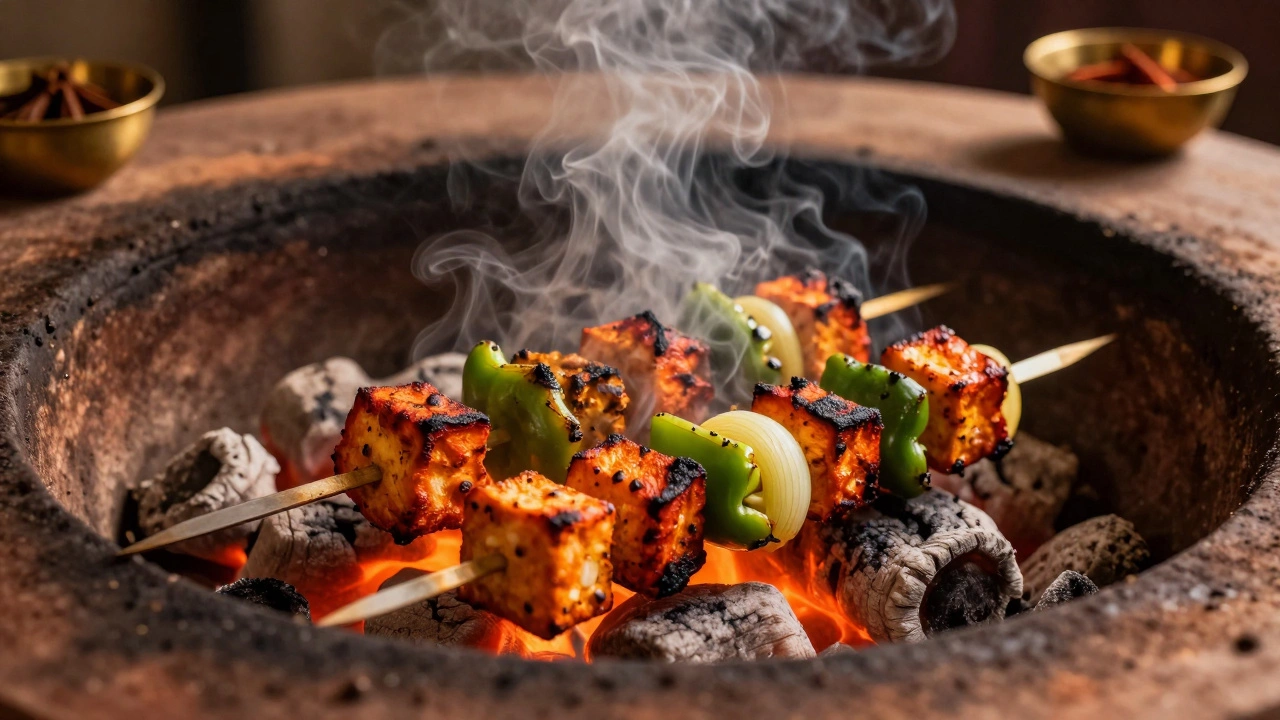
Paner, the Indian cottage cheese, is the secret. Unlike tofu or soy-based proteins, paneer has a rich, milky flavor and a firm texture that holds up to grilling without falling apart. It soaks up spices like cumin, coriander, turmeric, and garam masala, then develops a smoky crust when grilled over charcoal or in a tandoor. That combination-creamy inside, slightly charred outside-is hard to forget.
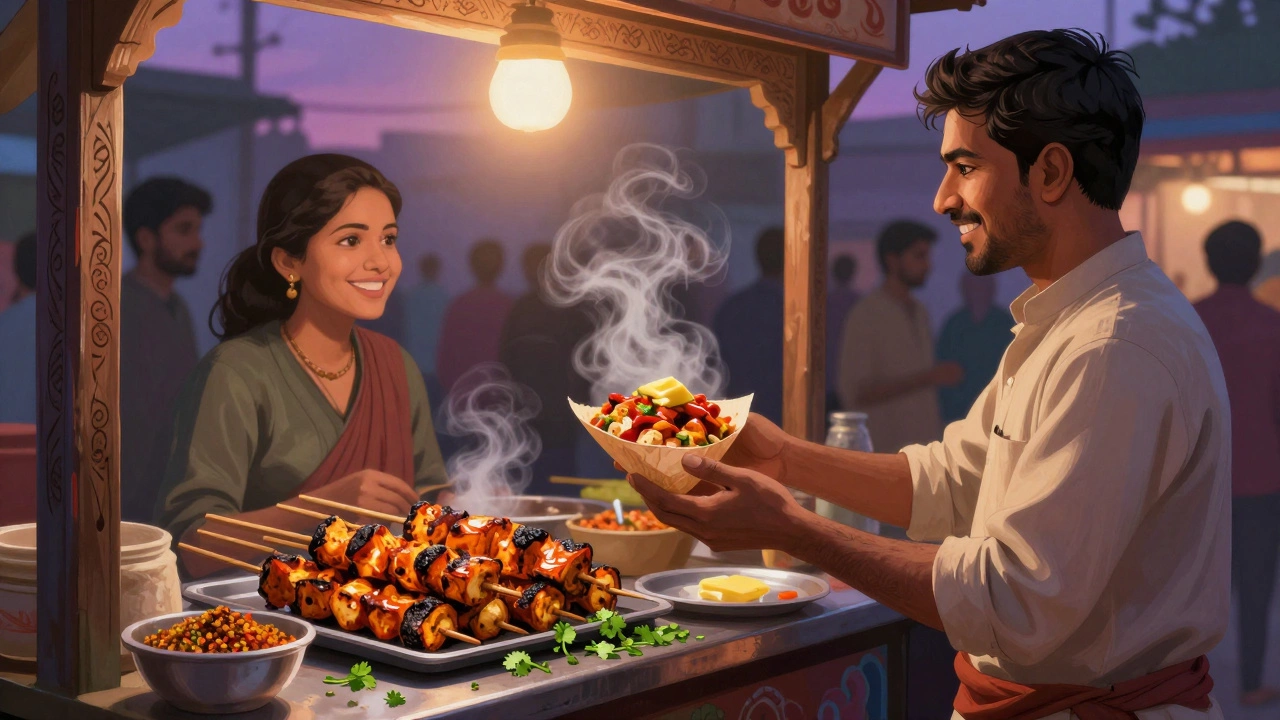
It’s also incredibly versatile. You can eat it as a starter, tuck it into a wrap, pile it on a salad, or serve it with naan and mint chutney. It’s the kind of dish that works for casual dinners, party platters, and even fine dining. In India, street vendors sell it in paper cones. Upscale restaurants plate it with saffron-infused rice and edible flowers. It crosses class, region, and age lines.
Compare it to dal makhani, another top contender. Dal makhani is slow-cooked black lentils and kidney beans in butter and cream. It’s rich, comforting, and deeply flavorful-but it’s a side dish. Chana masala? A spicy chickpea curry, popular in North India, often eaten with bread. It’s hearty, but it doesn’t have the same visual punch or textural contrast as paneer tikka. Palak paneer? Creamy spinach with paneer. Delicious, yes-but it’s more of a home-cooked staple than a showstopper.
History and Origins: From the Tandoor to the World
Paneer tikka didn’t come out of nowhere. It evolved from tandoori chicken, a Punjabi specialty that became famous after India’s independence in 1947. When restaurants began catering to vegetarians, cooks replaced chicken with paneer. The marinade stayed the same: yogurt, lemon juice, garlic, ginger, and spices. The cooking method-high-heat grilling in a clay oven-also stayed.
The first known mention of paneer tikka as a standalone dish appears in 1970s cookbooks from Delhi and Lahore. By the 1990s, it was a staple in Indian restaurants abroad. In the UK, it became the default vegetarian option in curry houses. Even today, if you walk into a British Indian restaurant and say, “I’m vegetarian,” the server will often ask, “Paneer tikka?” without even looking at the menu.
How It’s Made: The Real Recipe
True paneer tikka isn’t baked in the oven. It’s grilled. Here’s how it’s done in homes and restaurants across North India:
- Use fresh, homemade paneer if possible. Store-bought paneer often has too much water and falls apart.
- Cut it into 1-inch cubes. Pat them dry with a paper towel.
- Marinate for at least 4 hours (overnight is better) in a mix of yogurt, lemon juice, garlic paste, ginger paste, cumin powder, coriander powder, turmeric, red chili powder, and a pinch of garam masala.
- Thread the paneer onto skewers with chunks of onion and green bell pepper.
- Grill over charcoal or in a tandoor until the edges are charred and the paneer is golden.
Some cooks add a touch of kasuri methi (dried fenugreek leaves) at the end for a bitter-sweet aroma. Others brush the skewers with melted butter right before serving. That’s the secret-the butter isn’t just for flavor. It seals in moisture and gives the paneer that glossy finish you see in restaurant photos.
Why It’s Not Just About Taste
Paneer tikka isn’t famous because it’s the spiciest or the most complex. It’s famous because it’s the perfect balance of texture, flavor, and presentation. It’s visually appealing. It smells incredible. It’s satisfying without being heavy. And it’s adaptable.
Vegetarian diets vary widely. Some people avoid dairy. Others avoid gluten. Paneer tikka doesn’t fit every diet-but it fits most. It’s naturally gluten-free (if the marinade doesn’t contain flour), and while it contains dairy, paneer is lower in lactose than milk or cheese. That makes it accessible to many who think they can’t eat Indian food.
It’s also the gateway dish. People who’ve never tried Indian food often start with paneer tikka. Once they taste it, they’re more likely to try dal makhani, chana masala, or even aloo gobi. It’s the ambassador of vegetarian Indian cuisine.
Other Strong Contenders
Let’s be fair-paneer tikka isn’t the only dish worth celebrating. Here are three others that come close:
- Dal makhani: Creamy, slow-cooked lentils with butter and cream. A comfort food classic, especially in Punjab. Often served with rice.
- Chana masala: Spicy chickpeas with tomatoes, onions, and amchoor (dry mango powder). Popular across North India as a street snack or home meal.
- Palak paneer: Spinach and paneer in a smooth, spiced gravy. Nutrient-dense and mild enough for kids.
Each has its fans. But none of them have the same universal recognition. Dal makhani is loved by families. Chana masala is loved by street food lovers. Palak paneer is loved by health-conscious eaters. Paneer tikka? It’s loved by everyone.

How to Eat It Right
Don’t just grab a fork. The best way to eat paneer tikka is with naan or roti. Tear off a piece of bread, scoop up a piece of paneer, add a dollop of mint chutney, and maybe a slice of raw onion. The crunch of the onion, the coolness of the chutney, the smokiness of the paneer-it’s a full sensory experience.
Some people like it with a side of cucumber raita to cool the spice. Others dip it in tamarind chutney for sweet and sour contrast. In restaurants, it often comes with a wedge of lemon. Squeeze it over the top just before eating. The acidity lifts the whole dish.
Where to Find the Best Paneer Tikka
In India, the best versions come from roadside tandoor ovens in Delhi’s Chandni Chowk or from family-run restaurants in Amritsar. Outside India, top spots include:
- Amritsari Kitchen in London-known for authentic tandoor smoke.
- Naan & Curd in New York-uses house-made paneer and charcoal grilling.
- Spice Route in Birmingham-where paneer tikka is grilled over mango wood for a subtle sweetness.
If you’re making it at home, don’t skip the marinating time. And if you don’t have a grill, use a cast-iron skillet on high heat. Get those edges charred. That’s where the flavor lives.
It’s Not Just a Dish-It’s a Cultural Symbol
Paneer tikka represents more than food. It’s proof that vegetarian cuisine can be bold, exciting, and globally loved. In a world where meat dominates the spotlight, paneer tikka stands tall without apology. It doesn’t need to mimic chicken. It doesn’t need to be “healthy.” It just needs to taste good-and it does.
It’s the dish that made Indian vegetarian food visible on the world stage. It’s the reason people say, “I didn’t think I’d like Indian food… until I tried paneer tikka.”
Is paneer tikka the same as tandoori paneer?
Yes, they’re the same thing. "Tandoori paneer" is just another name for paneer tikka. "Tikka" means small pieces, and "tandoori" refers to the cooking method in a tandoor oven. So paneer tikka = tandoori-style paneer cubes.
Can I make paneer tikka without yogurt?
Yes, but it won’t be the same. Yogurt tenderizes the paneer and helps the spices stick. You can substitute with coconut milk or silken tofu blended with lemon juice, but the texture and flavor won’t be authentic. Yogurt is key.
Is paneer tikka spicy?
It can be, but it doesn’t have to be. The spice level depends on how much chili powder you use. Most restaurant versions are medium heat-enough to feel warm, not burn. You can easily make it mild by reducing or omitting the chili powder.
What’s the best side dish for paneer tikka?
Naan or roti is classic. For something lighter, try jeera rice or a simple cucumber-tomato salad with lemon. Mint chutney is non-negotiable. Raita helps if you want to cool the heat.
Is paneer tikka healthy?
Compared to fried snacks, yes. Paneer is high in protein and calcium. Grilling instead of frying keeps it low in fat. But it’s not low-calorie-especially if served with butter or cream. Portion control matters. A serving of 4-5 cubes with vegetables is a balanced meal.