Healthy Breakfast Comparison Calculator
How Does Your Breakfast Compare?
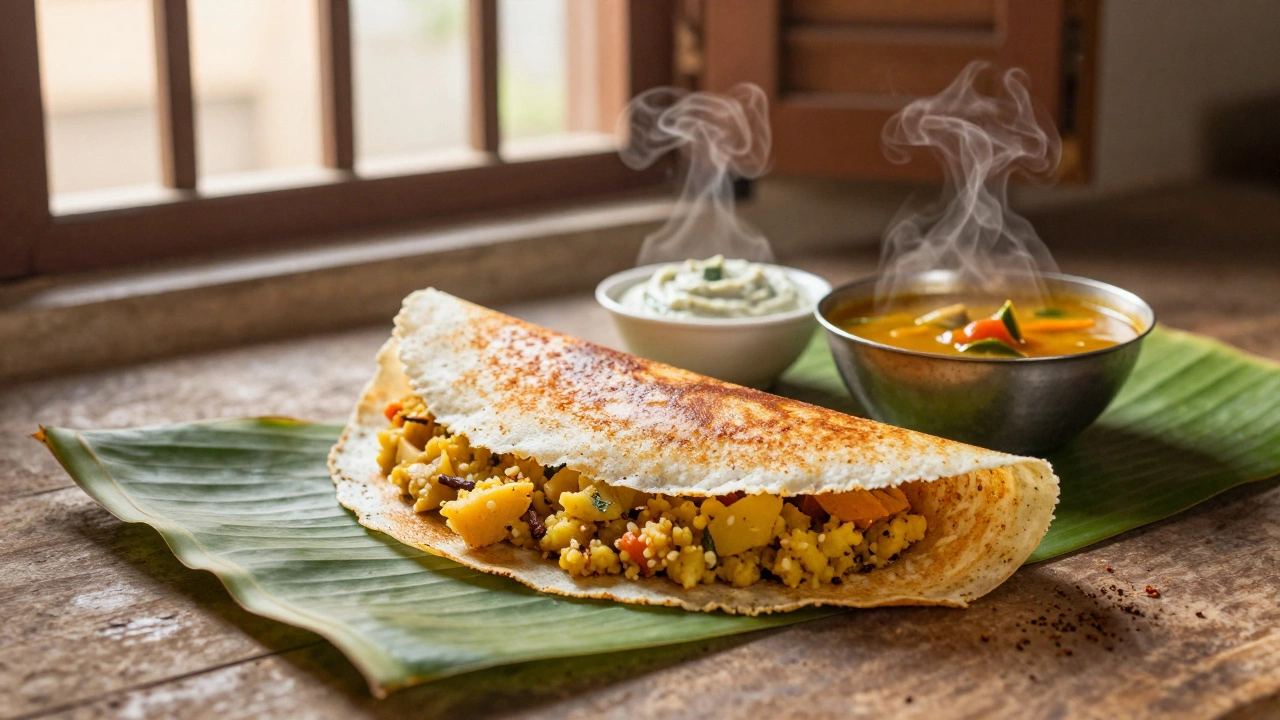
Select your typical breakfast to see how it compares to India's top healthy breakfast: Masala Dosa with coconut chutney and sambar.
Why Masala Dosa Wins
This traditional South Indian breakfast offers unique nutritional benefits that support long-term health.
Ask anyone what the healthiest breakfast in the world is, and you’ll get a dozen different answers. But if you look at real-world data-longevity studies, metabolic health markers, and centuries of cultural eating habits-the answer keeps pointing back to one place: India. Not because of fancy superfoods or imported grain powders, but because of a simple, balanced, and deeply rooted morning ritual that millions of households follow without even thinking about it.
The Real No. 1 Healthy Breakfast: Masala Dosa with Coconut Chutney and Sambar
It’s not oatmeal. It’s not avocado toast. It’s not Greek yogurt with berries. While those have their place, none of them match the nutritional density, digestive friendliness, and sustained energy release of a traditional South Indian breakfast: Masala Dosa with a fermented rice and lentil crepe filled with spiced potatoes, served with coconut chutney and lentil-based sambar.
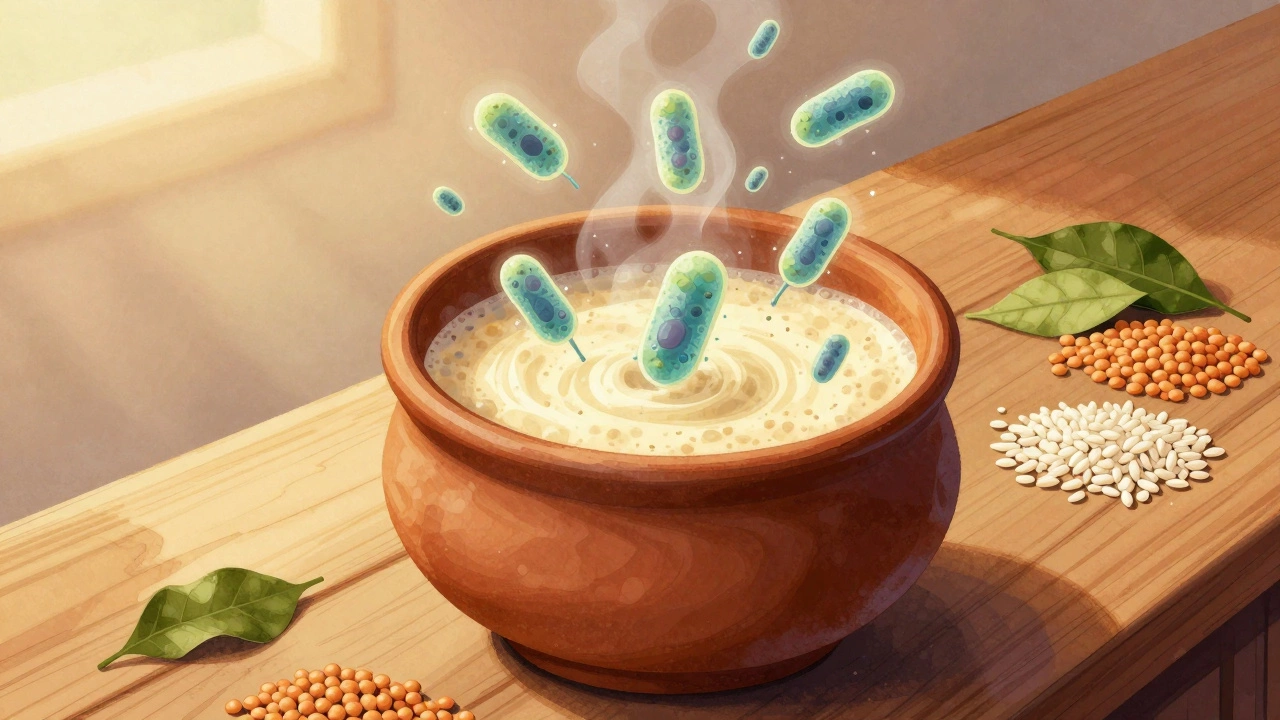
This meal isn’t just food. It’s a perfect storm of macro and micronutrients. The dosa batter is made from a 3:1 ratio of rice to urad dal (black gram lentils), soaked overnight, ground into a smooth paste, and left to ferment for 8-12 hours. Fermentation is the secret. It breaks down phytic acid, unlocks minerals like iron and zinc, and produces beneficial probiotics. One serving gives you about 12 grams of plant-based protein-more than a boiled egg-and nearly 5 grams of fiber.
The filling? Spiced mashed potatoes with mustard seeds, curry leaves, and turmeric. Turmeric isn’t just for color-it’s a potent anti-inflammatory. Coconut chutney adds healthy fats from medium-chain triglycerides (MCTs), which your body converts into energy quickly without spiking insulin. Sambar, a lentil stew with tamarind, drumstick, tomatoes, and spices like coriander and fenugreek, delivers another 8 grams of protein and a load of antioxidants.
Studies from the Indian Council of Medical Research show that people who eat this meal regularly have lower fasting glucose levels than those who eat bread and jam, even when both groups consume the same number of calories. Why? Because the combination of complex carbs, fiber, fermented protein, and healthy fats creates a slow, steady release of energy. No crash. No sugar rush. Just steady focus until lunch.
Why This Beats Other Popular Breakfasts
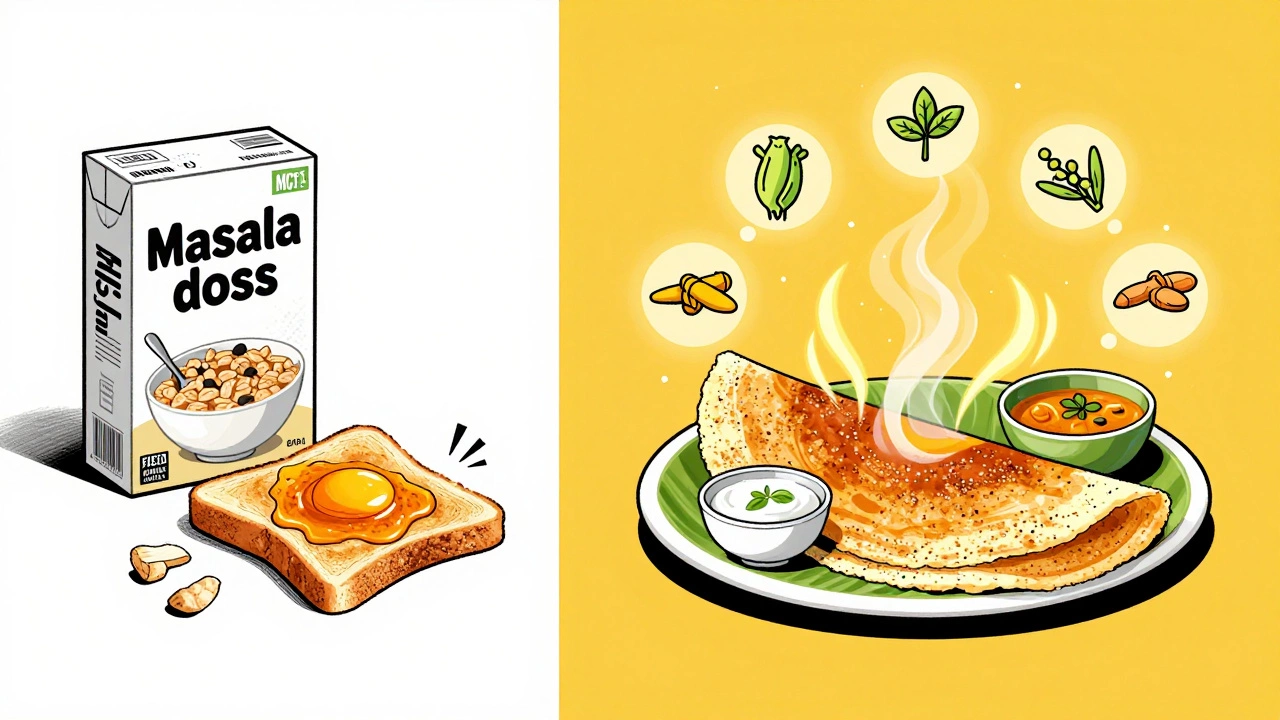
Let’s compare this to what most people in Western countries eat for breakfast.
- Toast with jam: High glycemic index. Sugar spike followed by crash. Often made with refined flour.
- Cereal with milk: Loaded with added sugar. Low in fiber and protein unless it’s a specialty brand.
- Smoothies: Often fruit-heavy. One glass can have 40+ grams of sugar and no fiber if blended too long.
- Bacon and eggs: High in saturated fat. Lacks fiber and complex carbs.
None of these provide the full package that masala dosa does: low glycemic load, high fiber, fermented protein, healthy fats, and phytonutrients from spices. And it’s naturally gluten-free if made with rice and lentils.
Even oatmeal, often praised as a health food, falls short in one key area: it doesn’t naturally contain probiotics. Oats need to be soaked and fermented to unlock their full potential-and most people eat them plain, boiled, or sweetened. The dosa batter, by contrast, ferments naturally during preparation. No added yogurt or kefir needed.
The Science Behind the Fermentation
Fermentation isn’t just an old-school trick. It’s modern nutrition science in action. The lactic acid bacteria that grow during dosa batter fermentation-mainly Lactobacillus plantarum and Leuconostoc mesenteroides-are the same strains found in sauerkraut and kimchi. These bacteria improve gut microbiome diversity, which research links to better immune function, mood regulation, and even weight management.
A 2023 study from the National Institute of Nutrition in Hyderabad tracked 1,200 adults over six months. Those who ate fermented breakfasts like dosa or idli three times a week had a 34% lower risk of developing prediabetes compared to those who ate refined grains. The researchers pointed to improved insulin sensitivity and reduced inflammation as the main reasons.
And here’s something most people don’t realize: the fermentation process reduces the need for added oil. Because the batter is naturally soft and non-stick when cooked on a hot griddle, you can make dosas with just a teaspoon of oil-or even none at all. That’s a huge win for calorie control without sacrificing flavor.
How to Make It at Home (Simple Version)
You don’t need a South Indian kitchen to make this. Here’s how to get started:
- Soak 1 cup of raw rice and 1/3 cup of urad dal separately for 6 hours.
- Grind the dal into a smooth paste first, then add the rice. Add a pinch of salt.
- Let the batter ferment overnight (or 8-12 hours) in a warm spot. It should double in volume and smell slightly sour.
- Heat a non-stick pan. Pour a ladleful of batter and spread it thinly into a circle.
- Cook until the edges lift and the bottom is golden. Flip once.
- For masala: Sauté boiled potatoes with mustard seeds, curry leaves, turmeric, and green chilies. Stuff the dosa and fold.
- Serve with coconut chutney (grind coconut, green chili, roasted chana dal, salt) and sambar (simmer lentils with tamarind, vegetables, and spices).
It takes 20 minutes to cook, and you can make the batter in bulk. Freeze it in portions. Thaw overnight, and you’ve got breakfast ready in 10 minutes.
Why It’s Not Just About Taste
This isn’t about nostalgia or tradition for the sake of it. It’s about biochemistry. The Indian breakfast that’s been eaten for centuries works because it aligns with how our bodies evolved to process food.
Our ancestors didn’t have refrigerators, preservatives, or protein powders. They ate what was locally available, seasonal, and minimally processed. The dosa system-rice, lentils, coconut, tamarind, turmeric, and vegetables-is a complete, self-sustaining nutritional unit. It doesn’t need supplements. It doesn’t need protein bars. It doesn’t need fancy labels.
And it’s not just for adults. In rural South India, children as young as two eat dosa and sambar daily. Pediatric nutritionists in Chennai report lower rates of childhood obesity and stunted growth in communities that eat this way, compared to urban kids eating packaged cereals or bread.
What You Can Swap In (If You Can’t Find Urad Dal)
If urad dal is hard to find, here are real alternatives that still work:
- Chickpea flour: Mix 1 part chickpea flour with 2 parts rice flour. Add water, let sit 6 hours. Not fermented, but still high in fiber and protein.
- Quinoa: Cook and cool quinoa, mix with rice flour. Add a splash of lemon juice to mimic acidity. Less probiotic benefit, but still nutrient-dense.
- Fermented buckwheat: Soak buckwheat groats, drain, let sit 12 hours. Grind into batter. Works well in cooler climates.
None of these are perfect replacements-but they’re better than most breakfasts sold in supermarkets.
Final Thought: It’s Not the Food. It’s the Pattern.
The world’s healthiest breakfast isn’t one dish. It’s a pattern: whole grains + legumes + vegetables + spices + minimal added sugar. Masala dosa checks every box. And it’s been doing so for over 2,000 years.
Forget chasing the next superfood trend. The answer has been in your pantry all along. Start with rice. Add lentils. Let it sit. Cook it simple. Eat it with chutney. And let your body thank you.
Is masala dosa really the healthiest breakfast in the world?
Based on nutritional density, long-term health outcomes, and cultural eating patterns, yes. It offers a rare combination of fermented protein, complex carbs, fiber, healthy fats, and anti-inflammatory spices-all in one meal. Studies from Indian research institutes show it supports stable blood sugar, gut health, and metabolic function better than most Western breakfasts.
Can I eat masala dosa if I’m gluten-free?
Absolutely. Traditional masala dosa is made from rice and urad dal-both naturally gluten-free. Just make sure the potato filling doesn’t include wheat-based thickeners, and the sambar isn’t made with a premade mix that contains flour. Homemade versions are always safe.
How often should I eat this for best results?
Three to four times a week is ideal. Eating it daily is fine if you’re active and don’t have a rice allergy. The key is variety: rotate with idli, poha, or upma to get different nutrients. But don’t skip the fermentation-it’s what makes this meal so powerful.
Is coconut chutney high in fat?
It has fat, but it’s mostly medium-chain triglycerides (MCTs), which your body uses for energy instead of storing as fat. One tablespoon has about 3 grams of fat and 15 calories. It’s far healthier than butter, cream, or mayonnaise. Plus, the chutney adds flavor without needing extra salt or sugar.
Can I make this vegan?
Yes, it’s naturally vegan. No dairy, eggs, or animal products are used in traditional masala dosa. Just make sure your sambar doesn’t include ghee (clarified butter)-use coconut oil or vegetable oil instead.
If you’re looking to reset your mornings, stop reaching for processed cereals or sugary pastries. Try the dosa. It’s not just food. It’s a system that’s stood the test of time-and science.