You’ve spent an hour chopping onions, browning chicken, and simmering spices-only to taste your chicken curry and realize it’s flat. No heat. No depth. Just… bland. This happens more often than you think. Even experienced cooks hit this wall. The good news? Tasteless curry isn’t a failed dish. It’s a fixable one.
Why Your Chicken Curry Tastes Flat
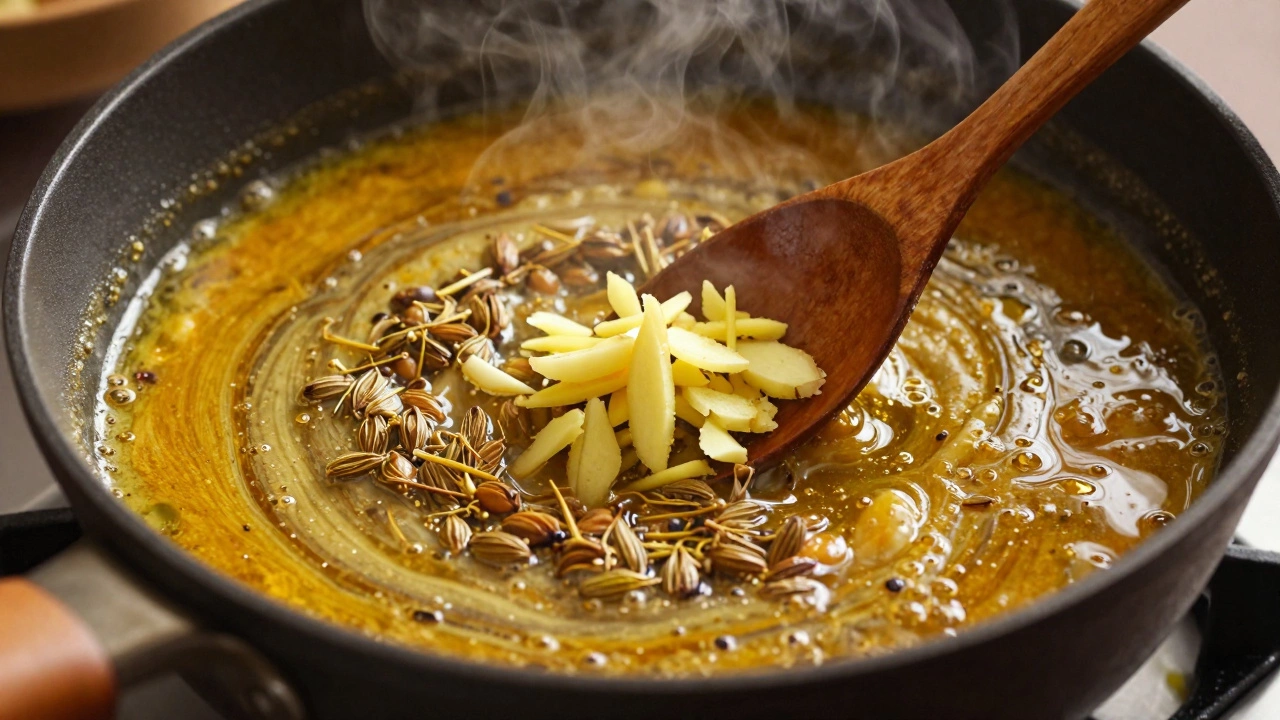
Most of the time, a tasteless curry isn’t about missing ingredients. It’s about missing technique. Curry isn’t just a mix of spices. It’s a layered flavor build. If you toss everything in at once, you’re not letting each component do its job. Think of it like a song. Garlic and ginger need to sizzle in oil before you add anything else-that’s your bassline. Tomatoes need to break down and caramelize-that’s the melody. Spices like cumin, coriander, and turmeric need to bloom in hot oil to release their oils-that’s the harmony. Skip any of these steps, and your curry sounds like a single note.Quick Fixes for a Tasteless Chicken Curry
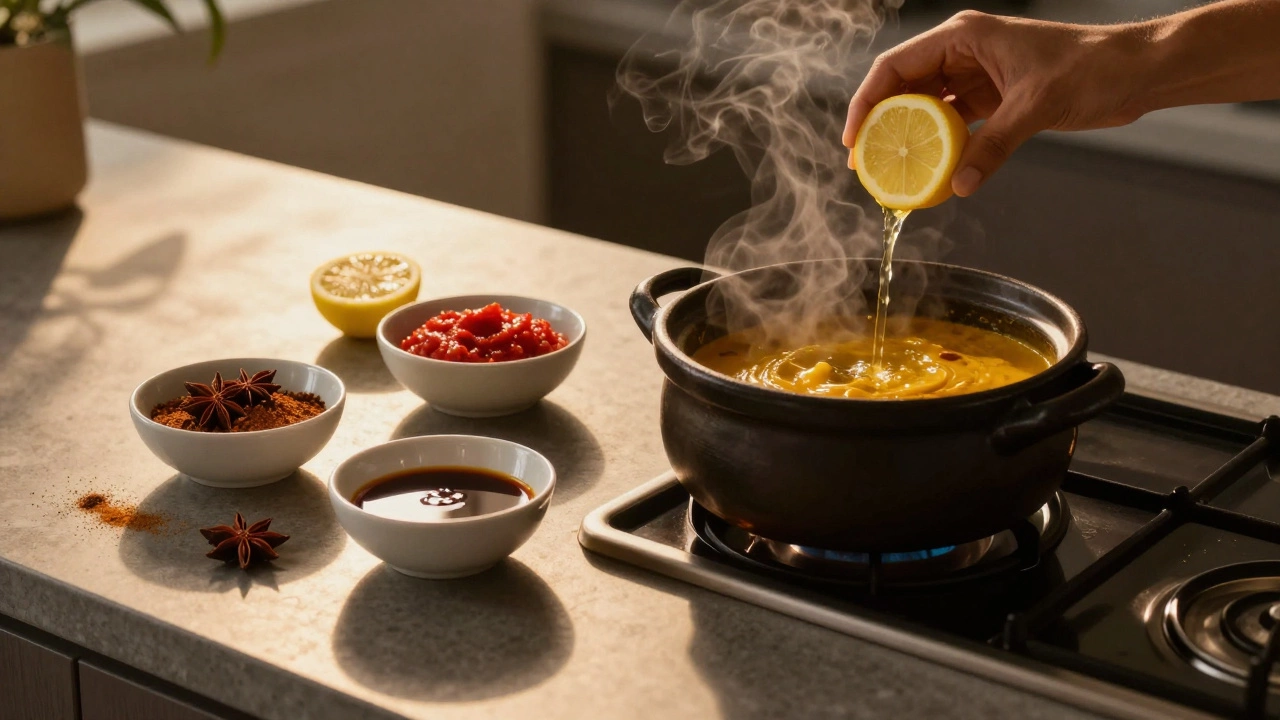
If you’ve already made the curry and it’s underwhelming, don’t throw it out. Here’s what actually works:- Add acid. A squeeze of lemon juice or a splash of vinegar (apple cider or tamarind water) wakes up the whole dish. Acid cuts through richness and makes other flavors pop. Start with half a teaspoon and taste.
- Boost umami. A teaspoon of tomato paste, a dash of soy sauce, or a small piece of dried mushroom powder adds depth. These aren’t Indian, but they’re used in professional kitchens worldwide to round out flavor.
- Toast more spices. If you still have oil in the pan, heat a teaspoon of cumin seeds, a pinch of fennel, and a quarter teaspoon of ground black pepper. Let them sizzle for 20 seconds, then stir into the curry. This adds a fresh layer of aroma.
- Stir in a spoon of ghee or butter. Fat carries flavor. A little extra ghee at the end makes the curry feel richer, even if the spices are quiet.
- Simmer longer. If the curry is too watery, turn up the heat and let it reduce. Concentration equals flavor. Ten extra minutes on medium heat can make all the difference.
Prevention: How to Build Flavor from the Start
The best fix is avoiding the problem altogether. Here’s how real home cooks in Birmingham and beyond build deep, complex chicken curries every time.- Sear the chicken. Don’t just drop raw chicken into the sauce. Brown it in batches in hot oil. That caramelized crust? That’s flavor gold.
- Use fresh garlic and ginger. Pre-minced from a jar? Skip it. Grate them fresh. The difference is night and day.
- Bloom your spices. Heat oil, add whole spices like cardamom, cinnamon, and cloves. Let them crackle. Then add ground spices-cumin, coriander, turmeric, chili powder. Stir for 30 seconds until fragrant. This step alone doubles the flavor.
- Cook tomatoes properly. Add chopped tomatoes and cook until they collapse into a thick paste. This takes 8-10 minutes. Rush this, and your curry tastes watery.
- Use yogurt or coconut milk wisely. If using yogurt, stir it in off the heat to prevent curdling. Coconut milk should be full-fat and added after the spices bloom.
- Finish with garam masala. Add it at the end, not the beginning. Heat kills its delicate aroma. One teaspoon stirred in just before serving makes the curry feel alive.
What Not to Do
There are common myths that make things worse:- Don’t add more salt. Salt enhances, but it doesn’t create flavor. If your curry is flat, salt won’t save it-it might just make it taste salty and dull.
- Don’t dump in curry powder. Pre-mixed curry powder is a shortcut that often tastes stale. It’s not the same as building flavor from whole spices.
- Don’t cover the pot. Trapping steam stops evaporation. You need to reduce liquid to concentrate flavor. Leave the lid off for the last 10-15 minutes.
Real-Life Fix: A Birmingham Kitchen Example
Last winter, a friend brought over a chicken curry she’d made for her family. Everyone said it was "nice, but plain." She didn’t know what went wrong. I tasted it. The spices were there, but they were buried. The tomatoes hadn’t cooked down. The chicken was pale. I took the pot, turned up the heat, and let it simmer uncovered for 12 minutes. While it reduced, I toasted a teaspoon of cumin seeds and a pinch of ground black pepper in a dry pan. I stirred that in, added a squeeze of lemon, and finished with a spoon of ghee and a sprinkle of garam masala. She took one bite and said, "That’s the curry I thought I made."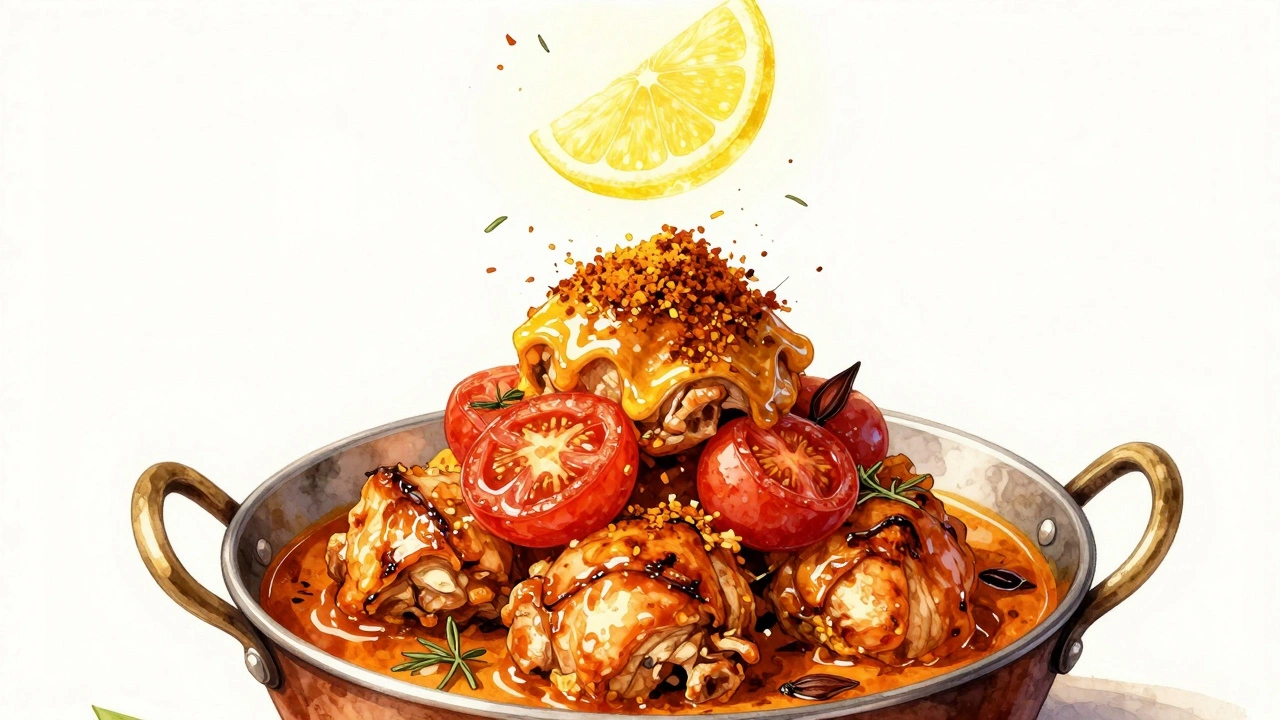
Spice Pairings That Work
Not all spices play well together. Here’s what you should keep in your pantry for chicken curry:| Spice | Role | Best Form |
|---|---|---|
| Cumin (jeera) | Earthy base | Whole seeds, toasted |
| Coriander (dhania) | Citrusy balance | Ground |
| Turmeric (haldi) | Color and mild earthiness | Ground |
| Chili powder | Heat | Ground |
| Garam masala | Finish note | Ground, added at end |
| Fenugreek leaves (kasuri methi) | Bitter-sweet depth | Dried, crushed |
When to Call It a Day
Sometimes, despite your best efforts, the curry still doesn’t come alive. That’s okay. It’s not a disaster. Use it as a base:- Turn it into a soup by adding broth and barley.
- Use it as a filling for samosas or wraps.
- Layer it with rice and bake it like a casserole.
Can I fix a tasteless curry the next day?
Yes, often better. Flavors deepen overnight. Reheat the curry slowly, then add a splash of lemon juice, a pinch of garam masala, and a spoon of ghee. The acidity and fresh spice will revive it. Avoid microwaving-it can make flavors flat again.
Why does my curry taste bitter?
Bitterness usually comes from over-toasted spices or too much fenugreek. If you burned the cumin or coriander, start over. If you used too many fenugreek leaves, balance it with a teaspoon of sugar or a squeeze of orange juice. A little sweetness cuts bitterness better than salt.
Is store-bought curry paste a good alternative?
It’s convenient, but not the same. Most pastes are high in salt and preservatives, and they lack the layered aroma of freshly toasted spices. If you use one, still bloom it in oil and add fresh garlic, ginger, and lemon juice at the end. It’ll help.
Should I use chicken thighs or breast?
Thighs. They have more fat and connective tissue, which breaks down into rich, juicy meat during cooking. Breast dries out easily and adds no flavor depth. If you use breast, sear it quickly and remove it early, then add it back at the end to avoid overcooking.
How do I know if my spices are fresh?
Smell them. Fresh ground spices should be aromatic-strong enough to make you sneeze. If they smell dusty or like nothing, they’re old. Whole spices last longer. Buy them in small batches and toast them before grinding. Store in dark jars away from heat.