Dosa Batter Leavening Calculator
Stop guessing. Get the perfect crispiness every time by matching the leavening agent to your batter's current state.
Sour & Doubled
Smells tangy, has bubbles, volume increased significantly.
Bland & Thick
Tastes like raw rice water, thick consistency, little smell.
Your Inputs
Recommended Action
Add Baking Soda
Timing Protocol
Preparation Method
Select your batter status and amount, then click "Get Instructions" to see the precise baking soda ratio and timing guide.
You’ve waited twelve hours. Maybe sixteen. You smell that distinct tangy aroma rising from your dosa batter and you know it’s ready. You heat the tawa, pour a ladle, and spread it thin. But instead of that satisfying golden crispiness, you get a soft, pale, slightly gummy crepe. What went wrong? For many home cooks, especially those trying to speed up the process or fix under-fermented batter, the culprit is often the misuse of baking soda.
Baking soda, chemically known as sodium bicarbonate, is a leavening agent that releases carbon dioxide when mixed with an acid or heated. In the context of Indian cooking, it’s not just a pantry staple for cakes; it’s a secret weapon for dosas. But here is the catch: timing is everything. Add it too early, and your batter loses its lift before it hits the pan. Add it too late, and you might taste metallic bitterness. Let’s break down exactly when-and how-to use this ingredient to save your breakfast.
The Science Behind the Rise
To understand why timing matters, you need to look at what happens inside the bowl. Traditional dosa batter relies on wild yeast and lactic acid bacteria naturally present in rice and urad dal flour. These microbes consume sugars and produce carbon dioxide gas, creating bubbles that make the batter airy. This process takes time-usually 8 to 12 hours depending on the temperature.
Baking soda shortcuts this biological process. It is an alkaline compound. When it meets an acidic environment (like the lactic acid produced during fermentation) or heat, it reacts instantly. The reaction produces CO₂ bubbles. If you add baking soda to batter that hasn’t fermented enough, there isn’t enough acid to trigger the full reaction, leading to a soapy aftertaste. If you add it to fully fermented batter and let it sit for hours, the gas escapes, leaving you with flat, dense dosas. The sweet spot is right before cooking.
Scenario 1: The "Quick Fix" for Under-Fermented Batter
This is the most common reason people reach for the box. You forgot to soak the beans last night, or your kitchen was too cold, and now it’s 7 AM and guests are arriving. Your batter looks thick and smells like plain rice water rather than sour yogurt.
In this scenario, you are using baking soda as a chemical substitute for fermentation. Here is the protocol:
- Check the pH: Taste a tiny bit of raw batter. If it tastes bland and starchy, it needs help.
- The Amount: Use roughly 1/4 teaspoon of baking soda per cup of batter. Less is more.
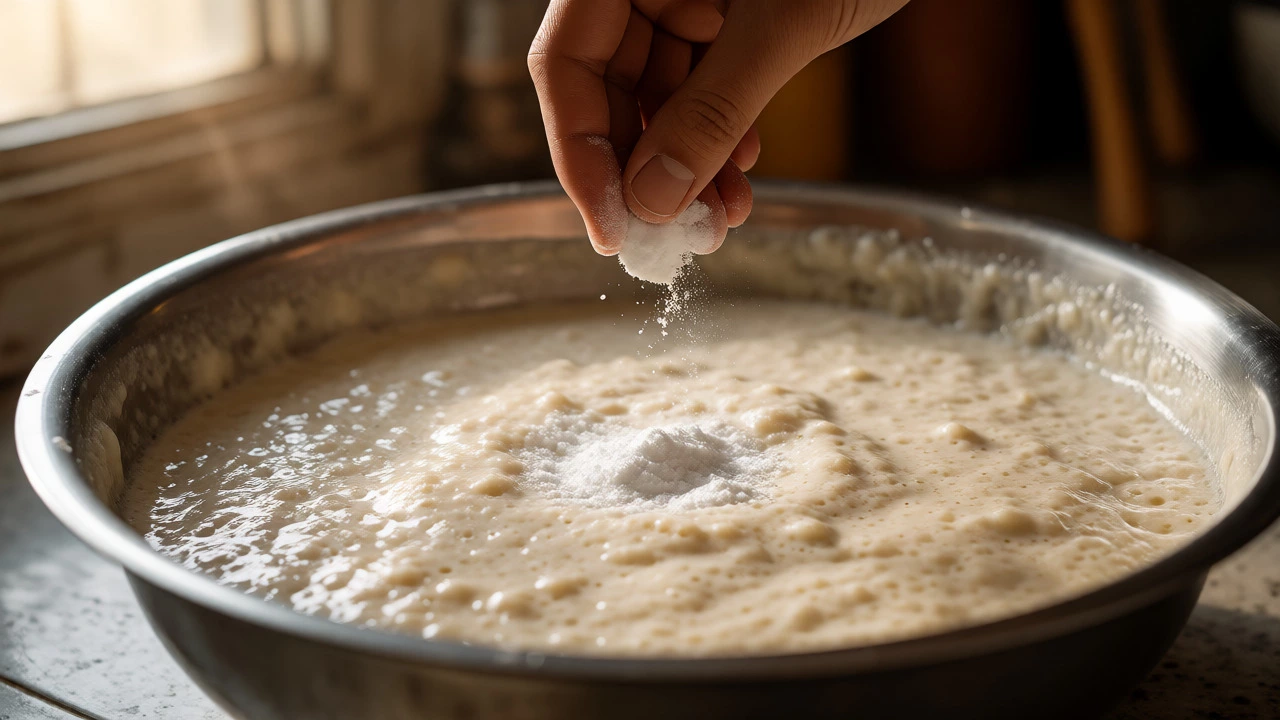
- Mix Gently: Sprinkle the soda over the surface and fold it in gently. Do not beat it vigorously, or you’ll knock out the air bubbles you’re trying to create.
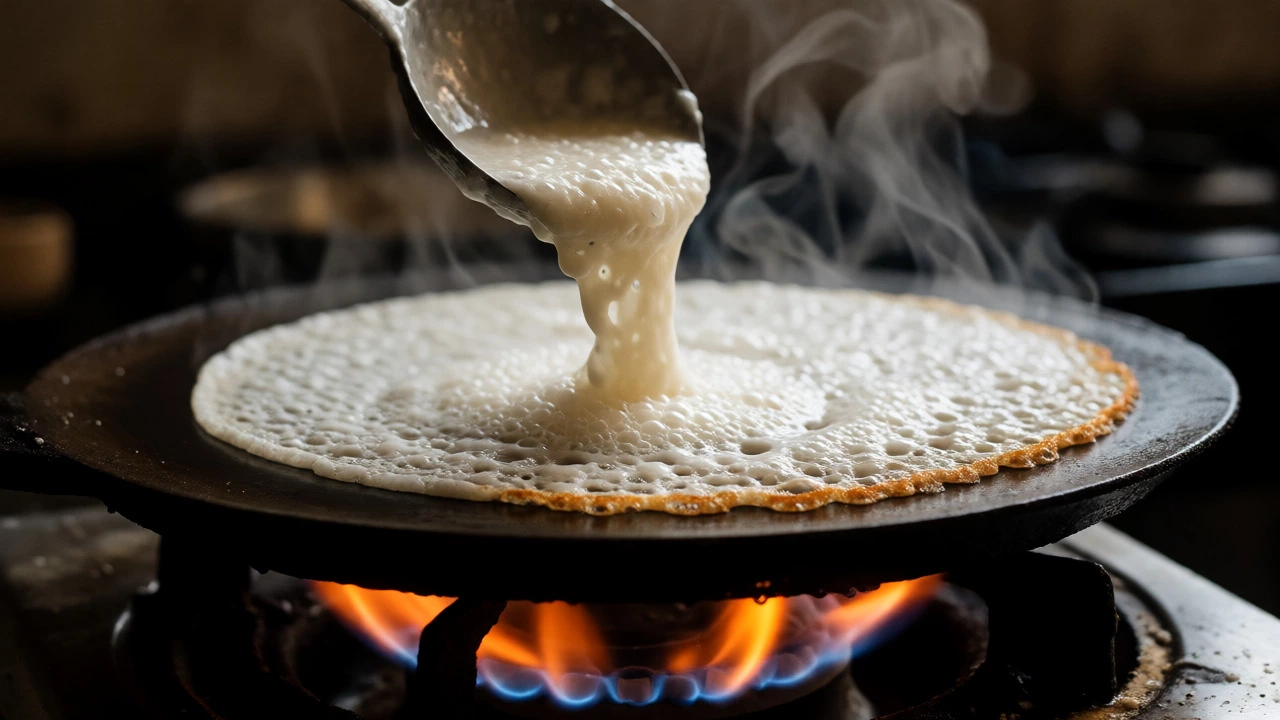
- Cook Immediately: Once mixed, start pouring. Do not let this batter sit for more than 30 minutes. The reaction peaks quickly and then fades.
If you wait too long, the batter will rise initially but then collapse, becoming watery and difficult to spread on the tawa.
Scenario 2: Boosting Crispiness in Well-Fermented Batter
Your batter has fermented perfectly. It has doubled in volume and smells pleasantly sour. Why would you add baking soda here? Because sometimes, natural fermentation doesn’t provide enough structural support for that ultra-crispy, lace-like edge we all crave. A small pinch of baking soda can enhance browning and texture.
However, the rules change slightly here:
- Dilute First: Dissolve the baking soda in a teaspoon of water before adding it to the main batch. This prevents clumps that can leave white spots or bitter bites in your dosa.
- Add Just Before Cooking: Take only the amount of batter you plan to cook in the next hour into a separate bowl. Add the dissolved soda to this smaller portion.
- Rest Briefly: Let this specific portion rest for 5-10 minutes. This allows the soda to integrate without escaping entirely.
This method gives you control. If you dump soda into the entire large container of batter, any leftovers stored in the fridge might develop an off-flavor by the next day.
Why You Should Never Add Baking Soda at Night
A frequent mistake among beginners is mixing baking soda into the batter before putting it in the fridge overnight. They think, "It’s already mixed, I’m ready to go in the morning." This usually leads to disaster.
Refrigeration slows down bacterial activity, but it does not stop the chemical reaction between baking soda and acids completely. Over 8-10 hours in the fridge, the slow release of gas creates large, unstable bubbles. When you take the batter out in the morning, you’ll find it separated-water at the bottom, foam at the top. The structure is broken. The dosas will be tough and rubbery because the gluten network has been compromised by the prolonged exposure to the alkaline agent.
Keep your base batter pure. Ferment it naturally. Keep the baking soda in a small jar on the counter, ready to sprinkle when you’re actually standing at the stove.
Troubleshooting Common Dosha Issues
If you are struggling with your dosas, check these symptoms against your baking soda usage.
| Symptom | Likely Cause | Fix |
|---|---|---|
| Metallic/Bitter Aftertaste | Too much baking soda or poor mixing. | Reduce quantity to 1/8 tsp per cup; dissolve in water first. |
| Soft & Pale Dosa | Under-fermented batter + no leavening aid. | Add baking soda just before cooking to boost rise. |
| Sticky/Unspreadable Batter | Over-fermented or too much soda added too early. | Dilute with water; do not add more soda; cook immediately. |
| Rubbery Texture | Batter sat with soda for hours before cooking. | Add soda only to the portion being cooked now. |
Alternatives to Baking Soda
Not everyone likes the taste of baking soda, or maybe you’ve run out. There are other ways to achieve that airy texture.
Eno fruit salt is a popular alternative in India. It contains sodium bicarbonate and citric acid. Because it has its own acid, it reacts faster and more reliably than plain baking soda in neutral batters. Use about half the amount of Eno compared to baking soda. It dissolves instantly and requires even stricter timing-cook within 5 minutes of mixing.
Yogurt is another option. Adding two tablespoons of curd to the batter can introduce extra acidity and moisture, aiding fermentation if you have a few hours left. However, this changes the flavor profile slightly, making the dosa richer and softer, which is great for uttapam but less ideal for crisp masala dosas.
Pro-Tips for the Perfect Pour
Once you’ve mastered the timing, focus on the mechanics. Baking soda makes the batter aerated, which means it becomes lighter and harder to control. If you are used to heavy, un-leavened batter, you might find the soda-infused version splashes more.
- Use Warm Water: If your batter is too thick after adding soda, thin it with warm water, not cold. Cold water shocks the bubbles and can cause them to pop prematurely.
- High Heat Start: Ensure your tawa is properly seasoned and hot. The initial burst of steam helps set the crust before the internal structure collapses.
- Don’t Overwork: Stirring batter with baking soda too much deflates it. Fold gently. Treat it like a soufflé, not pancake mix.
Remember, cooking is forgiving. If you mess up the ratio, the dosa will still taste good-it just might not look like the ones from a restaurant window. Experiment with small batches until you find the balance that works for your kitchen’s humidity and temperature. And keep that box of baking soda handy; it’s the best insurance policy for a rushed morning.
Can I store dosa batter with baking soda in the fridge?
It is not recommended. Baking soda continues to react slowly in the fridge, causing the batter to lose its structure and potentially develop a bitter taste. It is best to add baking soda only to the portion of batter you intend to cook immediately.
How much baking soda should I add to dosa batter?
A general rule of thumb is 1/4 teaspoon of baking soda per cup of batter. For well-fermented batter, you may only need a pinch (less than 1/8 teaspoon) to enhance crispiness without affecting the flavor.
Why does my dosa taste bitter when I add baking soda?
Bitterness usually comes from using too much baking soda or failing to mix it thoroughly. Undissolved clumps concentrate the alkaline taste. Always dissolve baking soda in a little water before adding it to the batter, and stick to the recommended quantities.
Is baking soda necessary for dosa?
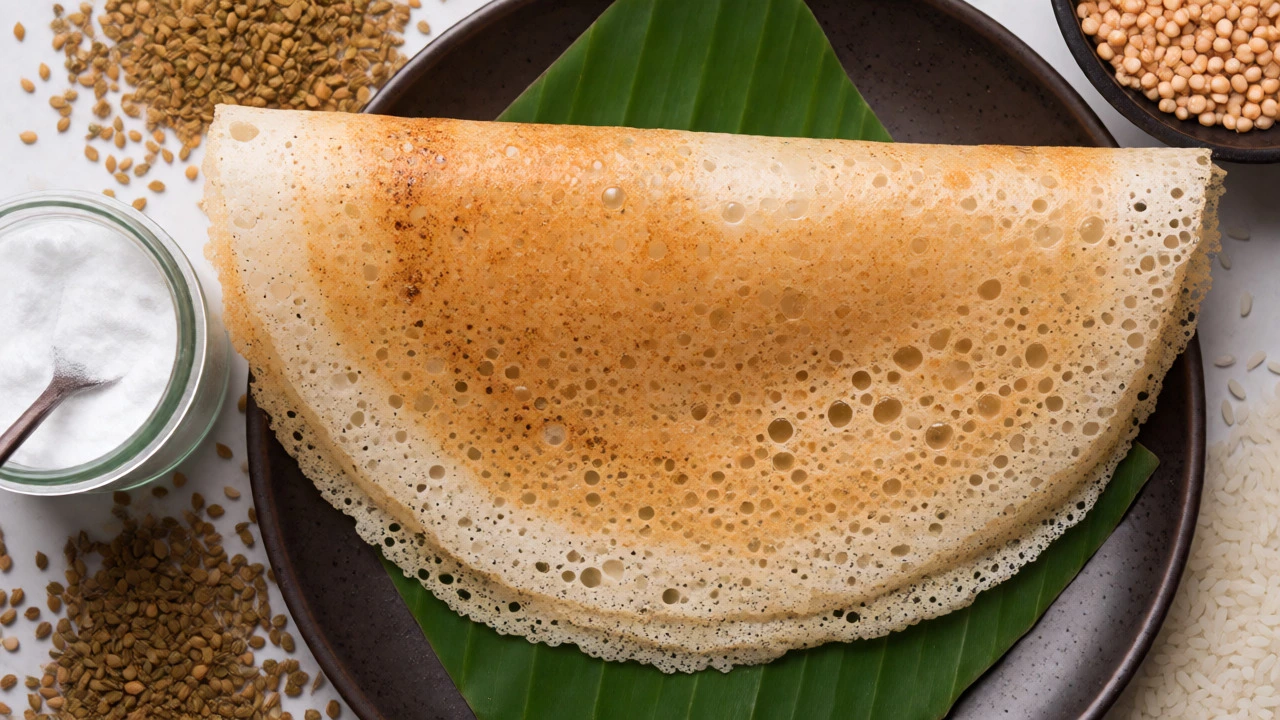
No, traditional dosa recipes rely solely on natural fermentation using fenugreek seeds (methi). Baking soda is a shortcut used when fermentation is incomplete due to cold weather or lack of time, or to artificially boost crispiness.
What is the difference between baking soda and Eno for dosa?
Eno fruit salt contains both sodium bicarbonate and citric acid, whereas baking soda is pure sodium bicarbonate. Eno reacts faster and more consistently in less acidic batters, but baking soda is cheaper and more versatile if your batter is already well-fermented.