Indian Meat Explorer
Discover which meats are most common in different parts of India. Select your preferences below to see recommendations.
Select options on the left to discover recommended meats.
Comparison Guide
| Meat Type | Local Name | Cost Level | Cooking Time | Best For |
|---|---|---|---|---|
| Chicken | Murgh / Kozhi | Low-Med | Fast (30-45 mins) | Daily meals, Curries, Tandoori |
| Goat | Mutton / Bakra | High | Slow (1.5 - 3 hours) | Festivals, Weddings, Rich Gravies |
| Buffalo | Carabeef | Medium | Medium | Kerala Fry, Minced Dishes |
| Fish | Machli / Meen | Variable | Fast to Medium | Coastal Diets, Light Meals |
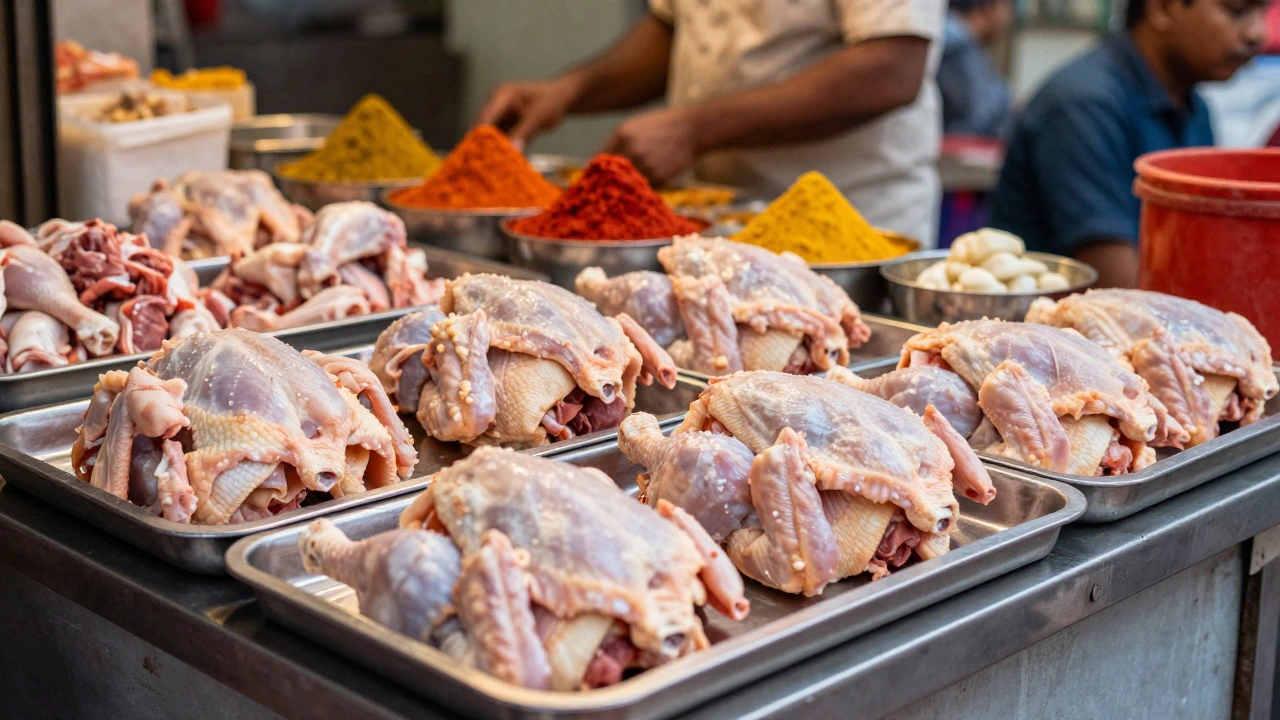
You might think beef tops the list if you look at global stats, but in India, the story is completely different. The Chicken is actually the most widely consumed meat across the country. It’s affordable, versatile, and fits into almost every regional cuisine without breaking cultural or religious taboos for the majority of the population. But here’s the twist: while chicken wins on volume, Mutton (which usually means goat meat in India) holds a special place in festive and premium dishes. If you’re trying to understand what lands on an average Indian plate, you need to look beyond just "meat" as a single category.
The Rise of Chicken in Indian Diets
Why did chicken become the default choice? It comes down to economics and accessibility. Unlike other meats, chicken doesn’t carry the same heavy price tag or the logistical nightmare of keeping live animals until slaughter. In cities like Mumbai or Delhi, you can buy fresh chicken at any local butcher shop or supermarket for a fraction of the cost of lamb. This affordability has made it the go-to protein for working families who want something substantial after a long day.
From a cooking perspective, chicken is forgiving. You can throw it in a curry, grill it tandoori-style, or stir-fry it with vegetables. It absorbs spices beautifully, which is crucial in Indian cooking where masalas are king. Dishes like Butter Chicken or Chicken Tikka aren’t just restaurant staples; they’ve moved into home kitchens because they’re relatively quick to prepare compared to slow-cooked mutton curries.
Mutton vs. Goat: Clearing Up the Confusion
If you’re new to Indian food, this distinction trips everyone up. When an Indian menu says "Mutton," it rarely refers to sheep. In the Indian context, Mutton is synonymous with goat meat. Sheep is less common due to lower production rates and specific regional preferences, particularly in Kashmir or among certain communities in the North East. Goat, however, is abundant.
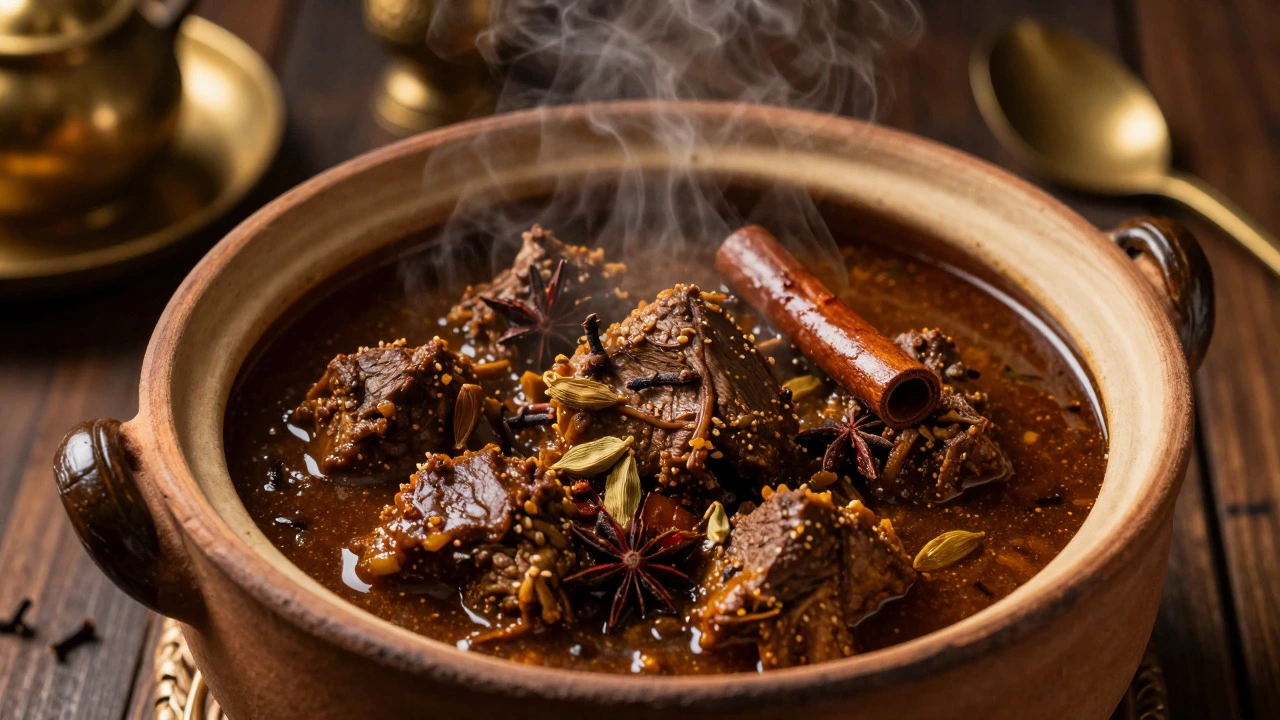
Goat meat is leaner than beef but richer than chicken. It requires patience. You can’t rush a good Rogan Josh or Nihari. These dishes demand hours of slow cooking to break down the connective tissues. Because of this time investment and higher cost, goat is often reserved for weekends, festivals like Eid, or weddings. It’s not the Tuesday night dinner for most households, but when it appears, it’s the star of the show.
Regional Variations: Where Beef Fits In
Saying "India" is one monolith ignores the massive diversity in eating habits. In Kerala and parts of the Northeast, such as Nagaland and Mizoram, Beef is incredibly popular. For many Christians and Muslims in these regions, beef is a standard protein source, similar to how chicken is elsewhere. Kerala’s Kerala Beef Fry is legendary for its use of coconut oil and curry leaves.
However, in states like Gujarat, Rajasthan, and much of Uttar Pradesh, beef consumption is minimal or non-existent due to Hindu beliefs regarding the cow’s sanctity. Here, you’ll see more reliance on poultry, goat, and even water buffalo meat (often labeled as "beef" in legal terms in some states) or pork in tribal areas. So, when we say chicken is the most eaten, we are averaging out these intense regional preferences.
| Meat Type | Common Name in India | Cost Level | Cooking Time | Primary Regions |
|---|---|---|---|---|
| Chicken | Chicken / Murgh | Low to Medium | Fast (30-45 mins) | All over India |
| Goat | Mutton / Bakra | High | Slow (1.5 - 3 hours) | North India, Muslim communities, Festivals |
| Buffalo | Carabeef / Buffalo Meat | Medium | Medium | Kerala, West Bengal, Maharashtra |
| Fish | Machli / Fish | Variable | Fast to Medium | Coastal Areas (Bengal, Kerala, Goa) |
The Role of Seafood and Pork
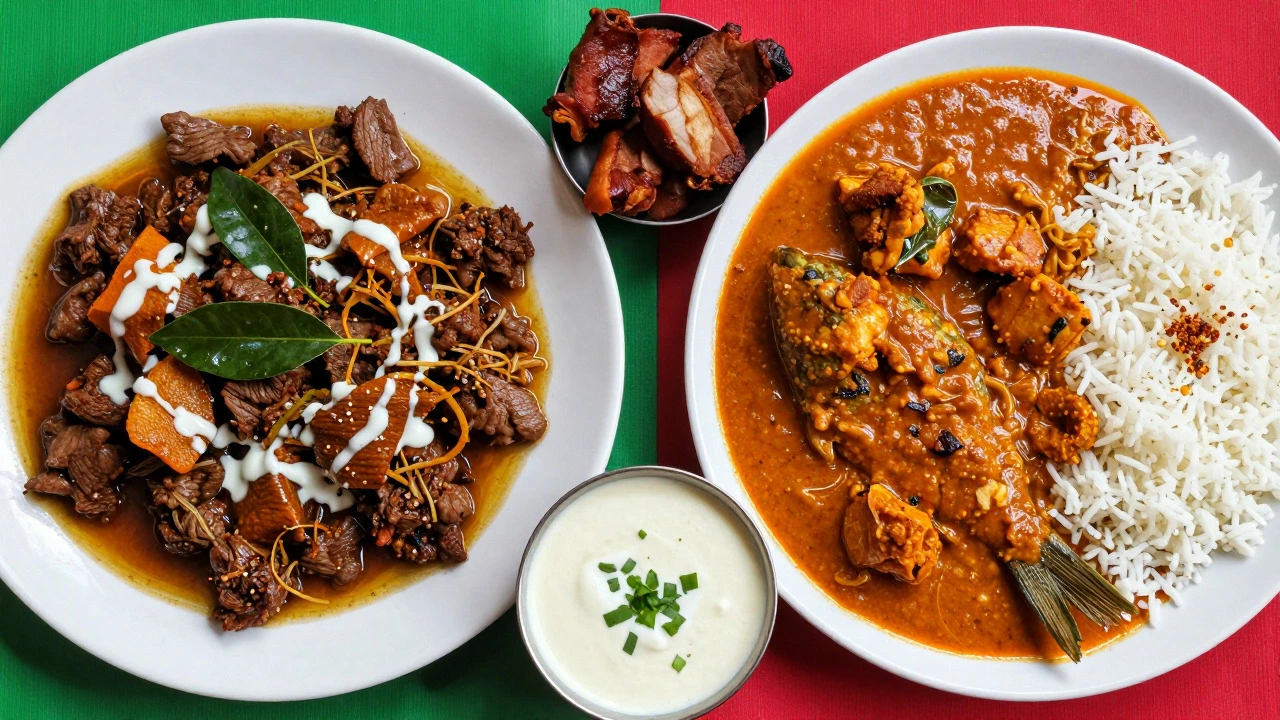
We can’t talk about meat without mentioning seafood, especially if you’re near the coast. In West Bengal, fish isn’t just an option; it’s a daily necessity. A Bengali meal without fish is incomplete. Similarly, Goan cuisine relies heavily on prawns and fish due to its Portuguese colonial history and coastal geography. While technically not "meat" in the land-animal sense, it competes directly with chicken and mutton for plate space in these regions.
Pork has a niche but loyal following. It’s prominent in Naga cuisine, where fermented bamboo shoot and smoked pork are staples. In Mangalore and parts of Karnataka, Catholic communities enjoy pork vindaloo or sorpotel. However, nationally, pork remains a minor player compared to poultry and goat.
Cultural and Religious Influences on Choice
Your religion often dictates your protein. Hindus generally avoid beef, though many consume chicken and mutton. Muslims prefer halal-slaughtered meats, favoring goat and chicken, and avoiding pork entirely. Jains avoid all root vegetables and often stick to strict vegetarianism, so their contribution to meat stats is zero. Sikhs traditionally eat meat, with chicken and mutton being common in Punjab, though beef is avoided.
This fragmentation means there is no single "national diet." Instead, there are dozens of micro-diets. If you visit a Punjabi household, expect rich, creamy chicken or mutton gravies. Head to a Tamil Brahmin home, and you might get pure vegetarian meals. Go to a Christian home in Kerala, and beef fry might be on the table alongside rice.
Trends Shifting the Plate
Things are changing. Urbanization and health consciousness are pushing people toward leaner proteins. Chicken breast sales have surged in metro cities as gym-goers seek high-protein, low-fat options. There’s also a rise in processed meats like sausages and nuggets among younger generations, influenced by Western fast-food chains. However, traditional tastes remain strong. The comfort of a homemade chicken curry trumps a burger for most Indians.
Another trend is the visibility of exotic meats. Venison, rabbit, and duck are appearing in upscale restaurants in Bangalore and Hyderabad. Yet, these remain luxury items. For the 90% of the population, the battle is between chicken, goat, and fish.
How to Cook Like an Indian Home Cook
If you want to replicate what’s most eaten, start with chicken. It’s the safest bet for beginners. Use bone-in pieces for flavor-boneless thighs work well for curries. Marinate with yogurt and spices like turmeric, red chili powder, and garam masala. Yogurt tenderizes the meat and creates a thick gravy base.
For goat, don’t skip the browning step. Sear the meat with onions and ginger-garlic paste before adding liquids. This builds depth. If you’re using a pressure cooker, you can cut cooking time significantly, making mutton more accessible for weeknight dinners. Always balance the heat. Indian meat dishes aren’t always spicy-hot; they’re aromatic. Use whole spices like cardamom, cloves, and cinnamon to layer flavors.
Is beef commonly eaten in India?
It depends on the region. In Kerala, Goa, and the Northeast, beef is very common. In North and West India, it is largely avoided due to religious sentiments. Often, "beef" in India refers to buffalo meat rather than cow meat.
What does "mutton" mean in Indian menus?
In India, "mutton" almost always refers to goat meat. Sheep meat is rare and usually specified separately if available. Goat is preferred for its texture and flavor in traditional curries.
Why is chicken so popular in India?
Chicken is affordable, cooks quickly, and is accepted by most religious groups except Jains and some vegetarians. Its versatility allows it to fit into diverse cuisines from North to South India.
Do Indians eat pork?
Yes, but it is regional. Pork is popular among Christians in Goa, Mangalore, and Kerala, as well as tribal communities in the Northeast like Nagaland. It is avoided by Hindus and Muslims.
Which state eats the most meat?
States in the Northeast like Nagaland and Mizoram have very high per capita meat consumption. Kerala also has high consumption due to beef and seafood availability. Coastal states like West Bengal consume significant amounts of fish.