🫓 Dosa Baking Soda Calculator
⚠️ Troubleshooting Tips
- Soapy/Yellow Taste? You used too much soda. Reduce by half next time.
- Rubber Texture? Under-fermented. Extend time by 4-6 hours instead of adding more soda.
- Sticky Surface? Whisk vigorously for 30 seconds before pouring onto tawa.
Ever wonder why some dosas come out flat and rubbery while others puff up like little pillows? It’s rarely about your tawa (griddle) or oil. Usually, it’s that tiny pinch of baking soda hiding in the batter bowl. While traditionalists swear by pure rice and urad dal fermentation, a small amount of sodium bicarbonate can change the texture game entirely. But does it ruin the authentic taste? Not if you use it right.
Baking soda is not a magic fix for bad batter. In fact, using too much turns your dosa into a yellow, soapy disaster. But used correctly, it acts as a chemical lever to help weaker ferments expand faster. This guide breaks down exactly what happens chemically when you add it, how much to use, and when you should skip it altogether.
The Chemistry Behind the Crispness
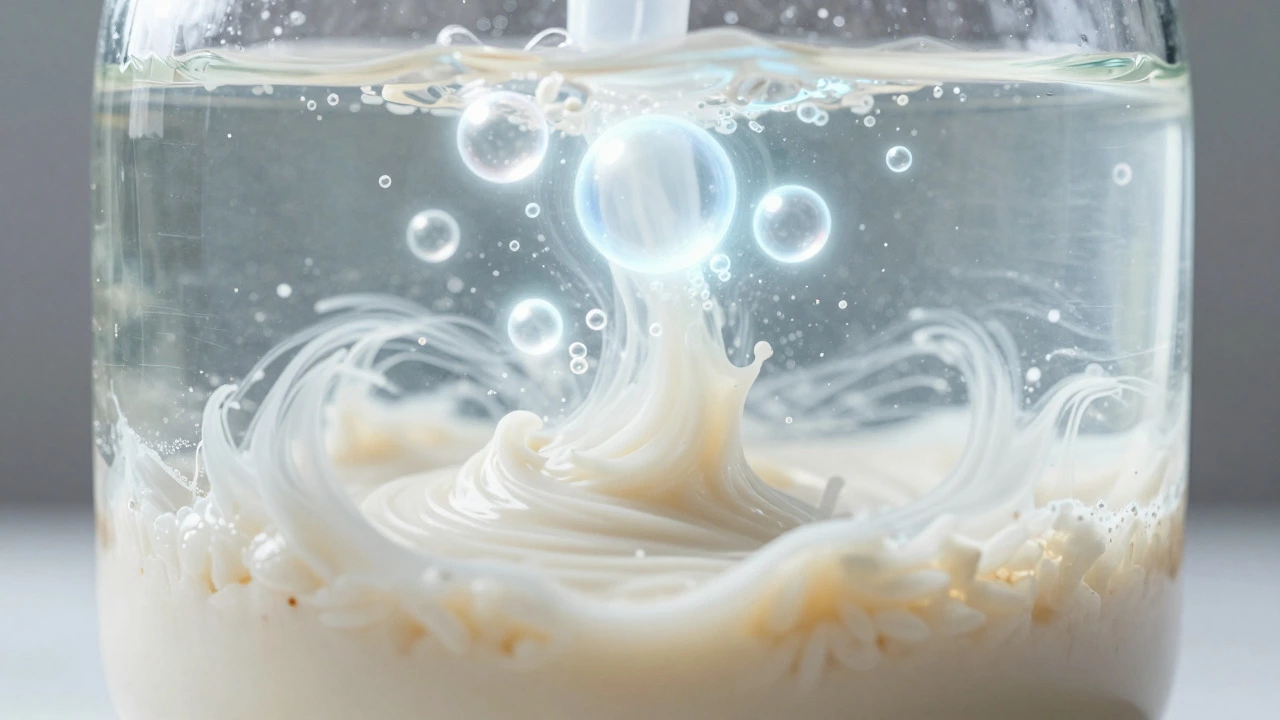
To understand why we add baking soda, we have to look at what happens inside the batter jar. Traditional dosa batter relies on wild yeast and lactic acid bacteria from the air to ferment ground rice and black gram (urad dal). This process produces carbon dioxide bubbles, which give the batter its lift. However, this natural fermentation is slow and temperature-dependent. If your kitchen is cool, or if you rushed the grinding, the bacterial activity might be weak.
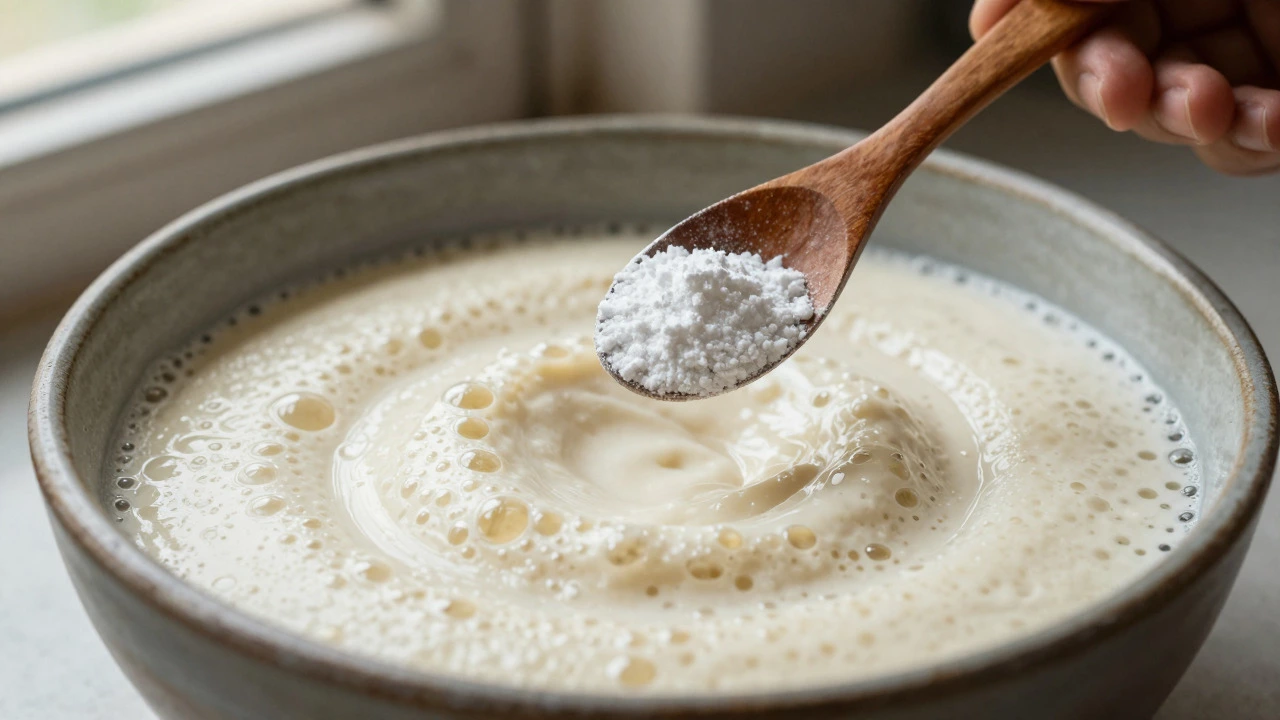
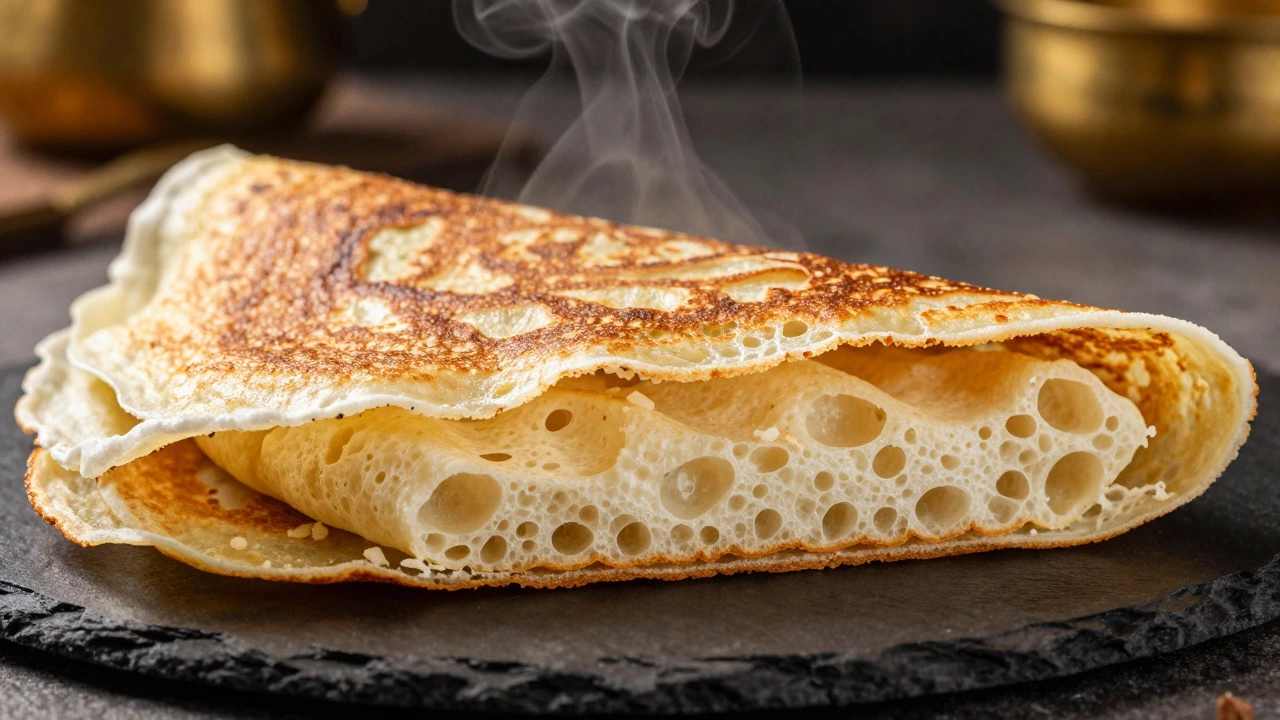
Sodium bicarbonate is a leavening agent that reacts with acids to release carbon dioxide gas instantly. Also known as baking soda, it doesn’t need time to work. When you mix it into acidic fermented batter, it triggers an immediate reaction. This rapid gas release creates more air pockets than natural fermentation alone could achieve in a short timeframe. The result? A lighter, fluffier interior and a shatteringly crisp exterior.
Here is the key distinction: natural fermentation gives flavor; baking soda gives structure. If you rely solely on soda without proper fermentation, your dosa will lack that signature tangy depth. But adding a pinch to well-fermented batter amplifies the existing lift without overpowering the taste.
How Much Should You Actually Add?
This is where most home cooks go wrong. They see "add a pinch" and throw in half a teaspoon. Big mistake. Baking soda is potent. For a standard batch of batter serving four people (about 500ml), you only need 1/4 to 1/2 teaspoon. That’s it. Any more, and you’ll taste the metallic, alkaline aftertaste that ruins the delicate balance of the masala chutney.
| Batter Volume | Recommended Baking Soda | Fermentation Time | Expected Result |
|---|---|---|---|
| 250 ml (Small Batch) | 1/8 teaspoon | 8-12 hours | Light, slightly airy |
| 500 ml (Standard Family Size) | 1/4 - 1/2 teaspoon | 12-16 hours | Crispy, fluffy, balanced |
| 1 Liter (Large Batch) | 1 teaspoon max | 16-24 hours | Very light, high volume |
Notice the correlation between fermentation time and soda usage. If your batter has been fermenting for 24 hours or more, it’s already very active. You might not need any soda at all. If you’re working with a quick 8-hour ferment, especially in winter, that extra 1/4 teaspoon helps compensate for the lower bacterial count.
When to Skip Baking Soda Altogether
Not every dosa needs chemical assistance. Here are three scenarios where you should leave the baking soda in the cupboard:
- High-Humidity Climates: If you live in a hot, humid region (like coastal Karnataka or Kerala), your batter ferments rapidly. The natural gas production is usually sufficient. Adding soda here often leads to over-leavening and a bitter taste.
- Masala Dosa with Thick Filling: If you are making thick, stuffed masala dosas, you want a sturdy base that holds the potato filling without tearing. Excessive leavening makes the dosa too fragile. A denser, purely fermented batter provides better structural integrity.
- Pure Authenticity Seekers: Purists argue that the slight tang from unregulated fermentation is part of the soul of the dish. If you want the exact taste of a street vendor in Chennai who uses stone-ground batter, skip the soda. Let the microbes do their job.
Troubleshooting Common Batter Failures
If your dosas are still failing despite following the ratios, the issue might not be the soda. It could be the grind or the water quality.
- Rubber Texture: This usually means under-fermentation. The starches haven’t broken down enough. Solution: Extend fermentation by 4-6 hours. Do not add more soda; it won’t fix the density, just make it taste weird.
- Yellow Color & Soapy Taste: Classic sign of excess baking soda. The alkalinity reacts with the pigments in the rice. Solution: Next time, reduce the soda by half. To fix current batter, add a splash of lemon juice or vinegar to neutralize the pH, but accept that the texture may be compromised.
- Sticky Surface: Too much water or insufficient whisking before pouring. Baking soda doesn’t fix stickiness. Solution: Whisk the batter vigorously for 30 seconds right before pouring onto the tawa to incorporate air and loosen the consistency.
The Role of Rice Variety
Let’s talk about the raw material. Idli rice is a specific parboiled rice variety designed for fermentation-based batters due to its higher starch content and lower protein structure compared to regular basmati or long-grain rice. Unlike Sona Masoori, Idli rice absorbs water differently and responds better to both biological and chemical leavening. If you are using regular white rice, your batter will be denser. In this case, a slightly higher dose of baking soda (closer to 1/2 tsp per 500ml) can help mimic the fluffiness of Idli rice, though the texture will never be identical.
So, is baking soda cheating? No. It’s a tool. Just like using a non-stick tawa instead of a seasoned iron one, it adjusts for your specific environment and ingredients. Use it sparingly, respect the fermentation, and you’ll get those perfect, crackling dosas every single time.
Frequently Asked Questions
Can I use baking powder instead of baking soda?
Yes, but be careful. Baking powder contains both baking soda and a dry acid. Since dosa batter is already acidic from fermentation, adding baking powder might create too much gas too quickly. If you substitute, use half the amount of baking powder compared to baking soda (e.g., 1/4 tsp powder instead of 1/2 tsp soda).
Does baking soda affect the shelf life of dosa batter?
Not significantly. Once mixed, the reaction starts immediately. However, because the batter becomes lighter and more aerated, it may dry out slightly faster if left uncovered. Always cover your batter jar tightly after mixing in the soda.
Why do my dosas turn brown instead of golden?
If they are turning dark brown quickly, your heat is too high, or you added too much baking soda. Excess soda increases the Maillard reaction speed. Lower the flame to medium-low and reduce the soda quantity next time.
Is baking soda healthy to consume regularly?
In the small quantities used in dosa batter (less than 1g per serving), it is perfectly safe. Sodium bicarbonate is a common food additive. Just ensure you aren't consuming large amounts daily, as excessive sodium intake can impact blood pressure.
Should I add baking soda before or after fermentation?
Always add it after fermentation is complete. If you add it to fresh ground batter, the soda will react with the initial acidity and burn off before you even cook. Wait until the batter has doubled in size and smells sour, then stir in the soda gently just before cooking.