Regional Potato Dish Finder
Select a region to see popular potato dishes
Yes, Indian food has potatoes-lots of them. If you’ve ever eaten aloo gobi, aloo paratha, or even a simple potato curry with roti, you’ve eaten Indian food with potatoes. They’re not an afterthought. They’re not a modern addition. Potatoes have been woven into the fabric of Indian cooking for nearly 200 years, and today, they’re one of the most common vegetables in vegetarian meals across the country.
Potatoes Came to India Through Colonization
Potatoes didn’t grow naturally in India. They arrived in the late 1500s or early 1600s, brought by Portuguese traders who got them from South America. But they didn’t catch on right away. It wasn’t until the British colonial period, around the 1800s, that potatoes started showing up in large quantities-especially in the north, where the climate suited them. The British planted them in hill stations like Simla and Darjeeling, and slowly, Indian farmers began growing them too. By the 1900s, potatoes were a staple in homes, not just in cities but in villages too.
Why Potatoes Work So Well in Indian Cooking
Potatoes are like a blank canvas for spices. They soak up flavors like turmeric, cumin, coriander, and garam masala without overpowering them. Their soft, starchy texture holds up in curries, fries up crisp in snacks, and blends smoothly into doughs. Unlike leafy greens or beans, they’re forgiving. You can overcook them a little, and they still taste good. They’re cheap, filling, and store well-perfect for households that need to stretch meals across days.
Think about it: most Indian households don’t eat meat every day. For millions of vegetarians, potatoes are a protein and carb booster. They turn a simple dal into a full meal. They give body to sabzis that might otherwise feel light. They’re the reason aloo methi or aloo tamatar doesn’t taste like a side dish-it tastes like dinner.
Every Region Has Its Own Potato Dish
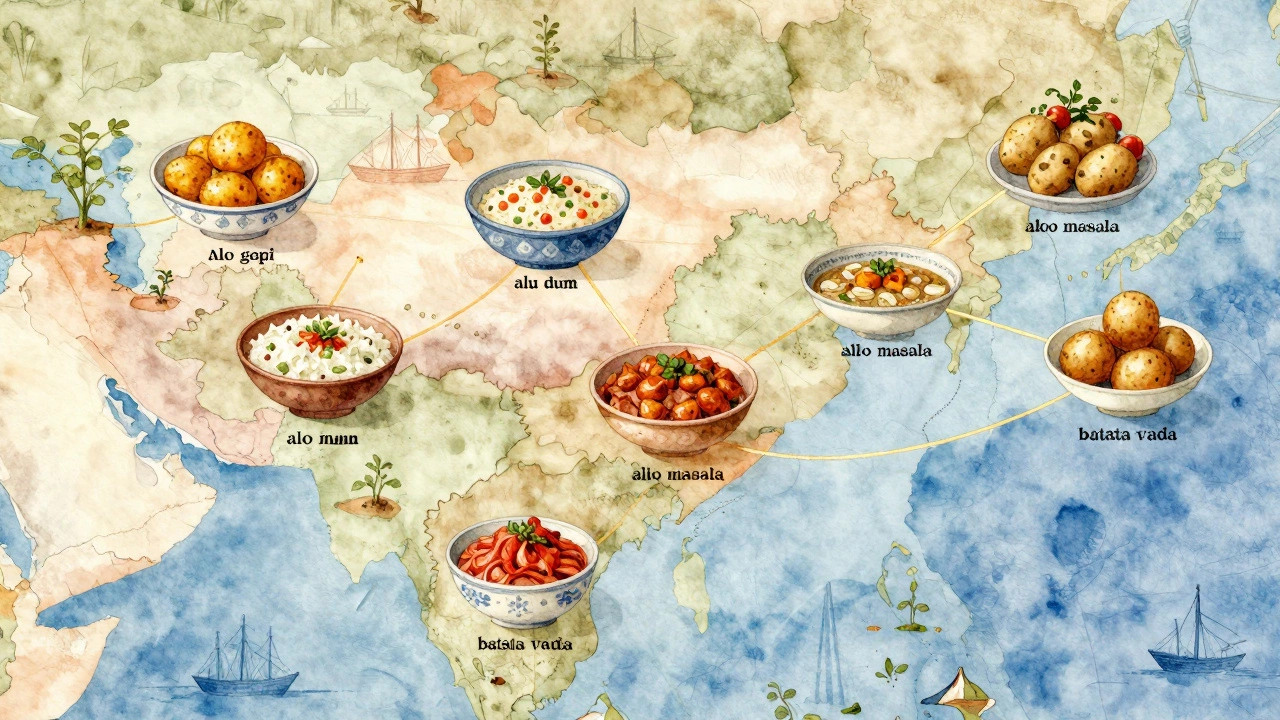
There’s no single "Indian potato dish." There are dozens, shaped by local ingredients, traditions, and climates.
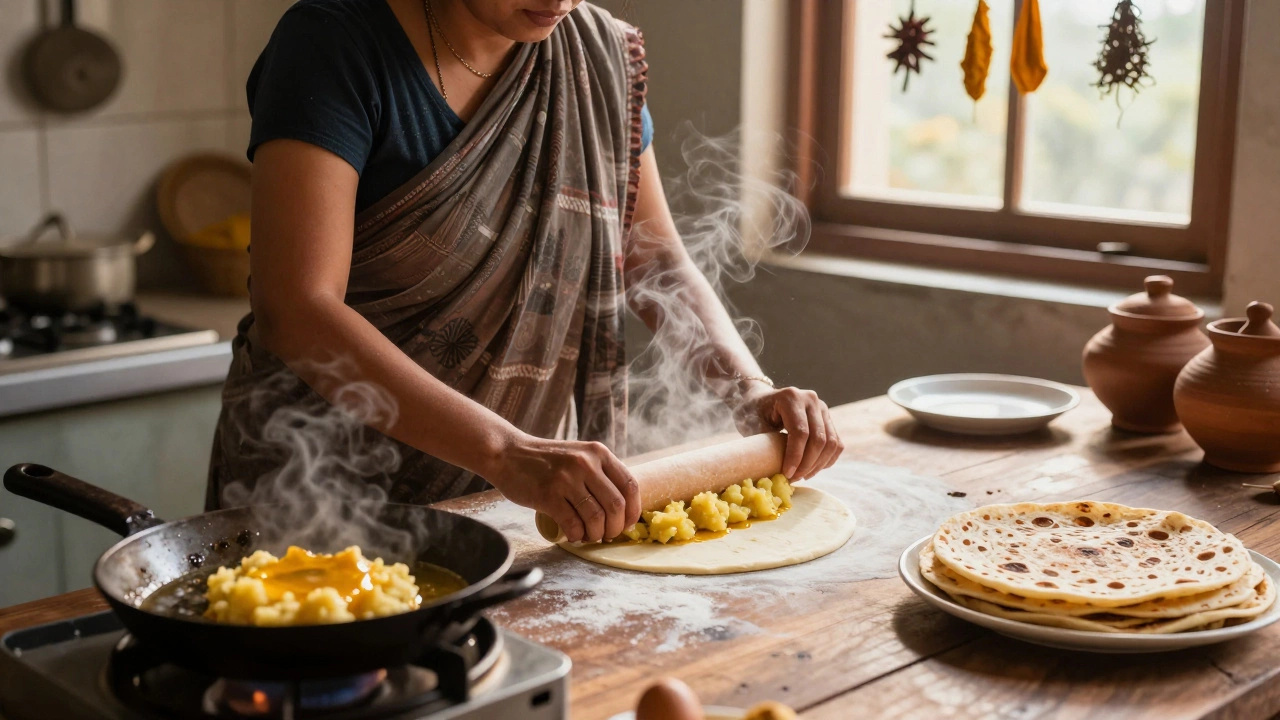
- In North India, aloo paratha is breakfast royalty. Flattened whole wheat dough stuffed with spiced mashed potatoes, fried in ghee, served with yogurt and pickle.
- In Punjab, aloo gobi-potatoes and cauliflower cooked with onions, tomatoes, and a blend of dry spices-is a weekend classic.
- In West Bengal, alu dum is a slow-cooked potato curry with mustard oil, fenugreek seeds, and a touch of sugar. It’s eaten with rice, not roti.
- In South India, aloo masala is a dry stir-fry often served with idli or dosa. It’s lighter, less creamy, and uses curry leaves and coconut.
- In Maharashtra, batata vada-deep-fried potato fritters wrapped in chickpea batter-is street food gold. You’ll find it in every Mumbai lane.
- In Gujarat, aloo no khand is a sweet-and-sour potato dish made with jaggery and tamarind, served during festivals.
Even in religious fasting foods, potatoes show up. During Navratri or Ekadashi, people eat sabudana khichdi-but many also eat aloo ki sabzi because potatoes aren’t considered grains. They’re allowed when wheat and rice are off-limits.

Potatoes Are in Snacks, Not Just Curries
Most people think of potatoes in curries. But they’re just as important in snacks. In fact, potato-based snacks might be the most popular category of Indian street food.
- Aloo tikki: Spiced potato patties, fried, topped with chutneys and yogurt.
- Papdi chaat: Crispy fried dough wafers layered with boiled potatoes, chickpeas, and tangy sauces.
- Samosas: While the filling can vary, the most common version is spiced potatoes and peas.
- French fries: Yes, they’re everywhere. But in India, they’re called "french fries" only in cities. In smaller towns, they’re "potato chips" or "batata fry."
Even packaged snacks have potatoes. Brands like Lays and Bingo sell masala-flavored potato chips that sell out faster than any other flavor. You can buy potato masala powder in every grocery store-just add it to boiled potatoes and you’ve got instant sabzi.
Are Potatoes "Traditional"? Yes, But Not Ancient
Some people argue that potatoes aren’t "authentic" Indian food because they’re not native. But that’s like saying tomatoes aren’t Italian because they came from the Americas. India’s food culture has always absorbed new ingredients and made them its own. Tomatoes, chilies, peanuts, and potatoes-all foreign arrivals-now define Indian cuisine.
There’s no ancient Sanskrit text that mentions potatoes. But there are thousands of family recipes passed down for generations that do. In rural households, grandmothers still say, "Aloo hai toh bhookh lagti nahi"-"If there’s potato, you won’t feel hungry." That’s not a modern saying. It’s a truth learned over decades of making do with what’s available.
How Potatoes Fit Into Modern Vegetarian Diets
Today, more Indians are choosing vegetarianism-not just for religion, but for health, environment, or cost. Potatoes play a big role in that shift. They’re affordable. A kilo of potatoes costs less than ₹30 in most places. They’re filling. One medium potato has about 160 calories and 4 grams of fiber. They’re versatile. You can steam them, roast them, mash them, or fry them.
They’re also a bridge for people transitioning to plant-based eating. If you’re used to eating meat with every meal, switching to dal and rice might feel too light. But add aloo sabzi, and suddenly, the meal feels complete. That’s why potato-based dishes are often the first vegetarian meals people learn to cook.
Potatoes Are Not the Enemy
Some health blogs claim potatoes are bad because they’re high in carbs. But in Indian cooking, they’re rarely eaten alone. They’re paired with lentils, vegetables, yogurt, and spices. That combination slows digestion and balances blood sugar. A bowl of aloo gobi with dal and roti is more nutritious than a plate of white rice with butter.
The real issue isn’t potatoes. It’s how they’re cooked. Deep-fried aloo tikkis every day? That’s a problem. Boiled potatoes with cumin and lemon? That’s a healthy choice. It’s not the potato. It’s the oil, the salt, the processing.
Even in urban health-conscious homes, potatoes aren’t gone. They’re just prepared differently-roasted with olive oil instead of fried, mashed with yogurt instead of butter, added to salads instead of chips.
Final Answer: Yes, Potatoes Are Core to Indian Vegetarian Food
If you ask someone in Delhi, Kolkata, Chennai, or Jaipur what they eat for lunch on a busy day, chances are they’ll say "aloo roti" or "potato curry." It’s not a trend. It’s tradition. It’s practical. It’s delicious.
Potatoes didn’t replace Indian ingredients. They joined them. And now, you can’t separate Indian vegetarian food from potatoes any more than you can separate curry from turmeric.
Are potatoes used in all Indian vegetarian dishes?
No, not all. Many dishes like paneer tikka, chana masala, or bhindi sabzi don’t include potatoes. But they’re so common that they appear in over 70% of everyday vegetarian meals across North and West India. In South India, they’re less frequent but still popular in snacks and rice dishes.
Do South Indian dishes use potatoes?
Yes, but less than in the north. South Indian meals focus more on lentils, coconut, tamarind, and rice. But potatoes appear in aloo masala (a dry curry served with idli), potato vada, and sometimes in sambar or rasam for extra body. In Kerala, you’ll find potato curry with coconut milk. So they’re there-they’re just not the star.
Can I eat potatoes if I’m on a low-carb diet?
Potatoes are high in carbs, so they’re not ideal for strict low-carb diets. But if you’re eating them in moderation-like one small potato per meal, boiled or roasted, and paired with protein and fiber-they can fit into a balanced plan. Avoid fried versions and heavy sauces. In Indian cooking, how you prepare them matters more than whether they’re included.
Why do Indian recipes call for boiling potatoes before cooking?
Boiling potatoes first makes them tender so they cook evenly when added to curries or stir-fries. Raw potatoes take longer to soften and can absorb too much oil or spice, making the dish bitter or oily. Pre-boiling ensures they soak up flavor without falling apart. It’s a technique used in almost every restaurant and home kitchen.
Are potatoes used in Indian fasting food?
Yes. During religious fasts like Navratri or Ekadashi, many people avoid grains like wheat and rice. Potatoes are allowed because they’re tubers, not cereals. Dishes like sabudana khichdi and aloo ki sabzi are common fasting foods. Some even eat potato chips if they’re made without wheat flour.