Bush Breakfast Energy Calculator
Natural No additives Sustained energy
Based on standard rural Indian bush breakfast nutrition values
(Source: Indian Council of Medical Research)
When you think of Indian breakfast, you might picture idli, dosa, or paratha. But in small villages and remote areas across India, there’s another kind of morning meal that doesn’t make it to food blogs or Instagram reels - the bush breakfast. It’s not a dish you can buy in a restaurant. It’s not even a recipe passed down in cookbooks. It’s what people eat when they have little, need energy, and don’t have time to waste.
What Exactly Is a Bush Breakfast?
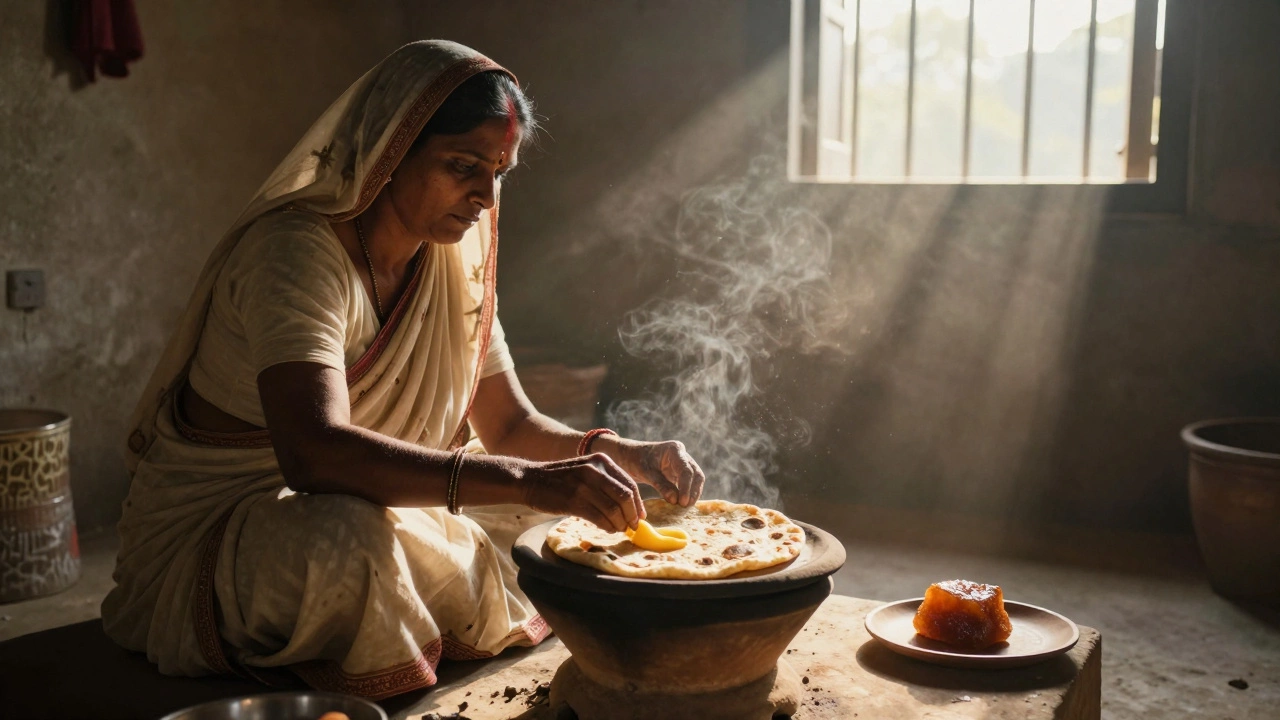
The term "bush breakfast" isn’t official. You won’t find it in dictionaries or government nutrition reports. But if you ask a farmer in Bundelkhand, a laborer in Jharkhand, or a woman waking up before dawn in Rajasthan, they’ll know exactly what you mean. It’s the simplest, most practical meal eaten before heading out to work - usually made from what’s already in the house: leftover roti, a spoon of ghee, a pinch of salt, maybe some jaggery or leftover dal.
It’s not fancy. No turmeric, no coriander, no garnishes. Just fuel. And that’s the point.
Why It Exists - And Why It Matters
In rural India, over 60% of households still rely on subsistence farming or daily wage labor. Many don’t have access to refrigerators, gas stoves, or even clean water every morning. A typical urban breakfast - with yogurt, fruit, or tea with biscuits - is a luxury here. Instead, people make do with what they have.
Here’s how it usually works:
- Leftover roti from the night before, warmed on the stove or over the fire
- A thin smear of homemade ghee - sometimes just a teaspoon
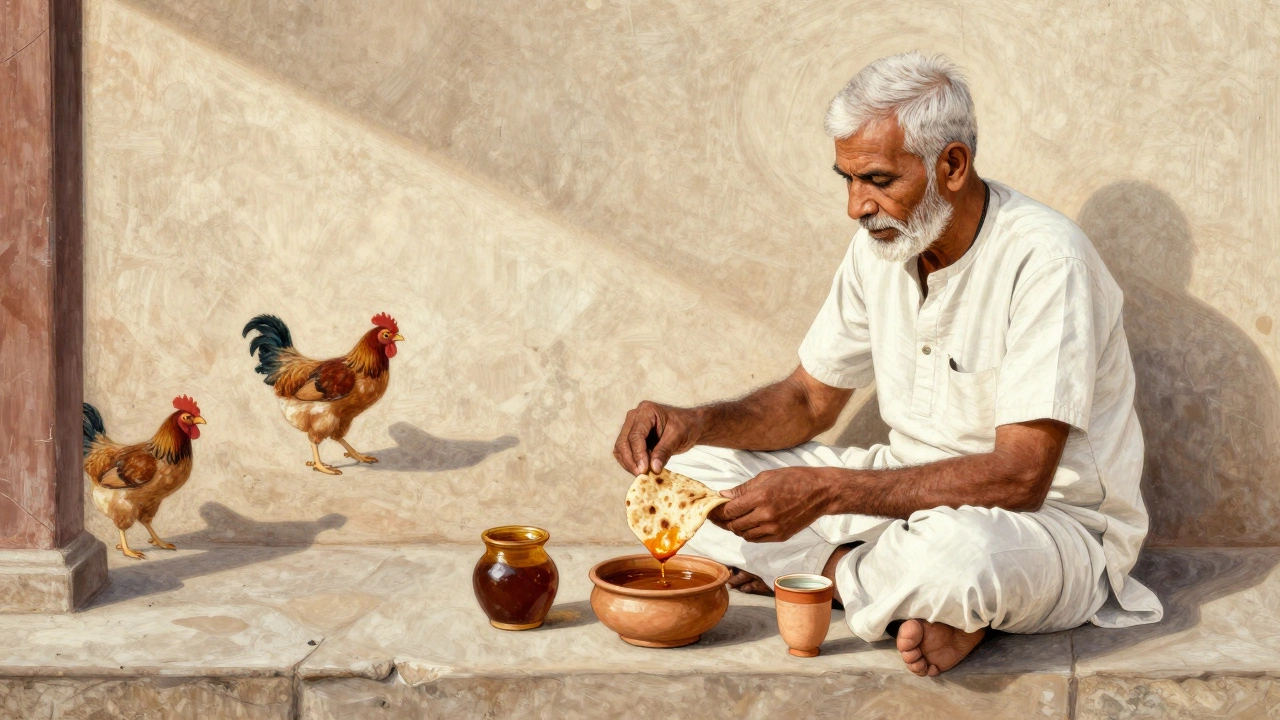
- A sprinkle of salt or a small lump of jaggery for energy
- Occasionally, a spoon of leftover dal or a few pickled mango pieces
- A glass of warm water or weak tea, if there’s time
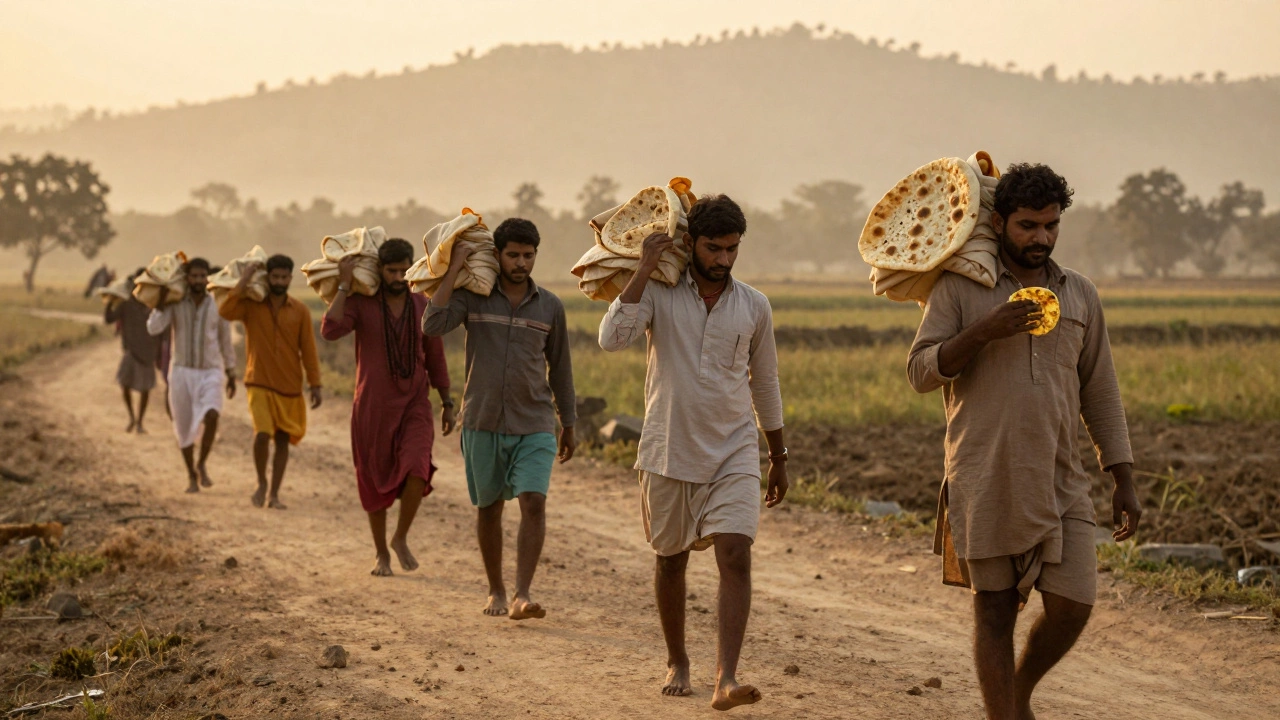
This isn’t about poverty. It’s about efficiency. A bush breakfast takes under five minutes to prepare. It’s portable. It doesn’t spoil. And it gives you the calories to walk three kilometers to the field, lift heavy sacks, or carry bricks for hours.
The Science Behind the Simplicity
Let’s break down what’s actually in a bush breakfast:
- Roti (whole wheat): High in complex carbs, slow-digesting energy. A single roti has about 70-80 calories.
- Ghee: Rich in saturated fats and fat-soluble vitamins. One teaspoon adds 45 calories and helps with nutrient absorption.
- Jaggery: Unrefined cane sugar. Contains iron, potassium, and magnesium - unlike white sugar. A small piece (10g) gives quick energy without a crash.
- Dal: If included, adds protein and fiber. Even a spoonful helps sustain muscle function.
Studies from the Indian Council of Medical Research show that rural laborers who eat this kind of meal regularly have better endurance than those who skip breakfast or rely on sugary tea alone. The combination of slow carbs, healthy fats, and trace minerals keeps blood sugar stable - critical for people working under the sun without access to snacks.
Regional Variations
While the core idea stays the same, the details change with the land:
- Uttar Pradesh & Bihar: Roti with ghee and salt. Sometimes a slice of raw onion or green chili on the side.
- Rajasthan: Roti dipped in watered-down buttermilk (chaas) with a pinch of cumin. Odisha & Jharkhand: Rice flakes (poha) lightly fried with mustard seeds, eaten cold.
- Madhya Pradesh: Leftover khichdi, reheated with a spoon of ghee.
- Andhra & Telangana: A small ball of jaggery and groundnut paste, eaten with a piece of roti.
Each version reflects local crops, climate, and available resources. There’s no one "correct" bush breakfast - just what works for the day ahead.
Why Urban Breakfasts Don’t Replace It
You might wonder: Why not just eat oats or bread with peanut butter? Because those things aren’t available - or affordable - in many places. A packet of oats costs ₹40. A jar of peanut butter? ₹150. In villages, ₹50 might be the entire daily food budget.
Also, urban breakfasts are designed for convenience, not endurance. Toast with jam won’t keep you going for eight hours of manual labor. A bush breakfast does.
Even when people move to cities, they often keep the habit. Migrant workers in Delhi, Mumbai, or Bangalore still carry leftover roti in their bags. They’ll warm it up at a roadside dhaba and eat it with salt and ghee - just like they did back home.
The Hidden Value of a Bush Breakfast
Beyond nutrition, this meal carries cultural weight. It’s tied to rhythm - waking before sunrise, eating in silence, preparing quietly. It’s not shared on social media. No one posts about it. But it’s deeply respected.
Older generations teach it not as a recipe, but as a lesson: "Don’t waste what you have. Eat what gives strength. Don’t look for fancy food - look for food that lasts."
It’s also a quiet form of resistance. In a world pushing for "healthy" breakfasts with superfoods and smoothies, the bush breakfast says something different: simplicity isn’t lack. It’s wisdom.
Can You Try It at Home?
Yes - and you should. Not because you’re poor. Not because you’re "going rustic." But because it teaches you how to eat with awareness.
Here’s how to make a version at home:
- Take one whole wheat roti (leftover is fine).
- Warm it lightly on a pan - no oil needed.
- Spread ½ teaspoon of homemade ghee (or clarified butter) on it.
- Add a pinch of salt - or a small piece of jaggery (about 10g).
- Pair it with a glass of warm water.
That’s it. No blender. No fridge. No fancy ingredients. Just food that works.
Try it for a week. Notice how your energy holds. Notice how you don’t crave snacks by 10 a.m. You might realize - the "bush" breakfast isn’t just for the countryside. It’s for anyone who wants to eat less, but feel more.
What’s Missing From Modern Breakfasts?
Modern breakfasts are full of sugar, preservatives, and marketing. They’re designed to sell, not sustain. The bush breakfast has none of that. It’s real. It’s local. It’s seasonal. And it’s been tested by time - not by nutritionists.
When you eat it, you’re not just eating food. You’re connecting to a tradition of resilience - one that doesn’t need hashtags to matter.
Is bush breakfast unhealthy because it’s so simple?
No. In fact, its simplicity is what makes it healthy. It avoids processed sugars, artificial flavors, and additives. Whole wheat roti, ghee, and jaggery are natural, unrefined foods that provide balanced energy. Studies show rural populations eating this way have lower rates of obesity and type 2 diabetes than urban populations consuming packaged breakfasts.
Can I make bush breakfast with store-bought roti?
Yes, but homemade roti is better. Store-bought rotis often contain preservatives and added oil to extend shelf life. Homemade roti uses just flour, water, and salt - making it more digestible and nutrient-rich. If you use store-bought, pick ones with minimal ingredients and avoid those with hydrogenated oils.
Is ghee necessary for bush breakfast?
Not strictly, but it’s highly recommended. Ghee adds fat-soluble vitamins (A, D, E, K) and helps your body absorb nutrients from the roti. It also slows digestion, keeping you full longer. If you can’t use ghee, a small amount of coconut oil or even mustard oil works as a substitute - but not butter or margarine.
Why not eat fruit or yogurt instead?
Fruit and yogurt are great - but not always practical. They spoil quickly without refrigeration. In places without electricity, they’re not reliable. Roti and ghee last for days at room temperature. Also, fruit sugars spike energy fast and crash soon after - not ideal for manual labor. Bush breakfast gives steady, long-lasting fuel.
Is bush breakfast only for poor people?
No. It’s for anyone who values efficiency, simplicity, and real food. Many urban professionals now eat this way - not out of necessity, but because they’ve realized how much better they feel. It’s not about income. It’s about intention.