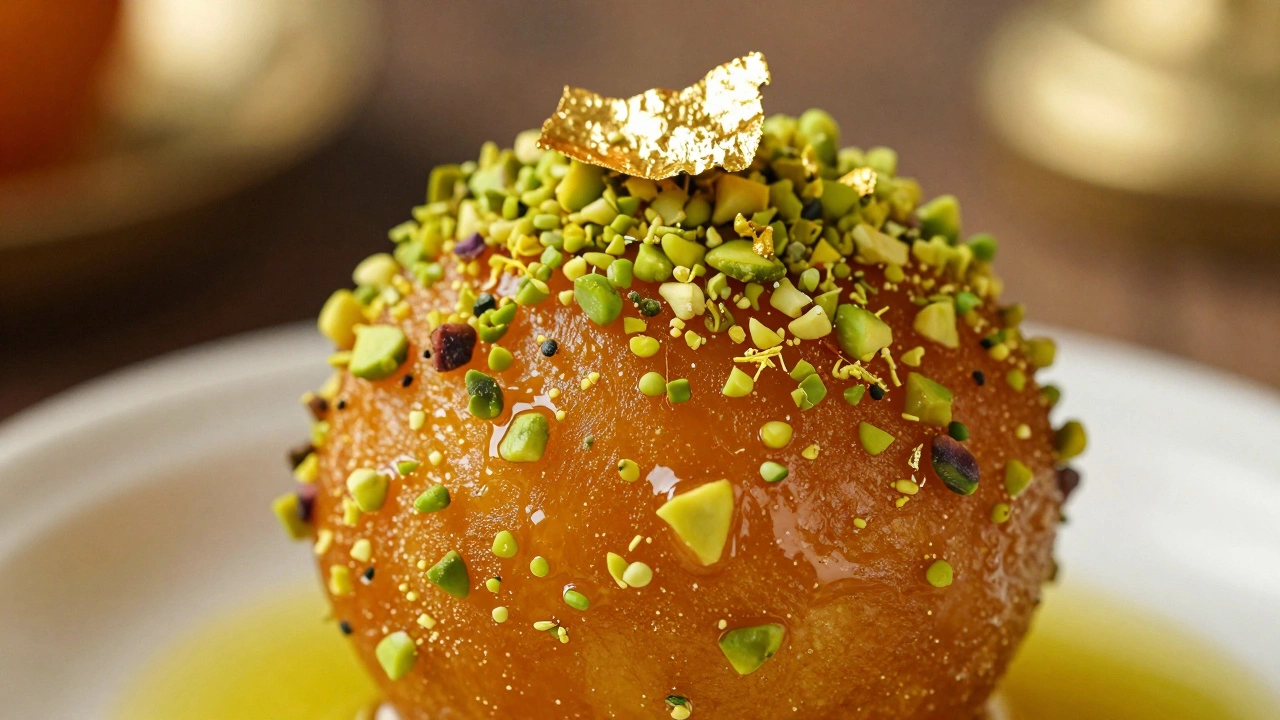
Luxury Gulab Jamun Price Estimator
Base (Khoya & Saffron): ₹100
Garnish (Pista): ₹20
Gold Leaf: ₹30
What makes it luxurious?
Picture this: you are walking through the narrow, aromatic lanes of Old Delhi or the grand bazaars of Mumbai. The air smells of cardamom and caramelized sugar. You spot a glass display case filled with golden orbs glistening under warm lights. These aren't just any sweets; they are wrapped in gold leaf, dusted with crushed pistachios, and priced higher than a decent dinner for two. In India, luxury isn't just about price tags; it is about heritage, ingredients that travel thousands of miles, and craftsmanship passed down through generations.
If you ask anyone who knows their way around Indian mithai is traditional sweet confectionery that serves as a centerpiece of celebration and hospitality across South Asia, the answer to "which is the most luxurious?" rarely points to a single item. Instead, it points to a tier of elite treats where ordinary ingredients are replaced by precious ones. Milk becomes reduced cream, sugar becomes saffron-infused syrup, and almonds become edible gold. Today, we will break down the contenders for the crown of India's most luxurious dessert and explain why one specific variation stands above the rest.
The Definition of Luxury in Indian Sweets
To understand what makes a dessert "luxurious" in the Indian context, we have to look beyond the final taste. It starts with the raw materials. In standard home cooking, you use milk powder, regular sugar, and maybe some vanilla essence. But in the realm of high-end Mithai is a category of Indian sweets that often involves reducing milk to solid curds (khoya) and soaking them in sugar syrups, these shortcuts don't exist.
Luxury here is defined by three main factors:
- Rarity of Ingredients: We are talking about Kashmiri saffron threads that cost more per gram than gold, pure silver leaf (vark), and edible 24-karat gold leaf. These aren't just decorations; they are status symbols.
- Time-Intensive Labor: Many of these sweets require hours of slow stirring over low heat. For example, making authentic Khoya (reduced milk solids) can take six to eight hours to reduce liters of milk into a dense, fudgy base.
- Artisanal Craftsmanship: Applying gold leaf by hand without tearing it requires a steady hand and years of practice. Shaping sweets like Motichoor Ladoo perfectly round takes skill that machines simply cannot replicate yet.
When you buy a box of premium sweets from legendary brands like Kewra Sweet Shop is a historic sweet shop in Lucknow known for its refined Mughlai-inspired sweets or Bikanervala is one of India's largest sweet chains originating from Rajasthan, famous for traditional recipes, you are paying for this invisible labor and scarcity.
The Top Contenders for the Throne
Before we crown the winner, let's look at the heavyweights. There are several desserts that consistently appear on lists of India's most expensive and opulent treats.
1. Shahi Tukda (Royal Bread Pudding)
Originating from the Mughal courts, Shahi Tukda is essentially French toast but elevated to an art form. It uses stale bread soaked in thickened milk flavored with saffron and cardamom, then fried in ghee until crispy on the outside and soft inside. The luxury comes from the sheer amount of ghee used and the garnish of chopped dry fruits and sometimes edible silver leaf. It is messy, rich, and undeniably regal.
2. Malaiyo from Bihar
This seasonal delicacy from Bihar is made during the winter months. It consists of small pearls of rice flour cooked in a thick, creamy milk reduction flavored with nutmeg and cardamom. Because it relies on fresh, high-fat milk and must be consumed immediately after preparation, it has a short shelf life and a cult following. Its rarity adds to its luxurious appeal.
3. Zarda Rice
Zarda is not just a side dish; in weddings, it is a star attraction. Basmati rice is cooked with sugar, ghee, and a rainbow of dried fruits, nuts, and food coloring. The luxury lies in the quality of the nuts-whole almonds, cashews, and pistachios-and the precise balance of sweetness and spice. A plate of Zarda often costs significantly more than the main course due to the volume of premium ingredients.
The Undisputed Champion: Kesar Pista Gulab Jamun with Gold Leaf
While all the above are magnificent, there is one dessert that consistently tops the charts for both price and perceived opulence: Kesar Pista Gulab Jamun is an ultra-premium version of the classic Indian fried dough ball, infused with saffron, coated in crushed pistachios, and often adorned with edible gold leaf.
You might think, "Gulab Jamun? That's just the cheap street food I had as a kid." And you'd be right-if we were talking about the standard version. But the luxury version is a completely different entity. Here is why it reigns supreme:
- The Base: Instead of milk powder, the dough is made from fresh Khoya (milk solids) or Malai (cream). This gives it a melt-in-the-mouth texture that powdered versions can never achieve.
- The Syrup: The sugar syrup isn't just water and sugar. It is infused with whole saffron strands (Kesar) from Kashmir, rose water, and cardamom pods. The color is a deep, vibrant orange-red, indicating real saffron, not artificial dye.
- The Garnish: Each piece is generously rolled in finely crushed pistachios (Pista) and almonds. Then, the pièce de résistance: a sheet of edible 24-karat gold leaf is carefully applied to the top.
A box of six such Gulab Jamuns from a premium boutique sweet shop in cities like Jaipur or Kolkata can easily cost between ₹800 to ₹1,500 ($10-$18 USD), depending on the brand and the thickness of the gold leaf. This transforms a humble snack into a gift item worthy of dignitaries.
| Feature | Standard Gulab Jamun | Kesar Pista Gold Gulab Jamun |
|---|---|---|
| Dough Base | Milk Powder + Flour | Fresh Khoya/Cream |
| Syrup Flavor | Sugar + Vanilla/Essence | Kashmiri Saffron + Rose Water |
| Garnish | None or minimal nuts | Crushed Pistachios + Edible Gold Leaf |
| Texture | Spongy, sometimes chewy | Velvety, melts instantly |
| Avg. Price per Piece | ₹10-₹20 ($0.15-$0.25) | ₹150-₹300 ($2-$4) |
Other Notable Mentions in the Luxury League
If Gulab Jamun isn't your thing, the world of Indian luxury desserts offers other extravagant options.
Rasgulla with Silver Vark
Traditional Rasgullas from West Bengal are spongy cheese balls in light syrup. The luxury version uses chhena (cottage cheese) made from the freshest buffalo milk, ensuring maximum tenderness. They are often topped with silver vark (beaten silver sheets), which is believed to have cooling properties according to Ayurveda. The visual contrast of white cheese against shiny silver is striking.
Gajar ka Halwa with Dry Fruits
Carrot pudding sounds simple, but when made with full-fat milk, tons of ghee, and loaded with raisins, almonds, cashews, and pistachios, it becomes a calorie-dense masterpiece. Winter markets in North India sell jars of this halwa that look like jewelry boxes. The key indicator of luxury here is the absence of grated carrot texture-it should be smooth, achieved by boiling carrots in milk until they disintegrate.
Mysore Pak
From Karnataka, Mysore Pak is a dense, crumbly block made from gram flour, ghee, and sugar. The ratio of ghee to flour is what matters. In luxury versions, the ghee content is so high that the sweet literally oozes when cut. It is incredibly rich and best eaten in small bites. Premium shops use clarified butter from grass-fed cows, adding to the cost and flavor depth.
Where to Find These Luxuries
You won't find these at every corner store. To get the authentic experience, you need to visit established sweet houses that maintain strict quality control.
- Lucknow: Known for its subtle flavors, Lucknow's sweet shops offer refined versions of Shahi Tukda and Firni.
- Jaipur: The land of kings produces some of the most visually stunning sweets, particularly those adorned with gold and silver leaf.
- Kolkata: The birthplace of Rasgulla and Sandesh, offering delicate, milky sweets that prioritize texture over intense sweetness.
- Mumbai & Delhi: These metropolitan hubs have high-end boutiques that cater to global tastes, often packaging sweets in designer boxes for gifting.
In recent years, online platforms have made these accessible nationwide. However, shipping perishable items like Khoya-based sweets requires cold-chain logistics, which adds to the premium pricing.
How to Enjoy Without Overdoing It
Eating luxurious Indian sweets is less about quantity and more about appreciation. These desserts are designed to be savored slowly. Here are a few tips:
- Pair with Chai: A strong cup of masala chai cuts through the richness of the ghee and sugar. The spices in the tea complement the cardamom and saffron in the sweets.
- Temperature Matters: Some sweets, like Gulab Jamun, are best served warm. Others, like Rasgulla, are refreshing when chilled. Follow the recommendation of the sweet maker.
- Portion Control: Because these are calorie-dense, one piece is often enough. Share the box with friends to try different varieties.
Conclusion: It’s About the Experience
So, which is the most luxurious dessert in India? If we define luxury by ingredient cost, visual splendor, and cultural prestige, Kesar Pista Gulab Jamun with Gold Leaf takes the title. It combines the comfort of a childhood favorite with the extravagance of royalty. However, the true luxury lies in the occasion. Whether it is a wedding, Diwali, or a special birthday, these sweets represent generosity, joy, and the finest offerings of Indian culinary tradition.
Next time you visit India or order from a premium Indian sweet shop, skip the mass-produced options. Ask for the saffron-infused, gold-adorned versions. Your palate-and your Instagram feed-will thank you.
Is edible gold safe to eat?
Yes, edible gold leaf is generally recognized as safe by food safety authorities worldwide. It is inert, meaning it passes through the digestive system without being absorbed. However, ensure you buy from reputable sources that certify the gold is 24-karat and free from impurities like lead or copper, which can be toxic.
Why is Kesar Pista Gulab Jamun so expensive?
The high price is due to three main factors: the use of fresh Khoya instead of milk powder, genuine Kashmiri saffron which is one of the most expensive spices in the world, and edible gold leaf. Additionally, the labor-intensive process of making and decorating each piece by hand adds to the cost.
Can I make luxury Indian sweets at home?
You can attempt to make them, but achieving the same level of luxury is challenging. Home-made versions often lack the perfect texture of commercial Khoya and the precision of professional gold leaf application. However, using high-quality ingredients like pure ghee and real saffron can elevate your homemade sweets significantly.
What is the difference between silver vark and gold leaf?
Both are edible metals used for decoration. Silver vark (vark) is beaten silver and is more common in traditional sweets like Rasgulla. Gold leaf is more expensive and considered more prestigious, often used in special occasion sweets like Gulab Jamun or Barfi. Silver is also believed to have cooling properties in Ayurveda, while gold is seen as a symbol of wealth.
Which Indian sweet is best for gifting?
For gifting, presentation is key. Boxes of assorted premium sweets, such as Kaju Katli (cashew fudge), Motichoor Ladoo, and Gold Gulab Jamun, are popular choices. Brands like Haldiram's, Bikanervala, and local boutique sweet shops offer elegant packaging that makes these sweets ideal for festivals and corporate gifts.