Chutney Flavor & Pairing Guide
Select a chutney type to discover its flavor profile, key ingredients, and best food pairings based on traditional Indian cuisine.
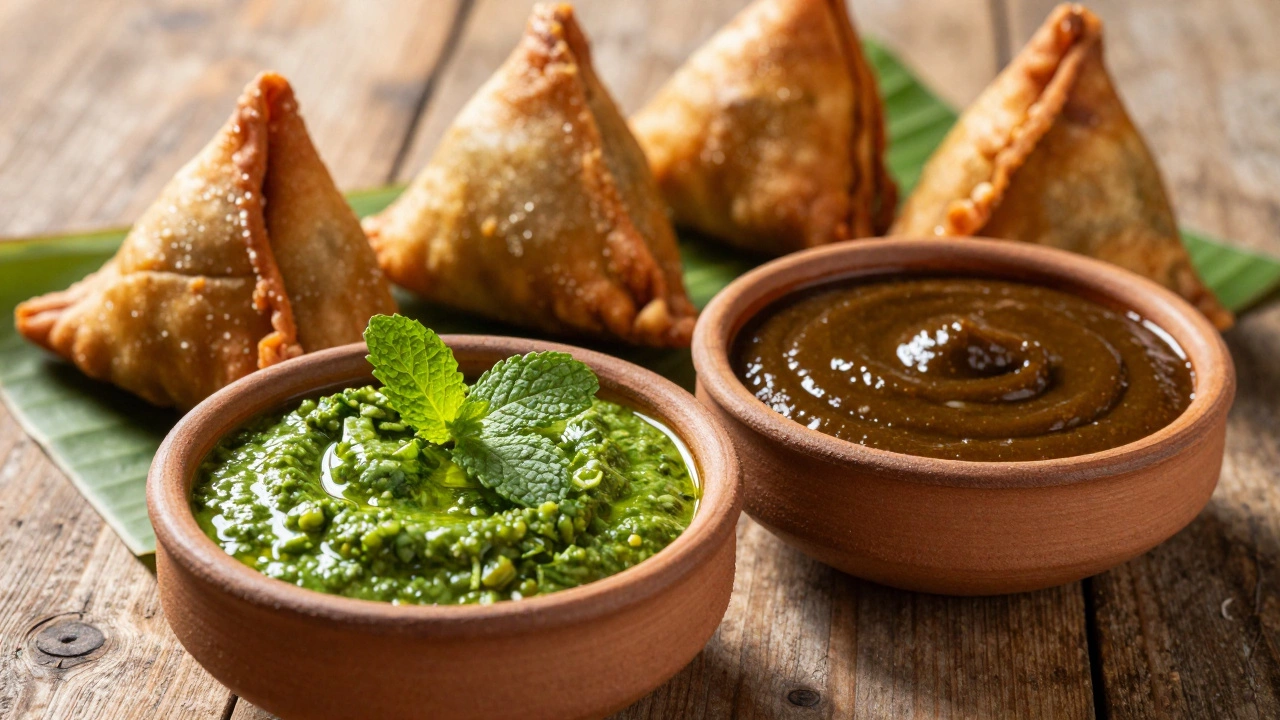
Walk into any Indian household or step onto a bustling street in Mumbai, Delhi, or even Birmingham, and you will find one thing on almost every plate: a small bowl of vibrant green or deep brown sauce. This is chutney, the essential condiment that transforms simple snacks into memorable meals. But if you have ever looked at a menu filled with dozens of options-coconut, mango, date, garlic-you might wonder: what is actually the most common type?
The answer isn't just one single flavor, but rather a triumvirate of three staples that dominate kitchens across the subcontinent and its diaspora. The most common types are Mint Chutney (Pudina Chutney), Coriander Chutney (Dhania Chutney), and Tamarind Chutney (Imli Chutney). These three form the backbone of Indian snacking culture. While regional preferences shift slightly from North to South, these flavors are universally recognized, used daily, and impossible to ignore.
The Green Standard: Mint and Coriander Chutneys
When people ask for "the" common chutney, they are usually picturing the bright green sauce served alongside samosas, pakoras, and dosa. In reality, this is often a blend, but let's break down the two primary herbs that make it up.
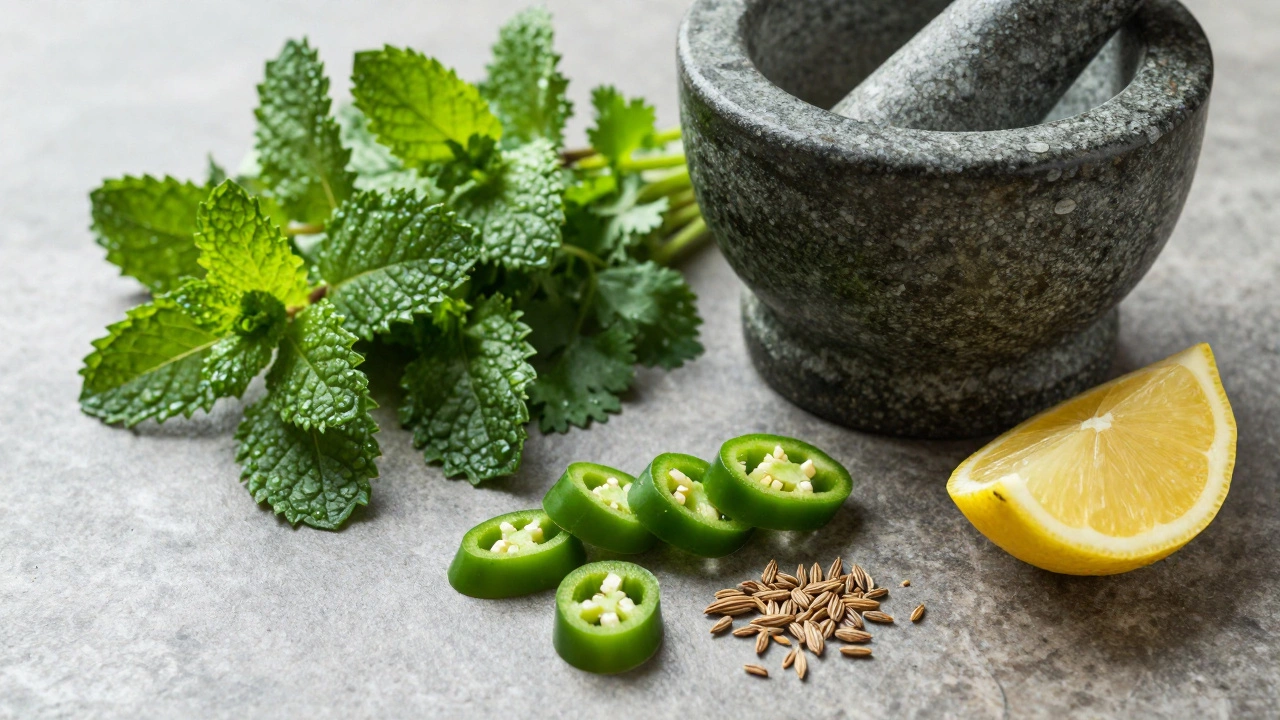
Mint Chutney (A refreshing condiment made primarily from fresh mint leaves, green chilies, and lemon juice) is arguably the most popular individual herb-based chutney. Its high water content and cooling properties make it perfect for balancing spicy fried foods. In North India, it is rarely served alone; it is almost always mixed with coriander. The ratio varies by family, but a standard mix is roughly 60% coriander to 40% mint. Why? Because pure mint can be overpowering and slightly medicinal if not balanced. Pure coriander, on the other hand, is earthy and mild. Together, they create a complex flavor profile that is both fresh and savory.
To make this classic green chutney, you typically blend:
- Fresh mint leaves (about one cup)
- Fresh coriander leaves (about two cups)
- Green chilies (adjust based on heat preference)
- Cumin seeds (roasted and ground, or added whole)
- Lemon juice or vinegar for acidity
- A pinch of salt
- Water to achieve the desired consistency
The key to a good green chutney is texture. It should be smooth but not watery like soup. If you add too much water, it separates quickly. If you want it to last longer than a day, adding a little oil or storing it in an airtight container in the fridge helps. However, for the best flavor, make it fresh. Oxidation turns the vibrant green color to a dull olive within hours, which is a natural process but affects the visual appeal.
The Sweet Counterpart: Tamarind Chutney
If green chutney represents freshness and heat, Tamarind Chutney (A sweet and tangy sauce made from tamarind pulp, jaggery, and spices) represents sweetness and depth. You cannot talk about common chutneys without mentioning this dark, sticky sauce. It is the other half of the equation when eating chaat, pav bhaji, or vada pav.
Tamarind chutney is distinct because it uses Jaggery (Unrefined cane sugar, providing a rich molasses-like sweetness) instead of white sugar. Jaggery adds a mineral-rich depth that refined sugar lacks. The base ingredient is Tamarind (A tropical fruit with a sour pulp used extensively in Asian cooking), specifically the ripe, dark variety. The pulp is soaked in warm water, strained to remove fibers and seeds, and then boiled with jaggery until it thickens.
Spices play a crucial role here. Unlike green chutney, which relies on raw herbs, tamarind chutney is cooked. Common additions include:
- Garam masala (for warmth)
- Cumin powder (for earthiness)
- Dry mango powder (amchur) for extra tang
- A pinch of asafoetida (hing) for digestion and flavor complexity
This chutney has a longer shelf life than its green counterpart. Stored in a glass jar in the refrigerator, it can last for weeks. It acts as a glaze, a dip, and a marinade component. Its versatility makes it a staple in households where quick, flavorful meals are needed.
Regional Variations: Coconut and Tomato Chutneys
While mint, coriander, and tamarind are the national standards, geography dictates local favorites. If you travel to South India, particularly Kerala, Tamil Nadu, or Karnataka, the most common chutney changes dramatically.
Coconut Chutney (A creamy, nutty sauce made from grated coconut, tempered with mustard seeds and curry leaves) is the undisputed king of South Indian breakfasts. It is served with idli, dosa, and uttapam. Unlike the blended green chutney, coconut chutney often involves grinding coconut with rice or poha (flattened rice) to achieve a coarse, textured paste. It is then tempered with hot oil containing mustard seeds, dried red chilies, and curry leaves. This tempering, known as tadka or vagaru, releases aromatic oils that define the dish.
In Western India, particularly Maharashtra and Gujarat, Tomato Chutney (A spicy, tangy sauce made from roasted tomatoes, garlic, and peanuts) is incredibly common. It is often associated with street food like pav bhaji. This chutney is thicker and spicier, often incorporating roasted peanuts or cashews for body. The roasting of tomatoes brings out a smoky sweetness that pairs well with the richness of buttered breads.
Why These Three Dominate
You might ask why these specific ingredients became so ubiquitous. The answer lies in availability, cost, and functional balance.
Mint and coriander grow easily in most Indian climates. They are cheap, accessible year-round, and require minimal processing. Tamarind is a dried fruit that stores indefinitely, making it a reliable source of acid before refrigeration was common. Jaggery is produced locally in many rural areas, ensuring a steady supply of sweetener.
From a culinary perspective, Indian cuisine balances six tastes: sweet, sour, salty, bitter, pungent, and astringent. A meal often includes heavy, oily, or spicy components. Chutneys provide the necessary counterbalance. Green chutney offers coolness and freshness to cut through grease. Tamarind chutney provides sweetness and sourness to balance spice. Coconut chutney adds creaminess and fat to complement dry, steamed foods.
| Chutney Type | Primary Flavor Profile | Key Ingredients | Best Paired With | Shelf Life (Fridge) |
|---|---|---|---|---|
| Mint-Coriander | Fresh, Herbaceous, Spicy | Mint, Coriander, Green Chili, Lemon | Samosa, Pakora, Dosa | 3-5 Days |
| Tamarind-Jaggery | Sweet, Tangy, Earthy | Tamarind Pulp, Jaggery, Cumin, Garam Masala | Pav Bhaji, Chaat, Vada Pav | 2-3 Weeks |
| Coconut | Creamy, Nutty, Mildly Spiced | Grated Coconut, Rice/Poha, Mustard Seeds, Curry Leaves | Idli, Dosa, Uttapam | 1 Week |
| Tomato-Peanut | Smoky, Tangy, Rich | Roasted Tomatoes, Peanuts, Garlic, Red Chili | Pav Bhaji, Fritters, Sandwiches | 1-2 Weeks |
How to Choose and Store Your Chutney
If you are new to cooking with chutneys, start with the green mint-coriander blend. It is the most versatile and forgiving. Freshness is critical. Use organic herbs if possible, as pesticides can concentrate in the leaves. Wash them thoroughly and pat dry completely before blending. Excess water dilutes flavor and promotes spoilage.
For tamarind chutney, buy block tamarind rather than pre-pasted pulp if you can. The blocks allow you to control the fiber content and ensure no preservatives are added. Look for dark, hard blocks that smell intensely sour. For jaggery, choose unbranded, loose jaggery from reputable markets for the best flavor, though branded packets offer convenience and hygiene.
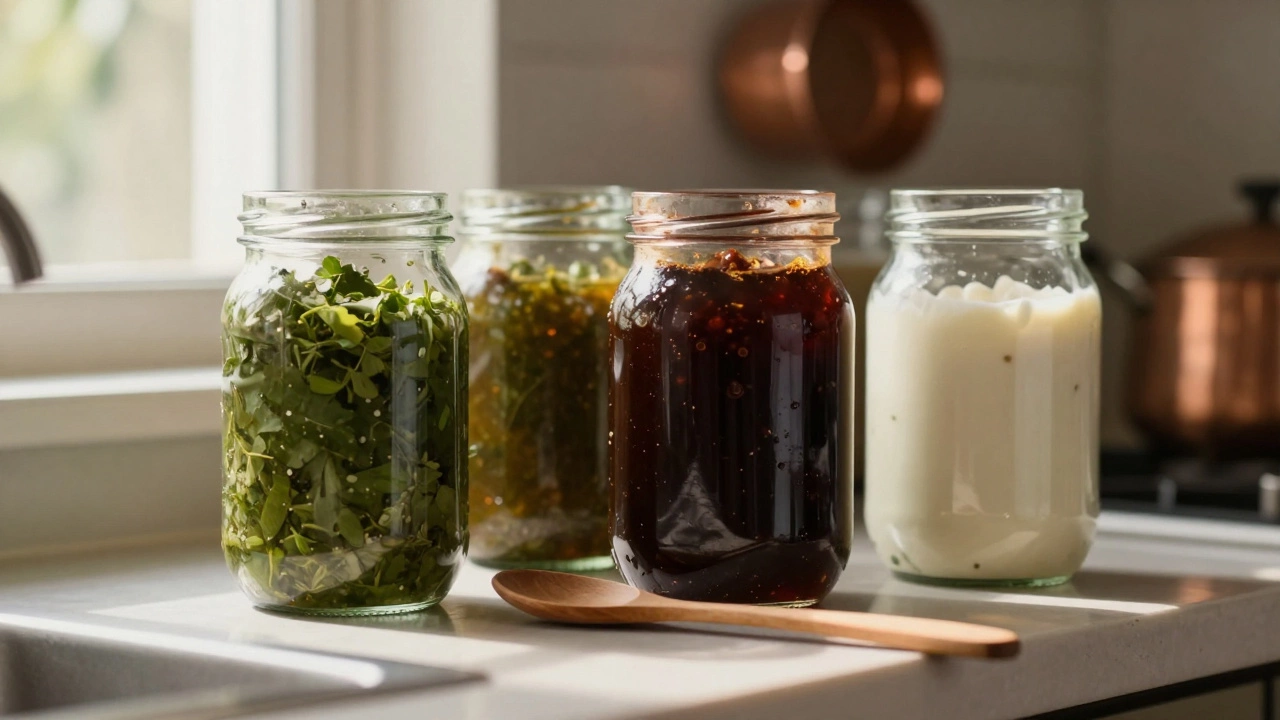
Storage matters. Always use clean, dry spoons to scoop chutney from jars. Introducing moisture or crumbs accelerates mold growth. Glass containers are preferable to plastic, as they do not retain odors and are easier to sanitize. Label your jars with dates. Green chutney should be consumed within three days for optimal taste, while tamarind chutney can last longer due to its high sugar and acid content.
Beyond the Plate: Modern Uses
Chutneys have transcended their traditional role as mere dips. In modern fusion cuisine, they are used as salad dressings, burger spreads, and marinades. A thin layer of tamarind chutney on a grilled chicken sandwich adds a surprising depth of flavor. Mint chutney drizzled over roasted vegetables enhances their natural sweetness. Even in desserts, a hint of coconut chutney can complement rich sweets like gulab jamun.
Understanding the most common types of chutney gives you a toolkit for elevating everyday meals. You don't need exotic ingredients. With a bunch of mint, some tamarind, and a few spices, you can recreate the vibrant flavors of India in your own kitchen. Whether you prefer the sharp bite of green chili or the comforting sweetness of jaggery, there is a chutney that fits your palate.
What is the difference between mint chutney and coriander chutney?
Mint chutney is cooler and more aromatic, often used to soothe heat from spicy dishes. Coriander chutney is earthier and milder. In practice, they are frequently blended together to create a balanced green chutney that offers both freshness and depth.
Can I make chutney ahead of time?
Yes, but storage times vary. Green herb chutneys last 3-5 days in the fridge. Cooked chutneys like tamarind or tomato can last 2-3 weeks. Always store in airtight glass containers and use clean utensils to prevent contamination.
Why does my green chutney turn black?
This is due to oxidation. To minimize discoloration, add a squeeze of lemon juice, which contains citric acid that slows down the browning process. Also, ensure there is no excess water in the mixture, as moisture accelerates spoilage.
Is chutney vegan?
Most basic chutneys are naturally vegan. However, some recipes may include ghee (clarified butter) for tempering or yogurt for creaminess. Always check the ingredients, especially in store-bought versions, to ensure they meet dietary requirements.
What is the best chutney for dosa?
Coconut chutney is the traditional and most popular pairing for dosa, especially in South India. It complements the crispy texture of the dosa with its creamy, nutty flavor. Sambar is also commonly served alongside it.